21 Corner Cabinet Organization Ideas for 2026
I still remember the first time I tried to organize my kitchen after moving into my home—I opened the lower corner cabinet, took one look into that dark, endless void, and immediately shut the door. Like millions of homeowners, I quickly learned that deep corner cabinets are where cookware, lids, and expired pantry items go to disappear forever. Every time I needed a specific stockpot, it felt like an excavation project that left half my kitchen counter covered in clutter.
The good news is that an awkward corner cabinet does not have to be a wasted black hole. With a few targeted layout changes and the right organizers, you can turn your most frustrating cabinet into the most functional storage spot in your kitchen. In this guide, I will walk you through 21 practical, real-world corner cabinet organization ideas that have completely transformed how I use my kitchen space—and will help you create a stress-free cooking environment.
1. How Do You Maximize Space Inside a Corner Kitchen Cabinet?
The biggest mistake I see people make with corner cabinets is treating them like standard straight cupboards. Because the interior extends diagonally, stuff simply gets pushed out of view.
To fix this, you need to bring structure to the deep interior. First, pull everything out and toss expired items or things you never use. Next, install hardware or organizers—like lazy Susans, sliding rails, or vertical dividers—that bring the back items straight to the front. Dividing the space into distinct vertical and horizontal layers ensures every inch serves a real purpose.
Vertical Shelves
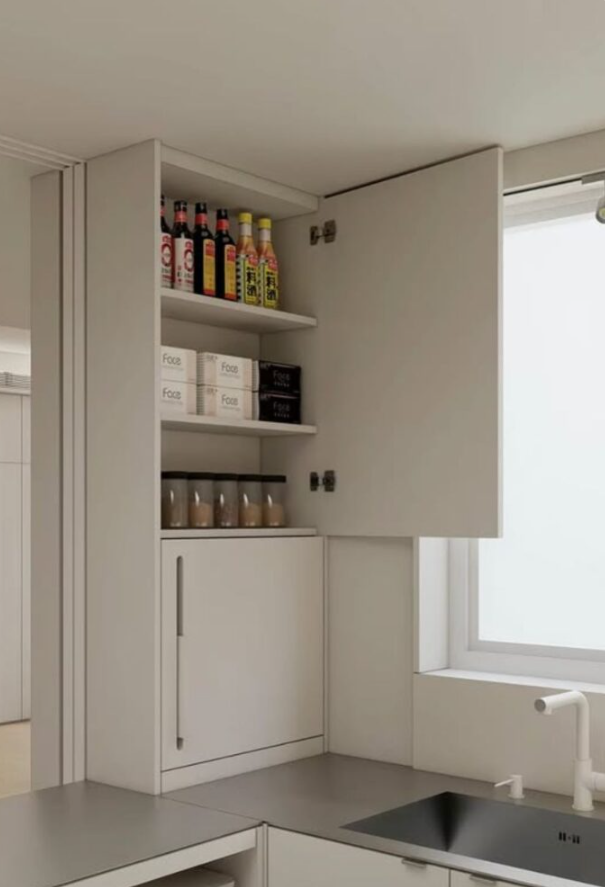
I like using vertical shelves when I need to store items of varying heights without creating a chaotic pile. By setting fixed heights for specific groupings, you build dedicated zones—sauces up top, boxed goods in the center, and heavy jars on the bottom.
Pro Tip: Place your tallest bottles on the top level so they do not block line-of-sight for smaller containers below. Stacking items neatly by height prevents the dreaded “back-of-cabinet clutter”.
Rotating Shelves
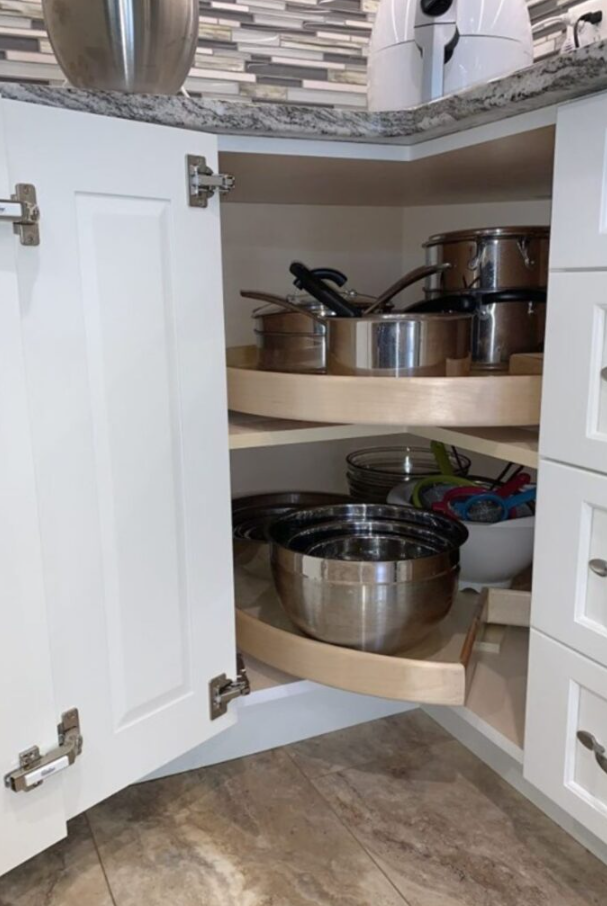
Installing rotating wooden or heavy-duty plastic trays changes everything for deep blind corners. Instead of crawling on your knees to find a stockpot, a simple spin brings the back contents right to your hands.
These circular shelves handle heavy pots, pans, and mixing bowls easily. Keep larger items along the outer perimeter where they turn freely without catching on cabinet walls.
Pull-Out Baskets
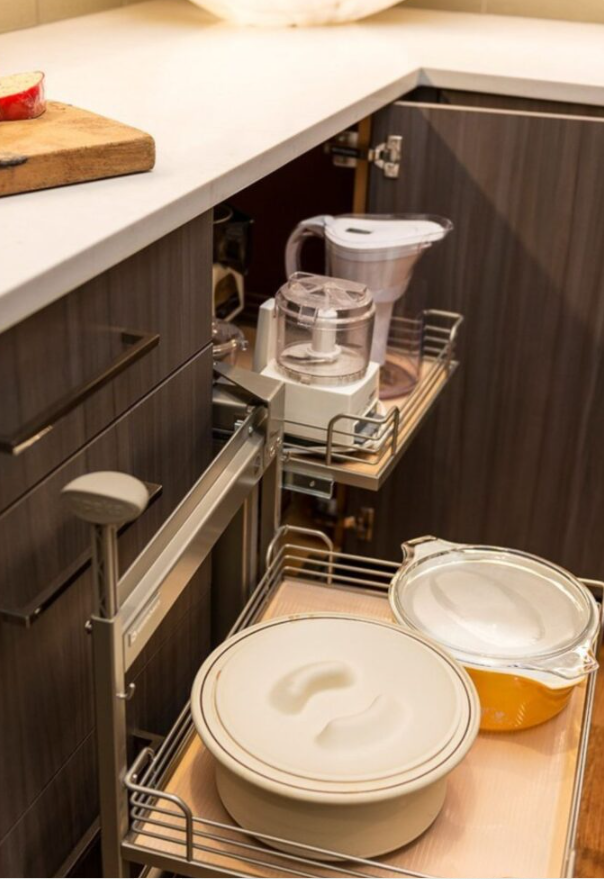
If you struggle to reach deep into lower cabinets, pull-out wire or metal baskets are worth every penny. Mounted on sliding rails, these trays glide forward out of the dark interior.
I use them regularly for heavy mixers, blenders, and baking sheets. Store your daily-use gadgets on the front tray and push secondary supplies toward the back.
Slim Shelving
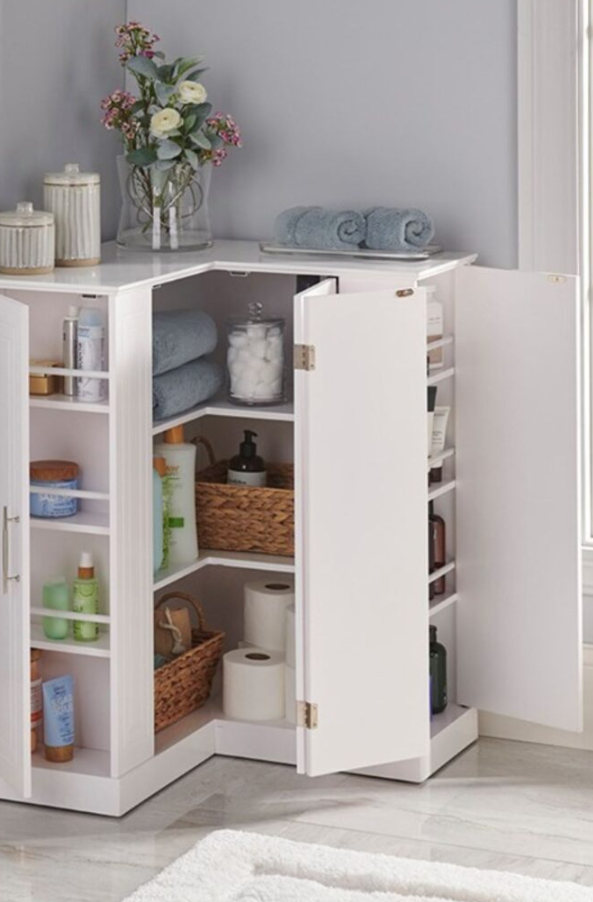
Unused side gaps inside a corner unit do not have to go to waste. Adding narrow, slim vertical shelves allows you to store tiny items that usually get swallowed up by larger pots.
This setup works wonders for small condiment bottles, skincare products, or cleaning supplies. Adding small racks directly onto the inside of the cabinet door captures even more hidden space.
Double Turntables
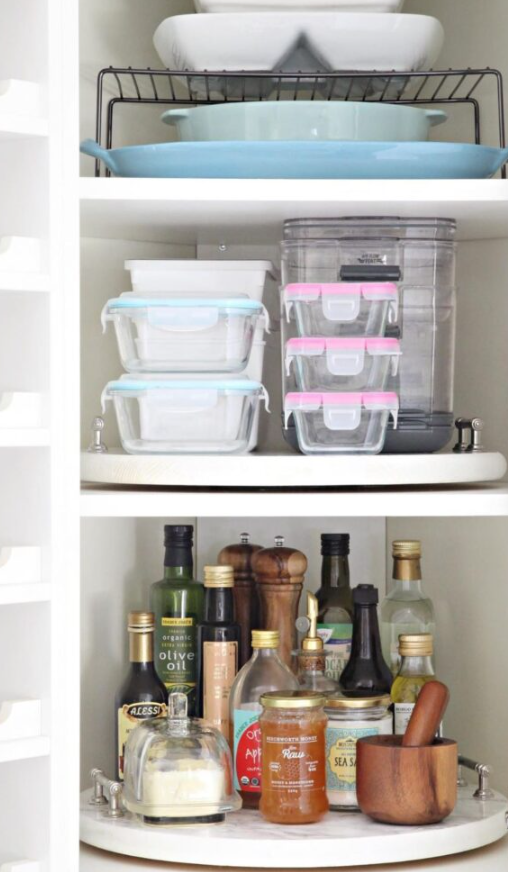
Why settle for one turntable when you can stack them? Placing two rotating trays on separate vertical levels creates a clean, multi-tier system where nothing hides.
I like reserving the lower level for heavy items like cooking oils, vinegars, and heavy jars. The top tray easily handles lightweight items, food storage lids, or small spice containers.
Pan Storage
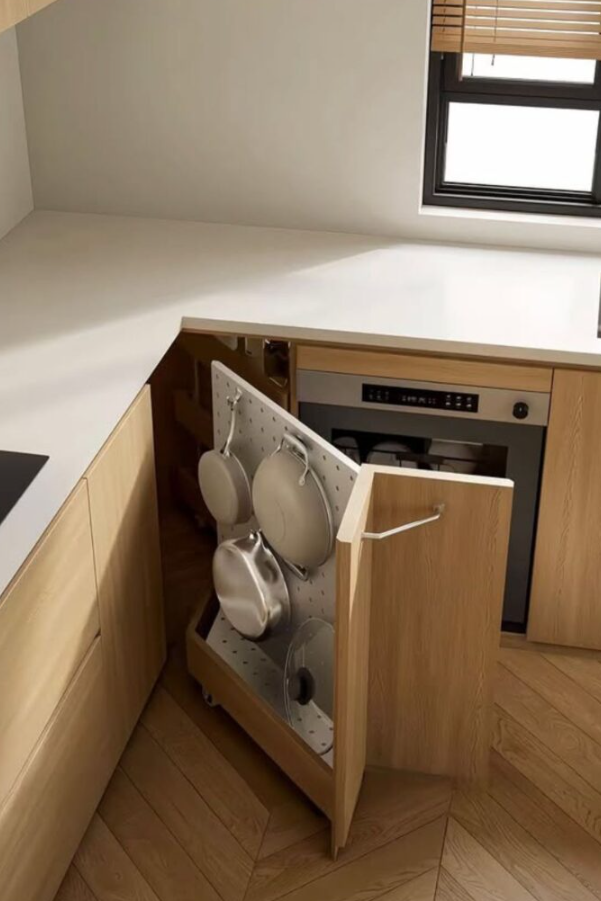
Stacking frying pans in a deep corner creates a noisy, scratched-up mess. I prefer hanging pans vertically using a pull-out slide equipped with sturdy hooks.
When you open the door and pull the slide forward, every pan sits upright in its own space. Mount your largest skillets near the front for seamless grab-and-go access during dinner prep.
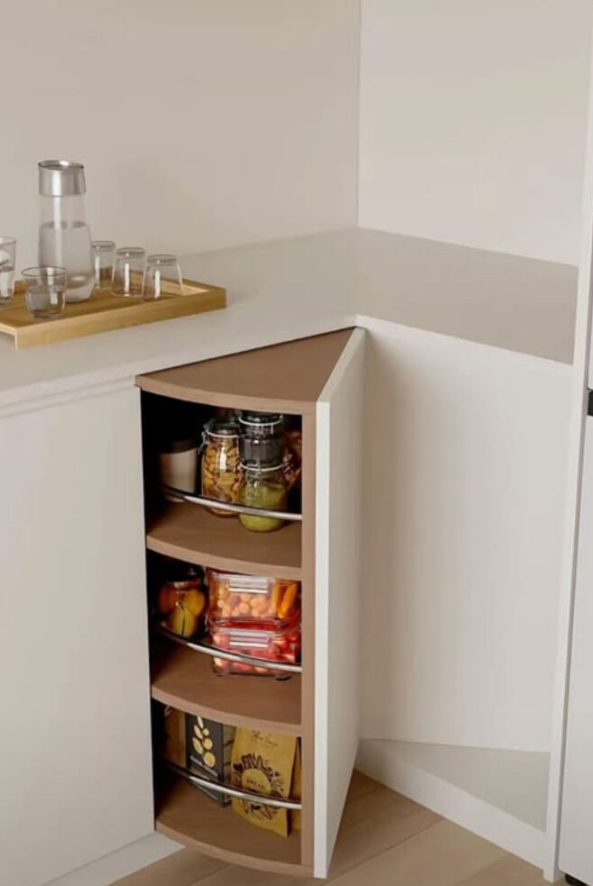
Curved Shelves
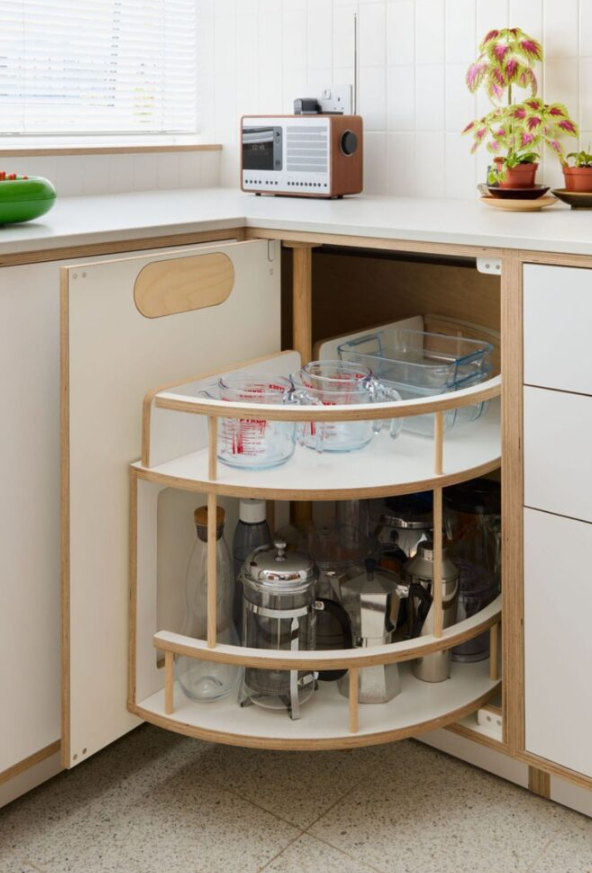
Curved or semi-circular shelves follow the natural contours of your cabinet, cutting out dead space in sharp back corners.
These rounded tiers work well for glassware, coffee gear, and small appliances. Make sure your shelves include a small raised edge or guard rail so items stay secure as the tray swings open.
Grid Compartments
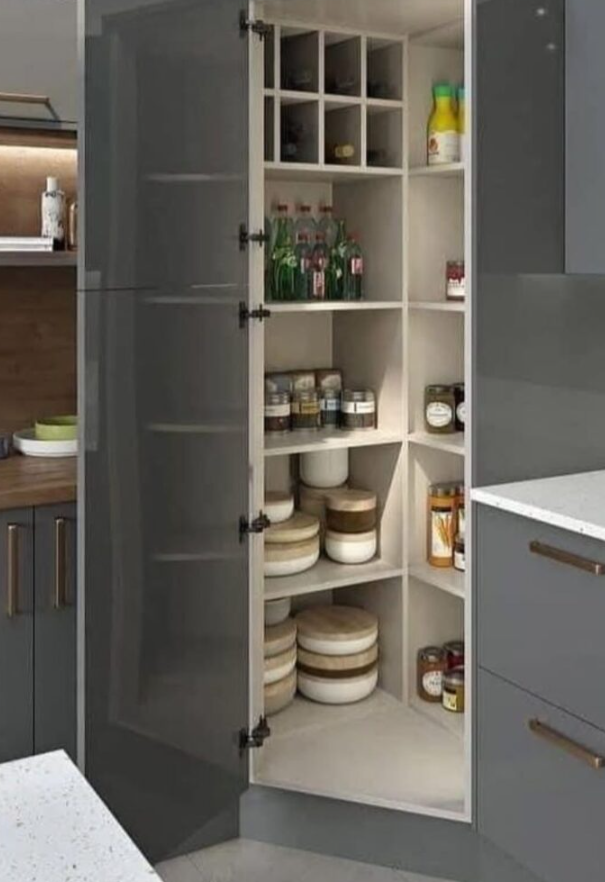
When a cabinet lacks structure, small items spread out everywhere. Installing modular grid dividers transforms a open box into individual storage cubbies.
Use smaller top compartments for spices and drinking glasses, while keeping taller middle sections for oils and grains. Reserve the wide bottom spaces for nested bowls or food storage containers.
Pantry Turntables
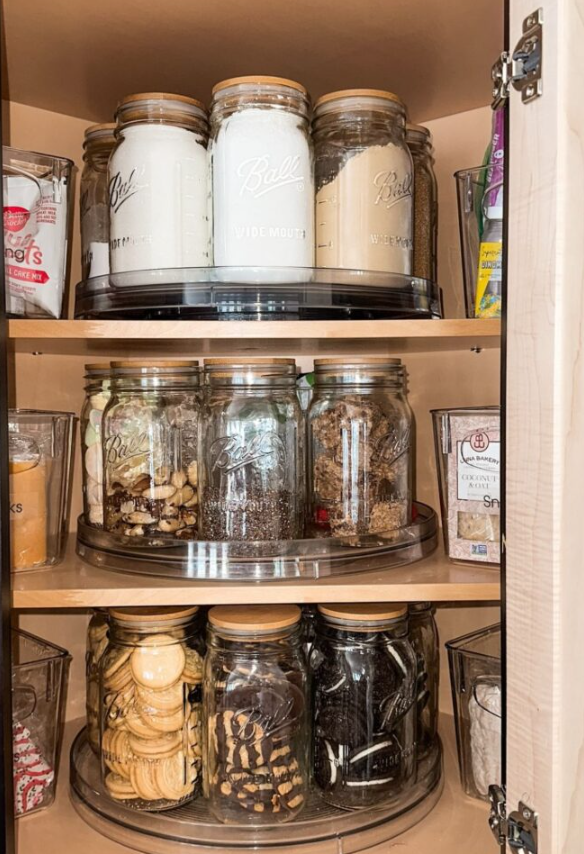
Storing dry goods in a corner cabinet gets messy fast when boxes stack up. Setting up large turntables on your pantry shelves keeps flour, sugar, and dry snacks visible.
Transferring food into uniform clear jars makes it simple to spot low supplies with a quick spin. This simple change stops duplicate purchases because you can always see what you have.
Shelf Zoning
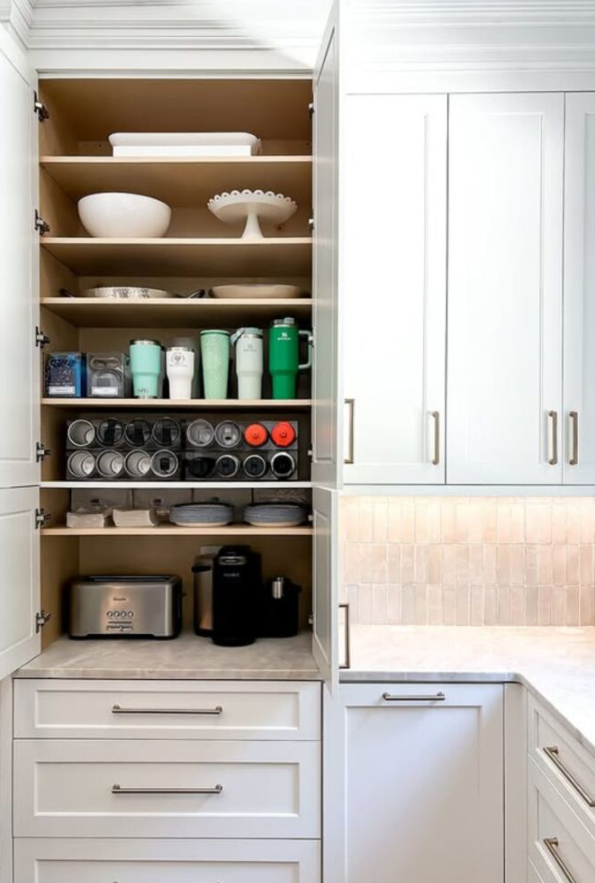
Assigning a dedicated job to every single shelf keeps chaos from taking over. In a tall corner unit, reserve the top shelf for seasonal items or specialty platters you rarely touch.
Keep middle shelves open for daily coffee mugs and glassware. Lower shelves should house heavy appliances like toasters or instant pots so you do not strain your back lifting them.
Sliding System
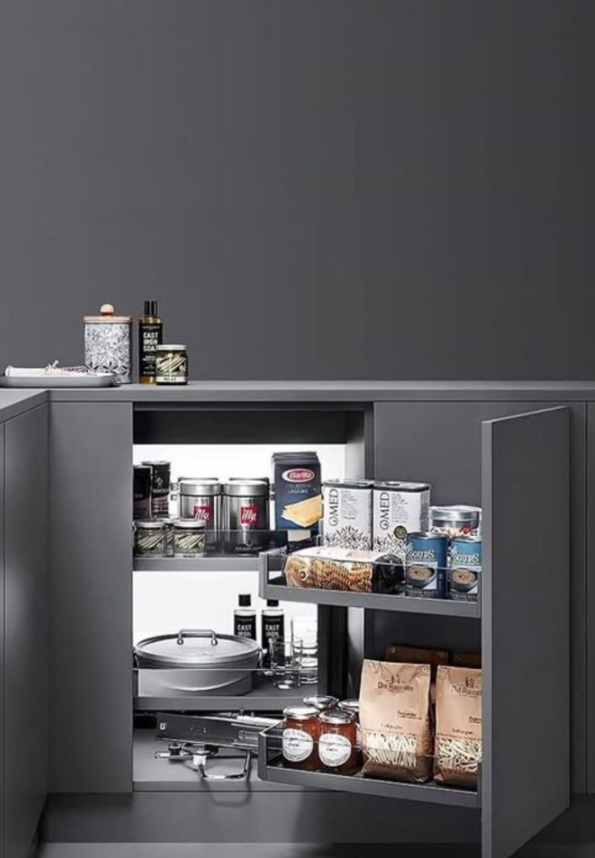
A full sliding corner system relies on two sets of connected baskets. When you pull the front framework out, the back baskets automatically slide forward into view.
It brings items straight out to you, so you never have to stretch into dark corners. Keep heavy cookware on the bottom runners to maintain a smooth, balanced gliding action.
Swing Shelves
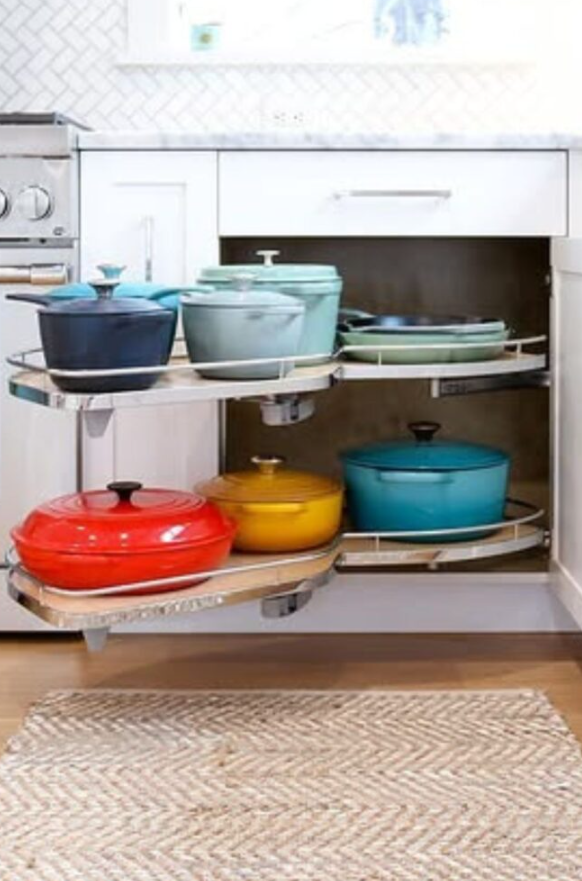
Heavy Dutch ovens and iron skillets need robust support. Specially engineered swing-out shelves pivot entirely outside the cabinet frame on heavy-duty metal arms.
The smooth motion prevents heavy pots from tipping over while bringing them out into room light. Place your heaviest cast iron on the lowest tray to maintain stability.
Corner Carousel
Carousel systems feature notched trays attached to a central rotating pole. Turning the mechanism rotates the entire interior, bringing every item to the door opening.
This design works great for storing dry snacks, baking ingredients, or canned goods. Keep taller items along the outer edge to prevent them from catching on the cabinet frame during rotation.
Corner Pullouts
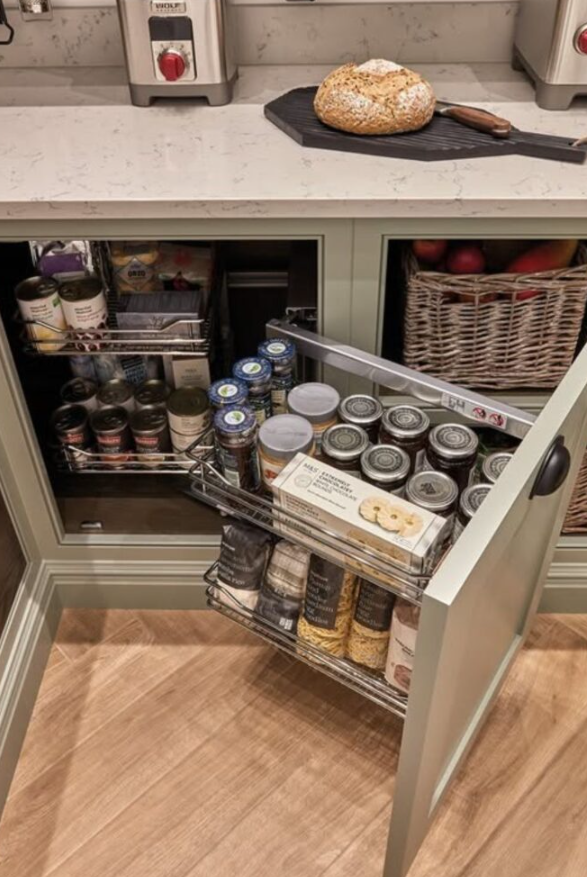
Blind corners—where one cabinet section extends past the door opening—are notoriously tricky. A two-tier pull-out rack solves this by sliding sideways before pulling straight out.
Front baskets keep your go-to spices and oils close at hand, while back baskets store backup inventory. Sturdy metal wire frames prevent jars from falling over when pulled quickly.
Spice Turntables
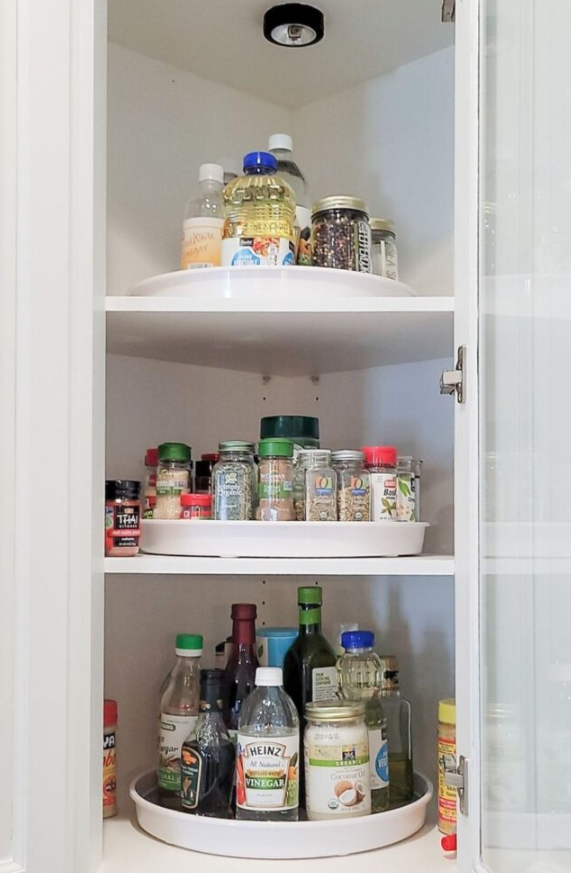
Small seasoning jars vanish instantly when pushed to the back of a deep shelf. Dedicated spice turntables group all your herbs, vinegars, and baking extracts on one turning surface.
Place taller oil bottles along the outer edge and smaller spice tins toward the center. This keeps the center of gravity balanced so the tray turns smoothly without tipping.
Tiered Rotation
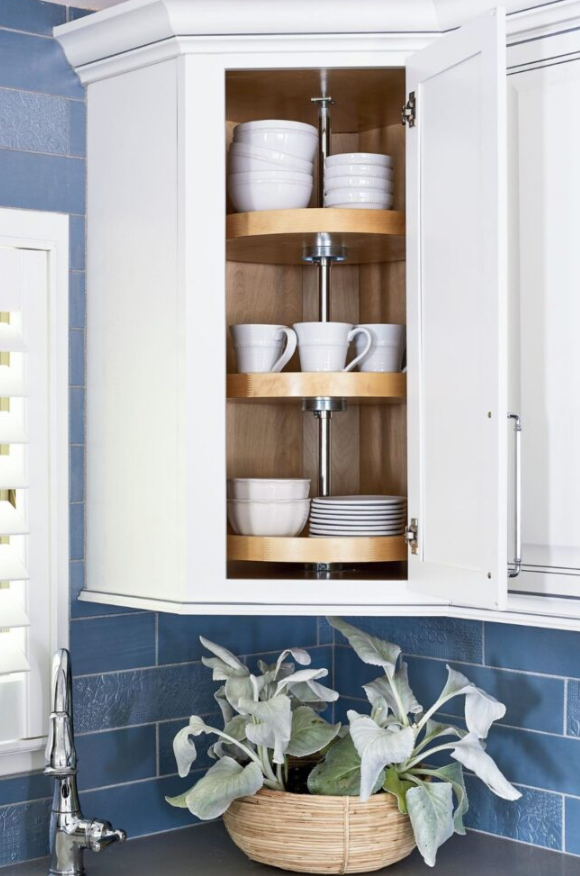
For tall corner spaces, pole-mounted tiered rotating shelves offer incredible capacity. Mounted on a central steel rod, multiple round shelves spin independently.
I use the lower levels for heavy plates and ceramic bowls, saving upper shelves for lighter coffee mugs and small dishes. A soft push spins whatever you need directly to the front.
Corner Drawers
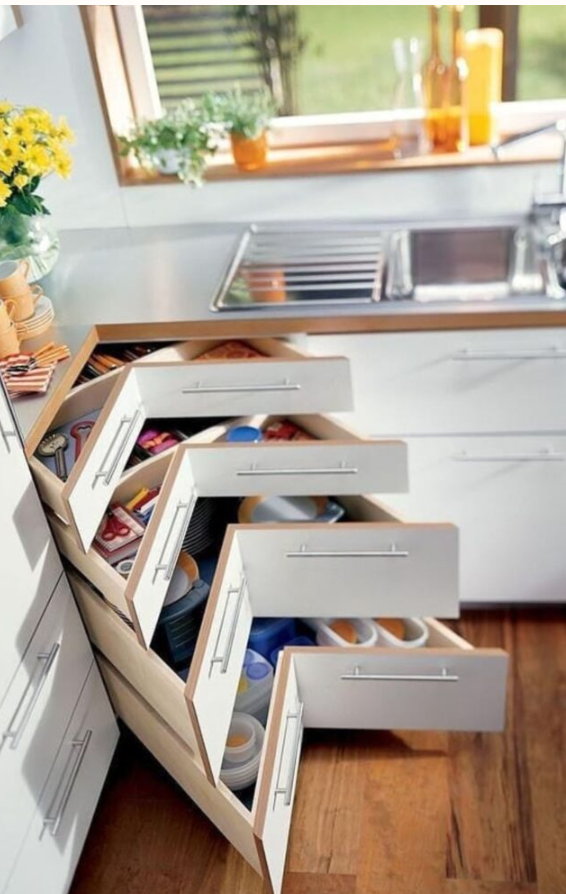
If you are planning a kitchen renovation, triangular corner drawers are a game-changer. Instead of standard cabinet doors, these custom drawers pull straight out into the room.
Their unique 90-degree shape accommodates small hand tools, measuring cups, and utensils up top, while offering deep storage for mixing bowls below. You get full visibility with zero awkward reaching.
Glass Storage
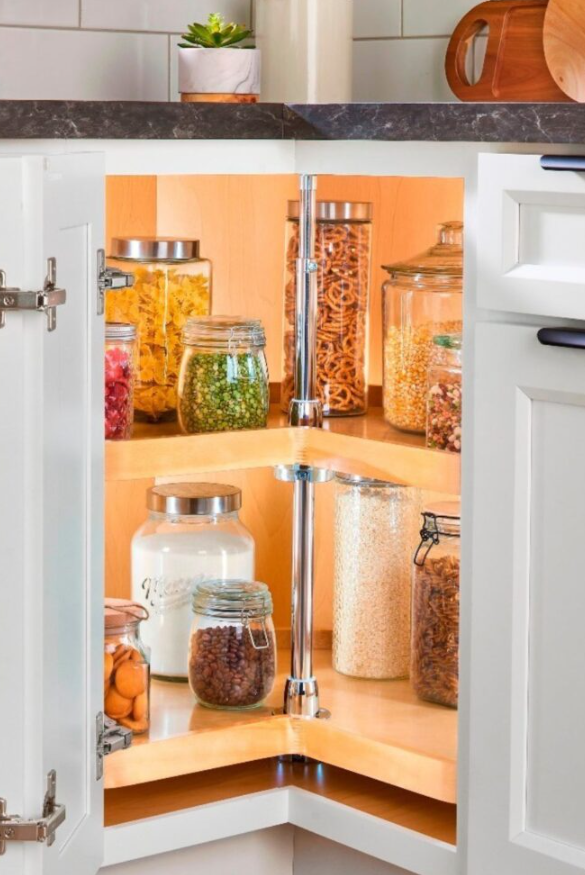
Swapping mismatched grocery packaging for uniform glass jars keeps your pantry looking clean and organized. Clear glass lets you track ingredients at a glance while keeping food fresh.
Combine matching glass jars with a centralLazy Susan mechanism. Arranging larger jars along the outside and smaller ones in the middle creates an efficient, organized food station.
Wooden Pullouts
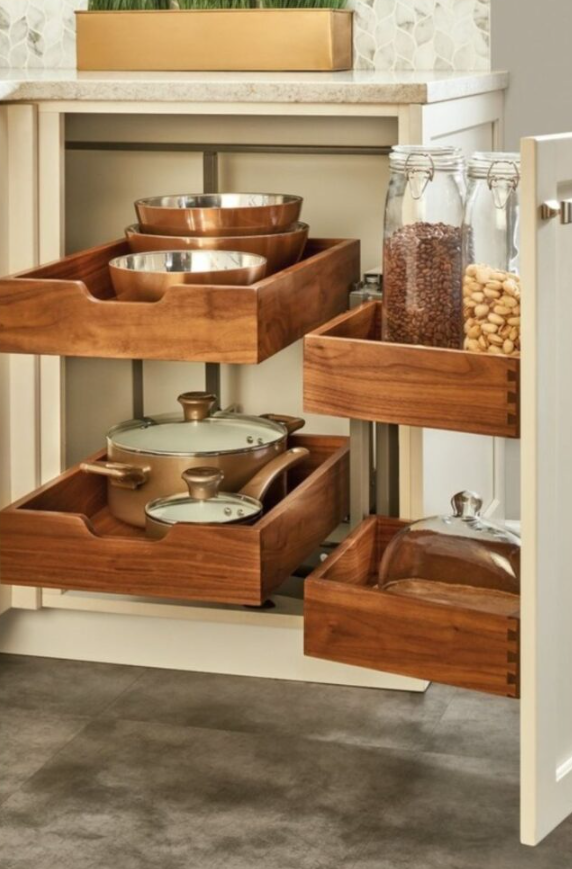
Solid wood pullout boxes bring a classic, high-end feel while adding sturdy function. Built with deep sidewalls, these drawers keep contents secure as they roll out.
Use shallow upper wood trays for small gadgets or pantry snacks, and deep bottom drawers for heavy pots. The natural wood frame prevents items from sliding around when opened.
Tall Pantry
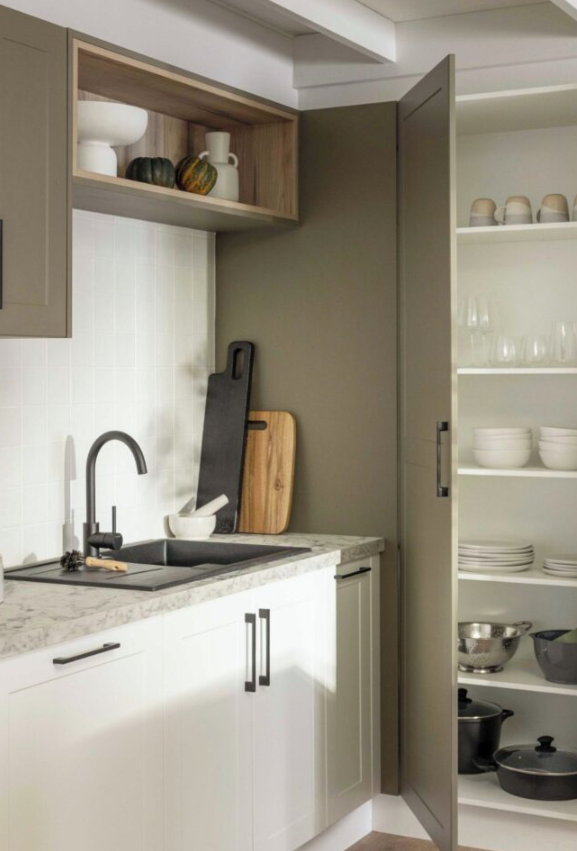
If you have space from floor to ceiling, converting a corner into a full-height pantry maximizes every inch of wall space.
Organize by height and frequency of use: place rarely used items up top, daily dishes and food in the middle, and heavy equipment down low. Grouping items logically makes meal preparation much smoother.
Appliance Nook
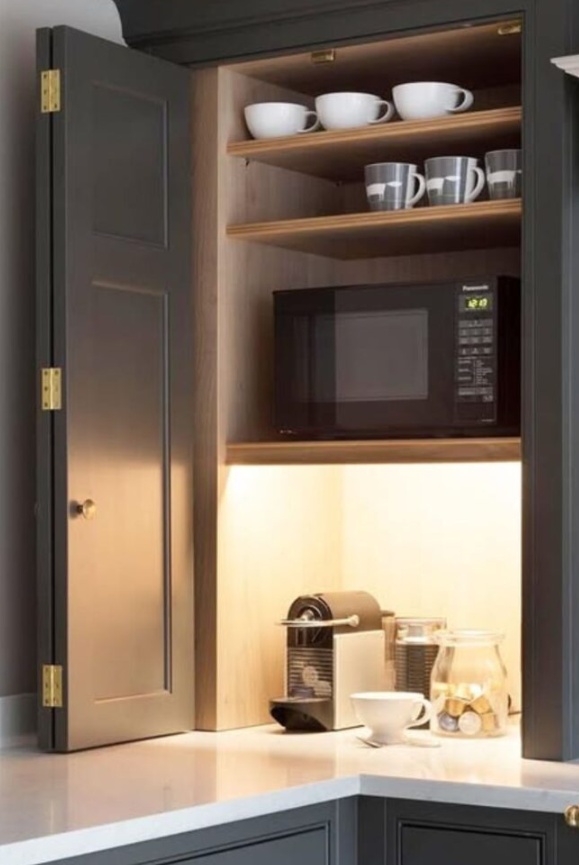
Clear off your countertops by turning an unused corner cabinet into a hidden appliance station. Built-in shelving creates tailored spots for your coffee maker, toaster, or microwave.
Installing an outlet inside the cabinet lets you run appliances right where they sit. When you are finished, simply close the cabinet door to keep your counters spotless.
2. FAQs
What should you avoid storing in a corner kitchen cabinet?
Avoid storing delicate glass items or everyday essentials in unorganized back corners. Fragile items can easily tip over when you reach around them, and daily items get frustrating to fetch if they sit deep inside. Stick to large cookware, backup pantry items, or small appliances that do not mind deeper storage.
Are corner cabinet organizers worth installing?
Yes, they are worth the investment. Adding mechanisms like lazy Susans, pull-out baskets, or swing-out hardware turns an awkward, underused space into accessible storage. It stops items from disappearing and helps you get full use out of your kitchen cabinets.
Conclusion
Fixing a frustrating corner kitchen cabinet comes down to one basic rule: stop reaching into the dark and make your storage move toward you instead. Whether you install a simple budget-friendly turntable, mount vertical hanging panels for your pans, or invest in full swing-out drawer hardware, giving every item a dedicated spot eliminates daily kitchen friction.
Take a look at your kitchen routine this week, identify which corner cabinet gives you the biggest headache, and start with just one or two solutions from this list. You will be amazed at how much time, energy, and counter space you save once your hardest-to-reach cabinet finally starts working for you.