16 Balcony Storage Ideas for 2026
Adding hidden storage to a balcony is easier when I choose furniture and organizers that serve more than one purpose. A storage bench can hold cushions, a compact table can hide small supplies, and a tall cabinet can keep gardening tools out of sight. I also make use of vertical space with wall shelves, hanging planters, and slim cabinets to keep the floor clear.
In this guide, I’m sharing practical hidden balcony storage ideas for small, narrow, and covered outdoor spaces. You’ll find options such as lift-top benches, built-in compartments, overhead cabinets, utility racks, and weather-resistant storage boxes. I’ll also cover material choices, space-saving tips, and ways to protect stored items from moisture without making your balcony feel crowded.
Key Takeaways
- Choose multifunctional furniture, such as storage benches and compact tables.
- Use tall cabinets and wall-mounted shelves to save valuable floor space.
- Pick weather-resistant materials for balconies exposed to rain and sunlight.
- Keep frequently used items within easy reach and store seasonal items out of sight.
- Check airflow requirements before covering air-conditioning units or other equipment.
How Can You Add Hidden Storage to Your Balcony Setup?
I start by looking at the items that usually create clutter, such as plant pots, cushions, watering cans, cleaning supplies, and outdoor accessories. Once I know what needs storing, I can choose a solution that fits the available space instead of adding unnecessary furniture.
A bench with a storage compartment works well when I need extra seating, while a slim cabinet can hold taller items without blocking the walkway. I also use wall space for lightweight organizers and shelves to keep the floor open.
For rented homes, freestanding cabinets, movable storage benches, and tension-mounted organizers can be useful alternatives to permanent installations. On an exposed balcony, I check that every storage unit is suitable for outdoor conditions and securely positioned against wind.
The goal is to keep everyday items accessible while reducing visible clutter. When storage fits naturally into the layout, the balcony feels more comfortable and easier to maintain.
Slim Vertical Closet
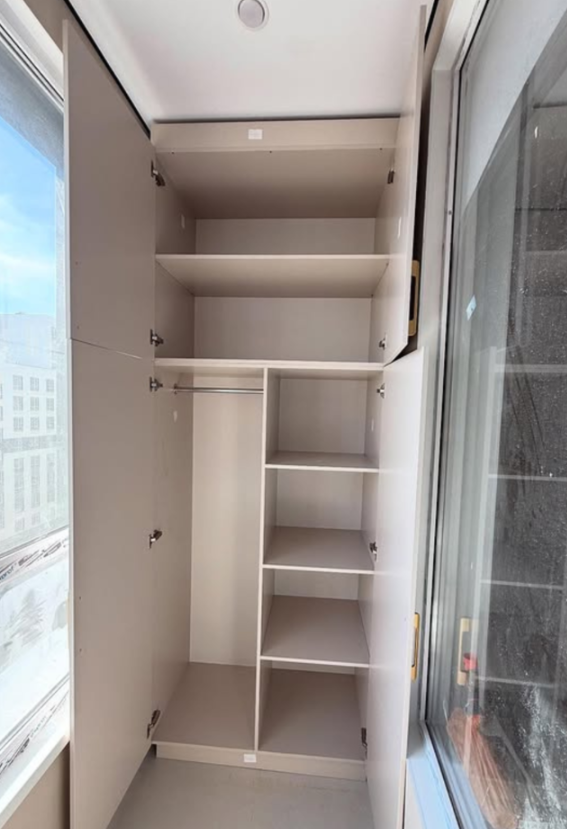
Best for: Narrow balconies with unused wall height
I use a slim vertical closet when floor space is limited but the balcony has enough height for extra storage. Its narrow footprint makes it useful for keeping brooms, folding chairs, small tools, and other household supplies in one place.
Inside, I would arrange adjustable shelves on one side and a taller section on the other for items that need more room. This makes it easier to store different supplies without stacking everything together.
If the balcony is enclosed, adding a small interior light can improve visibility. I also check the cabinet’s depth and door clearance before installation so it does not interfere with windows or the walking path.
Garden Tool Cabinet
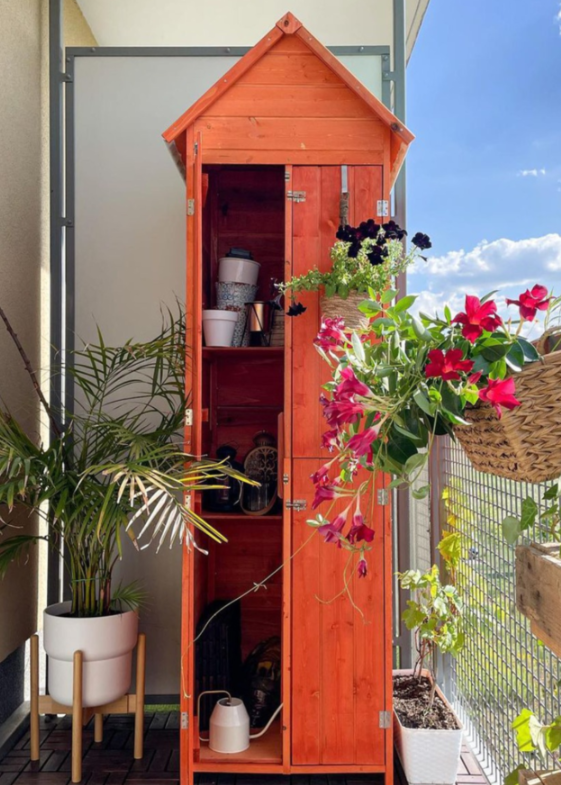
Best for: Balconies with plants and gardening supplies
A dedicated garden tool cabinet helps me keep watering cans, pots, gloves, and small bags of potting mix organized. Instead of spreading these supplies around the balcony, I can store them behind closed doors.
For outdoor use, I prefer treated wood, powder-coated metal, or weather-resistant resin. Raising the cabinet slightly above the floor can help reduce contact with standing water, especially after heavy rain.
I also separate damp tools from dry supplies and leave enough ventilation to reduce moisture buildup. A narrow cabinet placed near the plants keeps gardening essentials close without taking over the seating area.
Wall Cabinet Setup
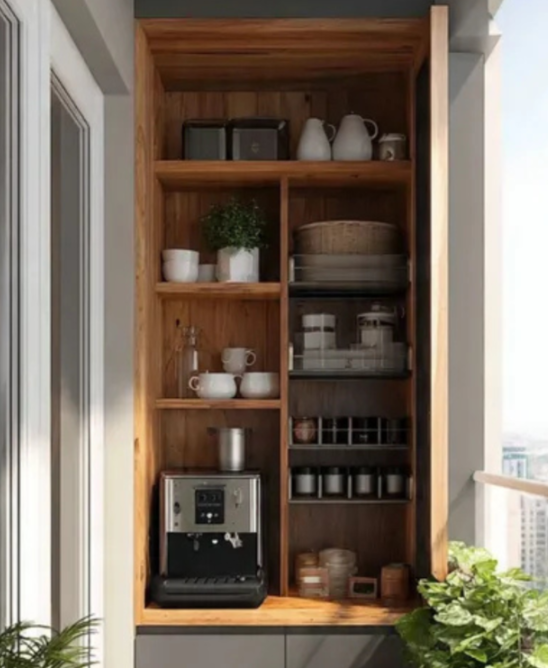
Best for: Covered balconies with unused wall space
A wall cabinet provides storage without occupying much of the floor. I would use one for plant care products, small outdoor accessories, glasses, or other items that need to stay out of sight.
Closed doors help create a tidy appearance, while a small open shelf above the cabinet provides room for a few decorative pieces or lightweight planters. Keeping the display simple prevents the wall from looking crowded.
Before mounting a cabinet, I check that the wall can support its weight and that the fixings are suitable for the surface. For exposed balconies, I choose a weather-resistant unit and make sure the contents are protected from rain.
Console With Storage
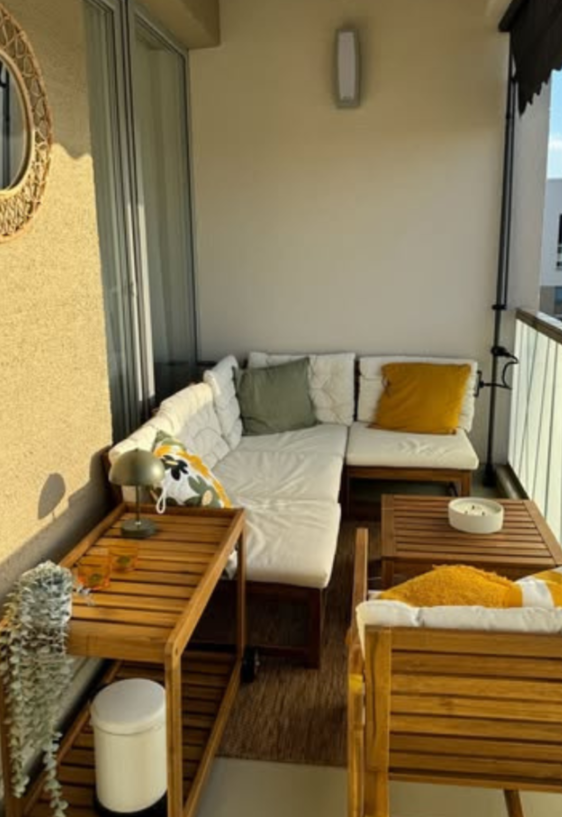
Best for: Long, narrow balconies with unused side space
A slim console table can turn an overlooked section of the balcony into useful storage. I would choose a design with a lower shelf or space for baskets so small accessories can be tucked away instead of left on the tabletop.
This setup works well for lightweight gardening items, outdoor candles, and decorative supplies. I keep the tabletop relatively clear to maintain a simple look and make everyday cleaning easier.
Warm wood tones can also help the console blend with other outdoor furniture. Before choosing one, I measure the available depth to make sure there is still enough room to walk comfortably.
Vertical Wall Planters

Best for: Plant lovers who want to save floor space
Vertical wall planters let me add greenery without filling the balcony floor with individual pots. Mounted planter boxes, railing planters, and wall-mounted pots can create a green display while leaving room below for seating or storage furniture.
For a rental, I would consider railing attachments or other removable mounting systems that are suitable for the planter’s weight. I also account for the weight of wet soil and water when choosing supports.
To make maintenance easier, I place plants with similar watering needs together and use trays or drainage arrangements that help prevent water from dripping onto the floor. The result is a greener balcony with less clutter around the seating area.
Built-In Wall Shelves
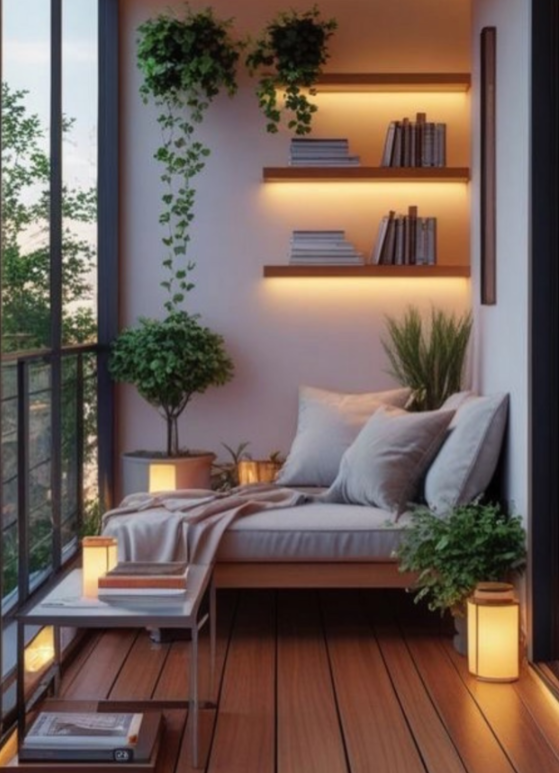
Best for: Covered balconies that need compact storage
Floating wall shelves provide a simple place for small baskets, books, lightweight accessories, and decorative items. I like this option when I want storage without adding another piece of furniture to the floor.
For a practical setup, I place frequently used items on the lower shelves and less-used accessories higher up. Small baskets make it easier to group loose objects and keep the shelves from looking untidy.
I use shelves made from materials suited to the balcony’s moisture levels and avoid placing unprotected items where rain can reach them. Under-shelf lighting is another option for a covered balcony, especially when the seating area needs a softer evening glow.
Bench With Compartments
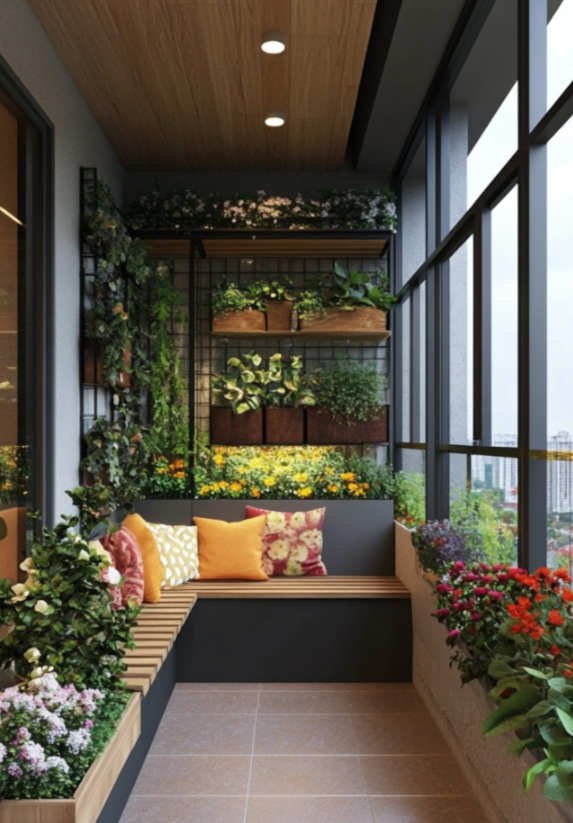
Best for: Long balconies with space for built-in seating
A built-in bench with storage underneath combines two useful features in one compact design. I can use the top for seating and store cushions, gardening accessories, or other outdoor items inside.
Lift-up lids work well when there is enough clearance to open them fully. Sliding compartments may be more practical in areas where a wall or table limits access from above.
I would add dividers or separate containers to keep the contents organized. If the balcony is exposed to moisture, I also make sure the compartment has suitable weather protection and ventilation rather than trapping damp items inside.
Low Profile Cabinet
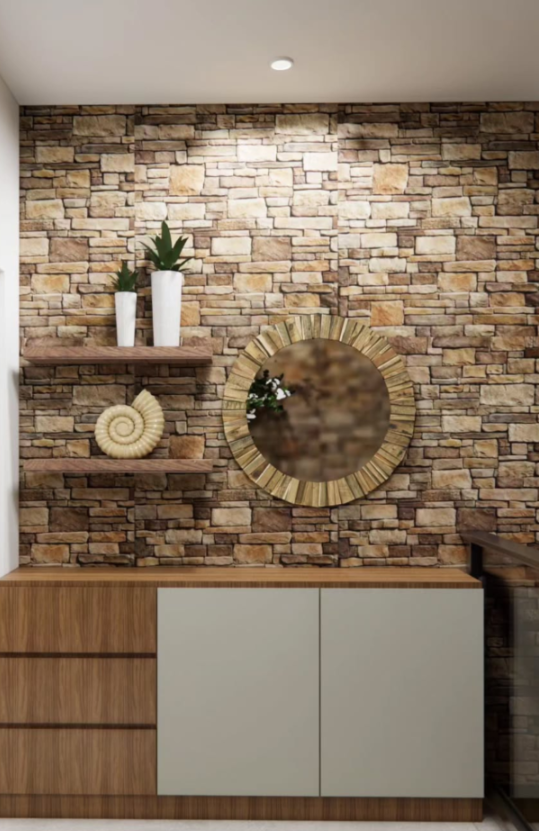
Best for: Balconies with long, unused wall sections
A low-profile cabinet provides hidden storage while keeping the balcony’s overall appearance simple. Its lower height can make the space feel less enclosed than it might with a tall, bulky unit.
I would use it for small gardening supplies, folded textiles, outdoor accessories, and other items that do not need a full-height cabinet. The top can hold a few lightweight decorations, provided they do not block access or create a safety concern.
Flat-front doors and a finish that matches the surrounding furniture help the cabinet blend into the setup. I also leave enough clearance for the doors to open without hitting chairs or other objects.
Under-Stair Storage Box

Best for: Balconies or terraces with stairs overhead
The space beneath exterior stairs can be difficult to use, but a fitted storage box or custom cabinet can turn it into a practical storage area. I would use it for gardening tools, empty pots, or other supplies that do not need to be accessed constantly.
Because this area may receive runoff from the stairs, material selection is important. Weather-resistant plywood with properly sealed edges, outdoor-grade composite panels, or suitable metal construction can help protect the contents.
I would also check for leaks, allow appropriate ventilation, and make sure the cabinet does not obstruct drainage or access. A simple door or panel keeps the stored items out of view without adding visual clutter.
AC Unit Cover
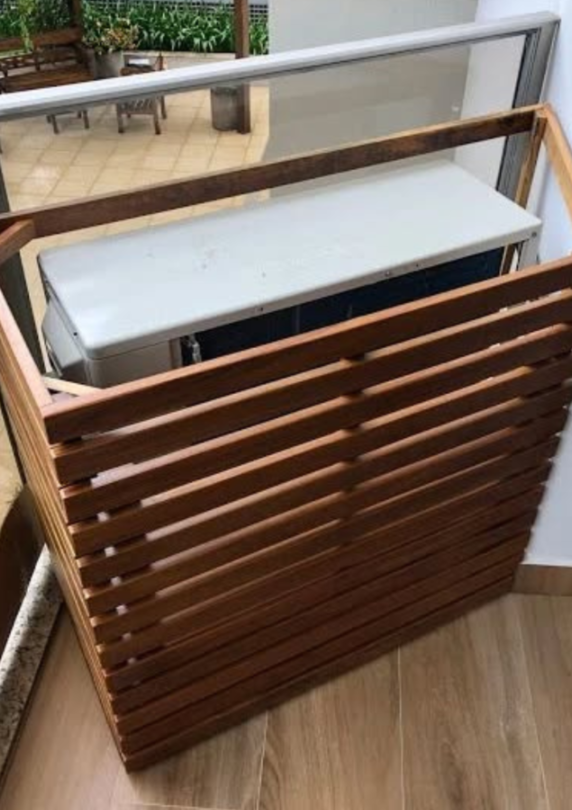
Best for: Balconies with an outdoor air-conditioning unit
An air-conditioning unit can stand out against an otherwise tidy balcony. A purpose-built slatted cover can make the equipment look less noticeable while helping it fit the surrounding design.
The most important detail is airflow. I would never enclose an outdoor unit in a solid cabinet or place storage items where they could block the manufacturer’s required ventilation clearances. Restricted airflow can affect performance and may cause overheating.
Before installing a cover, I check the equipment manufacturer’s instructions and allow room for servicing, drainage, and air circulation. A properly designed cover can improve the appearance of the balcony without compromising the unit’s operation.
Lift-Top Bench Storage
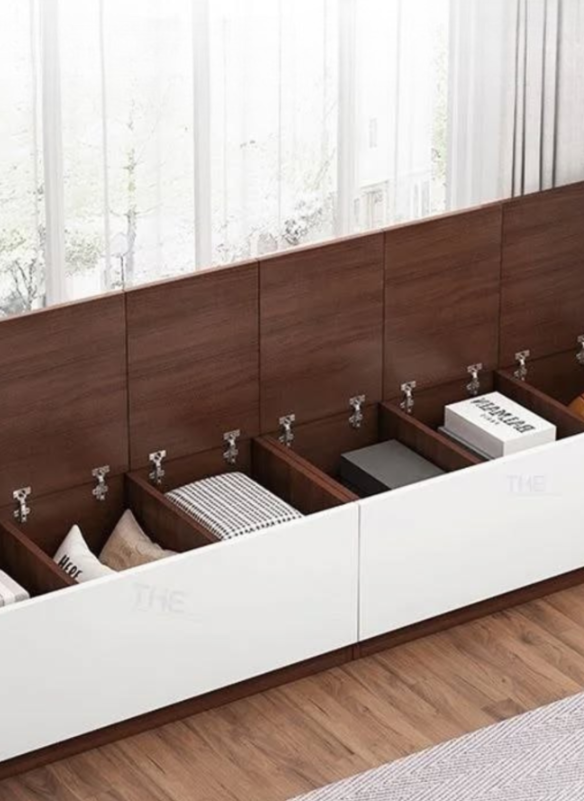
Best for: Wider balconies that need seating and storage
A lift-top storage bench is useful when I want a comfortable place to sit without adding a separate storage box. The compartment can hold outdoor cushions, small gardening tools, and seasonal accessories.
For easier organization, I divide the interior into sections or use removable containers. This prevents smaller items from getting buried beneath larger belongings and makes it easier to find what I need.
I would choose an outdoor-rated bench with sturdy hinges and a lid that opens safely. On exposed balconies, weather-resistant construction and moisture protection are especially important for keeping stored textiles dry.
Full-Height Cabinet
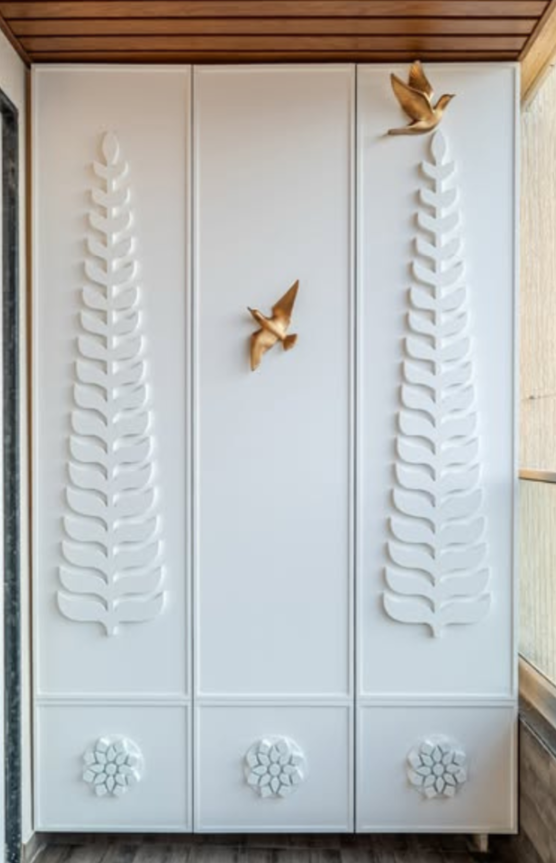
Best for: Covered balconies with enough vertical clearance
A full-height cabinet makes good use of vertical space when I need to store bulky items such as folding chairs, long-handled tools, and cleaning equipment. Placing it against one wall keeps the remaining floor area available for seating or plants.
I prefer adjustable shelves because they allow me to change the arrangement as my storage needs change. A separate tall compartment can accommodate items that would not fit on ordinary shelves.
Before choosing this design, I measure the ceiling height, cabinet depth, and door swing. I also check that the unit can be anchored safely and that its materials suit the balcony’s exposure to sunlight and moisture.
Overhead Wall Cabinets
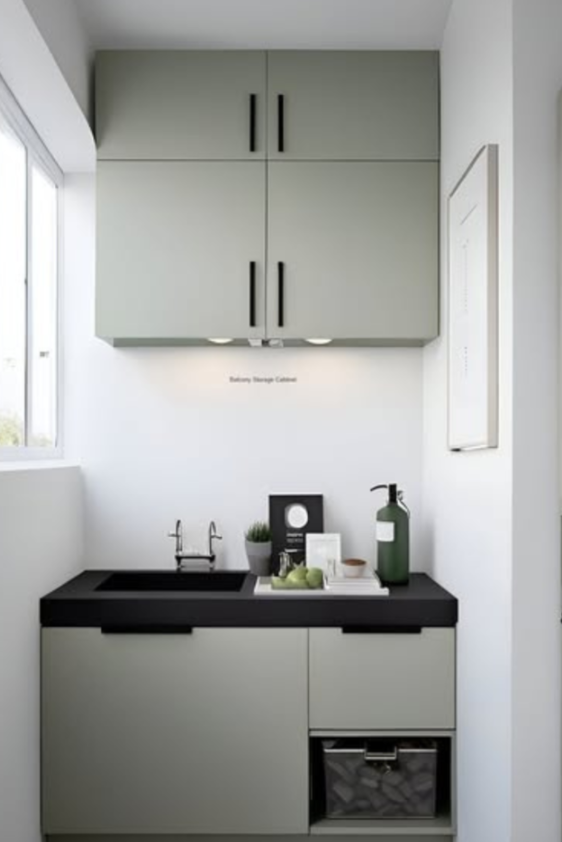
Best for: Enclosed balconies with limited floor space
Overhead cabinets make use of wall space that might otherwise remain empty. I would use them for lightweight gardening accessories, spare plant pots, and small household supplies that do not need to stay on the floor.
Keeping the lower section open leaves more room for a chair, a small table, or other everyday furniture. However, I avoid storing heavy objects overhead, particularly above seating areas.
Secure installation is essential. I check the wall construction, mounting hardware, and cabinet weight before installation, and I choose moisture-resistant materials if condensation is a concern. A small under-cabinet light can also improve visibility when accessing the stored items.
Open Shelf Styling
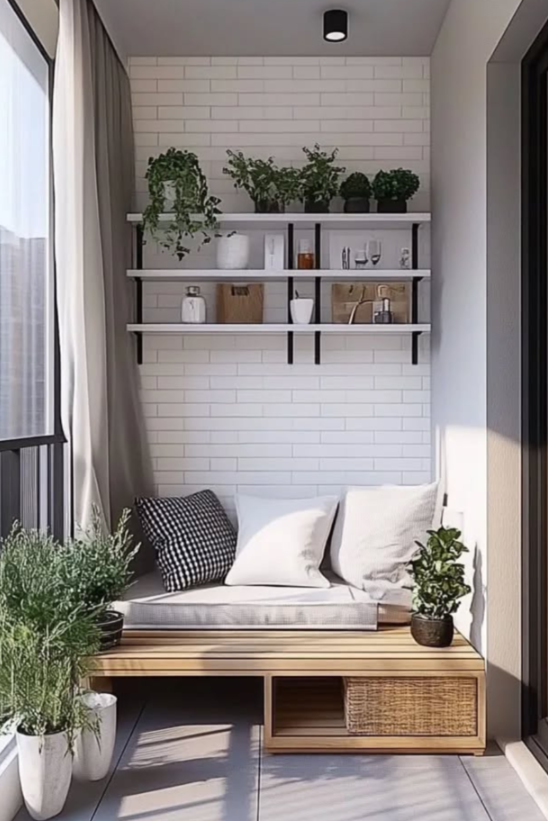
Best for: Small balconies that need accessible storage
Open shelves offer easy access to everyday items while using less floor space than a freestanding cabinet. I would arrange small planters, lightweight boxes, and baskets on the shelves rather than spreading them across the balcony.
Woven baskets or lidded containers help hide smaller belongings and make the arrangement look more organized. I keep heavier objects on lower shelves and leave some open space so the setup does not feel crowded.
For balconies exposed to rain, I choose outdoor-rated shelving and containers. On covered balconies, simpler materials may work well as long as they can handle the local humidity and temperature changes.
Hidden Bench Compartments

Best for: Balconies where seating runs along a railing or wall
A bench with built-in compartments keeps storage close to where I need it while maintaining a clear seating surface. It can hold folded cushions, plant-care accessories, and small outdoor items that would otherwise remain visible.
I would use separate containers inside the bench to group belongings and make them easier to remove when cleaning. A waterproof liner may provide an extra layer of protection, but it should not trap moisture inside the compartment.
For an open balcony, I choose a bench designed for outdoor exposure and check how well its lid and joints resist water. Positioning it along one side also helps preserve the main walking area.
Slim Utility Rack
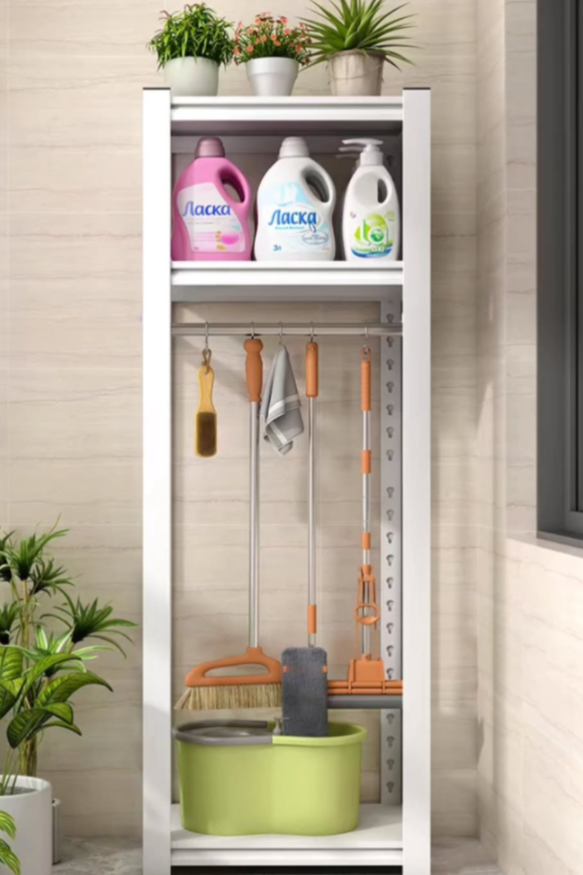
Best for: Enclosed balconies used for cleaning and household tasks
A slim utility rack gives cleaning supplies a dedicated place without taking over the balcony. I would use it for a mop, broom, small bucket, and other household tools that need to stay close at hand.
Hooks and holders keep long-handled items upright instead of leaning against the wall. Small bins can hold cloths and accessories, while a separate tray helps contain minor drips from damp equipment.
If I use the balcony for cleaning tasks, I keep detergents in their original containers and store them securely away from children and pets. I also make sure the rack does not block doors, drainage areas, or the main walkway.
FAQs
Can Hidden Storage Work on a Very Small Balcony?
Yes. Hidden storage can be especially useful on a small balcony because it helps reduce clutter without taking up additional floor space.
I would start with a storage bench, a narrow cabinet, or wall-mounted shelves. Each option makes use of space that already serves another purpose or would otherwise go unused.
Before buying anything, I measure the balcony and mark the areas needed for doors, chairs, and walking paths. Choosing one or two well-fitted storage solutions is often more practical than adding several small organizers.
What Materials Last Long Outdoors?
The best material depends on how much sunlight, rain, humidity, and temperature variation the balcony receives. For outdoor storage, I consider treated wood, powder-coated metal, and weather-resistant resin or plastic.
Treated wood needs suitable exterior protection and occasional maintenance. Metal should have a finish designed to resist corrosion, while resin storage should be rated for outdoor use and UV exposure where needed.
I avoid ordinary indoor MDF and untreated plywood in areas exposed to rain because moisture can cause swelling, deterioration, and damage. Even with weather-resistant materials, I check for standing water, clean the surfaces regularly, and protect cushions or other moisture-sensitive belongings in suitable containers.