25 Holiday Decor Storage Ideas for 2026
Storing Christmas and holiday decorations in a small home can be tricky when closets, cabinets, and shelves are already full. I like to use overlooked spaces, such as the area under the bed, the top of a closet, and vertical wall space, to keep seasonal items organized without adding clutter.
In this guide, I’m sharing practical Christmas and holiday decoration storage ideas, from clear bins and ornament cases to rolling carts, garage shelves, and dedicated wrapping stations. These solutions help protect fragile decorations, keep lights from tangling, and make it easier to find everything when the next holiday arrives.
Key Takeaways
- Use vertical shelves, closet corners, and under-bed storage to save floor space.
- Store fragile ornaments and holiday dishes in padded cases or divided containers.
- Label clear bins by holiday or decoration type for quick access.
- Keep Christmas lights, garlands, wrapping supplies, and pillows in suitable storage containers.
- Choose dry, temperature-appropriate storage areas to help protect decorations throughout the year.
Wreath Wall
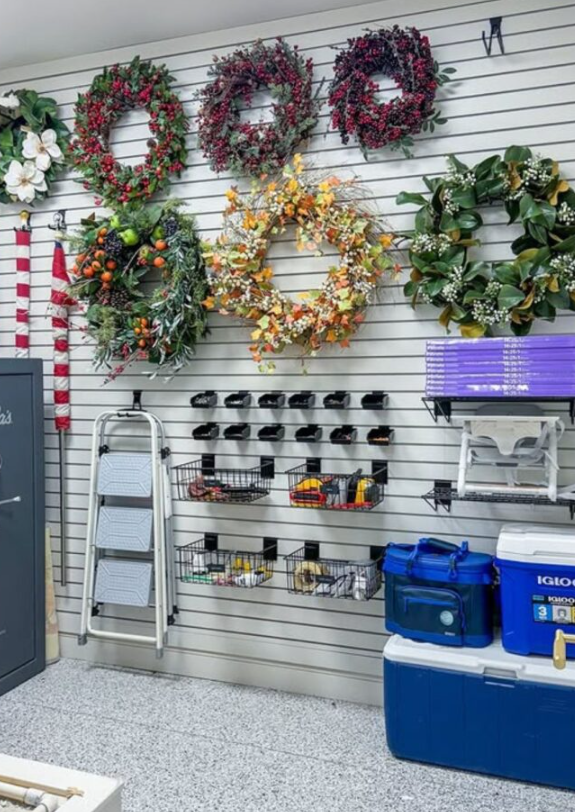
I use vertical wall space whenever floor space is limited. A wreath wall is a simple way to store seasonal wreaths without stacking them inside boxes, where their branches and decorative details can become crushed.
Install sturdy hooks on a slat wall, hook rail, or suitable empty wall. Hang each wreath by its frame or ribbon loop, leaving enough room between them to prevent decorations from rubbing against one another.
The lower part of the wall can hold small baskets or lightweight storage containers for wreath accessories. This setup works well in a garage, utility room, or spacious closet.
Pro tip: Cover delicate wreaths with breathable storage bags to help keep dust away while allowing them to retain their shape.
Clear Bins
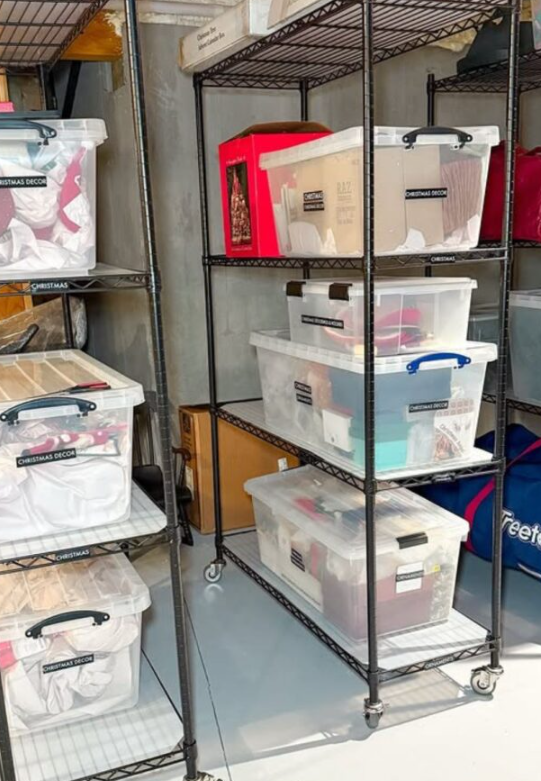
Clear storage bins make it easier to manage holiday decorations because I can see what is inside without opening every container. They are especially useful when several boxes contain similar items, such as ornaments, garlands, and Christmas lights.
I arrange the bins on sturdy metal shelving instead of leaving them scattered across the floor. Each container holds one category of decorations, and a simple label on the front makes everything easier to locate.
This arrangement works well in garages, basements, utility rooms, and storage closets. I also choose bins that fit the available shelf depth so they can be pulled out safely.
Pro tip: Keep heavy containers on lower shelves and lightweight decorations on higher shelves. This makes storage safer and reduces the risk of boxes falling.
Label System
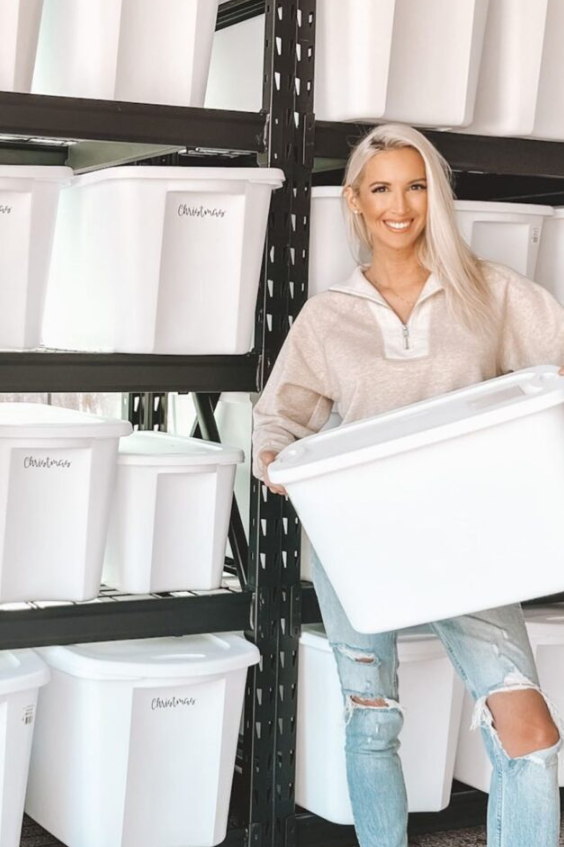
A labeling system saves time when I pack decorations away after the holidays. Without clear labels, it is easy to forget which box contains tree ornaments, outdoor lights, stockings, or garlands.
I assign each bin a specific purpose and write a short label that is easy to read from the front. For example, one container can hold tree decorations, another can store lights, and a third can hold table accessories.
Matching bins on open shelves create a tidy storage area without requiring a large room. If I use opaque containers, I make the labels especially clear so I do not need to open them to check their contents.
Pro tip: Add a small inventory card inside each bin for unusual or delicate items. This is useful when several decorations look similar from the outside.
Ornament Cases

Glass ornaments need extra care during storage because they can chip or break when they bump against other decorations. I prefer divided ornament cases that give each piece its own compartment.
Fabric storage boxes with padded separators work well for delicate baubles, painted ornaments, and decorations with glitter or detailed finishes. Smaller ornaments can go in individual sections, while larger pieces may need deeper compartments.
Before packing, I remove loose hooks and wrap especially fragile ornaments in soft tissue paper if the compartments do not provide enough cushioning. I then place the case somewhere dry, away from heavy objects.
Pro tip: Avoid filling empty spaces with hard objects that could press against the ornaments. A little cushioning can help prevent movement during storage.
Holiday Zones
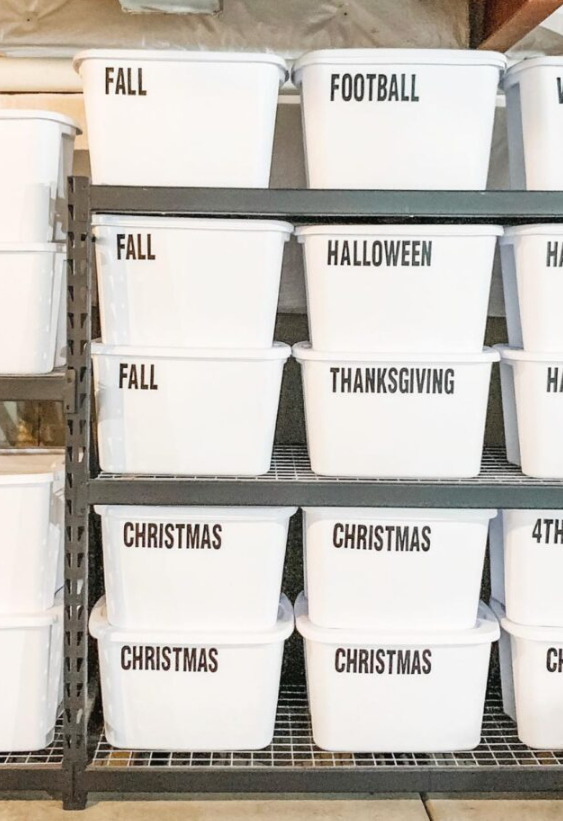
Keeping every holiday in a separate storage zone prevents Christmas decorations from getting mixed with Halloween, Easter, or fall items. I find this approach especially useful when one closet or garage shelf needs to serve several seasons.
I group containers by holiday and place clear labels on the front. Christmas may need several bins for the tree, outdoor decorations, and table settings, while a smaller holiday might need only one container.
A shared shelving unit can hold all these categories without requiring a separate storage room. I arrange the containers according to when I use them, keeping frequently needed seasonal items easy to reach.
Pro tip: Keep a little empty space in each zone for new decorations. Overfilling containers can damage delicate items and make packing more difficult.
Tree Storage

An artificial Christmas tree takes up considerable room, especially in a small home. A dedicated tree storage bag helps keep its branches protected from dust and reduces the mess that can happen when the tree is packed into an unsuitable box.
I follow the manufacturer’s instructions when taking the tree apart. I gently fold or secure the branches, place the sections in the appropriate bag, and close it without forcing the tree into a tight space.
Long storage bags can fit along a garage wall, beneath suitable shelving, or in a large closet. I choose the location based on the tree’s size and the available clearance.
Pro tip: Store the tree in a dry place and check the bag for moisture before closing it. Damp storage can damage some materials and encourage musty odors.
Storage Room

If I have a spare closet, part of a basement, or an unused garage corner, I can turn it into a small holiday storage station. The goal is to give decorations a permanent place instead of spreading boxes throughout the home.
Open cubby shelves work well because each compartment can hold a different category. I keep ornaments in protective cases, lights in separate containers, and larger decorations in spaces that fit their shapes.
Labels on the shelves or bins make the arrangement easier to maintain. I also leave enough room to remove containers without moving several other boxes first.
Pro tip: Measure the available space before buying shelving. A unit that fits the room and the containers will be more useful than one that leaves awkward gaps or blocks access.
Drawer Towers

Small holiday accessories can disappear easily when they are mixed into large storage bins. I use stackable drawer towers for ornament hooks, ribbon scraps, miniature figurines, craft supplies, and other small pieces.
Each drawer holds a separate category, so I can reach for what I need without emptying an entire box. Clear drawers are especially useful because their contents remain visible.
A drawer tower can fit into a closet corner, craft room, or storage nook. I choose a stable unit that fits the available height and width.
Pro tip: Keep tiny hooks and fasteners inside small lidded containers within the drawers. This prevents them from spilling when a drawer is opened or moved.
Cabinet Shelves
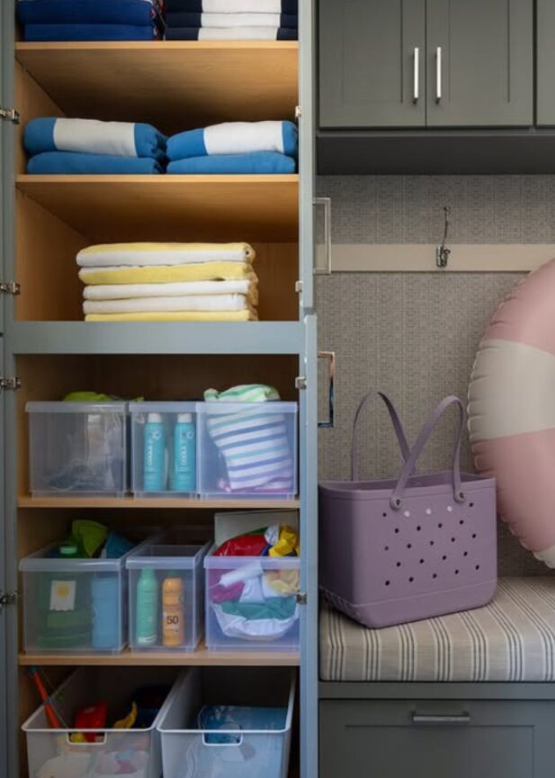
Storage cabinets are useful when I want holiday decorations out of sight but still easy to access. A tall cabinet with adjustable shelves can hold small Christmas decorations without taking up much floor space.
I use clear containers for ornaments, ribbons, miniature lights, and seasonal table accessories. Adjusting the shelves to fit the containers helps prevent wasted vertical space.
Laundry rooms, mudrooms, and hallway cabinets can work well for this setup, provided the area stays dry and the shelves are strong enough for the stored items.
Pro tip: Keep frequently used decorations on shelves that are easy to reach. Reserve higher shelves for lightweight items that you use less often.
Closet Storage

A closet can become a practical holiday storage area when I separate seasonal items from everyday clothing and household supplies. Even a small closet can hold quite a few decorations when its shelves are arranged carefully.
I place clear bins on shelves for ornaments, garlands, lights, and smaller accessories. Larger pieces, such as miniature trees and decorative figures, can sit on open shelves where they will not be crushed by other containers.
To save floor space, I use the full height of the closet while keeping everyday items accessible. I also avoid stacking fragile decorations beneath heavier bins.
Pro tip: Measure the closet before choosing containers. Uniform bins often make better use of shelf space than a collection of mismatched boxes.
Rolling Cart

A rolling cart keeps decorating supplies close at hand while I set up the Christmas tree or arrange holiday displays. It can hold ornament hooks, ribbons, spare decorations, scissors, and other small accessories that are easy to misplace.
I choose a narrow cart with several shelves or drawers so the supplies stay separated. Once decorating is finished, I can roll it into a closet, craft area, or storage corner.
This idea is particularly helpful in small homes because the cart can move between rooms without requiring a permanent decorating table.
Pro tip: Check the cart’s weight capacity before loading it. Keep heavier supplies on the bottom shelf and secure small items in drawers or containers while moving it.
Closet Tree
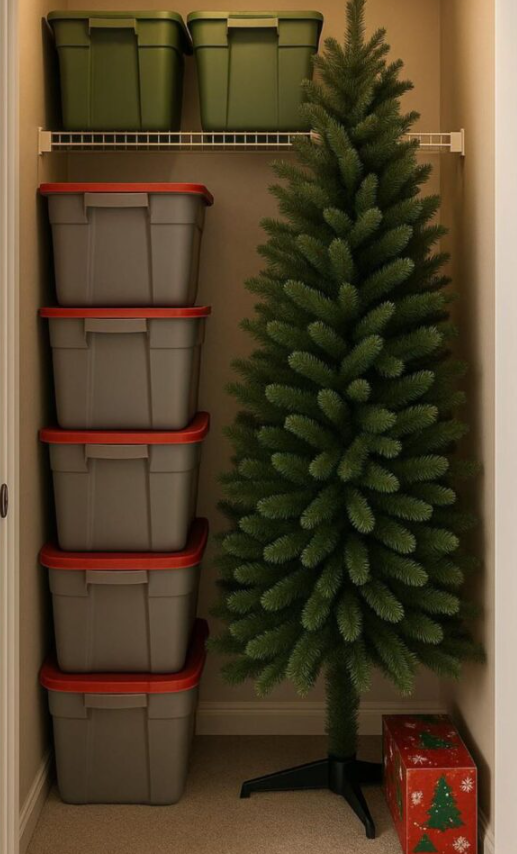
If I have a tall closet or storage area with enough clearance, keeping an artificial Christmas tree upright may save time during cleanup. This works best for trees designed to remain assembled during storage and for spaces where the tree will not block access.
I make sure the tree is stable, protected from dust, and positioned where branches will not be pressed against the door or nearby boxes. I also check the manufacturer’s storage instructions before deciding whether to leave it assembled.
Shelves around the tree can hold smaller holiday decorations, provided they do not press against the branches or create a falling hazard.
Pro tip: If the closet is too short or narrow, use a suitable tree bag and store the tree in sections instead. Never force a bulky tree into a tight space just to keep it upright.
Color Sorting
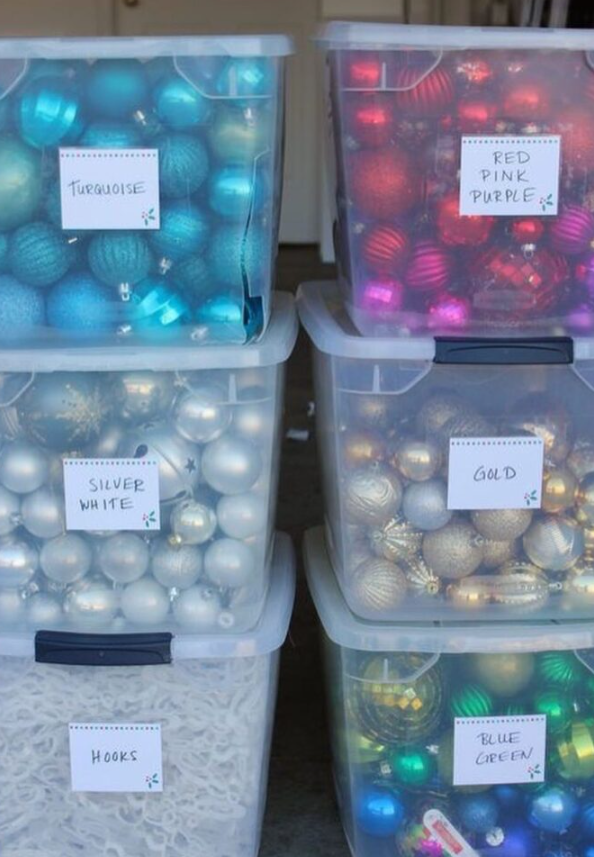
Sorting ornaments by color makes it easier to decorate a tree with a consistent theme. Instead of mixing every bauble into one large container, I group similar colors together so I can select the right decorations quickly.
Clear bins work well for this system. I label each one with its color, such as gold, silver, red, or blue, and keep ornament hooks and other small accessories in a separate container.
This method is especially helpful if I change my tree’s color scheme from year to year. I can take out only the colors I need instead of sorting through every ornament.
Pro tip: Store delicate ornaments in divided containers even when they are sorted by color. Color sorting makes decorating easier, but it does not replace proper protection.
Attic Shelves

Sloped attic ceilings can leave awkward spaces that are difficult to use for everyday storage. Low shelving can help turn these areas into useful spots for holiday decorations, as long as the floor and structure can support the load.
I place heavier containers on lower shelves and reserve higher shelves for lighter items. Clear bins help separate wreath supplies, garlands, ornaments, and lights so that nothing gets lost in a large box.
Before using the attic, I check for excessive heat, humidity, roof leaks, and other conditions that could damage decorations. Extreme temperatures can affect plastics, adhesives, fabrics, and some artificial greenery.
Pro tip: Avoid storing heat-sensitive decorations, candles, or delicate materials in an attic that becomes very hot. A climate-controlled closet or indoor storage cabinet may be a better option.
Garland Bins
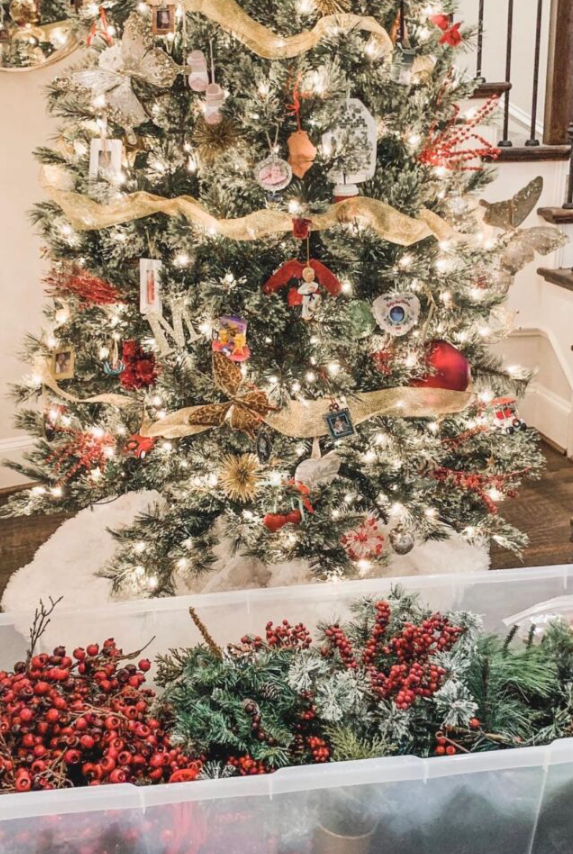
Christmas garlands can become tangled or misshapen when they are squeezed into small containers. I prefer long, wide storage bins that allow the greenery to rest loosely without sharp bends.
Before packing, I gently remove dust and let the garlands dry completely if they have been cleaned. I arrange them inside the container without forcing the branches down, then close the lid carefully.
These bins can fit on basement shelves, beneath suitable stairs, or along the floor of a closet. Transparent sides make it easy to identify the greenery without opening the container.
Pro tip: Store garlands separately from heavy ornaments and decorations. This helps preserve their shape and reduces the chance of crushing decorative berries, wired branches, or attached accessories.
Gift Closet
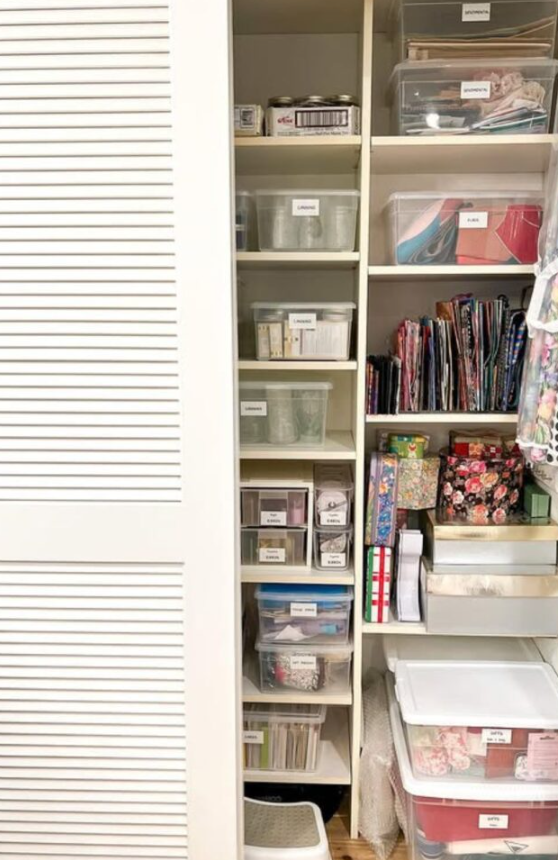
Wrapping paper, gift bags, ribbons, and tags often end up scattered across several drawers. I prefer to group these supplies in one closet or on a dedicated shelf so I can prepare gifts without searching through different rooms.
Tall compartments keep wrapping paper rolls upright, while small bins hold bows, tape, gift tags, and ribbon. Clear containers help me see what I already have before buying more supplies.
A hallway closet or spare wardrobe can work well for this setup. I use vertical space to keep the floor clear and choose storage that fits the width of the closet.
Pro tip: Store tape, scissors, tags, and pens together in a small caddy. Keeping these everyday wrapping tools in one place makes gift preparation easier.
Seasonal Boxes

Seasonal boxes are a practical choice when one small storage area needs to hold decorations for the entire year. I assign separate containers to Christmas, Halloween, Easter, Thanksgiving, and other holidays rather than mixing everything together.
Smaller boxes are useful for table decorations, miniature figures, craft supplies, and other accessories. Larger containers can hold bulkier items, provided they are not overloaded.
I label each box clearly and stack compatible containers on shelves in a closet, craft room, or storage cabinet. This keeps seasonal items grouped together without spreading them throughout the home.
Pro tip: Choose box sizes that are easy to lift and fit your shelves. A few manageable containers are often more practical than one very large, heavy box.
Shelf Wall
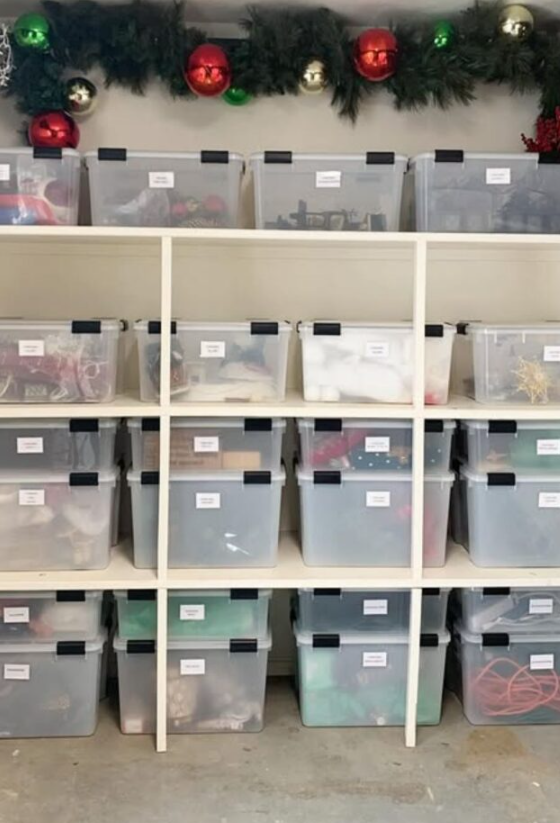
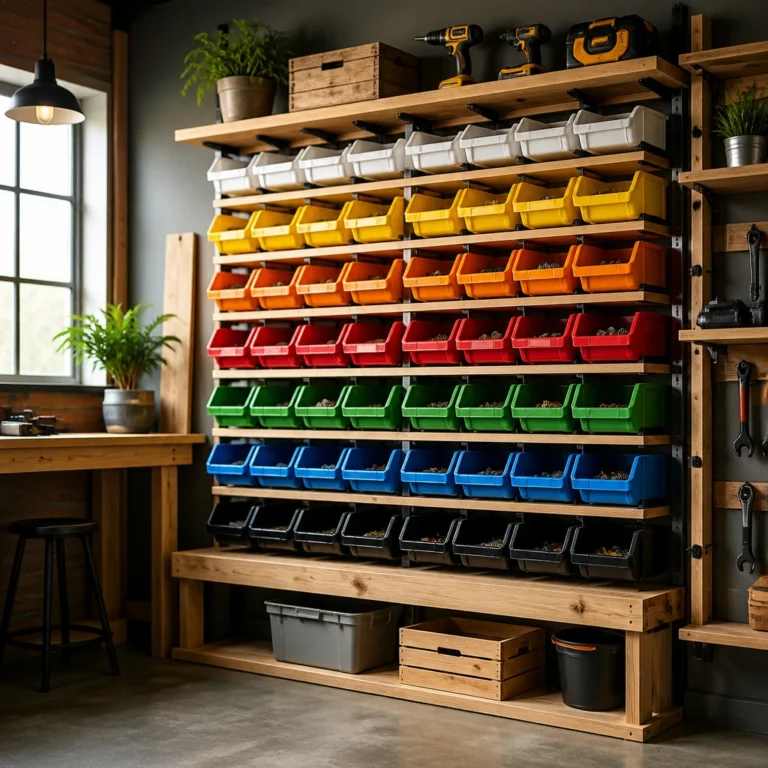
A shelving wall can make a big difference when holiday decorations have taken over the garage or basement floor. Instead of stacking boxes in random corners, I give each container a designated place on a sturdy shelving unit.
I group decorations by type, keeping lights, ornaments, garlands, and tree accessories in separate bins. Labels on the front make it easier to locate items without moving other containers.
The best part is that this system uses vertical space and leaves more of the floor available for other household items. I make sure the shelves are securely installed and suitable for the weight of the stored decorations.
Pro tip: Leave a little room between frequently used bins so you can remove them without rearranging the entire shelf.
Wrap Station

A wrap station keeps gift-preparation supplies together without requiring a separate room. I like this idea for small homes because a slim organizer can fit inside a closet, beside a wardrobe, or in a craft corner.
Vertical compartments hold wrapping paper rolls, while pockets or small containers keep ribbon, bows, tape, scissors, and gift tags easy to reach. A lightweight organizer can also be moved when the space is needed for another task.
If I already have a gift closet, I can set up a wrap station inside it rather than adding another storage unit.
Pro tip: Keep wrapping paper away from damp areas and avoid placing heavy objects on top of the rolls. This helps prevent creases and damage.
Pillow Rack

Holiday throw pillows can take up a surprising amount of closet space, especially when I have several covers and seasonal designs. A vertical pillow rack helps organize them by using height rather than spreading them across a shelf or floor.
I arrange the pillows loosely on the rack and avoid compressing them too tightly. If the pillows have removable covers, I can wash and dry the covers according to their care labels before storing them.
A spare room, basement corner, or large closet may provide enough space for this arrangement. I make sure the rack is stable and that the pillows are stored in a clean, dry area.
Pro tip: For long-term storage, breathable fabric bags can help keep dust away. Make sure pillows are completely dry before packing them.
Light Spools
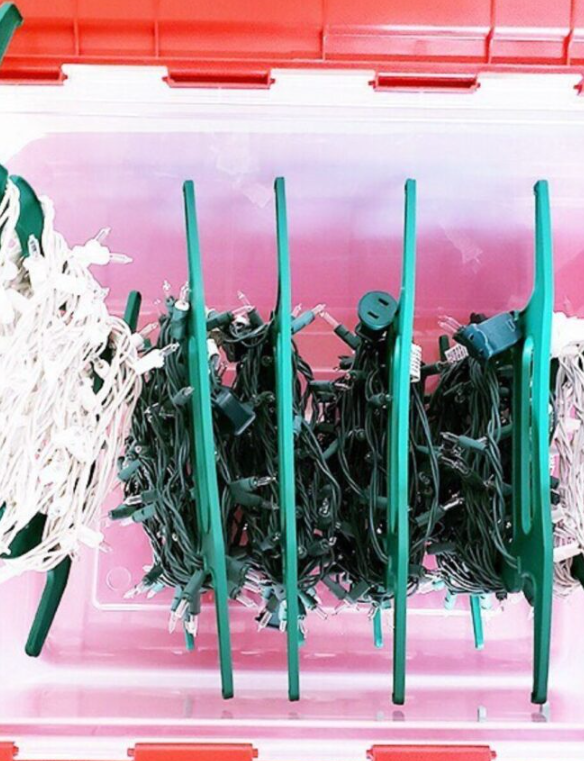
Tangled Christmas lights can make decorating frustrating, so I wrap each strand around a suitable reel or spool before putting it away. This keeps the cords separated and makes it easier to identify individual light sets next season.
I check each strand for damaged wires, loose connections, or broken bulbs before storing it. Any damaged electrical decorations should be repaired appropriately or replaced rather than packed away for future use.
Several reels can fit inside a single storage bin, depending on their size. I label the container according to where the lights are used, such as indoor tree lights or outdoor lights.
Pro tip: Avoid winding lights so tightly that the wires become strained. Follow the manufacturer’s storage instructions and keep electrical decorations in a dry location.
Garage Shelves
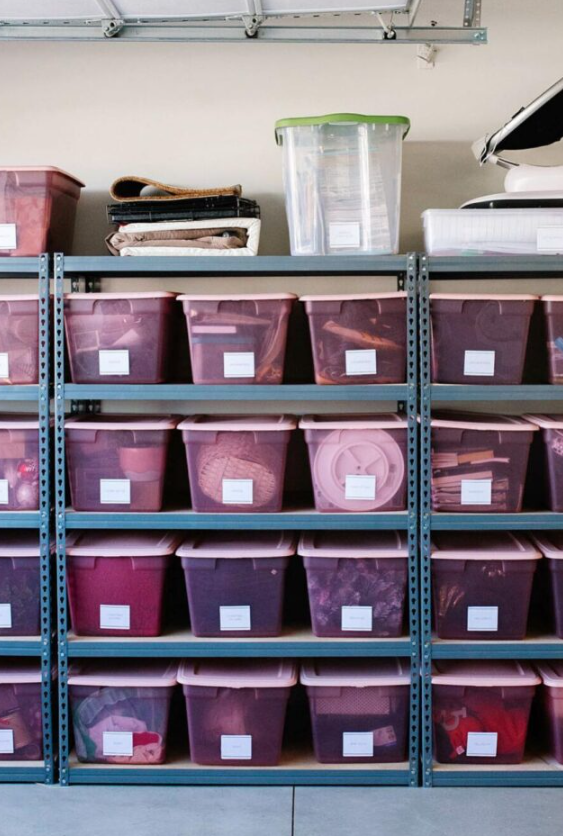
Garage shelving helps keep holiday storage manageable when indoor closets are already full. I use sturdy shelves to group decorations in bins rather than allowing them to collect across the garage floor.
Large containers can hold outdoor lights, tree stands, and other bulky items, while smaller bins keep ornaments and accessories separate. Labels on the front make it easier to find each category.
I place heavier containers on lower shelves and lighter decorations higher up. I also check that the shelves are stable and that stored items are protected from leaks, pests, and excessive temperature changes.
Pro tip: Keep decorations away from damp concrete floors and areas where water may collect. A dry, well-organized storage space helps preserve seasonal items for longer.
Decor Shelves
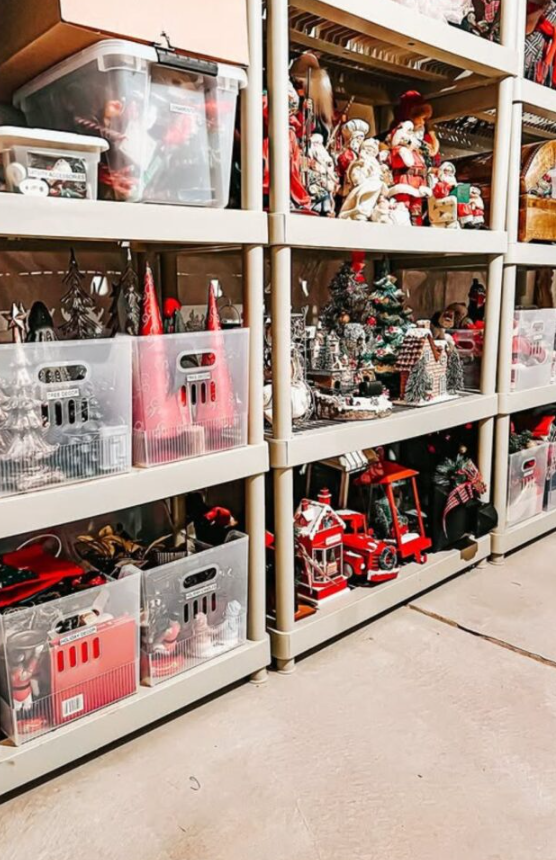
Decorative figures, Christmas village houses, and miniature trees can break if they are packed together with heavy items. I prefer to place larger pieces on open shelves and store smaller, fragile decorations in protective containers.
Keeping items separated makes it easier to see what I own and reduces the need to unpack several boxes to find one decoration. I also arrange pieces according to their size and fragility, leaving enough room to lift them safely.
This setup works well in a basement, spare closet, or dedicated storage area. If the shelves are open, I cover particularly delicate items to keep dust away.
Pro tip: Wrap fragile figurines individually before placing them in boxes. Avoid stacking other decorations on top of them, even if the container appears sturdy.
Bin Labels
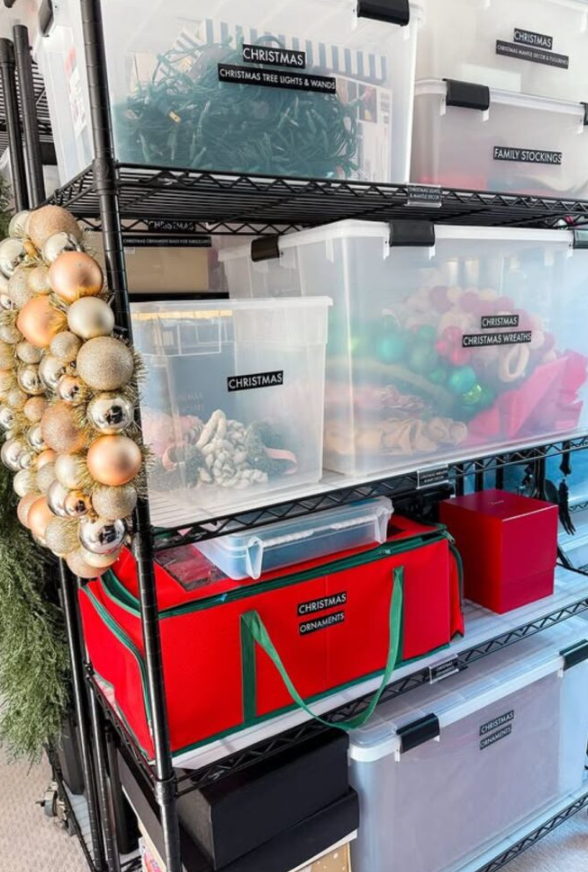
Clear labels are one of the simplest ways to improve holiday storage. I give each bin a specific category, such as ornaments, lights, stockings, wreaths, or outdoor decorations, so I can find what I need without opening several containers.
I place labels on the front where they remain visible when the bins are stacked on shelves. For opaque boxes, I use larger labels and add a short list of important contents if necessary.
This system works well in garages, basements, storage closets, and cabinets. Even a single shelving unit becomes more useful when every container has a consistent place.
Pro tip: Use labels that will stay attached in your storage environment. If you change the contents of a bin, update the label immediately rather than relying on memory.
Dish Protectors
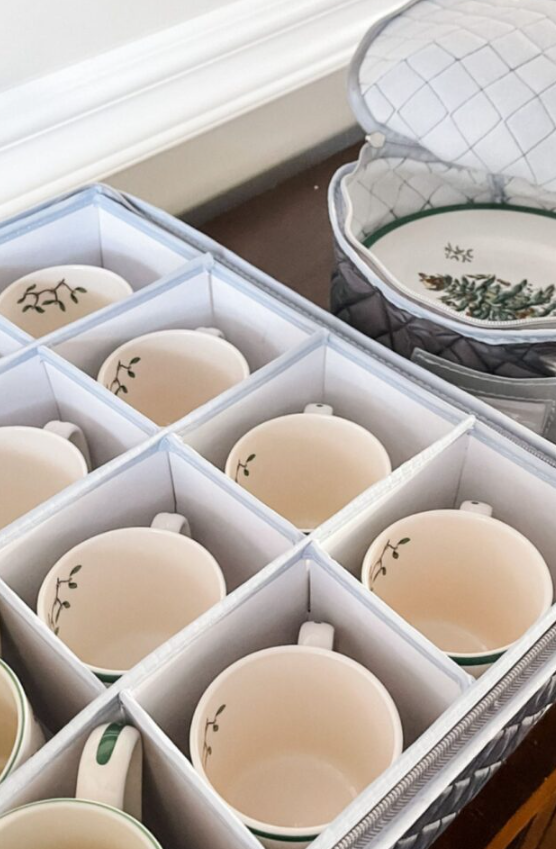
Holiday mugs, serving dishes, and decorative plates need protection from chips and scratches during storage. I use padded dish organizers with individual compartments to keep delicate pieces from knocking against each other.
Quilted fabric cases can work well for plates, cups, and saucers, while dividers help separate different shapes. Before packing, I make sure the dishes are clean and completely dry.
These organizers can be stored in kitchen cabinets, pantry shelves, or sturdy storage shelving. I keep heavier dishes on lower shelves and avoid stacking cases beyond their recommended weight limits.
Pro tip: Check that the protector fits each dish securely. If a piece moves around inside the compartment, add suitable cushioning to help prevent damage.
FAQs
What is the best way to protect fragile holiday decorations during storage?
I recommend using divided ornament cases, padded containers, and individual wrapping for delicate decorations. Glass ornaments, ceramic figures, and other breakable pieces should be separated so they do not rub against one another.
I also keep fragile items away from heavy containers and store them in a dry location. Before packing, I check that everything is clean and completely dry to help prevent moisture-related damage.
How can you keep holiday decorations organized year after year?
The easiest approach is to group decorations by type or holiday and label every container clearly. I keep lights, ornaments, wreaths, wrapping supplies, and table decorations in separate bins so each category has a consistent place.
I then arrange the containers on shelves in a closet, garage, or other suitable storage area. After decorating, returning each item to its assigned container makes cleanup faster and helps prevent clutter from building up again.