28 Under Bed Storage Ideas for 2026
1. What Are the Best Under Bed Storage Solutions for Small Bedrooms?
Having lived in compact apartments for years, I know the frustration of running out of closet space all too well. When every square foot counts, the void under your bed becomes prime real estate for organization. Over the years, I’ve tested nearly every under-bed storage setup imaginable—from hydraulic lifts to simple woven baskets.
In this guide, I share my first-hand experiences, practical insights, and proven setups to help you turn that overlooked space into a seamless, clutter-free extension of your wardrobe.
2. Key Takeaways
- Space Efficiency: Utilizing the space under a queen bed can unlock up to 30–40 cubic feet of hidden storage without taking up additional floor footprint.
- Dust Prevention: Zippered fabric units and lidded plastic containers provide the best seal against dust bunnies and ambient floor debris.
- Mobility Matters: Choose containers with smooth caster wheels or friction-reducing glides if you plan to access your items on a weekly basis.
- Custom Organization: Modular dividers, clear labels, and dedicated grid systems reduce retrieval time by keeping small items like shoes and toys sorted.
3. Executive Summary: How to Master Under-Bed Storage
If you’re looking for a quick breakdown, here is how you can maximize your under-bed area effectively:
- Assess Clear Clearance: Measure your bed’s vertical clearance first. Standard bed frames offer 6–8 inches, while higher frames or platform beds provide 10–12+ inches.
- Match Storage to Frequency: Use rolling drawers or pull-out trays for daily-use items (like shoes or toys), and sealed or vacuum-packed containers for long-term seasonal storage (like heavy winter coats or extra duvets).
- Protect Against Dust & Damage: Dust builds up quickly near floor levels. Always opt for lidded plastic bins, heavy-duty zippered fabric bags, or sealed trunks to keep linens fresh.
- Maintain Structural Balance: Avoid overloading sliding trays or fabric cases beyond their recommended weight capacity (typically 15–25 lbs for soft bags, 40+ lbs for rolling wooden units).
4. Tested Under Bed Storage Solutions for Small Bedrooms
When I first attempted to organize my small bedroom, I realized that haphazardly shoving loose boxes under the mattress created more stress than space. Through trial and error, I found that successful under-bed storage depends on selecting purpose-built systems tailored to your floor type and item weight.
According to interior organization estimates, capitalizing on the full footprint beneath a standard bed can recover up to 80% of the storage space typically provided by a stand-alone dresser. Below, I break down the absolute best design strategies and storage methods I’ve used and installed.
5. Lift Storage
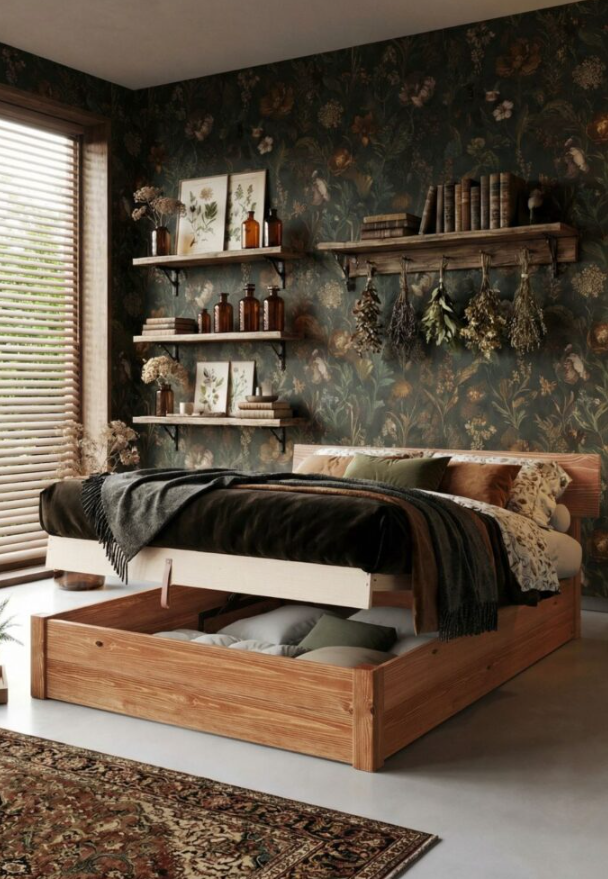
In my experience, nothing beats a hydraulic lift bed when you need maximum, uninterrupted storage volume. Instead of dealing with multiple sliding boxes, the entire mattress platform lifts effortlessly, giving you complete access to a massive subterranean compartment underneath.
I recommend using this setup primarily for long-term or seasonal storage—think off-season duvets, extra pillows, and bulky winter gear. Because the entire mattress lifts as a single unit, you don’t have to worry about individual drawer clearances or sliding mechanisms scuffing your hardwood floors.
Pro Tip: Look for hydraulic lift frames rated for at least 100–120 lbs of mattress weight so the gas struts easily keep the platform suspended hands-free while you pack or retrieve items.
6. Toy Drawer
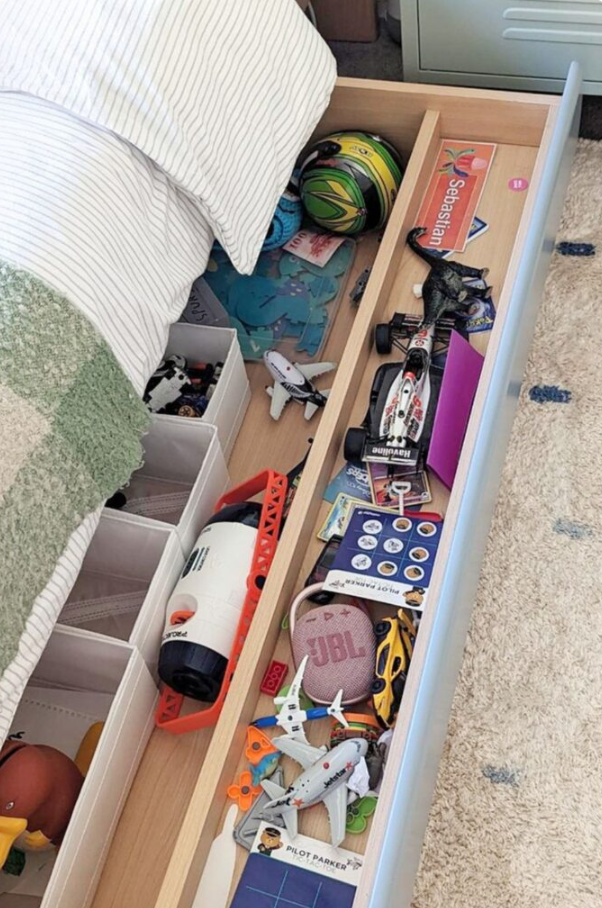
When managing kids’ rooms, I’ve found that floor clutter escalates within minutes if there isn’t an effortless cleanup system in place. Installing a wide, shallow pull-out toy drawer directly under the bed frame gives children immediate access to their toys without adding bulky furniture.
In my projects, mounting wooden drawers on wide caster wheels or recessed floor tracks prevents the drawer from veering off course. Dividing the interior into shallow sections keeps building blocks, action figures, and puzzles organized so items don’t accumulate into a messy pile at the back.
7. Toy Bins
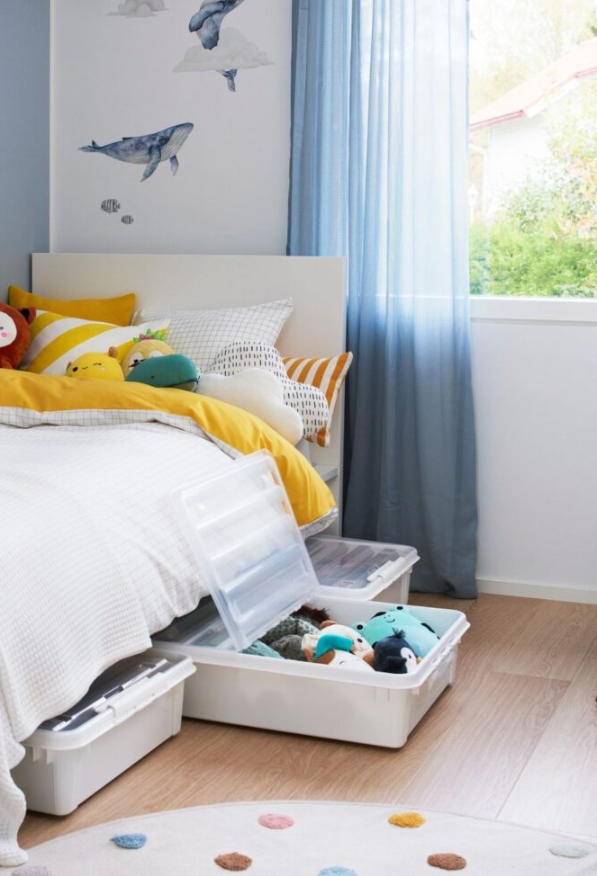
If custom carpentry isn’t an option, low-profile plastic toy bins are my go-to budget-friendly alternative for children’s spaces. I always choose clear, durable plastic bins with snap-on lids so kids can see exactly where their favorite toys are stored without dumping out every container.
From my testing, beds with at least 8 to 10 inches of clearance accommodate stacked or side-by-side toy bins easily. Smooth-sliding plastic slides easily across low-pile carpets, making cleanup as simple as sliding the bins out for playtime and tucking them back at night.
8. Rolling Cases
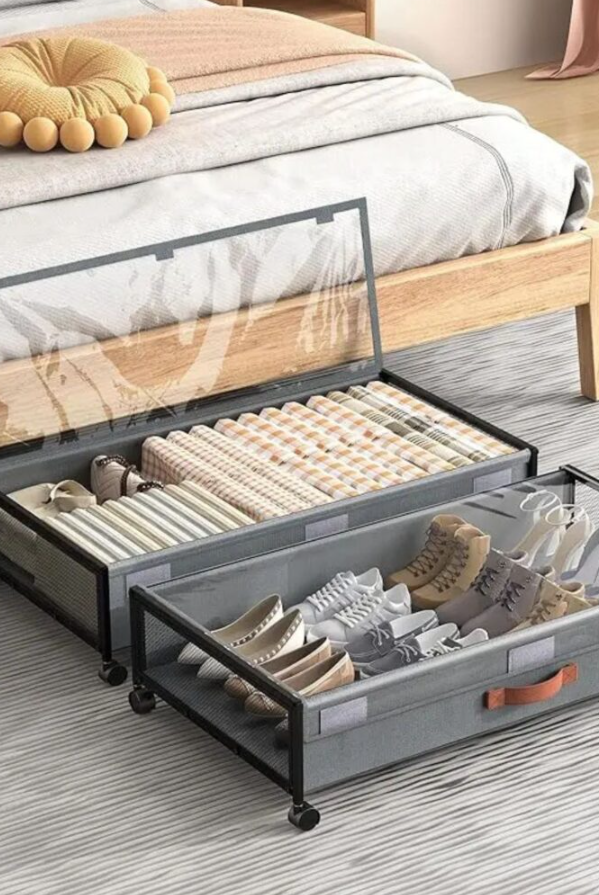
When closet space runs tight, I treat rolling fabric cases as an invisible extension of my main wardrobe. These slim, flexible storage units are specifically designed to store off-season apparel, folded trousers, and spare footwear in neatly organized compartments.
I personally prefer heavy-duty fabric units built with integrated omnidirectional wheels because they glide smoothly over both hardwood and plush carpet without snagging. Transparent vinyl top panels are an essential feature here, letting you audit your seasonal clothes at a glance without unzippered access.
9. Drawer Storage
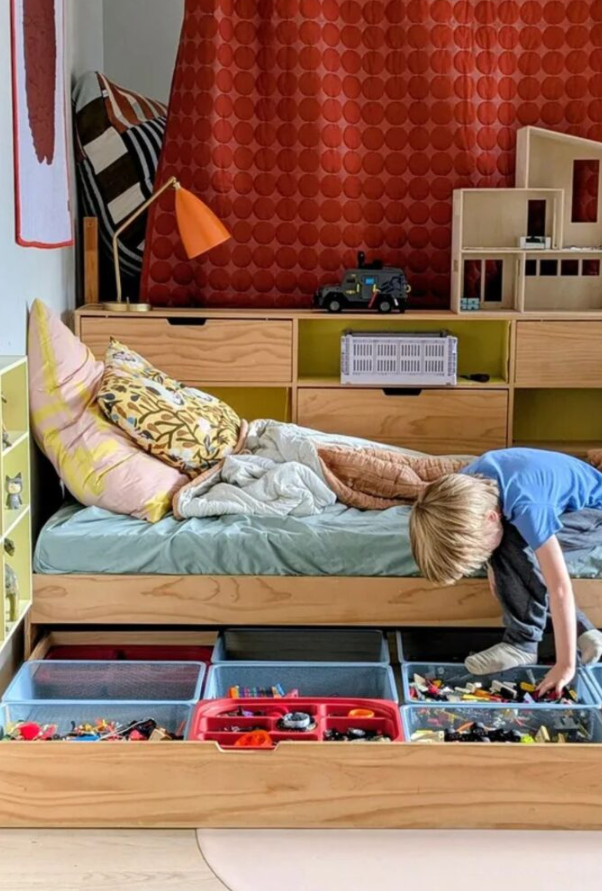
In high-traffic bedrooms, deep pull-out bed drawers act as built-in furniture that keeps daily essentials within arms’ reach. I’ve installed these setups in modern kids’ rooms to house everything from craft supplies and board games to daily school uniforms.
To make the most of deep under-bed drawers, I line them with removable fabric trays or plastic dividers. This prevents smaller items from shifting around when the drawer is opened and closed quickly, cutting morning prep time significantly.
10. Costume Bags
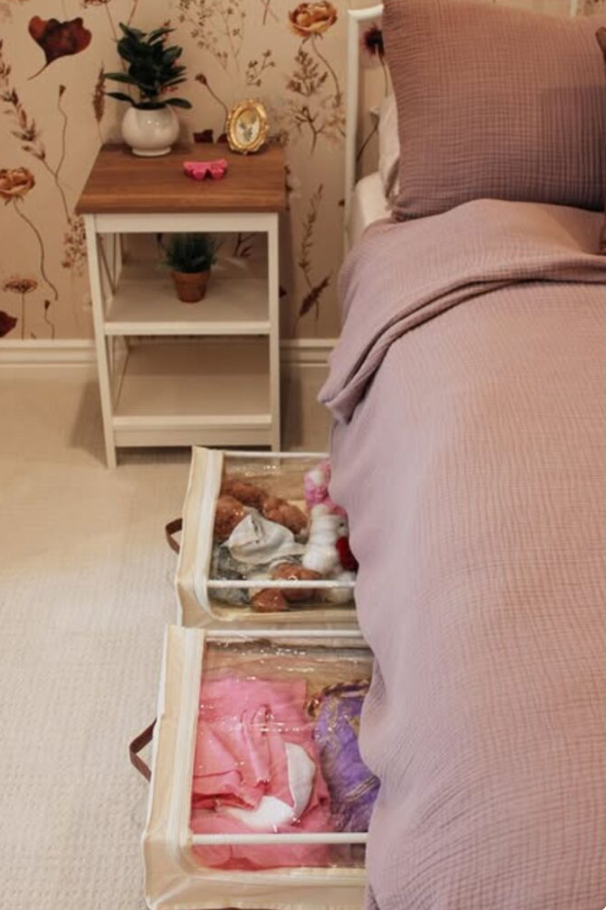
Delicate garments, dress-up costumes, and formal wear tend to get crushed or wrinkled when crammed into standard closet drawers. My favorite workaround is storing them in low-profile, clear zippered costume bags laid flat underneath the bed base.
These soft-sided bags compress nicely under beds with low clearance (even down to 5 or 6 inches). The clear top shield protects delicate fabrics from dust, while keeping specialized outfits neatly folded and ready for immediate use.
11. Platform Drawers
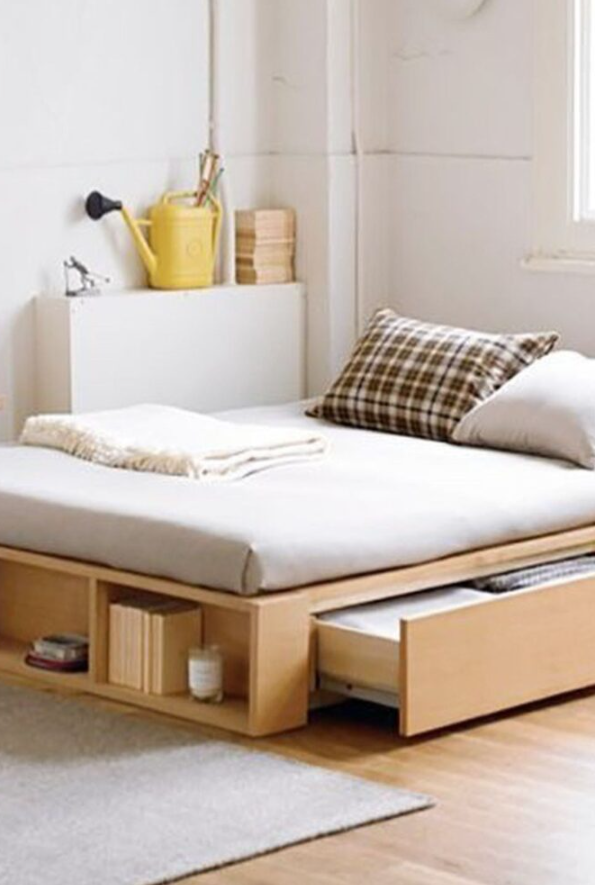
Platform beds with integrated side drawers are one of the most efficient multi-functional furniture investments I’ve ever made for small spaces. By utilizing the bed’s structural base as built-in cabinetry, you completely eliminate the need for an extra bedroom dresser.
When selecting a platform drawer frame, I always measure the surrounding open floor space carefully. You need at least 24 to 30 inches of side clearance around the bed to fully extend the drawers without hitting nightstands or adjacent walls.
12. Linen Storage
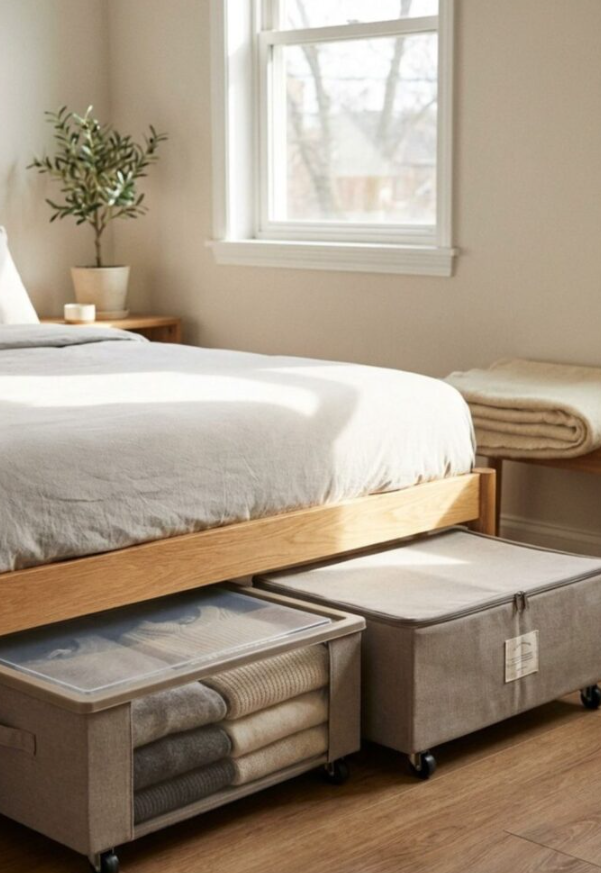
Bulky comforters, extra bed sheets, and guest blankets consume massive amounts of precious closet shelf space. My solution has always been transferring extra linens into dedicated low-profile rolling storage boxes under the guest or main bed.
I recommend using lidded fabric or rigid plastic containers with smooth-rolling caster wheels to keep linens elevated off floor dust. Choosing containers with clear viewports ensures you can instantly locate the right sheet set or quilt when guests arrive.
13. Shoe Drawer
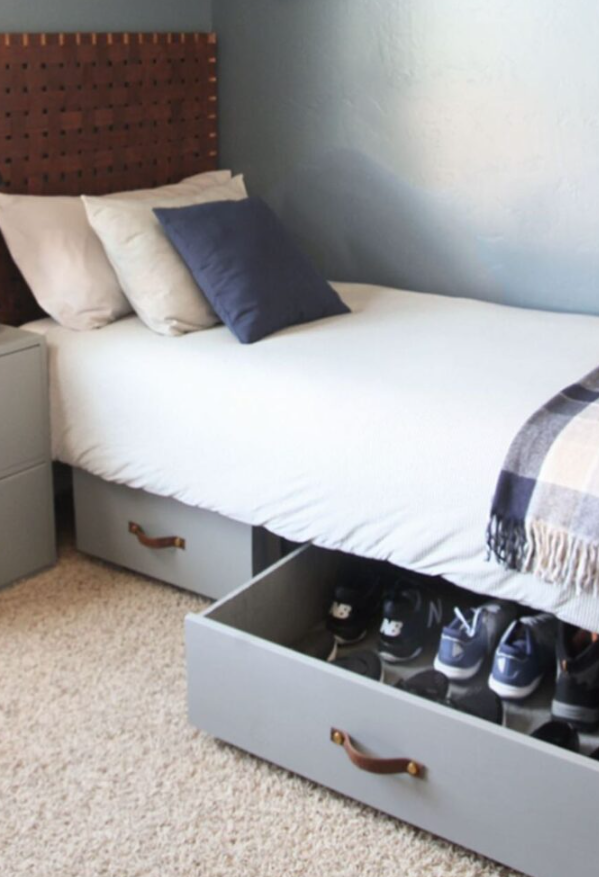
If shoes are constantly cluttering your entryway or bedroom floor, converting under-bed space into a dedicated shoe slide is a game-changer. A shallow pull-out drawer fitted with internal shoe dividers keeps footwear paired and protected from dust.
In my experience, a standard queen-size under-bed footprint can easily accommodate a shoe drawer holding 12 to 16 pairs of sneakers, flats, or dress shoes. The horizontal layout prevents shoes from getting crushed, which frequently happens in standard shoe hanging bags or deep bins.
14. Slide Trays
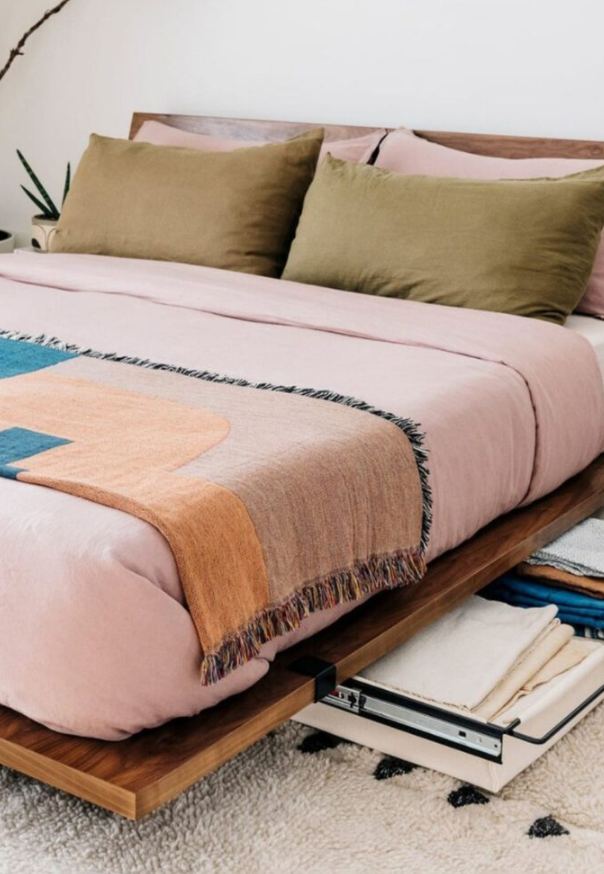
For ultra-low clearance bed frames, traditional deep bins won’t fit. That’s where mounted slide trays excel. These metal or wooden trays glide effortlessly on heavy-duty drawer slides mounted directly to the bed frame or platform base.
I often use slide trays to store flat-folded items such as extra quilts, light throws, or board games. Because the ball-bearing slides carry the load, the tray extends fully into the room without dragging or scratching delicate floor finishes.
15. Clear Bins
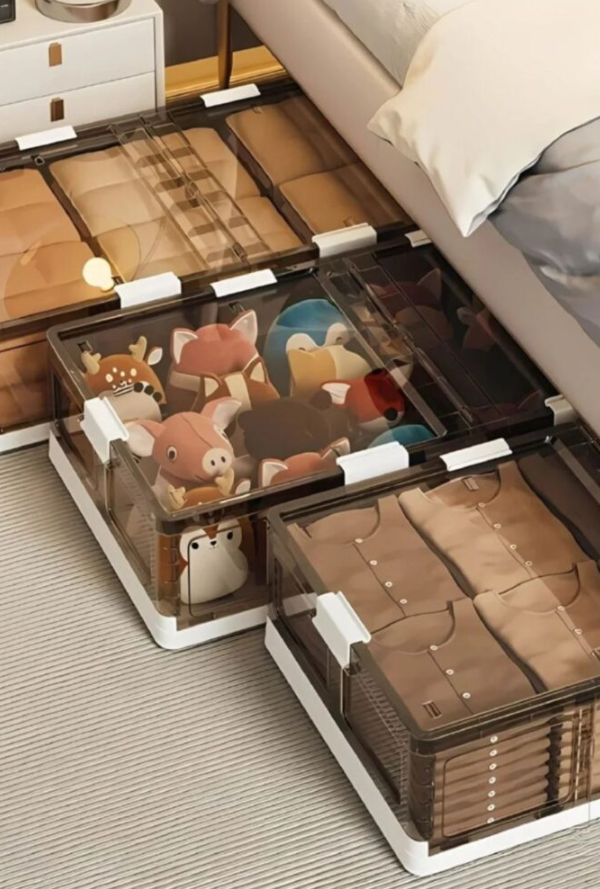
When I organize a bedroom, visibility is always top priority—if you can’t see what you stored, you’ll likely forget you own it. High-clarity polypropylene bins completely solve this problem by keeping every folded sweater, sheet, or accessory in clear view.
I suggest buying stackable, uniform clear bins with locking latch handles. The secure latches create a tight dust seal while keeping the lids firmly anchored when sliding the containers across hardwood or carpeted floors.
16. Wood Drawer
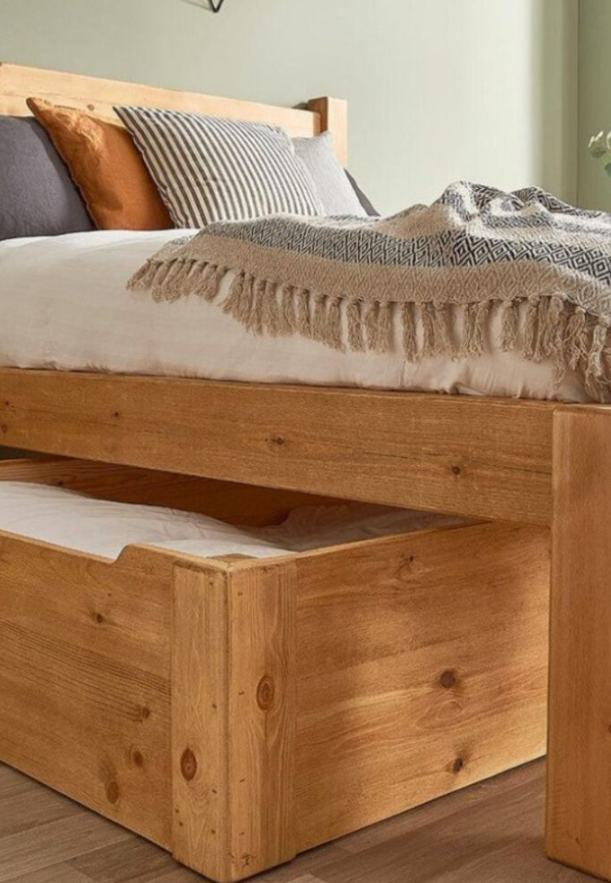
For a classic, furniture-grade feel that blends seamlessly with existing decor, solid wood under-bed drawers are unbeatable. These heavy-duty boxes provide substantial structural integrity, making them ideal for storing heavy winter woolens, weighted blankets, or extra books.
If you are retrofitting an existing bed frame, I recommend choosing wooden drawers mounted on non-marking rubber casters. The rubber wheels protect delicate wood floors from scratching while supporting heavier storage loads up to 40 lbs per drawer.
17. Blanket Drawer
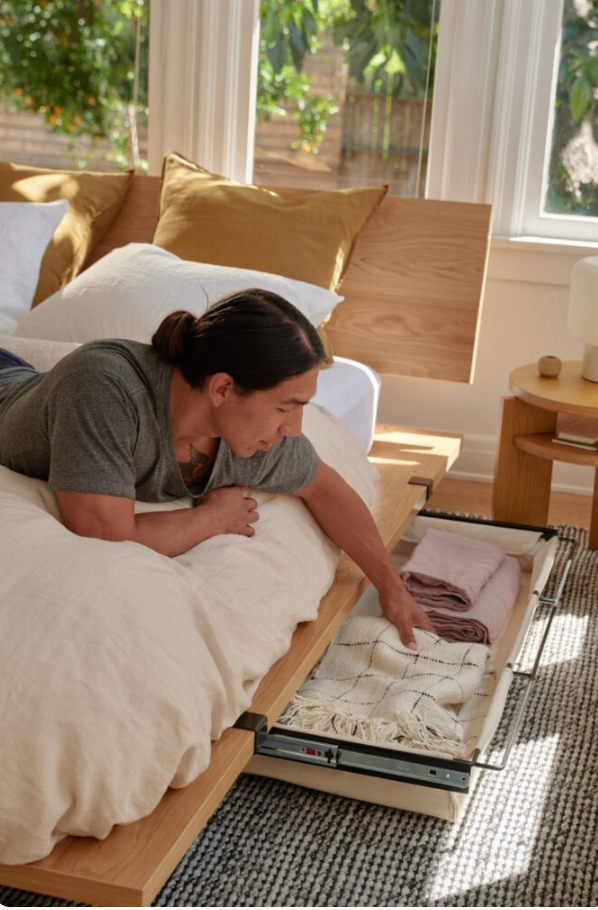
Throw blankets have a habit of accumulating on bedroom chairs and footboards. Dedicated shallow blanket drawers underneath the bed provide a clean, dedicated home for all your extra layers.
To maximize space inside a blanket drawer, I practice filing blankets vertically (using the KonMari folding method) rather than stacking them on top of one another. This allows you to pull out a single blanket without disturbing the rest of the stack.
18. Book Drawer
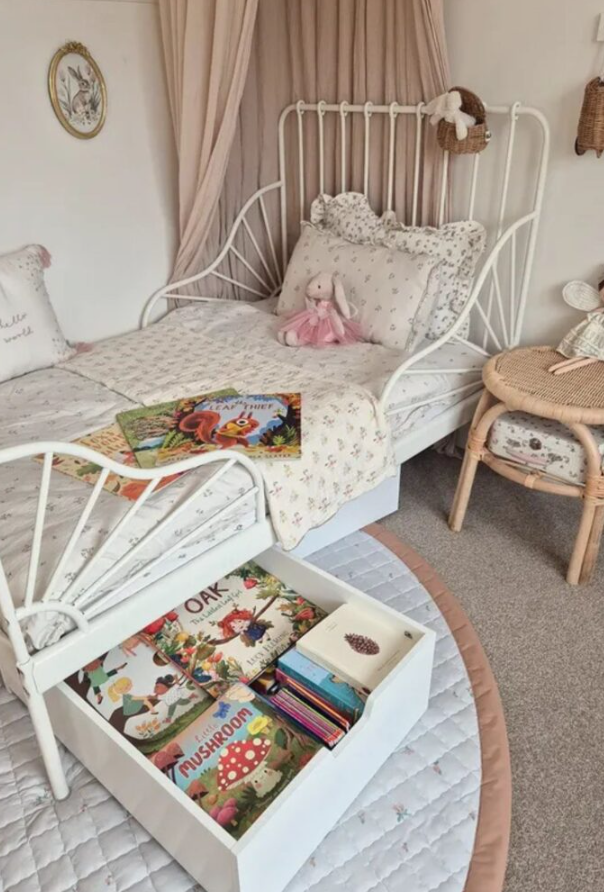
As an avid reader, I know how fast bedtime reading lists can outgrow standard nightstand drawers and bookshelves. Converting under-bed space into a heavy-duty book drawer keeps bedtime reading material organized and easily accessible.
Because books are heavy—a full drawer can easily weigh upwards of 30 lbs—make sure the drawer is equipped with reinforced bottoms and solid caster wheels. Store books vertically with their spines facing upward so you can read titles instantly at a glance.
19. Rolling Drawers
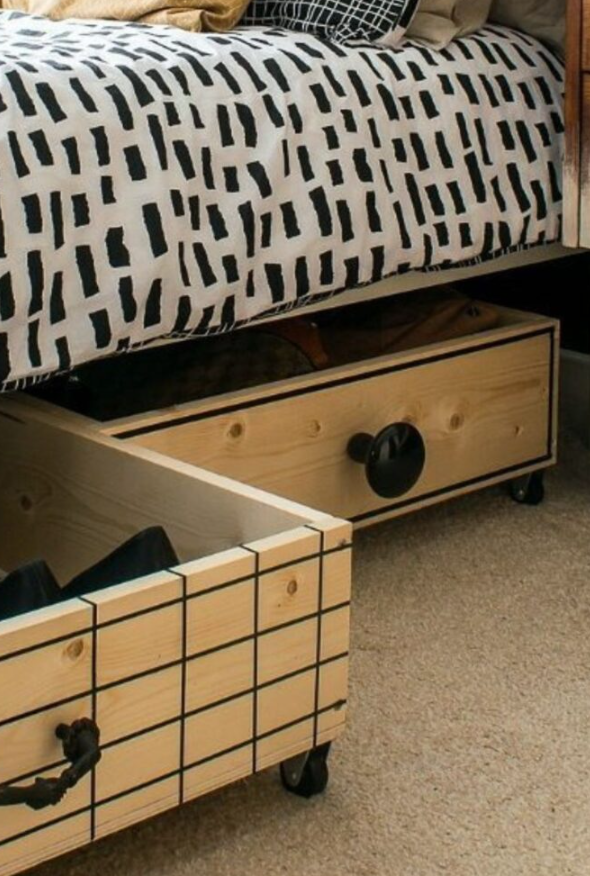
Independent rolling wooden drawers offer exceptional flexibility because they aren’t tied to specific bed-frame tracks. You can roll them out completely from under the bed and wheel them to another area of the room when packing or reorganizing.
In my experience, rolling drawers work best when fitted with high-density polyurethane wheels that transition smoothly between rugs and hard surfaces. They provide the strength of solid furniture with the agility of portable storage containers.
20. Grid Bins
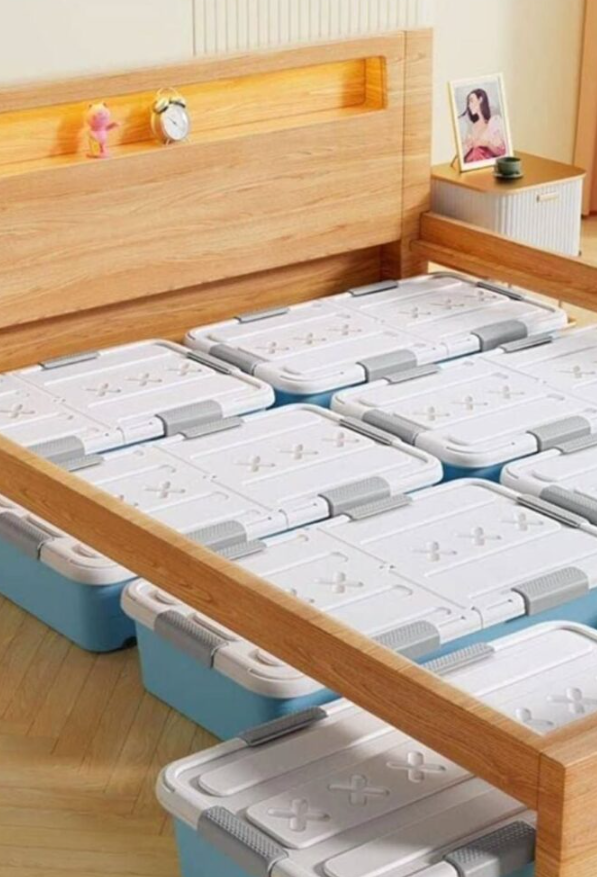
When dealing with small accessories, socks, craft supplies, or baby clothes, large open bins quickly turn into chaotic catch-alls. Dividing the space under your bed into a structured grid using modular compartment bins keeps every item distinctly separated.
I like to use plastic or heavy fabric grid bins equipped with removable internal dividers. Labeling the top or front edge of each grid section ensures that every item has a specific place, making routine organizing effortless.
Pro Tip: Apply self-adhesive vinyl labels or chalkboard tags to the outside face of each grid bin so household members can easily identify contents without sliding every bin out.
21. Trundle Bed
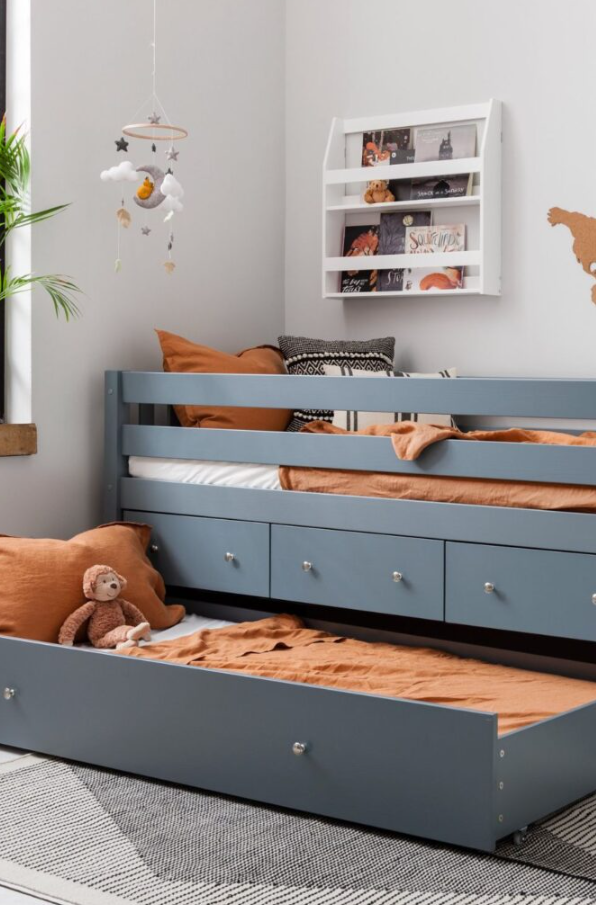
When space is at a premium and you frequently host guests or sleepovers, a trundle bed is the ultimate under-bed integration. Tucked neatly below the primary mattress frame, a trundle frame rolls out instantly to provide an extra real mattress.
During times when guest stays are infrequent, I’ve seen homeowners temporarily replace the trundle mattress with large fabric organizers or wooden dividers, seamlessly transforming the frame into a massive slide-out storage tray.
22. Storage Trunk
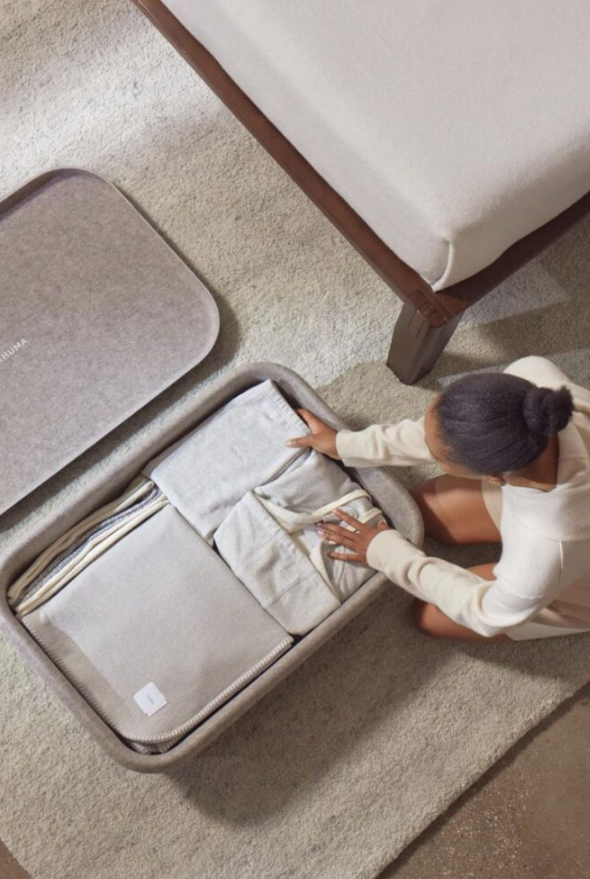
Structured fabric storage trunks combine the soft aesthetic of home decor with the protective rigidity of a traditional chest. I often use these under higher bed frames to store off-season wardrobe collections, heavy coats, and delicate keepsakes.
The structured sidewalls prevent the trunk from collapsing under weight or bowing outward, ensuring it maintains a clean, low profile that slides smoothly under the bed frame without catching on dust ruffles or linens.
23. Sweater Boxes
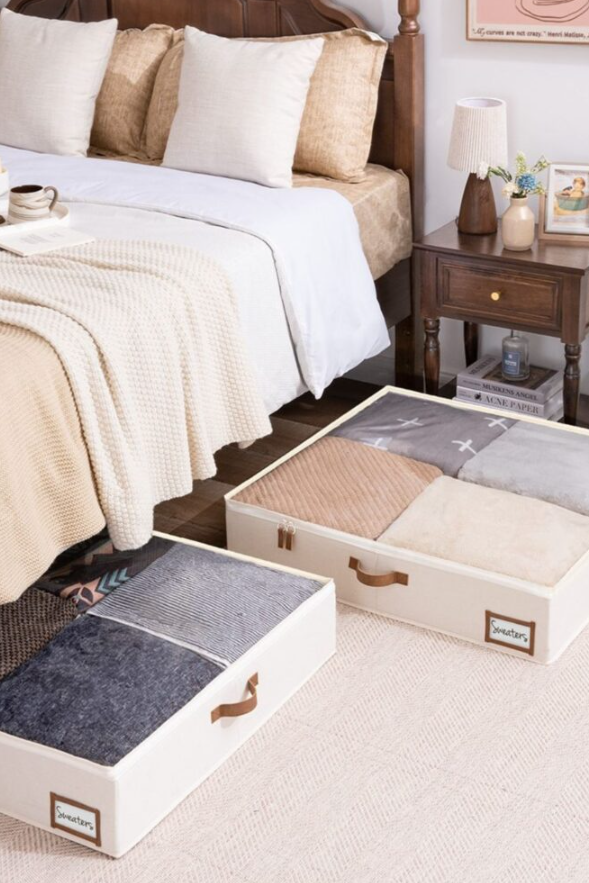
Knitwear and heavy wool sweaters should never be hung on coat hangers because they stretch out of shape over time. Flat, low-profile sweater boxes designed for under-bed storage keep knits safely folded and flat.
I recommend zippered fabric sweater boxes featuring breathable canvas walls and clear vinyl tops. The breathable fabric allows air circulation—preventing musty odors—while the sealed zippers keep fabric moths and floor dust away from your fine knits.
24. Labeled Bins
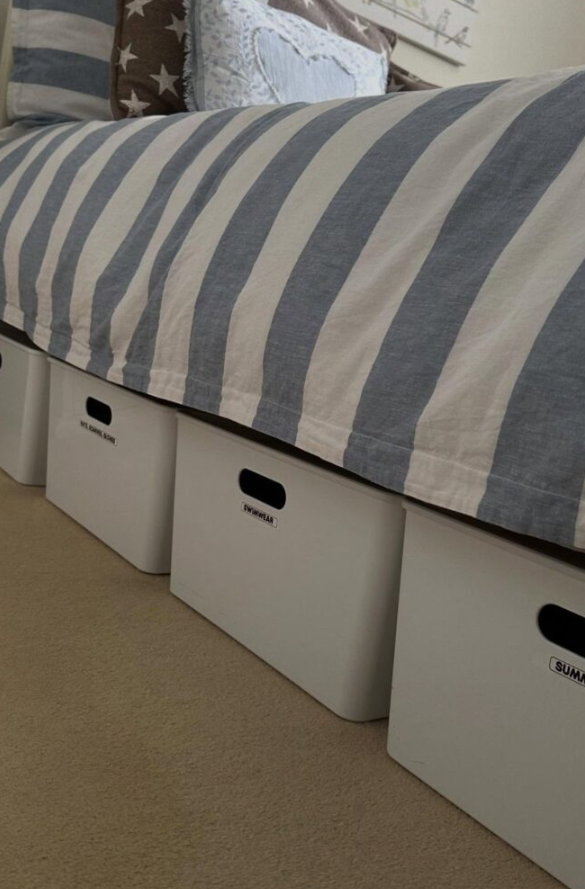
One of the simplest yet most effective practices I implement in every home organization project is clear container labeling. Color-coded or text-labeled plastic bins make managing seasonal wardrobe swaps completely foolproof.
By designating specific bins for “Winter Wear,” “Summer Linens,” or “Holiday Decor,” you eliminate guesswork. When the seasons change, you simply rotate the labeled bins between your top closet shelves and under-bed zone in a matter of minutes.
25. Hidden Drawers
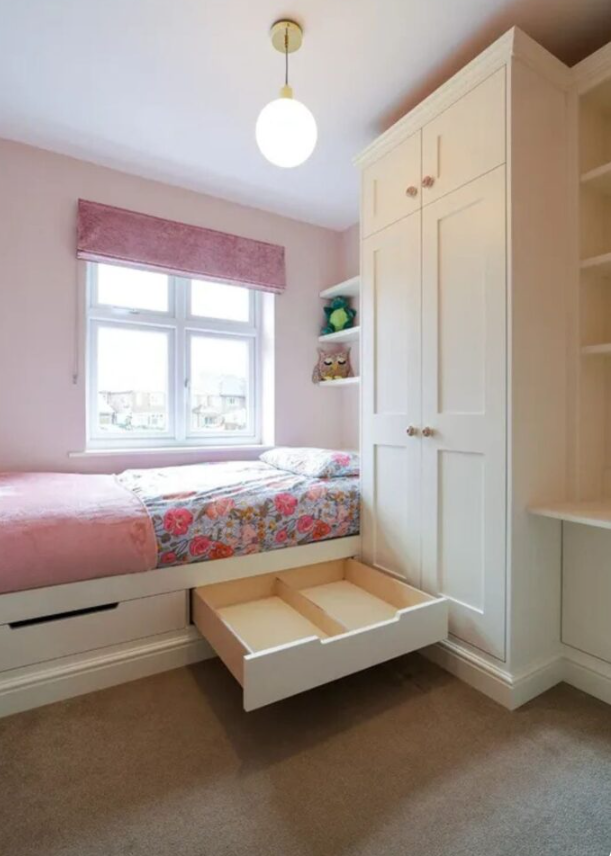
Custom or semi-custom bed frames featuring hidden base drawers offer a sleek, architectural storage approach. Because these drawers sit flush against the outer bed base, they keep stored items completely hidden from view while preserving clean room aesthetics.
In compact bedrooms, hidden drawers maximize every available inch within the bed’s direct footprint. I suggest using interior velvet drawer dividers to organize watches, jewelry, belt collections, or delicate linens safely within these hidden compartments.
26. Storage Platform
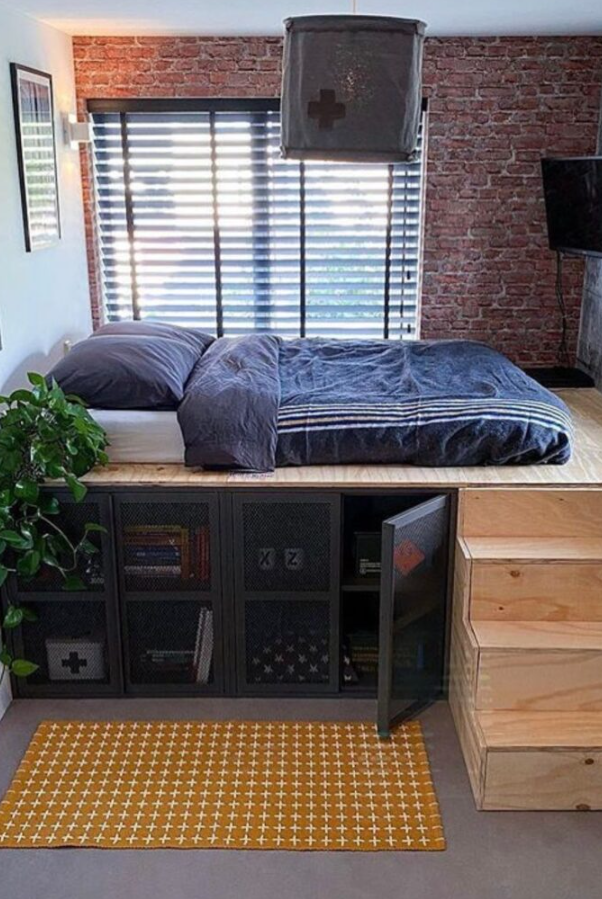
Elevating your mattress on a dedicated storage platform creates an incredible volume of usable space underneath. A high platform frame can raise your bed 14 to 18 inches off the floor, effectively converting the lower frame into a full-scale storage chest or cubby wall.
In my experience, platform units built with integrated step storage or slide-out lower cabinets work brilliantly in studio apartments. They allow you to store bulky luggage, plastic totes, and archive boxes directly beneath your sleeping area without feeling cramped.
27. Open Cubbies
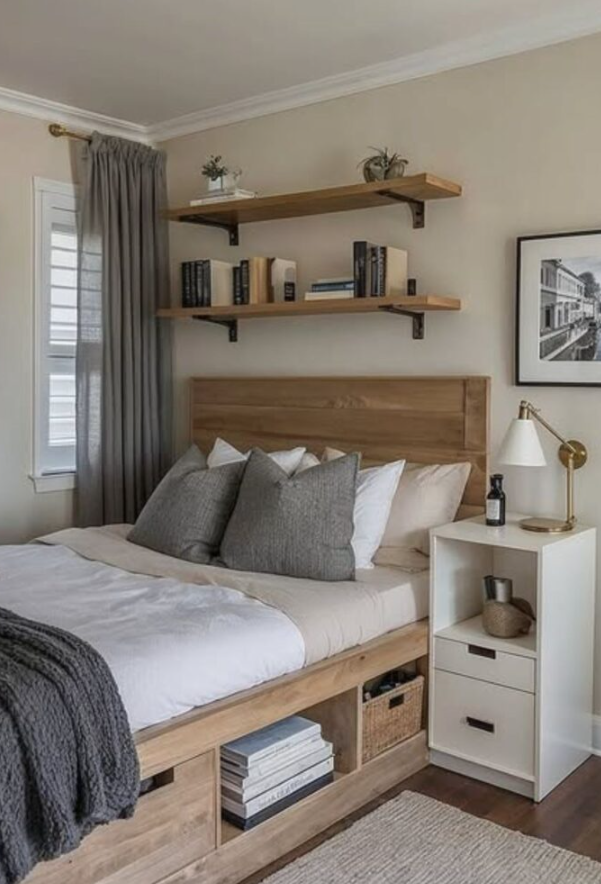
For spaces where you want immediate visual and physical access to items, open cubby bed frames are a wonderful choice. These frames feature built-in rectangular compartments around the perimeter of the bed base.
I recommend using open cubbies to store frequently referenced books, display decorative accents, or hold stylish storage baskets. It turns the perimeter of your bed into an attractive, functional display that doubles as accessible storage.
28. Woven Basket
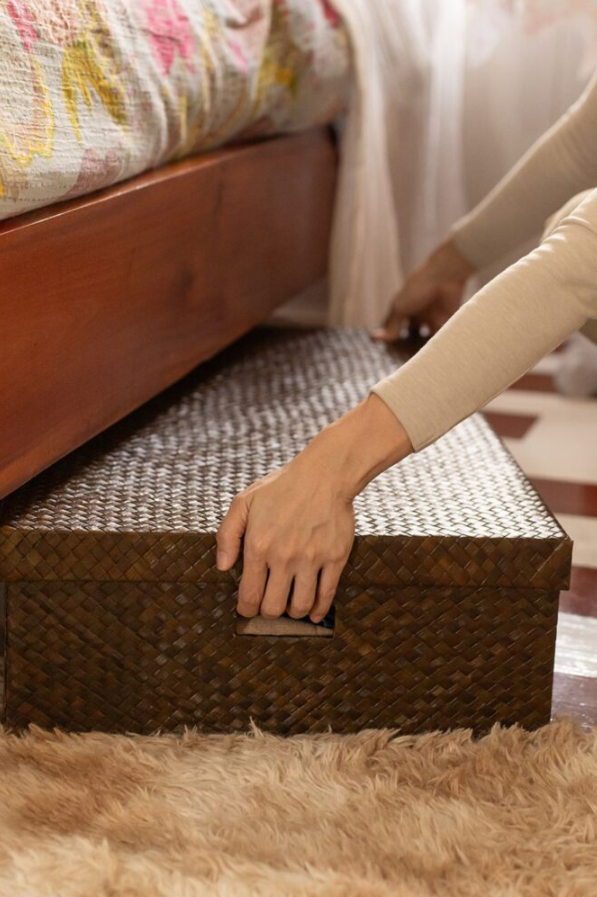
If your bedroom features natural, organic, or Scandinavian interior design, plastic bins can disrupt the room’s aesthetic. Flat, low-profile woven baskets made of sea grass, rattan, or jute blend beautiful style with practical under-bed utility.
I use shallow woven baskets with integrated leather handles to store extra accent throws, decorative pillow covers, or reading material. The textured weave adds warmth to the bedroom decor while keeping items tucked away neatly out of sight.
29. Upholstered Drawers
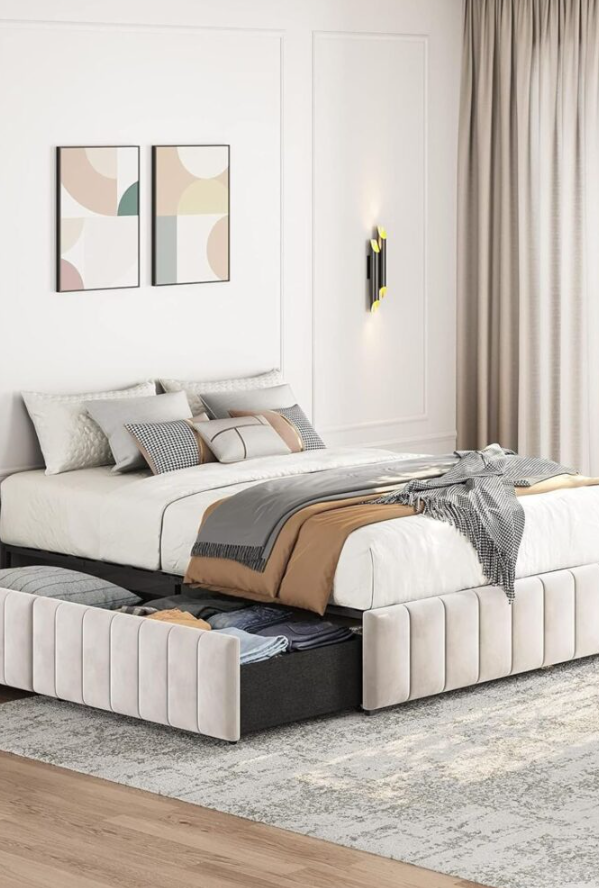
For a refined, high-end bedroom look, beds equipped with upholstered drawers are an outstanding choice. The drawer fronts are padded and covered in matching fabric (such as linen, velvet, or faux leather), making them appear as a seamless part of the bed frame.
These built-in side drawers slide open smoothly on concealed metal rails, making them ideal for storing extra bed sheets, folded trousers, or pajamas. You get all the practical perks of extra dresser space without compromising on luxury styling.
30. Basket Cubbies
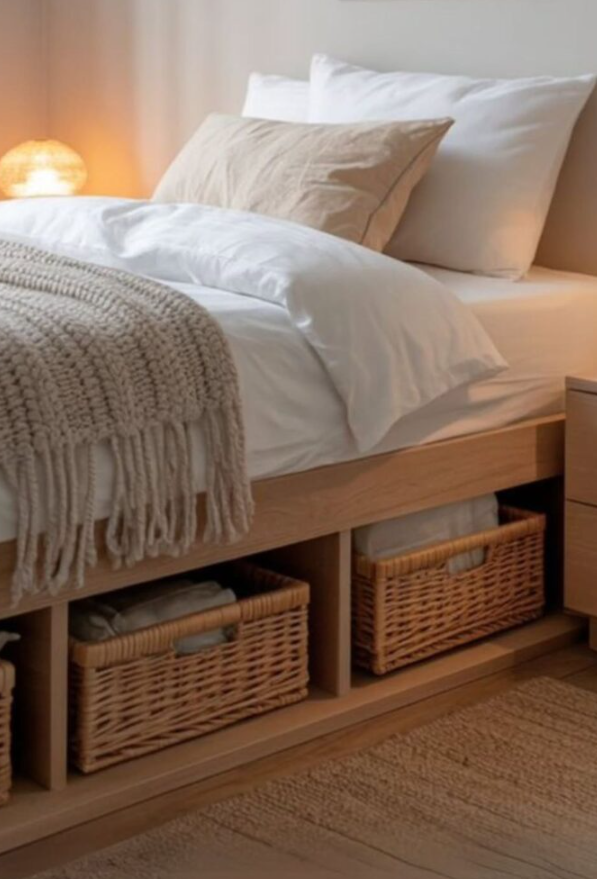
Combining open platform cubbies with custom-fitted woven baskets gives you the best of both worlds: natural design texture and hidden organization. The baskets slide into the cubbies like drawers, keeping personal items organized and out of view.
In my design setups, I allocate specific baskets for distinct items—for example, one basket for extra linens, another for seasonal apparel, and a third for footwear. The woven structure allows air to circulate, keeping fabrics smelling clean and fresh.
31. Industrial Drawers
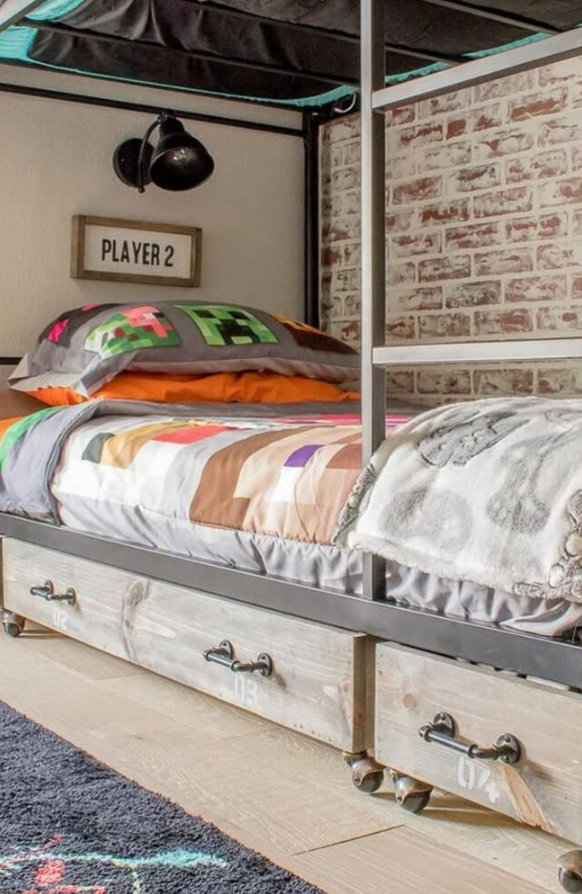
For modern lofts or rustic children’s bedrooms, industrial-style under-bed drawers constructed from dark iron and distressed wood offer incredible durability and style. Mounted on heavy-duty steel wheels, these units easily support heavy loads.
I’ve used industrial rolling drawers to store heavy equipment, large toy collections, or thick winter outerwear. Their open-top, high-walled metal and wood framework makes throwing items away during quick cleanups fast and simple.
32. Frequently Asked Questions
How much space do you need under a bed for storage to work properly?
To comfortably slide in flat containers, fabric bags, or low-profile rolling trays, you need a minimum clearance of 6 to 8 inches between the floor and the lower edge of the bed frame. If you want to use deep plastic totes, woven baskets, or built-in drawer systems, target a clearance of 10 to 12 inches or more. Always measure from the lowest point of your bed frame rail (and check for center support legs) before buying storage units.
How do you keep under-bed storage from getting dusty or messy?
To protect your belongings from floor dust and pet hair, always store items in sealed, lidded plastic containers or heavy-duty zippered fabric storage bags. For added protection, vacuum underneath your bed regularly using a flat vacuum attachment before sliding containers back in. To maintain order inside the bins, group items logically by category (e.g., winter sweaters, extra sheets, shoes) and use internal dividers or labels to keep contents from shifting.
33. Conclusion
Maximizing the space under your bed is one of the most practical, cost-effective ways to reclaim floor area in a small bedroom. By selecting the right storage system—whether that means sealed clear bins to fight floor dust, smooth-rolling wooden drawers for daily footwear, or a multi-functional lift frame for seasonal duvets—you turn wasted real estate into an organized, stress-free asset. Take precise measurements of your frame clearance, match your containers to your lifestyle needs, and enjoy a cleaner, far more functional room.