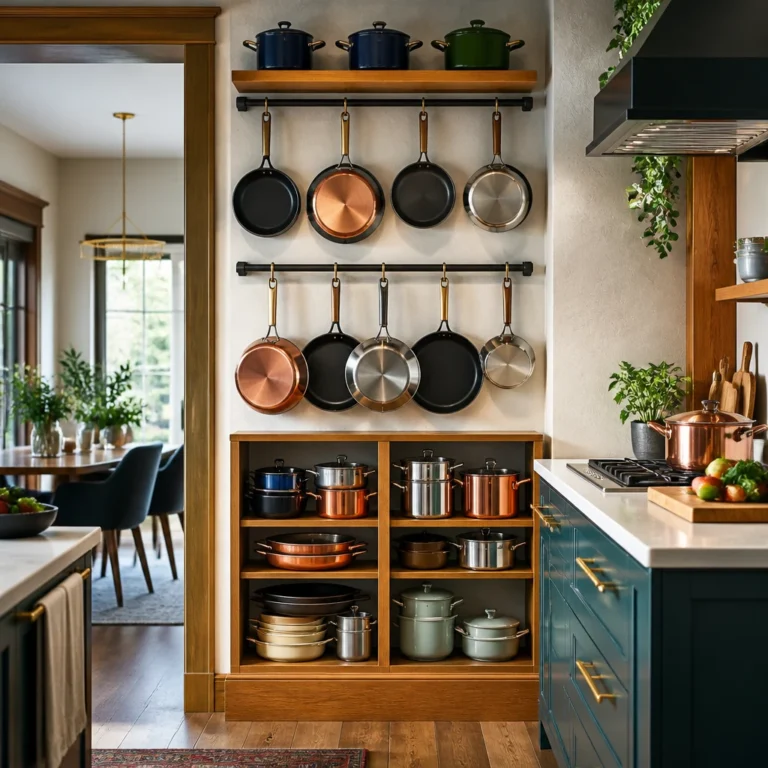
12 Pot Lid Storage Ideas for 2026
Keeping pot lids organized can make everyday cooking much easier. I know how quickly cabinet shelves and kitchen drawers become cluttered when lids are stacked on top of each other. They slide around, make noise, and take extra time to sort through whenever I need the right size.
The good news is that there are several simple pot lid storage ideas that can help create a more organized kitchen. From adjustable cabinet racks and pull-out peg panels to deep drawer dividers and wooden slot holders, I can use unused cabinet doors, shelves, and drawers to create practical storage. These solutions keep lids separated, easy to reach, and protected from scratches while making better use of available kitchen space.
Key Takeaways
- Store pot lids vertically to make them easier to access and prevent sliding.
- Use adjustable racks to organize lids of different sizes.
- Make use of cabinet doors to create additional storage without taking up shelf space.
- Add dividers to deep drawers to keep lids separated.
- Store heavier glass lids in sturdy holders with enough support.
- Keep frequently used lids near the cooking area for easier access.
- Measure cabinets and drawers before purchasing storage organizers.
How Can I Create a Pot Lid Storage System That Stays Organized Long-Term?
I believe the best way to organize pot lids is to create a storage system that fits my kitchen space and everyday cooking routine. Buying random organizers may solve the problem temporarily, but the clutter can return if the storage does not match the size of the lids or available space.
I start by deciding where I want to keep my lids. A cabinet door, deep drawer, open shelf, or pull-out organizer can all work depending on the kitchen layout. Before choosing a rack, I measure the available width, height, and depth to avoid buying something that does not fit.
Whenever possible, I prefer vertical storage because it keeps each lid separate and makes it easier to grab the one I need. I also arrange frequently used lids in an accessible position and keep less-used ones toward the back or higher shelves.
One important thing I avoid is stacking lids directly on top of one another. This makes it difficult to reach the right size without moving everything around. A simple system with individual spaces helps keep the kitchen organized for longer.
Adjustable Cabinet Racks
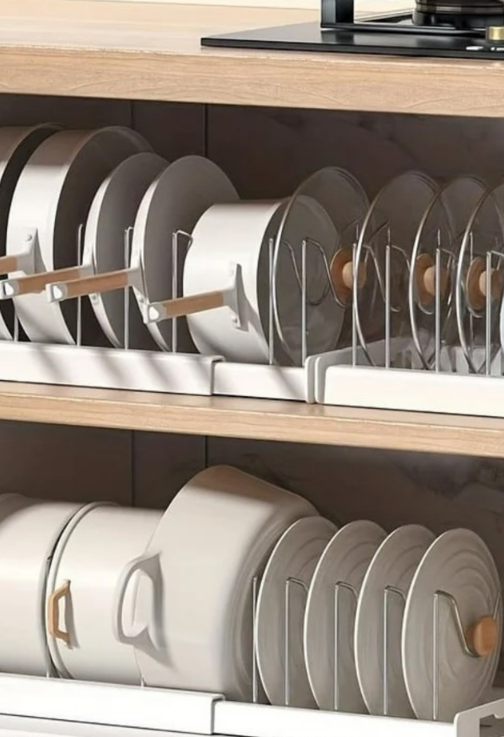
Adjustable cabinet racks are a practical way to organize pot lids without making major changes to kitchen cabinets. Instead of stacking lids in a pile, I can place each one upright in its own slot.
I prefer using these racks inside lower cabinets because they provide enough depth for different lid sizes. Before choosing an organizer, I measure the shelf and look for adjustable dividers that can accommodate both small and large lids.
The individual sections prevent lids from sliding into one another when I take something out. This also makes it easier to see all the available lids without moving other cookware.
I especially like this arrangement in light wood or white cabinets because the organized rows create a clean appearance without taking up too much space.
Pull-Out Peg Panel
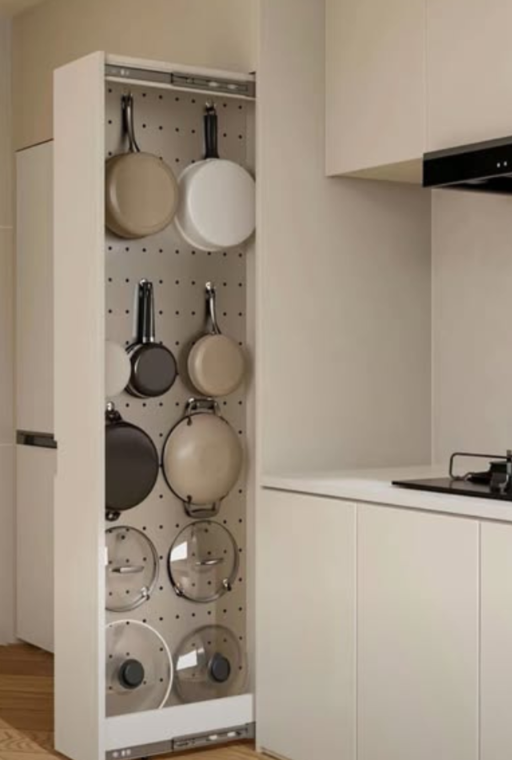
A pull-out peg panel is a smart option for kitchens with narrow cabinets or unused spaces beside the refrigerator or stove. It creates a storage area that slides out whenever I need to access my cookware.
I can install a sliding frame with a pegboard-style back and adjustable pegs. The pegs hold pots and lids in separate positions, allowing me to arrange the storage according to their sizes.
I make sure there is enough distance between each item so handles and edges do not knock against one another. Strong sliding hardware is also important because the entire unit needs to move smoothly, even when holding heavier cookware.
This design is especially useful when regular cabinet shelves are already full. It turns a narrow space into a practical storage station without adding clutter to the kitchen.
Cabinet Door Mount
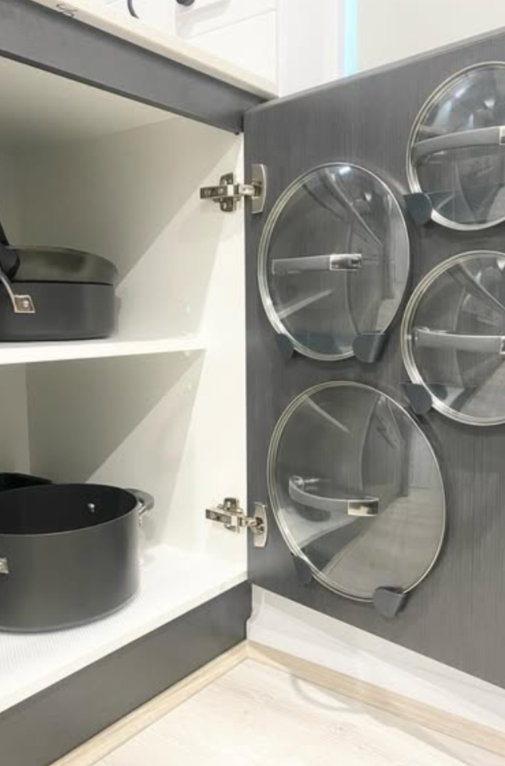
The inside of a cabinet door is often overlooked when organizing kitchen supplies. I like using this space for pot lid storage because it provides an extra place to keep lids without taking up the main shelf.
I install sturdy lid holders or brackets on the inside of a lower cabinet door. Before attaching them, I check the door’s dimensions and make sure the holders will not interfere with the shelves or cabinet frame.
I arrange the holders according to lid diameter so each lid has enough room. Heavier glass lids need strong brackets and secure mounting rather than lightweight adhesive holders.
This setup keeps lids visible and easy to reach whenever I am cooking. It also works well in smaller kitchens where every bit of cabinet space matters.
Dual-Zone Storage

Keeping pots and lids in separate sections can make a kitchen cabinet much easier to use. I like this dual-zone arrangement because it gives each type of cookware a dedicated place.
I use slim lid holders on the inside of the cabinet door and adjustable dividers inside the main cabinet for larger lids and pots. This creates two storage areas without needing an additional organizer.
The pots stay securely arranged on the cabinet shelf, while the lids remain upright and accessible. I also measure the distance between the door and stored cookware to make sure nothing gets pressed or damaged when closing the cabinet.
This idea works particularly well in lower kitchen cabinets with enough depth. It keeps everyday cookware together while preventing lids from becoming mixed with pots and pans.
Countertop Display Stand

A countertop display stand is useful when I regularly use the same pot lids and want them within easy reach. Instead of opening a cabinet every time, I can keep a small organizer near my cooking area.
I choose a compact stand with individual slots that can hold different lid sizes. I place it near the stove but away from direct heat, splashes, and areas where it might interfere with food preparation.
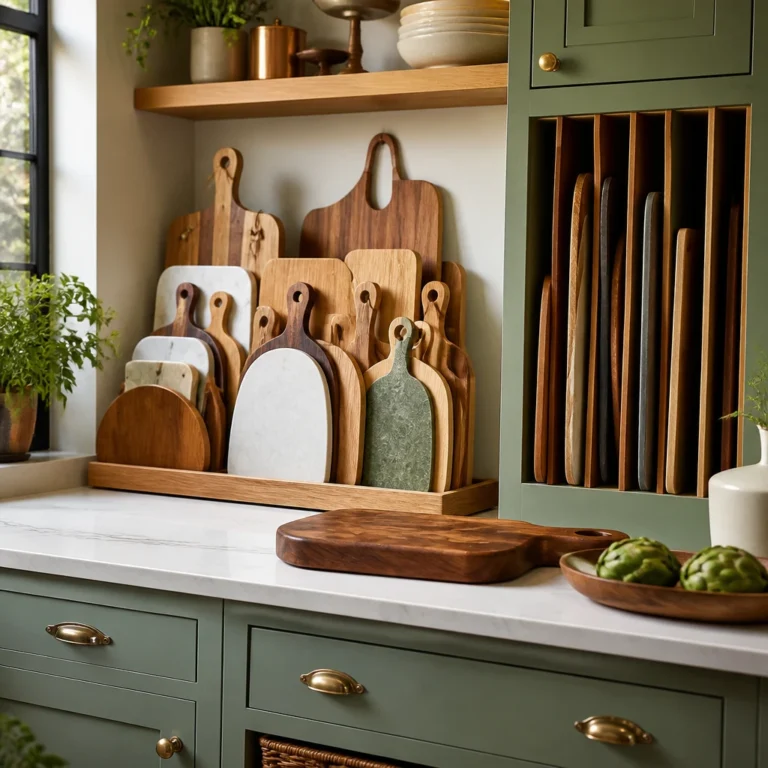
Some stands also have extra space for cutting boards or other flat kitchen items. I find this helpful because one organizer can serve more than one purpose.
I prefer wooden or stainless steel stands because they are easy to match with different kitchen styles. Regular cleaning also prevents grease and moisture from collecting around the lids.
Deep Drawer Filing

Deep kitchen drawers provide plenty of room for organizing pot lids when I use the right dividers. Rather than placing lids in a stack, I arrange them upright so each one has its own section.
I start by measuring the drawer’s height and depth. This is important because some pot lids have tall handles that may hit the drawer top when it closes.
Next, I add a sturdy metal or wooden rack with enough space for different lid diameters. I place larger lids toward the back and smaller ones near the front so I can reach frequently used pieces quickly.
This arrangement works especially well in wide lower drawers. It keeps everything visible and prevents one lid from getting stuck underneath another.
Vertical Door Rack
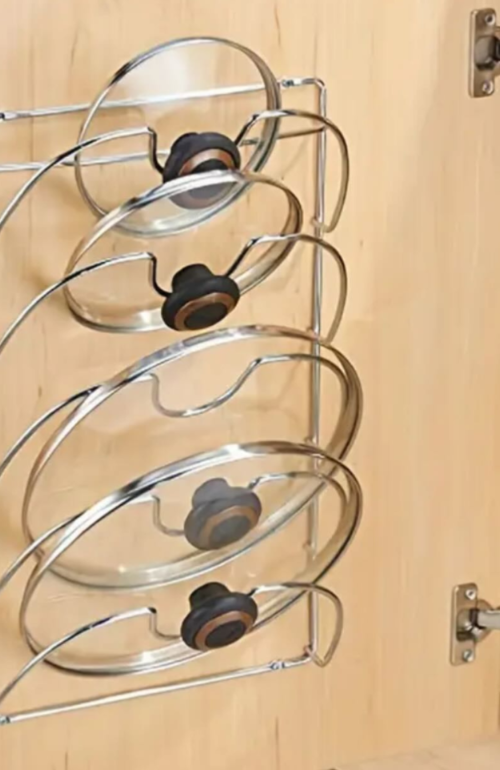
A vertical door rack is another way to use the unused space inside kitchen cabinets. I like this option because it keeps pot lids separated without taking up the main storage area.
I choose a slim metal rack designed to hold lids securely and install it inside a lower cabinet door. For heavier glass lids, I prefer screw-mounted holders because they generally provide more reliable support than adhesive options.
I arrange the lids according to their size and weight. Larger or heavier pieces need suitable support, and I make sure the cabinet door can close without pressing against the stored lids.
This system makes everyday cooking more convenient because I can see each lid and remove it without disturbing the other cookware.
Heavy-Duty Drawer Rack

If I have several heavy stainless steel or glass lids, I prefer using a heavy-duty drawer rack. A strong organizer helps prevent the lids from leaning against one another or moving around whenever I open the drawer.
I first check the drawer’s dimensions and weight capacity. Then I choose a sturdy metal rack with slots wide enough for the handles and edges of my lids.
I position the rack toward one side of the drawer, leaving the remaining space available for pots or other kitchen items. This keeps the drawer useful without making it feel overcrowded.
Wide drawers near the cooking area are particularly convenient because I can access the lids while preparing meals. I also check that the handles do not hit the drawer top when it closes.
Top Shelf Slot
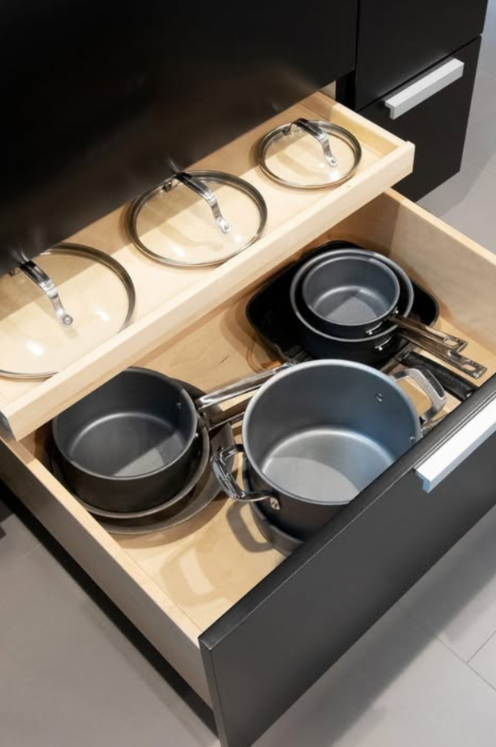
A top shelf slot is a clever way to create extra pot lid storage inside a deep kitchen drawer. Instead of using the entire drawer for lids, I can add a narrow section above the pots.
I use a slim wooden strip or a suitable divider to create individual spaces along the upper edge of the drawer. Each lid slides into its own slot while the pots remain organized underneath.
Before installing anything, I measure the drawer height and check the clearance around the handles. The slots should hold the lids securely without making them difficult to remove.
I particularly like this idea for wide drawers because it makes use of vertical space that might otherwise remain empty. It also keeps pots and lids together without stacking them in the same section.
Mixed Drawer Zones
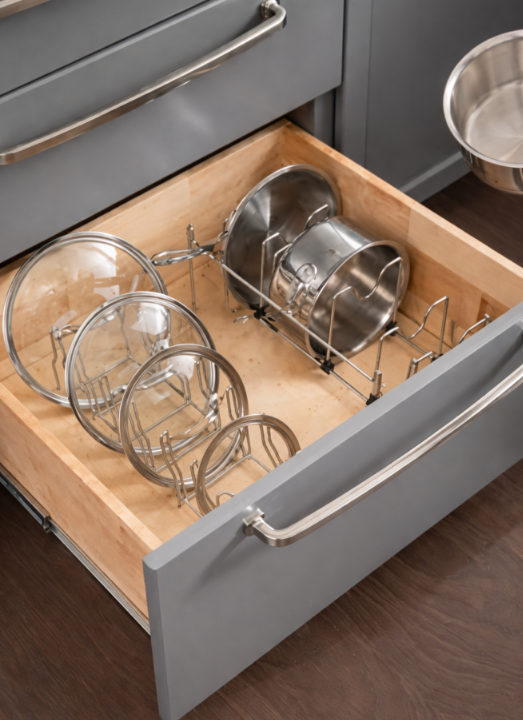
A mixed drawer system is a good choice when I want to store pots and lids in one convenient location. Instead of mixing everything together, I create separate sections for each type of cookware.
I use adjustable metal or wooden dividers to divide the drawer into two main areas. One side holds pot lids upright, while the other side keeps pots stacked in an organized arrangement.
I adjust the spacing according to the size of my cookware. Larger lids go toward the back, while smaller and frequently used ones stay near the front.
This setup works best in wide base drawers with enough depth. It keeps everything close together while making it easier to take out one item without disturbing the rest.
Slim Divider Rack
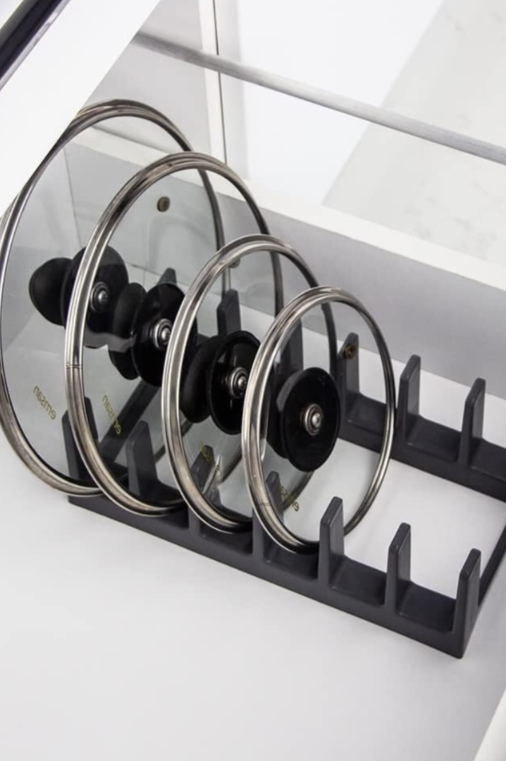
Small kitchen drawers can also hold pot lids neatly with a compact divider rack. I prefer this option when I have limited storage space and do not want to install a large organizer.
I place the rack along one side of the drawer and adjust the slots according to the lid sizes. Each lid stands separately, which prevents the edges from rubbing against one another.
I also check the height of the drawer before adding the organizer. The rack should leave enough room for handles and should not prevent the drawer from closing smoothly.
This idea works particularly well for smaller lids that are often difficult to organize in large cabinets. It creates a simple storage system without taking up the entire drawer.
Wooden Slot Holders

Wooden slot holders are a useful option for open shelves and wide kitchen cabinets. I like their simple appearance because they add structure while keeping the natural look of the kitchen.
I can use two separate wooden organizers to arrange lids according to their sizes or how often I use them. Each lid slides into an individual slot, keeping the pieces upright and separated.
I prefer smooth, well-finished wood because rough surfaces can scratch glass lids or damage their edges. I also leave enough space between the slots so removing one lid does not disturb the others.
Pots can stay stacked on the shelf below while the lids remain organized above. This arrangement is especially useful when I want storage that looks neat as well as practical.
FAQs
Should You Store Lids With Pots?
I prefer storing pot lids separately from pots because stacking them together can quickly create clutter. When lids sit directly on top of cookware, they can slide around, fall over, or become difficult to remove.
A vertical rack, cabinet door holder, or drawer divider provides a more organized solution. Each lid has its own space, so I can take out the one I need without moving several other pieces.
If cabinet space is limited, I can still keep pots and lids in the same drawer. I simply create separate sections for each item using adjustable dividers.
This small change makes everyday cooking easier and helps maintain an organized kitchen.
What’s the Best Way to Store Glass Lids Safely?
Glass lids need proper support because their edges can chip or crack when they knock against other cookware. I prefer storing them upright in a sturdy rack with individual slots.
I avoid placing glass lids directly on top of one another because the weight and movement can cause scratches or damage. Each lid should have enough space to sit securely without rubbing against the next one.
For heavier glass lids, I choose strong metal or wooden organizers that can support their weight. I also check that the rack is stable and does not move whenever I open or close the drawer.
A well-fitted vertical organizer keeps glass lids protected, visible, and easy to access.
Final Thoughts
Organizing pot lids does not require a complete kitchen makeover. I can make better use of existing cabinets, drawers, and unused door space with simple storage solutions such as adjustable racks, vertical dividers, and wooden slot holders.
The most important thing is to choose a system that fits my cookware and daily routine. I prefer keeping lids upright, separating them by size, and placing frequently used pieces where they are easy to reach.
With the right arrangement, I can prevent unnecessary clutter, protect glass lids, and make my kitchen more convenient to use every day.