18 Vanity Drawer Organization Ideas for 2026
I find that most messy vanity drawers do not need more storage—they need a better system. When I put everything into one open space, small items quickly cover larger ones, products shift around, and I waste time looking for things I use every day.
Another mistake I avoid is stacking products too deeply. A drawer may look tidy when it is closed, but if I have to remove three items to reach the one underneath, the setup is not really practical. I also measure the drawer before buying organizers because even a good tray can waste space if it leaves awkward gaps.
I keep makeup, skincare, jewelry, and beauty tools in separate zones whenever possible. I also remove products I no longer use instead of allowing them to take up valuable daily storage. For cosmetics and skincare, I check the product’s expiration or period-after-opening guidance rather than keeping something simply because there is still product left.
Key Takeaways
- I measure the drawer before buying bins, trays, or dividers.
- I keep products I use every day in the easiest-to-reach areas.
- I use separate zones for makeup, skincare, jewelry, and tools.
- I avoid deep stacks because hidden products are easy to forget.
- I use vertical space when the drawer is deep enough to support it.
- I review rarely used and old products regularly to prevent clutter from returning.
Clear Acrylic Zoning
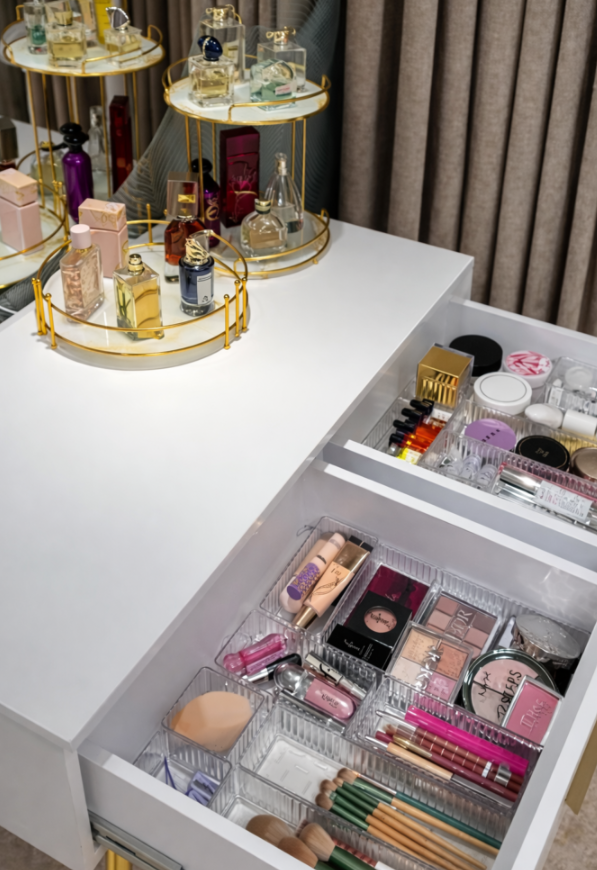
I like clear acrylic dividers when I want to see everything without opening several containers. Instead of putting all my makeup into one tray, I create small zones for lip products, compacts, pencils, and brushes.
The main advantage is visibility. I can see what I have immediately, which makes it less likely that products will get pushed to the back and forgotten. Clear organizers also work well when I frequently change or add products.
Before buying anything, I measure the inside length, width, and usable height of the drawer. I then choose modular pieces that can sit closely together rather than buying one oversized organizer that leaves unused space around the edges.
Labeled Category Sections
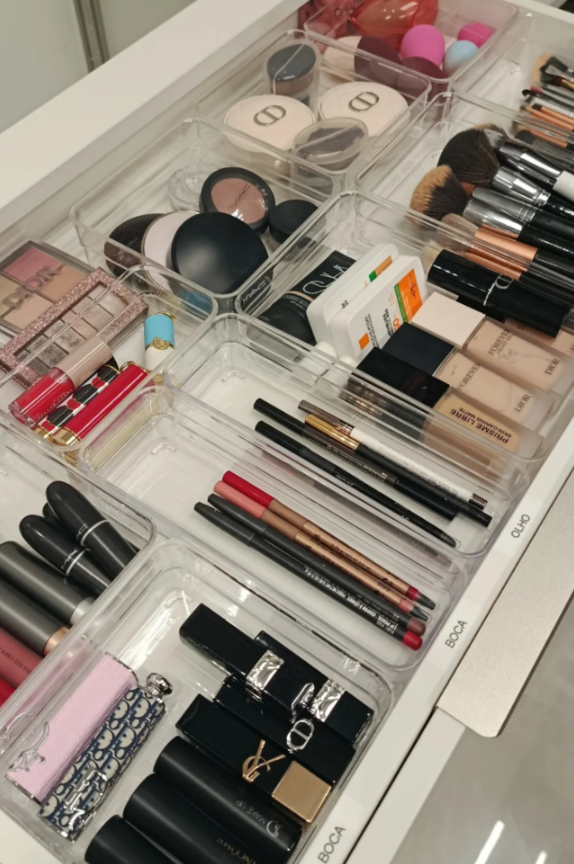
When I have a large beauty collection, labels make the drawer much easier to maintain. I give each section a clear purpose, such as lips, face, eyes, brushes, or personal care.
I find labels especially useful in shared bathrooms or busy households because everyone can see where an item belongs. They also remove the guesswork when I am putting things away after getting ready.
I prefer small, simple labels placed on the front edge of a bin or divider. I avoid labeling every individual product because that creates unnecessary work. The goal is to make the category obvious, not turn the drawer into a filing cabinet.
Tiered Wooden Layers
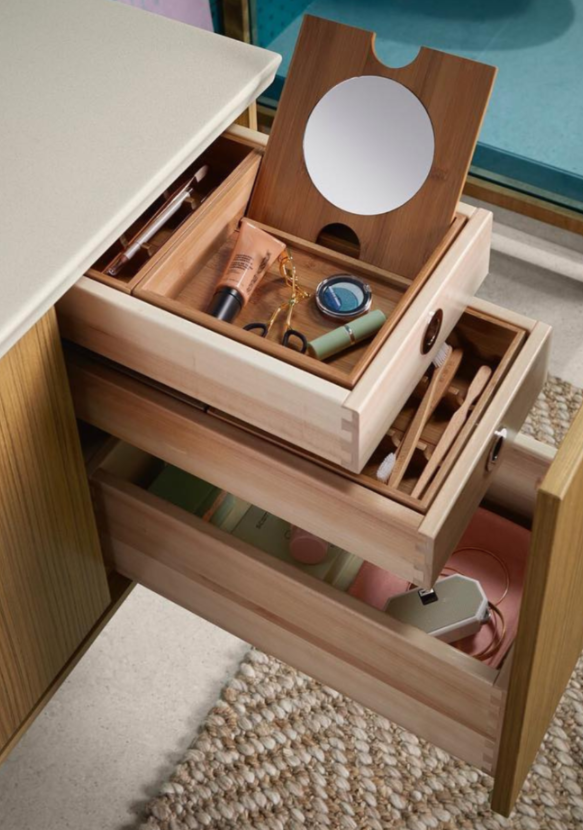
For a deep drawer, I use vertical space instead of allowing products to disappear underneath one another. A tiered wooden insert gives me separate levels, so I can keep frequently used items on top and less-used products underneath.
This setup works particularly well for larger makeup collections. I can keep my everyday foundation, concealer, and powder within easy reach while storing backup or occasional-use products on a lower level.
I check the drawer height before choosing a tiered insert. If the drawer is too shallow, the upper layer can make the lower section difficult to access, which defeats the purpose of the organizer.
Rolling Vanity Cart
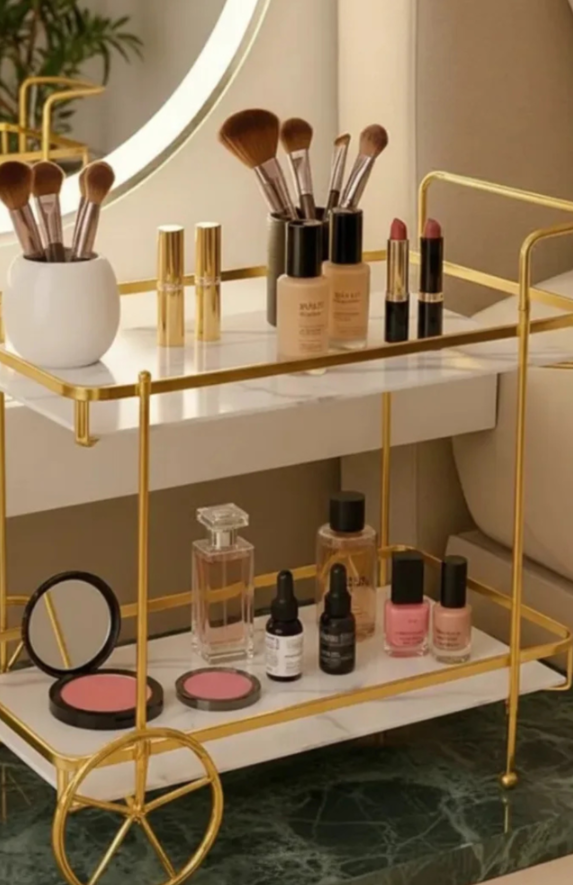
When my drawers are already full, I do not try to force another category into the same space. A slim rolling cart can provide extra storage without requiring a new vanity.
I use the top shelf for products I reach for often and lower shelves for larger or less frequently used items. The wheels are useful because I can move the cart closer while getting ready and push it aside afterward.
For a small bedroom or apartment, I would measure the available floor space first. A cart that blocks a walkway or bathroom door is not a useful storage solution, no matter how much it holds.
Flat Palette Layout
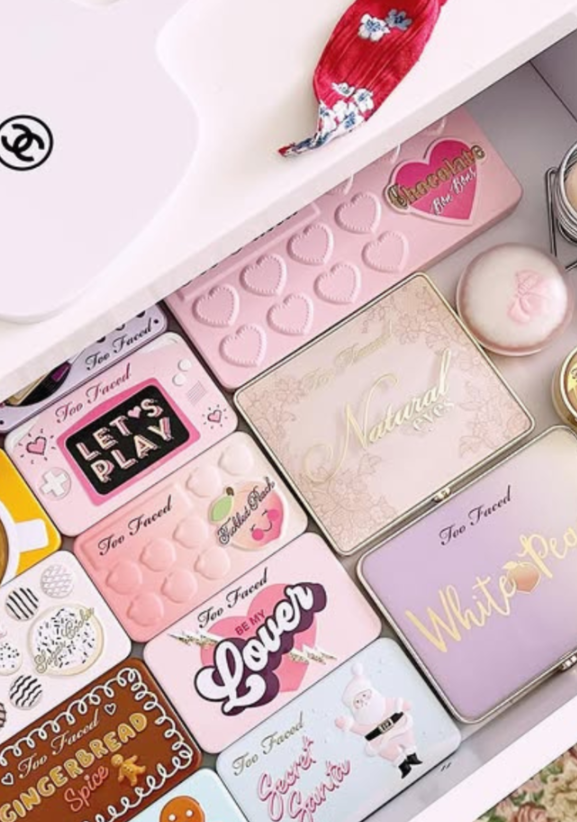
I avoid creating a tall pile of makeup palettes because the palette I need is usually at the bottom. Instead, I arrange them in a single accessible layer whenever the drawer dimensions allow it.
For wide, shallow drawers, I place palettes side by side and keep my everyday favorites toward the front. Larger or occasional-use palettes can go toward the back.
If the drawer is narrow, I would rather use a vertical file-style divider than force several palettes into a flat stack. The best arrangement depends on the drawer dimensions and how often I use each item.
Custom Wood Dividers

Custom dividers are useful when I want the drawer to feel like a permanent part of the vanity rather than a collection of loose containers. Fixed sections also stop products from moving whenever I open or close the drawer.
I divide the space according to function instead of randomly matching products by size. For example, I can keep face products together, small beauty tools in another section, and nail-care items in their own compartment.
One tip I find helpful is to leave a little room for future purchases. If every section is filled tightly on day one, the system can become difficult to maintain as soon as I add a new product.
Hexagon Bin Sorting
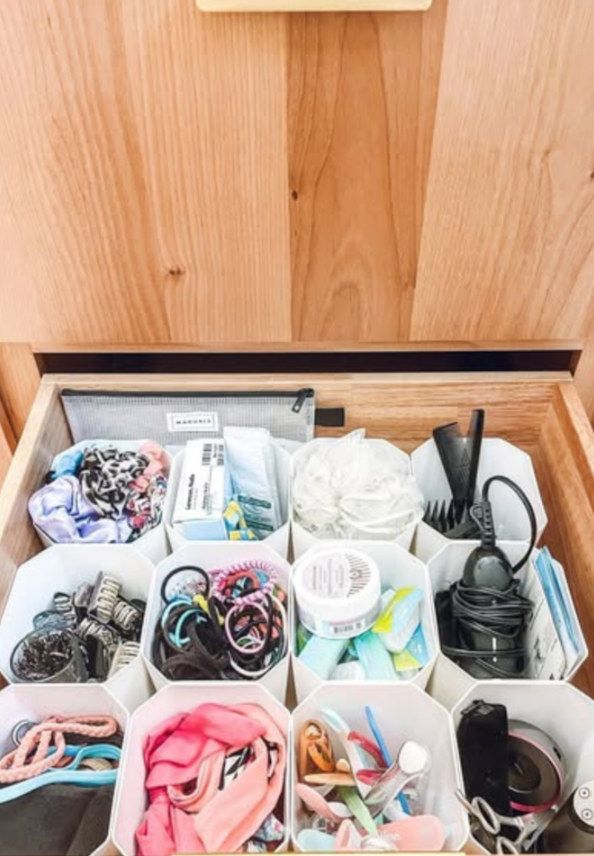
Small accessories are some of the easiest things to lose inside a large drawer. I use small modular bins to give items such as clips, hair ties, scrunchies, and cords their own spaces.
The important part is assigning one purpose to each container. If I put hair ties, clips, and pins into the same bin, I have simply created a smaller version of the original mess.
Honeycomb or hexagon-style containers can work well in wide drawers because their individual compartments make small items easier to separate. I would choose the layout based on the items I actually own rather than organizing around the shape of the container.
Deep Drawer Compartments
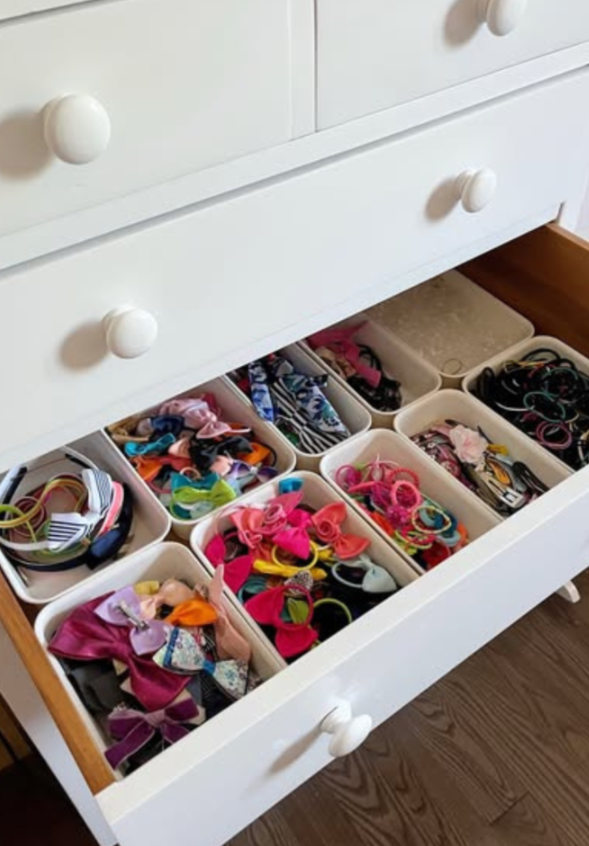
Deep drawers are useful, but they can quickly become storage pits. I solve this by adding larger compartments for bulky items such as headbands, bows, hair accessories, or backup personal-care products.
I try to keep each container limited to one broad category. That makes it easier to find something without having to empty the whole section.
I also avoid filling every bin to the top. A little unused space makes it much easier to put things away, while overfilled containers usually become messy again within a few days.
Vertical Product Rows
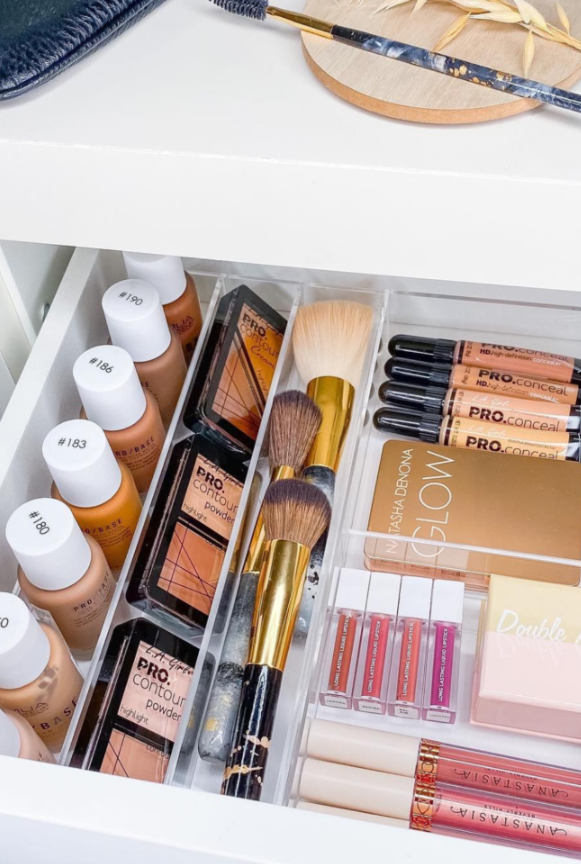
Bottles and tubes take up less usable space when I organize them into stable vertical rows. I use narrow dividers to prevent foundation, skincare, and other bottles from rolling or falling over.
I keep similar products together and place the items I use most often closest to the front. If bottles have different heights, I position taller ones where they will not block smaller products.
I keep brushes in their own compartment rather than placing them directly beside loose powders. This helps prevent powder residue from spreading across other products and keeps the drawer easier to clean.
Velvet Jewelry Inserts
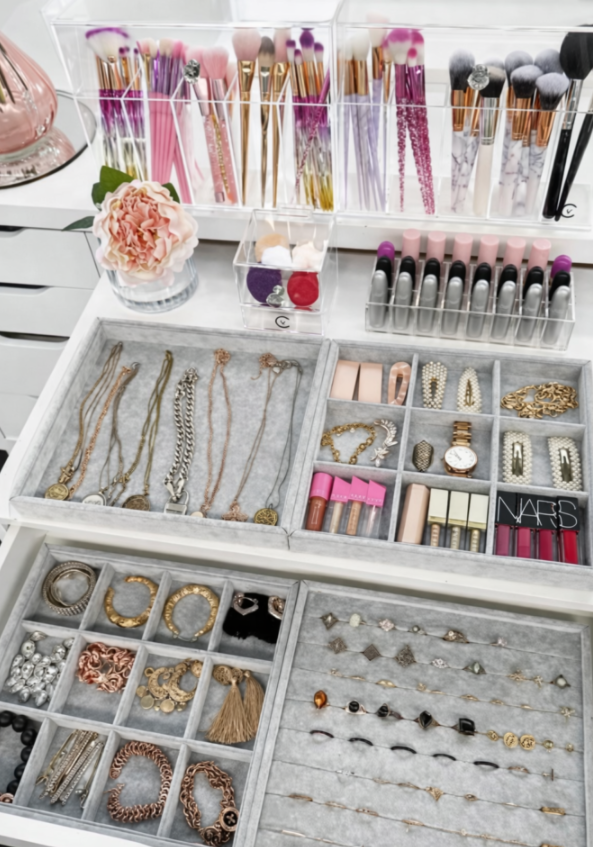
If I store jewelry in my vanity, I give it a separate section instead of mixing it with makeup. Velvet-lined trays are useful because individual compartments help keep smaller pieces separated.
I use small sections for rings and earrings, longer slots for necklaces, and larger spaces for watches or bigger accessories. Keeping necklaces separated is particularly helpful because it reduces the chance of creating a tangled pile.
I choose the insert according to the drawer dimensions first. A beautiful jewelry tray is not useful if it leaves half the drawer unusable or prevents the drawer from closing properly.
Countertop Drawer Tower
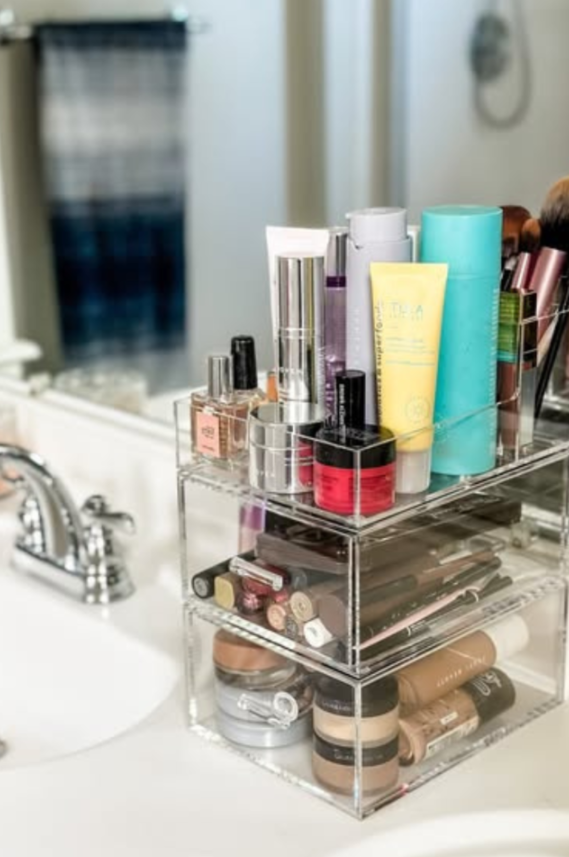
When bathroom drawer space is limited, I can move some storage upward by using a compact countertop drawer tower. This works well for the products I reach for regularly.
I prefer keeping categories separated by drawer or level. For example, I might use one drawer for skincare, another for makeup, and another for smaller personal-care items.
I avoid placing too many tall bottles into a shallow drawer because they can become difficult to remove. Before buying a tower, I check both the overall footprint and the height of each drawer.
Stacked Clear Drawers
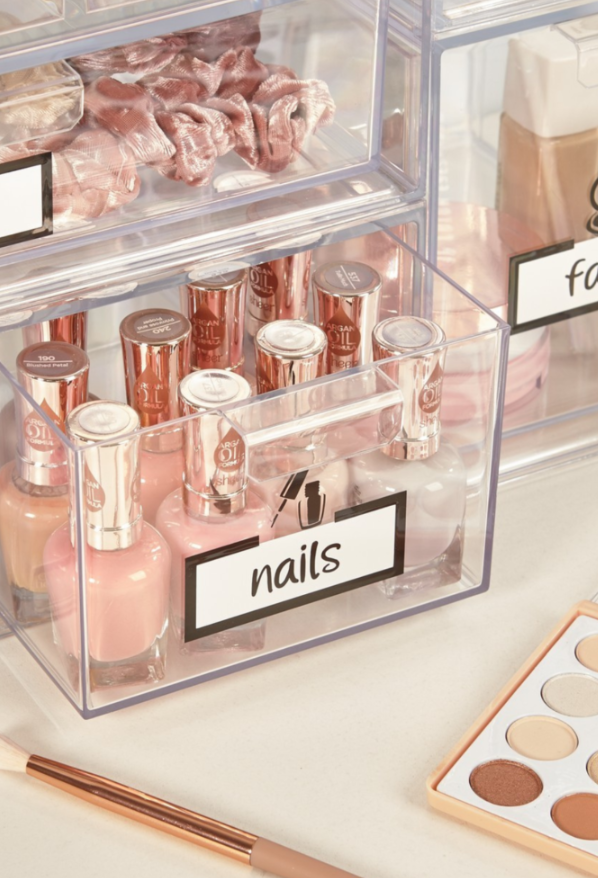
Stacked clear drawers help me use vertical space when my countertop is more available than my existing drawer space. Because the contents are visible, I can quickly identify the category I need.
I normally reserve deeper drawers for taller bottles and larger products. Smaller compartments work better for items such as nail products, hair accessories, pencils, and other compact items.
I also avoid creating too many categories. If I have only a few nail-care products, giving them an entire drawer may waste space that could be used for a larger category.
Slim Stack Storage
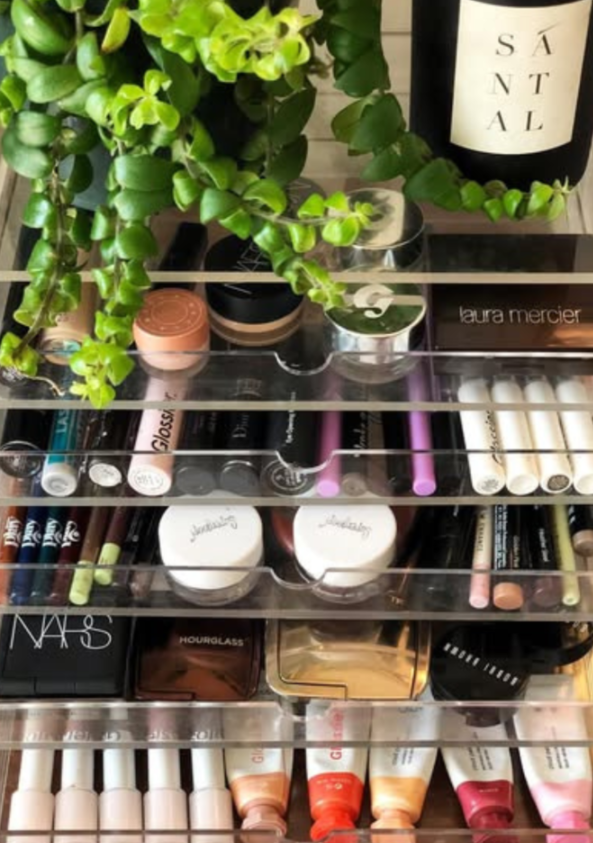
I use slim stack organizers when I have many small products but limited drawer depth. Instead of putting everything into one deep container, I create shallow levels that keep more items visible.
This is particularly useful for lipsticks, compacts, pencils, and other products that are easy to lose beneath larger items. I group products by type so I know where to look before opening the drawer.
One practical rule I follow is visibility before capacity. A container that holds 30 products but hides 20 of them may be less useful than one that holds 20 products where I can see all of them.
Minimal Grid Layout
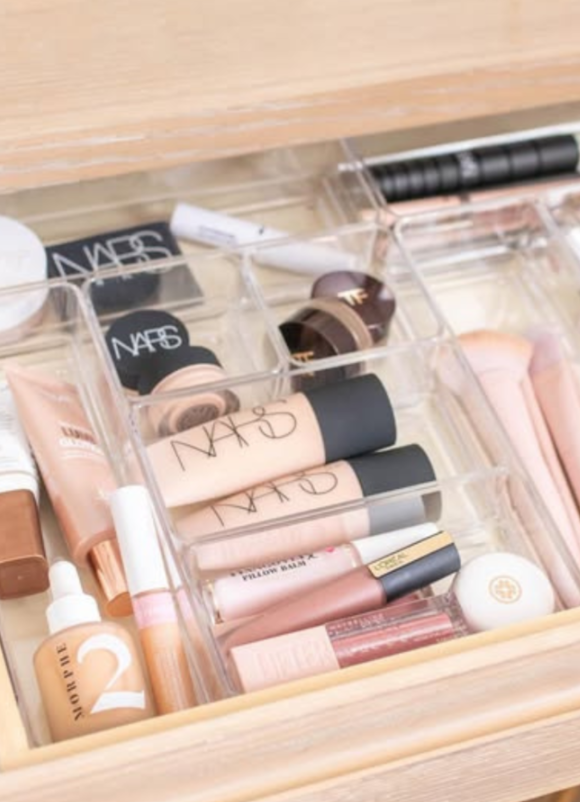
A grid layout gives each product a defined position. I like this approach for shallow drawers because it prevents small products from sliding into empty spaces and creating a mixed pile.
I can use medium sections for foundation and concealer, smaller spaces for lip products, and wider compartments for sponges or other tools.
I do not try to make every compartment the same size. Different products need different amounts of space, so an adjustable grid is often more practical than a rigid organizer with identical sections.
Daily Skincare Zone
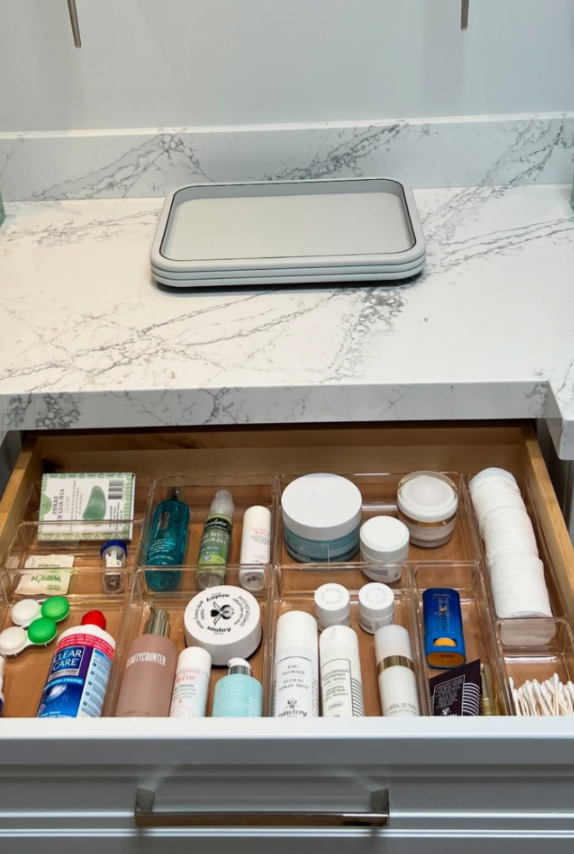
I find it much easier to follow my skincare routine when the products are kept together and arranged in the order I normally use them.
I can place cleansers or first-step products toward one side, followed by serums, moisturizers, and other routine products. Cotton pads or small accessories can sit in a separate section nearby.
I keep bottles upright whenever the packaging calls for it and avoid overcrowding them. If I use a product every morning, it should not be hidden behind something I only use once a month.
Labeled Daily Sections
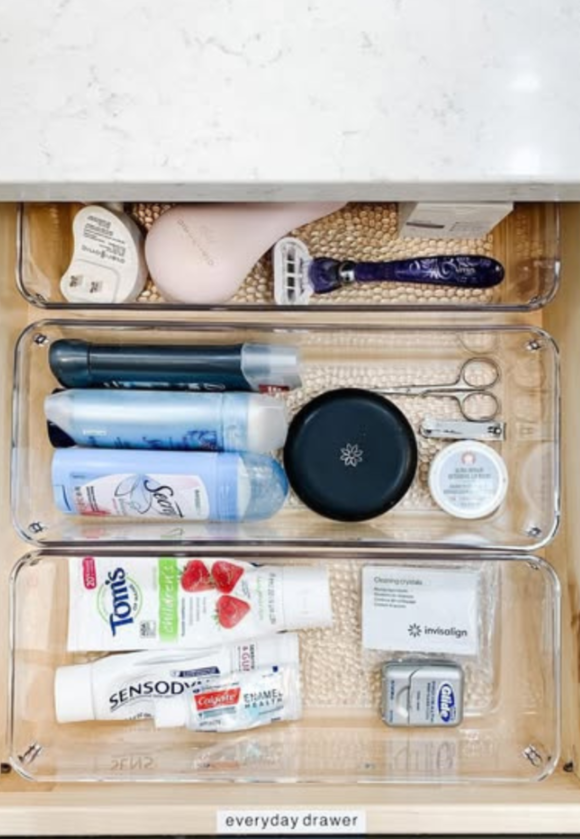
A shared vanity can become messy quickly because different types of personal-care products end up in the same drawer. I use broad labels such as dental, deodorant, skincare, grooming, or personal care to create clear boundaries.
I keep everyday products in one easy-to-reach area and store backups somewhere else. This prevents me from mixing an unopened replacement with the product I am currently using.
For households with several users, I find this especially practical because everyone has a clear idea of where an item belongs.
Built-In Tool Slots
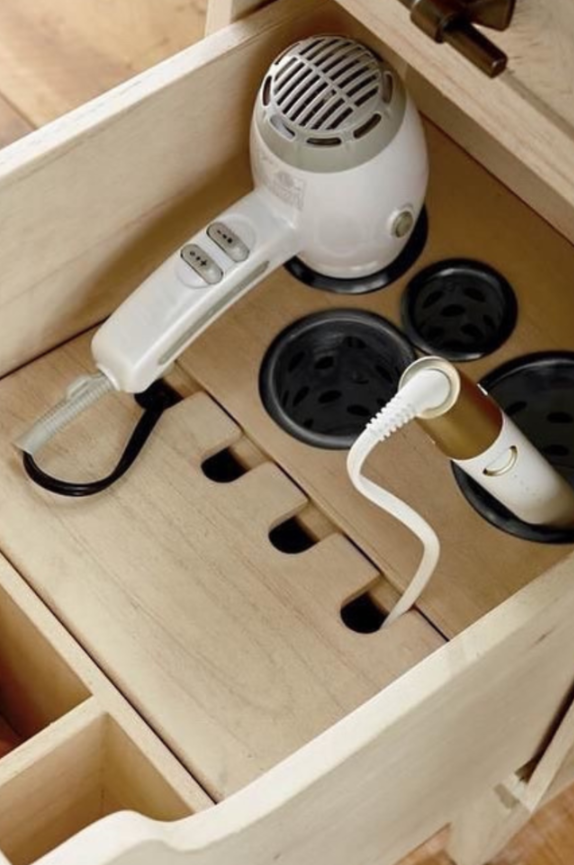
Hair tools need more planning than small makeup products because they are larger, heavier, and often come with long cords. For a deep drawer, built-in slots can give dryers, straighteners, curling tools, and brushes their own positions.
I prefer a setup where each tool has a defined space and cords have a separate channel or area. This reduces the amount of untangling I have to do before using them.
I also pay attention to heat safety. I never place a hot styling tool directly into a closed drawer or against materials that are not designed for heat. Any storage insert should be appropriate for the tool and used only after the tool has cooled sufficiently.
Accessory Color Zoning
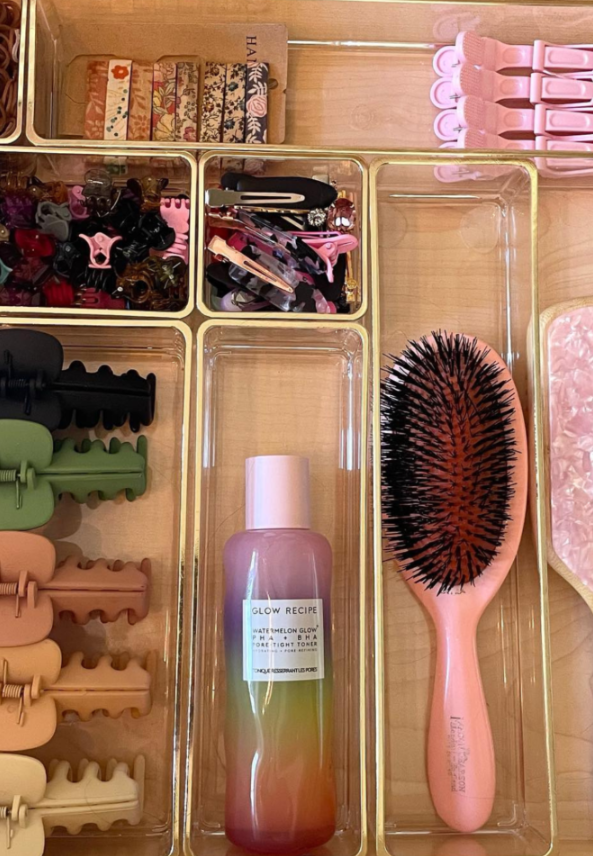
Color zoning can make a drawer easier to scan, but I use it only after I have sorted accessories by type. I would rather group claw clips together first and then arrange them by color than create a pretty drawer where similar items are scattered across multiple sections.
I can use separate compartments for clips, hair ties, scrunchies, brushes, and other accessories. Within those sections, arranging colors from light to dark can make the drawer easier to visually navigate.
The goal is not just appearance. I want to be able to open the drawer and find the exact type of accessory I need within a few seconds.
FAQs
How Do You Keep Products From Sliding Around Inside the Drawer?
I start by checking whether the compartments are simply too large for the products. If there is a lot of empty space around each item, products will naturally move when I open and close the drawer.
I use adjustable dividers, snug-fitting trays, or a non-slip drawer liner where appropriate. I also group products with similar shapes and sizes instead of leaving small items loose in a large compartment.
I avoid overfilling the drawer to stop movement. A good organizer should hold products securely while still leaving enough room for me to remove and replace them easily.
Should You Store Skincare and Makeup in the Same Drawer?
Yes, I can store them in the same drawer as long as I create separate zones. I keep skincare bottles and creams together and use divided sections for makeup.
I also give brushes and other reusable tools their own clean area. Loose powder can create residue, so I do not place brushes directly on top of makeup products or skincare containers.
If I have enough space, I prefer separate drawers for skincare and makeup. If space is limited, clear dividers and a simple category system can make the shared drawer work just as well.