25 Road Trip Organization Ideas for a Clutter-Free Car
A road trip can start with a perfectly packed car and still turn messy within a few hours. I have found that most of the clutter comes from small things: empty bottles, snack packets, charging cords, jackets, shoes, and items that never make it back to their original spot.
The easiest fix is not buying dozens of car organizers. I prefer giving each type of item a clear home and keeping the things I use most within reach. A small trash container, separate personal bags, organized food storage, and a quick reset at stops can make a noticeable difference.
In this guide, I’ll walk through 25 road trip organization ideas for the passenger area and trunk. I’ll also show you what I would keep within reach, what belongs in the trunk, and how to create a simple setup without overcrowding the car.
Key Takeaways
- Give each passenger a small bag for personal items.
- Keep water, snacks, chargers, tissues, and other frequent-use items accessible.
- Use separate storage for food, rubbish, electronics, clothing, and shoes.
- Keep bulky luggage and rarely needed supplies in the trunk.
- Leave some unused space because your luggage will rarely stay exactly the same throughout the trip.
- Take five minutes at major stops to return items to their proper places.
1. Give Everyone Their Own Small Travel Bag
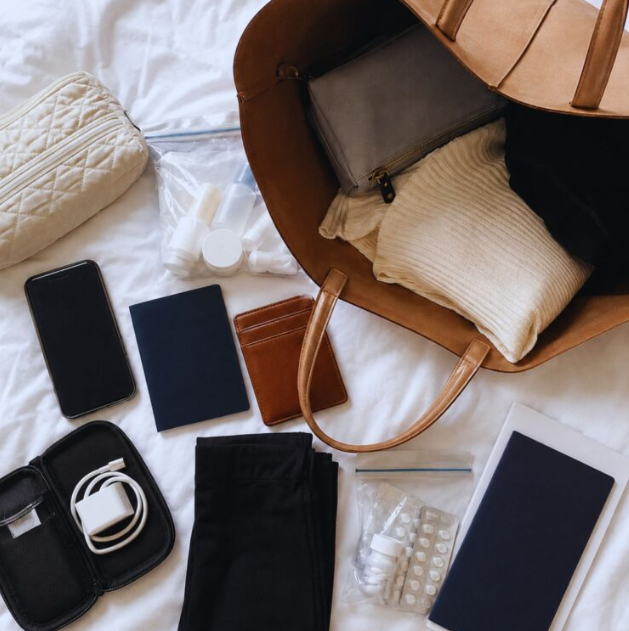
I find shared bags become messy quickly because everyone puts their belongings in the same place. A better approach is to give each passenger a small travel pouch or tote for personal items.
It can hold headphones, sunglasses, medication, tissues, chargers, reading material, or a few snacks. The larger suitcase stays in the trunk while each person keeps only their useful in-car items nearby.
For children, a small backpack can serve the same purpose. It also gives them responsibility for their own belongings instead of relying on someone else to find them.
Pro tip: Keep the bags small. If a personal bag is too large, it can become another place to store unnecessary stuff.
2. Use a Backseat Organizer
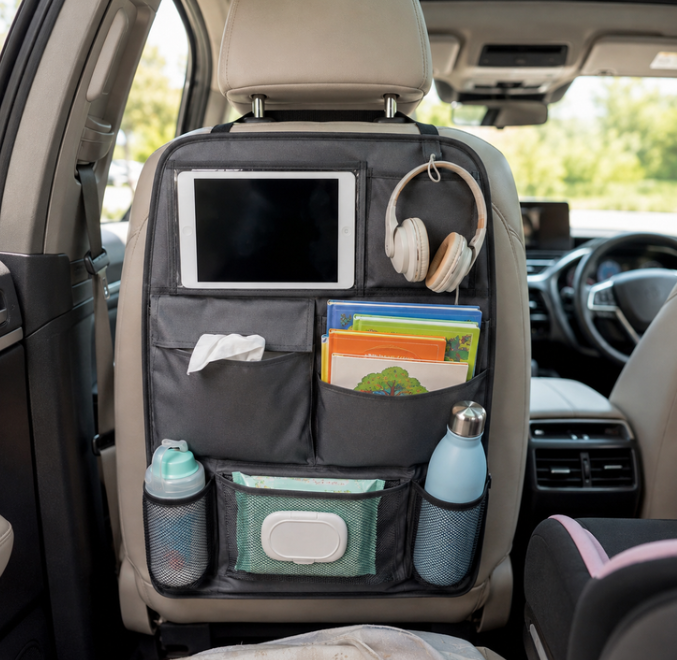
A backseat organizer can make good use of the space behind the front seats, particularly when children are traveling with you.
I would use the pockets for items that passengers may need during the drive, such as books, headphones, wipes, small toys, water bottles, and tablets. This keeps those items off the floor and reduces the need to search through luggage.
Before buying one, check that it fits your seat properly and does not interfere with the driver’s controls or visibility.
Pro tip: Avoid filling every pocket. A few useful items are better than an organizer that becomes overloaded.
3. Keep a Small Trash Bin in the Car
I consider a dedicated rubbish container one of the most useful additions for a long drive.
Without one, wrappers and receipts tend to collect in door pockets, cupholders, and under seats. A small lined container or reusable rubbish bag gives everyone an obvious place to put waste.
I would empty it whenever I stop for fuel, food, or a longer break. That prevents food packaging from sitting in a warm car for hours.
Pro tip: Put a few spare liners inside the bottom of the container so replacing a full bag takes seconds.
4. Create a Snack Station
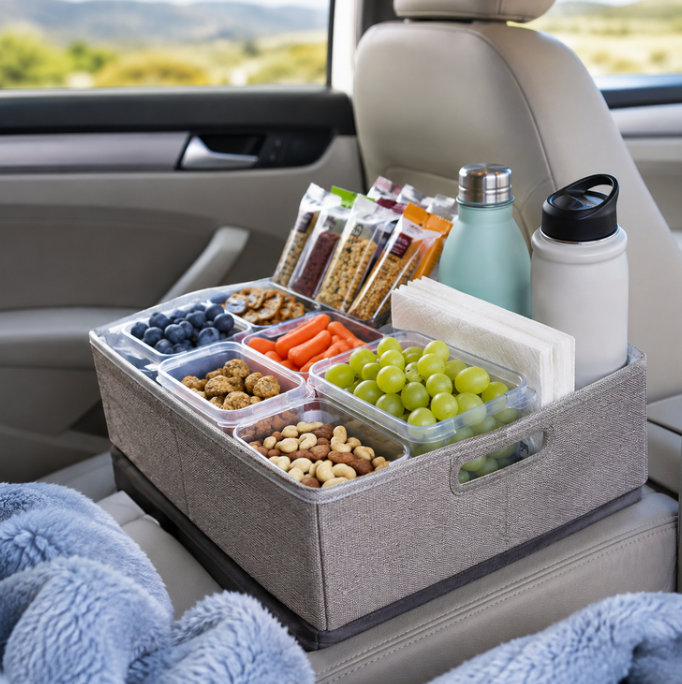
Instead of keeping several large snack packets loose inside the car, I prefer putting the day’s snacks in one basket or soft-sided container.
You can separate items such as crackers, fruit, granola bars, nuts, pretzels, and dried fruit into smaller portions. Passengers can then take what they need without opening multiple bags.
For longer trips, keep food that can tolerate heat in the car and store temperature-sensitive foods in a properly chilled cooler.
Pro tip: Put the snack station somewhere passengers can reach safely without leaning across the driver.
5. Use Clear Containers for Small Items
Small items are easy to lose because they disappear underneath larger belongings.
Clear pouches or containers let me group similar items together while still seeing what’s inside. For example, one pouch can hold charging accessories, another can hold personal-care items, and another can contain basic first-aid supplies.
This works particularly well in the trunk because you can identify a pouch without opening several bags.
Pro tip: Label the pouches if several people are sharing the same storage area.
6. Keep Charging Cables Together
Loose charging cables are one of those small problems that can make a car feel untidy very quickly.
I keep cables together in a small pouch and use simple cable ties or Velcro straps to prevent them from becoming tangled. If several passengers use different connectors, separating them by type makes finding the right one faster.
I also recommend carrying a spare charging cable rather than relying on a single one for everyone.
Pro tip: Check your vehicle’s charging ports before the trip so you know how many devices can actually be charged at once.
7. Use the Center Console Carefully
The center console has limited space, so I try not to treat it as a general-purpose drawer.
Give each section a job. Frequently used small items can stay near the top, while less frequently needed accessories can go into a pouch underneath.
Avoid storing loose coins, wrappers, receipts, cables, and personal items together. Once everything is mixed, finding one small item becomes surprisingly difficult.
Pro tip: Empty unnecessary items from the console before leaving home. Starting with a clean space makes the system much easier to maintain.
8. Put Important Documents in One Folder
I like keeping important travel information together rather than searching through email, text messages, and different bags.
Depending on your trip, the folder could contain accommodation information, insurance details, roadside-assistance information, vehicle documents, reservations, and printed directions.
Digital copies are useful too, but I would not rely entirely on your phone. A dead battery, poor signal, or damaged device can make basic information harder to access.
Pro tip: Keep sensitive documents secure and only carry the information you actually need for the journey.
9. Pack a Front-Seat Essentials Basket
The front passenger area is where I keep items that someone may need repeatedly during the drive.
A small basket or pouch can hold tissues, hand sanitizer, wipes, sunglasses, mints, a charger, and other everyday items.
The main benefit is simple: instead of opening the trunk every time you need something small, you already know where it is.
Pro tip: Keep the basket compact enough that it does not block access to important controls or become a hazard during sudden braking.
10. Use Door Pockets With a Purpose
Door pockets can hold useful items, but they become messy when there is no system.
I prefer assigning each pocket a purpose. For example, the front passenger pocket might hold tissues and wipes, while a rear pocket could be used for activity books or a water bottle if the vehicle’s storage is designed for it.
Do not overload them with heavy objects. Extra weight in a door pocket can also make items harder to retrieve.
Pro tip: Check the vehicle’s manual for storage and weight limitations before putting bulky items in door compartments.
11. Pack Snacks Into Individual Portions
Individual snack portions make sharing easier and can reduce the amount of food opened at one time.
I would divide suitable snacks into small reusable containers or bags before leaving. This also makes it easier to give children a predetermined amount rather than handing over an entire large packet.
For foods that spoil quickly, use an insulated cooler with sufficient ice or cold packs rather than leaving them in the passenger area.
Pro tip: Pack a few extra portions for unexpected delays. Traffic, detours, and longer stops can quickly extend a planned journey.
12. Keep Wet Wipes Within Reach
A pack of wet wipes can solve plenty of minor road-trip problems.
I keep them available for cleaning hands, dealing with small food spills, wiping surfaces, or cleaning sticky fingers after snacks. They are especially useful when traveling with children.
For longer journeys, I prefer having one pack in the passenger area rather than storing it with the main luggage.
Pro tip: Keep wipes sealed properly so they do not dry out before you need them.
13. Use Cupholder Organizers
Cupholders are designed mainly for drinks, but they often become temporary storage for coins, receipts, cables, lip balm, and other small objects.
A removable cupholder insert can provide separate compartments for these little items. I find this particularly useful when the vehicle has limited small-item storage.
Just make sure the organizer does not interfere with the actual cupholder’s intended use.
Pro tip: Keep the number of items low. A cupholder organizer should reduce clutter, not create another crowded compartment.
14. Pack a Car Cleaning Kit
I do not think a road trip requires a full cleaning kit. A few basic supplies are usually enough for small accidents.
My compact setup would include microfiber cloths, paper towels, wipes, and a few rubbish bags. Store everything together in a pouch so you can grab it quickly after a spill.
Cleaning a small mess immediately is much easier than allowing food or liquid to sit for several hours.
Pro tip: If a drink spills, deal with it as soon as it is safe to do so. Some liquids can stain upholstery or leave odors if they remain untreated.
15. Use Packing Cubes in the Trunk

Packing cubes can make a car trunk easier to manage even when you are not using suitcases.
I like separating clothes, toiletries, towels, and activity gear into different cubes. That way, I can pull out one category without disturbing everything else.
They also make it easier to repack after an overnight stop because each category already has its own container.
Pro tip: Put the items you will need first near the top or front of the trunk rather than underneath several heavy bags.
16. Keep an Overnight Bag Separate
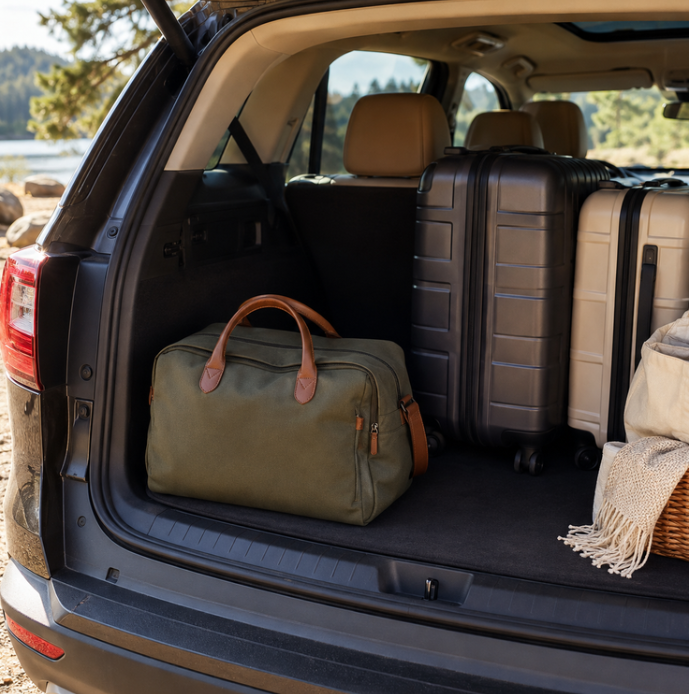
If your road trip involves several overnight stops, I would avoid taking every suitcase into the hotel each night.
Pack a smaller overnight bag with sleepwear, toiletries, a change of clothes, and charging equipment. The main luggage can remain organized in the trunk when appropriate and secure.
This can save time, especially when you are staying somewhere for only one night.
Pro tip: Keep the overnight bag near the trunk opening so you do not have to remove other luggage to reach it.
17. Create a Dedicated Cooler Zone
Food and drinks are easier to manage when they have one designated location.
I prefer keeping the cooler in a stable part of the vehicle where it will not slide around during normal driving. Put napkins, reusable bottles, utensils, and other food-related supplies nearby.
For perishable food, maintaining a safe cold temperature matters more than simply having a cooler. Follow the food-safety instructions for the foods you are carrying.
Pro tip: Pre-chill the cooler and food before leaving. Starting with cold contents helps the cooler maintain its temperature for longer.
18. Use Reusable Water Bottles
A long drive can quickly create a collection of half-used disposable bottles.
Giving each passenger a reusable bottle creates less rubbish and makes it easier to keep track of everyone’s drink. Labeling bottles or choosing different designs can help prevent mix-ups.
I would also make sure every bottle fits securely in the vehicle’s cupholders or designated bottle holders.
Pro tip: Refill at suitable stops instead of allowing empty bottles to accumulate around the cabin.
19. Pack Entertainment Into One Bag
For passengers who need entertainment during a long drive, I recommend keeping everything together.
One bag can hold books, cards, headphones, tablets, coloring supplies, travel games, and puzzle books. When everything has one home, passengers can choose something without searching through several bags.
For children, I would avoid bringing every toy they own. A small selection usually creates less clutter and is easier to manage.
Pro tip: Rotate activities during long journeys instead of putting everything out at the same time.
20. Use a Document or Tablet Holder for Kids
A suitable tablet holder can keep a child’s device positioned in front of them rather than balanced on their lap.
For screen-free activities, a stable lap tray can provide a surface for coloring, drawing, sticker books, or simple travel games.
When using any vehicle accessory, make sure it is properly installed and does not interfere with airbags, seat belts, visibility, or other safety equipment.
Pro tip: Test the holder before the trip. A product that works at home may not fit your particular seat or vehicle correctly.
21. Keep a Spare Clothes Bag Easy to Reach
I always think an emergency clothing bag is more useful when it is accessible rather than buried under luggage.
A spare outfit can help after a drink spill, muddy stop, rain, or another unexpected mess. For children, I would consider keeping a complete change of clothes available.
Include basic items such as a shirt, bottoms, underwear, and socks.
Pro tip: Pack the spare clothes in a waterproof or washable bag if possible. That gives you somewhere to put wet or dirty clothing afterward.
22. Use a Laundry Bag for Dirty Clothes
Clean and worn clothes can easily get mixed together during a multi-day road trip.
A separate laundry bag gives dirty clothing one obvious destination. As clothes are worn, they go directly into the bag instead of returning to the clean luggage.
This also makes unpacking easier because you can take the laundry bag straight to the washing area when you get home.
Pro tip: A lightweight washable laundry bag takes up very little room when empty, making it a practical choice for road trips.
23. Keep a Shoe Bag Near the Trunk
Shoes can carry mud, sand, water, and dirt into your luggage and vehicle.
I like keeping footwear together in a separate bag or washable container. This is particularly useful after hiking, visiting a beach, camping, or walking through wet areas.
It also stops shoes from being scattered around the trunk and makes them easier to find.
Pro tip: Let wet footwear dry when possible instead of sealing it in a closed bag for an extended period.
24. Do a Five-Minute Car Reset at Every Major Stop
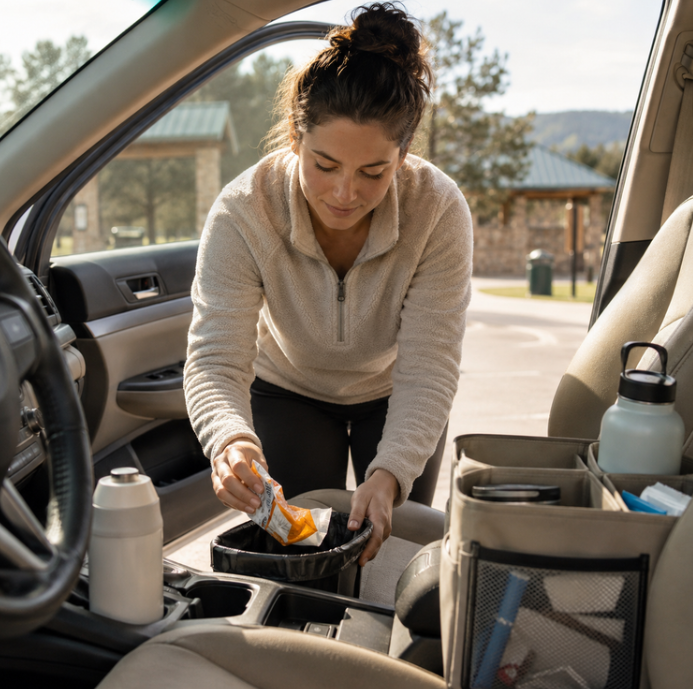
This is the habit I would prioritize if you only want to follow one idea from the list.
At a fuel, food, or longer rest stop, take a few minutes to collect rubbish, return snacks to their container, organize cables, refill water, and move belongings back to their assigned locations.
Everyone can help. Even a quick group reset prevents small messes from becoming a major cleanup later.
Pro tip: Do the reset while stopped somewhere appropriate. Never reorganize loose items while the vehicle is moving.
25. Leave Some Empty Space
One mistake I see with road-trip packing is using every available inch before the journey even starts.
I prefer leaving some room in the trunk and storage areas. You may buy groceries, collect souvenirs, remove layers of clothing, or pick up supplies during the trip.
If everything is already tightly packed, there is nowhere for those new items to go.
Pro tip: Aim to leave at least one small section of flexible storage rather than filling every compartment to capacity.
A Simple Road Trip Organization Setup
You do not need 25 separate organizers to keep your car manageable. I would start with a simple system based on where items are used.
Front area: Keep the essentials basket and important documents here.
Back seats: Use seat organizers for passenger items, entertainment, and approved storage.
Center console: Reserve this for small, frequently used personal and electronic items.
Floor: Keep it as clear as possible, especially around the driver’s controls and passenger footwells.
Trunk: Store main luggage, packing cubes, spare clothes, shoes, and less frequently used supplies.
Food area: Keep the cooler and food supplies together.
Rubbish: Give everyone one obvious place to put waste.
The goal is not to create a perfect-looking car. It is to make it obvious where each item belongs.
What to Keep Within Reach
Before leaving, I would make these items easy for passengers to access:
- Water bottles
- Snacks
- Phone charging equipment
- Sunglasses
- Tissues
- Wet wipes
- Hand sanitizer
- Rubbish bags
- Basic first-aid supplies
- Necessary travel documents
- Entertainment
- Spare clothing when needed
Keep anything that could become dangerous during sudden braking properly secured rather than leaving loose objects around the cabin.
What Should Stay in the Trunk
I keep bulky and rarely needed items out of the passenger area whenever possible.
That includes:
- Main suitcases
- Extra shoes
- Large toiletries
- Spare blankets
- Outdoor equipment
- Backup food supplies
- Laundry bags
- Extra clothing
- Other items that are not needed during the drive
A clear passenger area gives everyone more usable space and makes it easier to reach the items that actually matter during the journey.
One Rule That Makes Road Trips Much Easier
If I take something out, I put it back when I am finished.
That rule sounds almost too simple, but it prevents clutter from spreading.
A jacket gets left on a seat. A charger stays in the console. A snack packet ends up on the floor. A water bottle gets pushed under a seat. None of these creates a serious mess by itself.
The problem comes when dozens of small items are left out over several hours.
A quick reset after each activity keeps the car manageable without requiring a major cleanup.
Final Thoughts
For me, an organized road-trip car is not about making the interior look perfect. It is about reducing the small frustrations that build up during a long journey.
I want to find my charger without searching under a seat. I want snacks in one place, rubbish in one place, and luggage that does not need to be completely unpacked to find one shirt.
Start with the basics: give belongings a home, keep frequently used items accessible, separate food and rubbish, organize the trunk, and reset the car during longer stops.
You do not need to buy every organizer available. A few simple systems that everyone actually follows will usually work better than a complicated setup that nobody maintains.
The less time I spend searching, cleaning, and moving bags around, the more attention I can give to the journey itself.