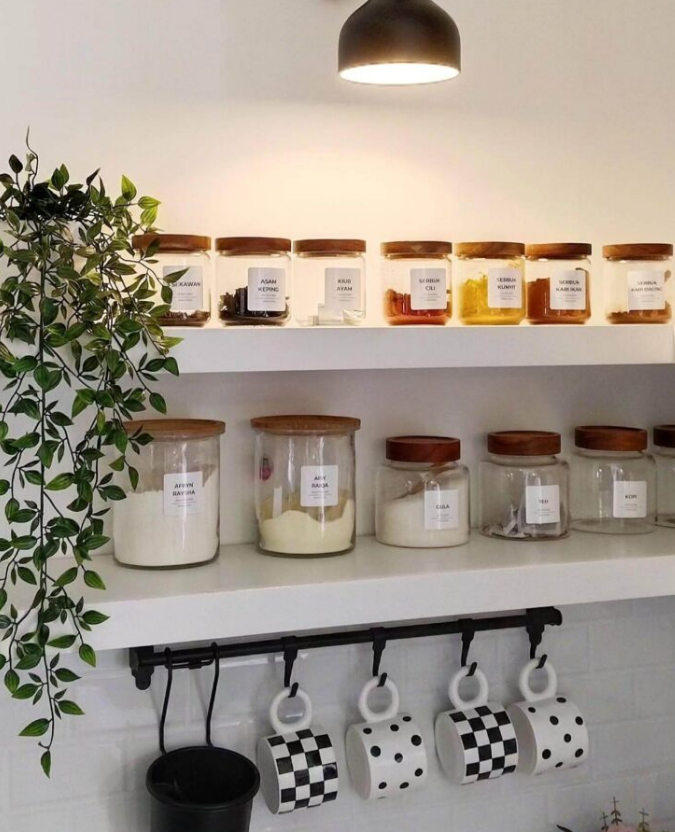
20 Coffee Station Organization Ideas for 2026
A home coffee station can make your morning routine easier when everything you need is kept in one convenient place. I believe a good setup should focus on everyday use rather than decoration alone. Your coffee machine, mugs, coffee beans, filters, syrups, sugar, and other supplies should all have a clear place.
You don’t need a large kitchen or expensive built-in cabinets to create a useful coffee corner. A small countertop, floating shelves, a storage cabinet, or even an unused kitchen corner can work. The key is choosing storage that fits your routine and keeping frequently used items within easy reach.
In this article, I’ll share practical home coffee station ideas, including tiered mug displays, floating shelves, labeled baskets, pull-out pantry storage, countertop organizers, and hidden drawers. I’ll also cover lighting, small-space solutions, and the essentials worth keeping nearby so your coffee station stays clean and easy to use.
Key Takeaways
- Keep your coffee machine, mugs, beans, filters, and sweeteners together in one dedicated area.
- Use floating shelves, tiered stands, and risers to make better use of vertical space.
- Store extra supplies in labeled baskets, drawers, or cabinets to prevent countertop clutter.
- Choose clear containers so you can quickly check your coffee and sugar supplies.
- Add task lighting near your coffee machine to make early morning preparation easier.
- Keep decorative items limited so you have enough room to prepare your drinks.
Tiered Mug Display

I like using a two-tier mug stand because it makes everyday cups easy to reach without filling the entire countertop. Instead of opening cabinets every morning, I can keep my favorite mugs together and grab one whenever I need it.
A sturdy metal or wooden stand works well for this arrangement. Place your frequently used mugs on the lower and upper levels, and store seasonal cups or extra collections somewhere else.
For a more practical layout, position the stand next to your coffee machine. This creates a small preparation area where you can reach your cup and brewer without moving around the kitchen.
Natural daylight can make white mugs and wooden accents stand out. If the counter is in a darker area, add suitable overhead or under-cabinet lighting to keep everything visible.
Floating Shelf Setup
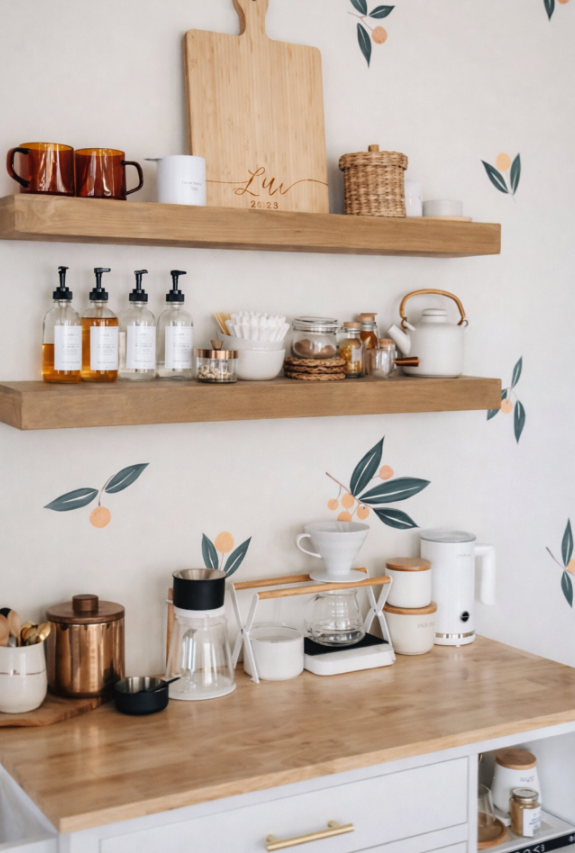
Floating shelves are useful when your kitchen counter doesn’t have enough room for coffee supplies. Instead of keeping every jar and accessory on the worktop, you can use the wall above it for additional storage.
I recommend installing two sturdy wooden shelves above your coffee machine. Use the lower shelf for everyday items such as mugs, filters, and frequently used syrups. The upper shelf can hold backup supplies, decorative jars, or items you don’t need as often.
Clear containers are particularly helpful for storing coffee beans, sugar, and other dry ingredients. They make it easier to check how much you have left without opening several packages.
This arrangement works especially well in apartments and smaller kitchens. Warm wooden shelves also add a natural touch, while good window and overhead lighting keep the station bright.
Cabinet Coffee Nook
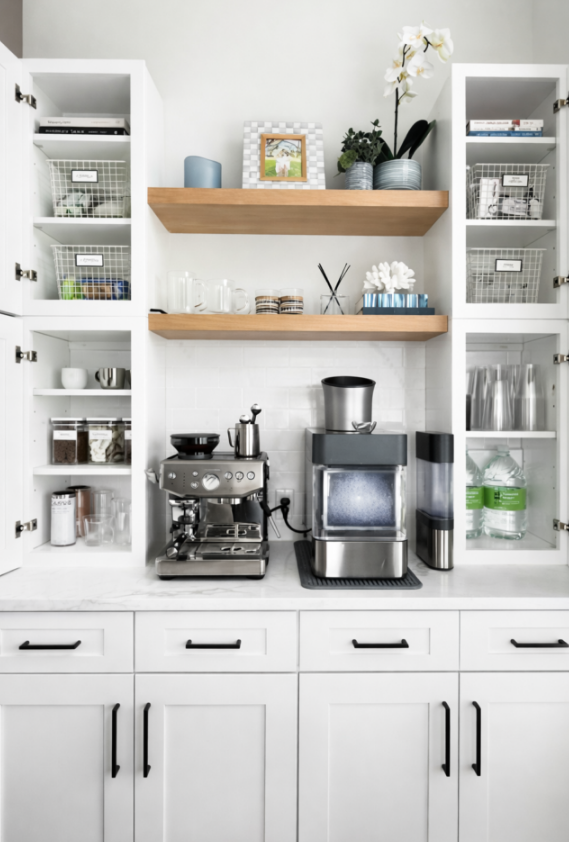
A cabinet coffee nook is a good option if you prefer keeping kitchen counters free from visible clutter. Everything can stay inside one dedicated cabinet, making the kitchen look more organized when you’re not preparing coffee.
I would use adjustable shelves to separate mugs, coffee machines, beans, filters, and syrups. This makes it easier to arrange supplies according to their size instead of wasting space between fixed shelves.
Small labeled baskets can hold coffee pods, tea bags, stirrers, and other accessories. Keep your coffee machine at a comfortable working height so you don’t have to bend or reach too far during preparation.
White cabinets can make the nook feel bright and clean. Recessed lighting or small cabinet lights can also help illuminate the workspace, especially if the cabinet is positioned away from natural light.
Labeled Basket System
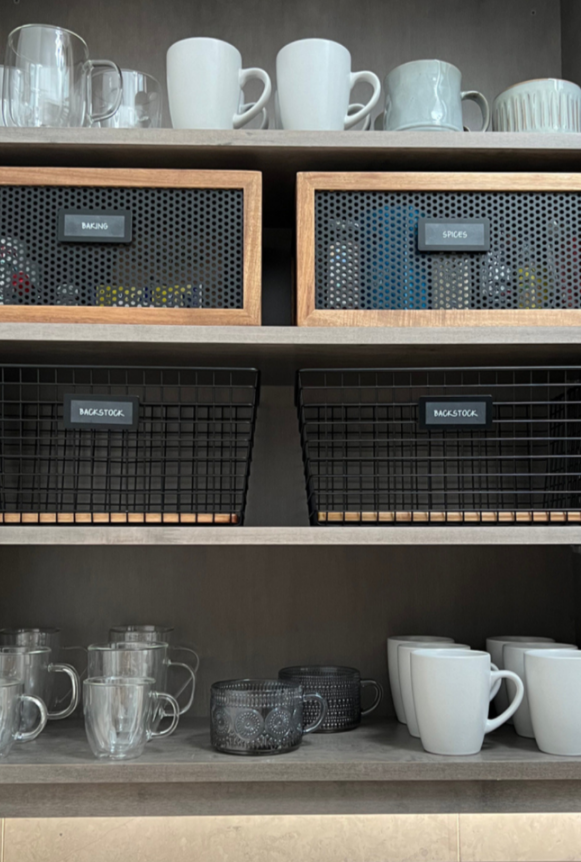
One simple way to organize coffee supplies is to give every category its own basket. When pods, sweeteners, filters, and stirrers are mixed together, finding something in the morning takes longer than necessary.
I suggest using separate labeled containers for regular coffee pods, decaf options, flavored varieties, and tea supplies. This makes it easier for everyone in the household to put things back where they belong.
Mesh or clear-front baskets are useful because you can see what’s inside without removing every container. Choose baskets that fit your cabinet shelves and leave enough room to pull them out comfortably.
Keep everyday mugs on a lower shelf and place backup supplies higher up. If your cabinet is deep, use under-cabinet lighting or small battery-powered lights so labels and contents remain easy to see.
Pull-Out Coffee Pantry

A pull-out coffee pantry is a practical choice when you want several coffee essentials stored in one compact area. Instead of reaching into a deep cabinet, you can slide the storage unit toward you and access everything more easily.
I like this idea for kitchens with tall cabinets or unused narrow spaces. You can dedicate the middle shelves to coffee equipment, mugs, and everyday supplies while using lower drawers for filters, pods, napkins, and extra accessories.
Soft-close drawers are worth considering if you’re planning a custom installation. They reduce noise and help drawers close smoothly during busy mornings.
Keep frequently used items between waist and eye level so they’re comfortable to reach. Built-in LED lighting can also make the shelves easier to use while giving the pantry a warm appearance.
Dark Cabinet Contrast
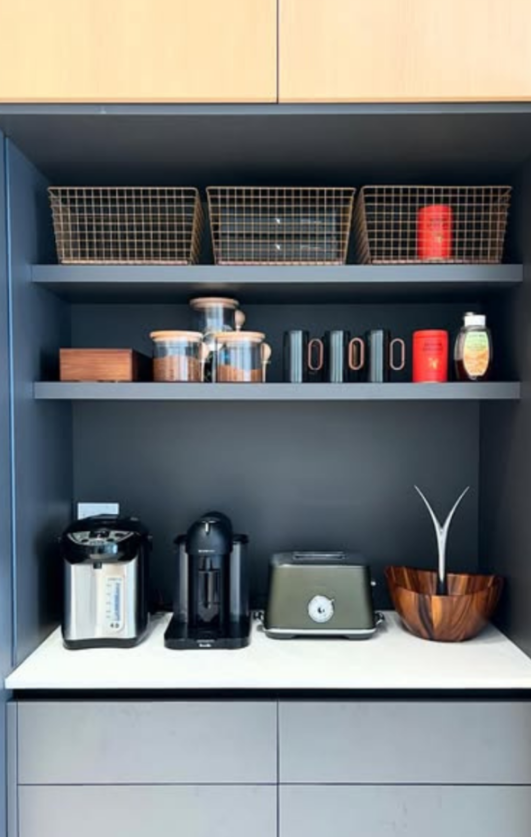
A dark cabinet interior can give your coffee station a defined look while keeping supplies organized behind closed doors. It’s a useful design choice if you prefer a clean kitchen exterior but still want a dedicated place for your coffee equipment.
For this setup, I would use matching containers for coffee beans, sugar, and other dry ingredients. Arrange your coffee machine and grinder side by side if there is enough room, and use small wire baskets on the upper shelves for pods and backup supplies.
Try not to fill every available surface. Leave enough open space around the machine to prepare your drink, add water, and clean up spills.
Shelf lighting is particularly helpful inside darker cabinets. A small LED strip can illuminate the supplies without making the entire kitchen feel overly bright.
Styled Open Shelving

Open shelving gives you a chance to keep coffee supplies accessible while making use of empty wall space. It’s especially helpful if you have a wide kitchen counter but limited cabinet storage.
I recommend using long floating shelves to separate everyday tools from decorative items. Keep mugs and frequently used coffee accessories on the lower shelf, while the upper shelf can hold extra jars, backup supplies, and a few simple decorations.
Small trays are useful for grouping syrup bottles, sugar jars, and other accessories. They also make cleaning easier because you can lift the entire group instead of moving each item individually.
Avoid overcrowding the shelves. Leaving a little space between containers makes everything easier to reach and prevents the coffee station from looking messy.
Wall sconces or under-shelf lights can provide extra visibility around the preparation area. Combine them with general kitchen lighting for a comfortable setup.
Cozy Cottage Corner

If you prefer a warm farmhouse or cottage-style kitchen, a small coffee corner with wooden shelves, glass jars, and matching cups can create a welcoming space.
I would start with a simple shelf for teacups and saucers. Stacking matching sets together helps save space while keeping everything ready for everyday use.
Clear jars with wooden lids are another useful addition. You can use them for coffee beans, sugar, tea bags, or individually wrapped treats. Small drawers or baskets can hold teaspoons, filters, and other accessories that don’t need to stay visible.
Position the coffee machine at one end of the counter and leave the middle section open for preparation. This gives you enough room to make coffee without moving decorative items around.
Natural daylight works beautifully with warm wood and glass containers. Soft ceiling lighting can make the corner practical during early mornings and evenings.
Open Rack Station
A freestanding rack can turn an unused kitchen corner into a complete coffee station without requiring permanent shelving or cabinet installation.
I find this particularly useful for apartments, rental kitchens, and homes with limited storage. Choose a rack with multiple levels so you can separate coffee equipment, mugs, and supplies instead of stacking everything together.
Mug hooks underneath the top shelf keep cups within reach and free up valuable shelf space. You can use woven baskets or small containers on the lower levels to organize tea bags, pods, sugar packets, and snacks.
Keep your coffee machine on a comfortable middle shelf, provided the rack is designed to support its weight and can safely accommodate the appliance. Make sure there is enough clearance for ventilation and safe operation.
Place the rack near an accessible power outlet and use nearby lighting to keep the entire setup easy to use.
Clean Corner Layout
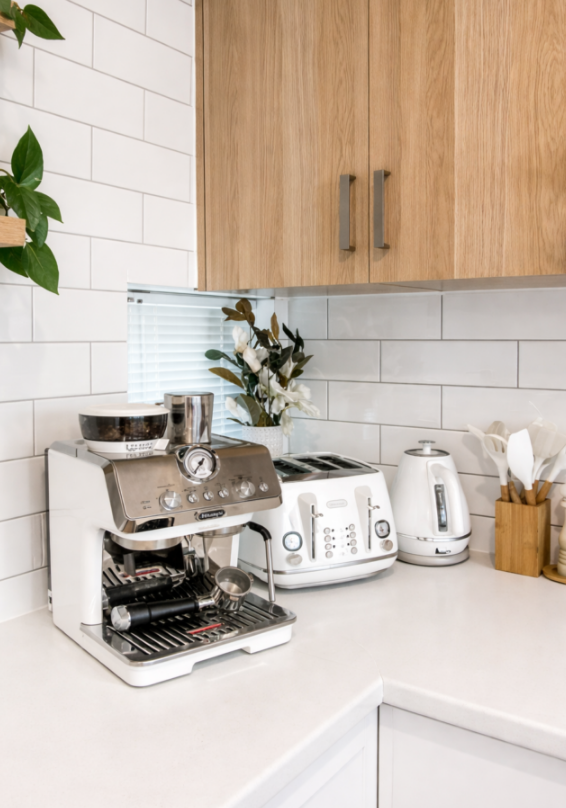
An unused kitchen corner can become a practical coffee station with a little planning. Rather than allowing this area to collect random appliances, give it one clear purpose.
I would position the coffee machine against the wall and arrange smaller appliances, such as an electric kettle or toaster, beside it only if there is enough room.
Use a small holder for spoons, stirrers, and other tools so they don’t spread across the countertop. Keep coffee beans and sweeteners in nearby containers or a small tray.
The most important part of this layout is leaving open space in front of the machine. You need room to place a mug, prepare your drink, and clean up afterward.
This arrangement works well in minimalist kitchens where keeping surfaces clear is a priority. Good natural and overhead lighting will also make the corner feel brighter.
Contained Coffee Caddy
A coffee caddy is one of the easiest ways to organize a small coffee station without installing shelves or buying additional furniture.
I recommend choosing a handled caddy with separate sections for coffee pods, sugar packets, stirrers, tea bags, and other small supplies. This keeps everything together instead of spreading it across the counter.
A portable design is especially useful in shared kitchens, offices, or homes where different people prepare their drinks in different areas. You can simply move the caddy whenever you need it.
Keep only the items you use regularly inside. If you add too many backup supplies, the caddy can quickly become crowded and difficult to organize.
Place it beside your coffee machine so the entire brewing process happens in one convenient area. A wooden or dark-colored tray can also add a little contrast to a light countertop.
Minimal Glass Storage
Matching glass containers can make coffee supplies easier to organize and monitor. Instead of keeping several open packages on the counter, transfer suitable dry ingredients into clean, clearly labeled containers.
I would use airtight jars for coffee beans and other dry ingredients that need protection from air and moisture. Clear containers are also useful for sugar and tea because you can see when supplies are running low.
For flavored syrups, use properly cleaned, compatible bottles with pumps. Label each bottle clearly so you don’t accidentally use the wrong flavor.
A small tiered tray can hold several jars without spreading them across the countertop. Keep larger appliances grouped on one side and leave the remaining area open for preparation.
One important tip: coffee beans are best protected from heat, moisture, air, and direct sunlight. If you use clear jars, keep them away from sunny windows and choose airtight storage.
Compact Counter Zone
Small kitchens require a little more planning because every inch of counter space matters. A compact coffee station should include only the equipment and supplies you use regularly.
A raised pod drawer is a smart option because it provides storage underneath while offering another surface on top. You can arrange coffee capsules inside the drawer and place a few syrup bottles or small accessories above it.
Position your coffee machine at one end of the counter and keep the remaining space available for preparing drinks. Avoid adding extra mugs, decorative jars, and backup supplies if they make the area difficult to use.
Labeled pump bottles can also help reduce packaging clutter. Just make sure they are easy to refill and clean.
This arrangement works well in rental kitchens where you cannot install permanent shelves. Under-cabinet lighting can provide useful task lighting without taking up any counter space.
Raised Tray Display
When small coffee supplies are scattered across a flat countertop, the entire area can look cluttered. A wooden riser or raised tray helps bring those items together and creates separate storage levels.
I like using a small riser for syrup bottles, sugar jars, and coffee accessories. You can place smaller containers underneath or use the lower section for mugs, depending on the design.
This is a helpful solution for compact coffee corners because it uses vertical space without requiring wall installation.
Arrange taller bottles toward the back and smaller items toward the front so everything remains visible. Keep the area directly in front of your coffee machine clear for preparing drinks.
Choose a riser that is stable, easy to wipe clean, and large enough to hold your everyday essentials without making the counter feel crowded.
Built-In Beverage Bar
If you have a larger kitchen, a built-in beverage bar can provide enough room for coffee machines, mugs, cold drinks, and additional supplies.
I would combine upper cabinets with a few open shelves. Closed cabinets are useful for hiding backup coffee supplies, while open shelving makes frequently used mugs and accessories easy to reach.
A lower beverage refrigerator is another option if your household regularly uses chilled drinks, milk, or creamers. Make sure the refrigerator has suitable ventilation and enough clearance according to the manufacturer’s instructions.
Keep the coffee machine on one side of the counter and leave a clear preparation area beside it. Store syrups, filters, and extra supplies inside the cabinets rather than covering every available surface.
Recessed ceiling lights can brighten the entire beverage area. You can also use shelf lighting to make the space easier to use in the evening.
Warm Wood Layers
Wooden shelves and natural storage materials can make a coffee station feel warm without sacrificing practical storage.
One idea I particularly like is using small wooden crate-style shelves to display mugs vertically. This arrangement keeps cups visible and can make better use of a narrow wall or countertop.
A woven-front cabinet or basket can hold coffee pods, tea bags, napkins, and other supplies that you don’t want to display. Keep frequently used jars on the open shelf above so they’re easy to reach.
Try grouping containers according to their purpose. For example, keep coffee beans and sugar together, while tea bags and sweeteners can have their own section.
Don’t add too many decorative accessories. A few wooden details and matching containers are usually enough to make the station feel complete.
Pendant lighting can provide focused illumination, while under-shelf lights help brighten the counter and backsplash.
Marble Backdrop Focus
A marble backsplash can become the main feature of your coffee station, especially in a modern kitchen with simple cabinetry and countertops.
When using a statement material like marble, I prefer keeping the surrounding accessories minimal. Too many colorful bottles and decorative pieces can distract from the natural pattern.
Use matching airtight canisters for coffee beans and other dry supplies. Keep your daily mugs close to the coffee machine and place one or two decorative accessories toward the side.
Warm wooden cabinets or shelves can create a nice contrast with the cooler marble surface. You can also use a small tray to keep sugar, stirrers, and syrup bottles together.
This arrangement works well in modern and traditional kitchens where the backsplash is meant to stand out. Natural daylight can highlight the stone’s texture, while recessed lighting keeps the preparation area bright.
Mini Riser Storage
A mini wooden riser is a useful addition when you want more storage but don’t have room for another cabinet or shelf.
The raised platform creates an upper and lower level. You can keep coffee jars, brewing accessories, or a small glass container on top while storing mugs and saucers underneath.
I recommend choosing a riser with enough height for your cups to slide underneath comfortably. It should also have a stable base that can support the items placed above it.
This works particularly well on narrow countertops because it helps organize supplies without spreading them over a larger area.
Keep the surrounding counter clear so you have enough room to prepare your coffee. A simple wooden finish also works nicely with neutral kitchen colors and other natural materials.
Layered Lighting Nook
Lighting can make a noticeable difference in how comfortable and practical your coffee station feels. A poorly lit corner can make it difficult to read labels, measure coffee, or clean up spills.
For a cozy setup, you can combine under-shelf LED strips with a wall sconce or small decorative light. These options provide extra brightness without using valuable countertop space.
String lights can add a decorative glow behind floating shelves, but I would not rely on them as the main source of light. Keep a proper task light near the coffee machine.
Organize syrups and jars on the upper shelves and store tea, sugar, and smaller supplies in labeled containers below. Drawer dividers can help separate coffee pods, spoons, and sweeteners.
This arrangement is especially suitable for apartments and dedicated coffee corners where you want a comfortable atmosphere without sacrificing everyday convenience.
Hidden Drawer Storage
Hidden drawers are an excellent way to keep small coffee accessories organized without filling your countertop with containers.
A wide pull-out drawer with adjustable dividers can hold coffee pods, tea bags, sugar packets, stirrers, filters, and napkins. Each category gets its own section, making it easier to find what you need.
I recommend using clear drawer organizers so you can see the contents without removing every item. If you have several types of coffee pods, separate them by flavor or strength.
Upper cabinets can hold mugs, cups, and less frequently used equipment. Keep the coffee machine on the main counter with enough open space around it for preparation.
This setup works particularly well in renovated kitchens or custom-built coffee stations. Under-cabinet lighting can brighten the worktop, while internal cabinet lights make hidden storage easier to access.
FAQs
How Much Space Do I Really Need for a Home Coffee Station?
You don’t need a large kitchen or an entire wall to create a useful coffee station. A counter section measuring around 24–36 inches wide can be enough for a compact setup, depending on the size of your coffee machine and accessories.
I recommend measuring your available space before buying storage organizers or appliances. Keep the coffee machine, mugs, and daily supplies together, and store extra items in nearby cabinets.
If the countertop is particularly small, consider floating shelves, a tiered mug stand, or a compact storage riser. These options help you use vertical space without making the worktop feel crowded.
What Should I Keep Out of My Coffee Station?
I would keep only the supplies and equipment you use regularly within easy reach. This usually includes your coffee machine, everyday mugs, coffee beans or pods, filters, sugar, and a few basic accessories.
Extra mugs, seasonal syrups, unopened coffee bags, bulk supplies, and unrelated kitchen tools are better stored in cabinets or drawers. Keeping these items out of the main preparation area makes cleaning easier.
Avoid using the coffee station as a general storage space for random kitchen accessories. When every item has a specific place, your setup stays organized and your morning coffee routine becomes much easier.