21 Boot Storage Ideas for 2026
Boots can quickly make an entryway look messy because they take up more space than regular shoes. Tall boots often lean against walls, lose their shape, and create clutter around the front door.
The best way to organize them is to give every pair a proper storage spot. A boot rack, storage bench, wall hooks, or even a simple basket can help keep your entryway neat while protecting your footwear.
In this article, I’m sharing 23 practical boot storage ideas for entryways. These solutions include options for small spaces, mudrooms, closets, and larger entryways, so you can choose a setup that works for your home.
Key Takeaways
- Use boot hangers and shapers to help tall boots maintain their shape.
- Choose cubbies, racks, and shelves to keep pairs separated.
- Use wall-mounted storage to save valuable floor space.
- Add waterproof trays and drying racks for wet outdoor boots.
- Try storage benches, baskets, and cabinets to keep entryways tidy.
What Are the Smartest Boot Storage Ideas for Entryways?
The smartest way to store boots in an entryway is to choose a solution based on the number of pairs you own and the space available. Tall boots need enough vertical room to stand properly, while wet outdoor boots need ventilation and a place for water to drain.
Start by choosing a dedicated area near the door. This could be an open rack, a storage bench, a small cabinet, or an unused section of a closet.
If you have limited floor space, wall-mounted racks and hooks can help keep boots off the ground. For larger entryways, a cabinet or cubby system provides separate spaces for different pairs.
I also recommend using boot shapers or hangers for tall leather and suede boots. They help prevent the shafts from folding over and developing unwanted creases.
1. Boot Hangers
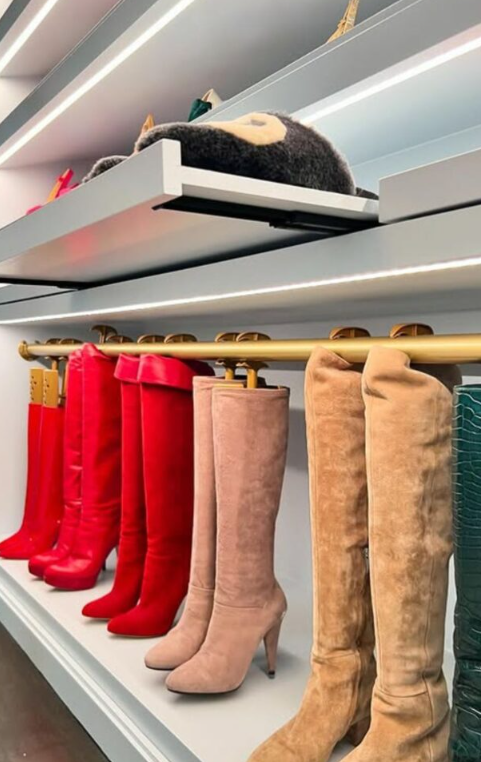
Tall boots can lose their shape when they’re folded or squeezed into crowded shelves. Boot hangers offer a simple way to keep them upright.
Install a clothing rod inside an entryway closet or along an available wall. Use sturdy clip-style or curved boot hangers to hold each pair securely.
Leave enough space between the boots so they don’t rub against each other. You can also install a shelf above the rod for smaller shoes, bags, or seasonal accessories.
This idea works particularly well for leather and suede boots that need extra care during storage.
2. Floor Row

If you have unused floor space beneath a clothing rack or closet rod, turn it into a dedicated boot storage area.
Arrange your boots in a neat row instead of leaving them scattered around the entryway. This keeps every pair visible and makes it easier to choose the footwear you need.
Use boot shapers or suitable inserts to support soft shafts and prevent them from folding over. Leave a little space between pairs so they’re easy to remove.
This is an affordable option for closets and dressing rooms where most of the wall space is already being used.
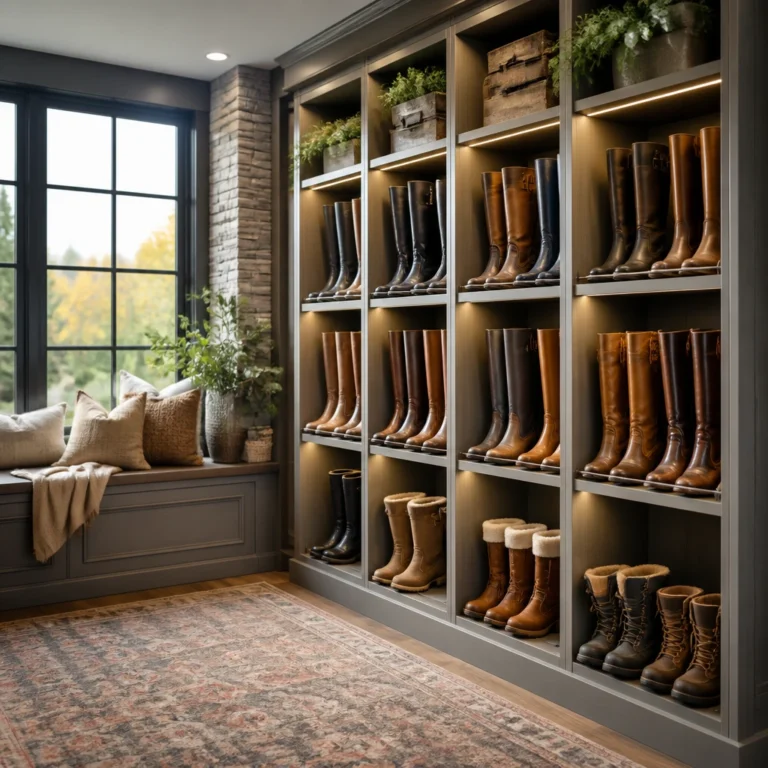
3. Shelf Wall
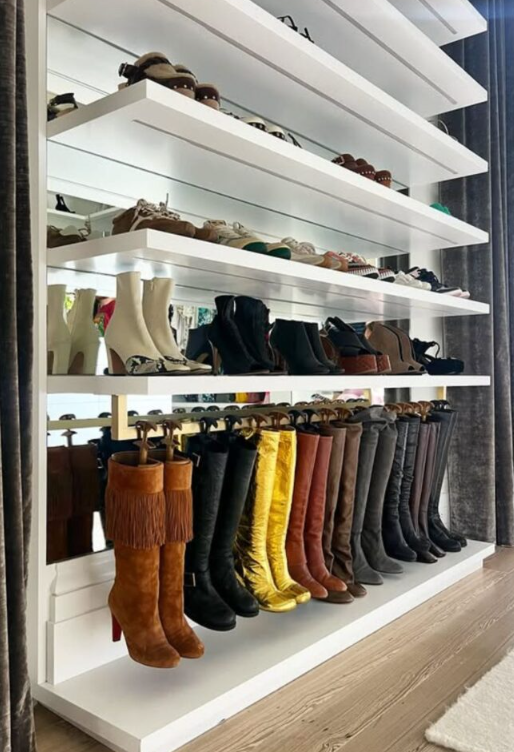
A full-height shelving unit can provide plenty of storage while keeping tall boots organized at the bottom.
Use the upper shelves for regular shoes, bags, and accessories. Leave the lower section open for taller footwear or install a hanging rod with boot hangers underneath.
Arrange each pair evenly so the boots remain visible and easy to reach. You can also add LED strip lighting beneath the shelves to make the storage area easier to use.
This layout works especially well in walk-in closets and larger dressing rooms.
4. Boot Cubbies
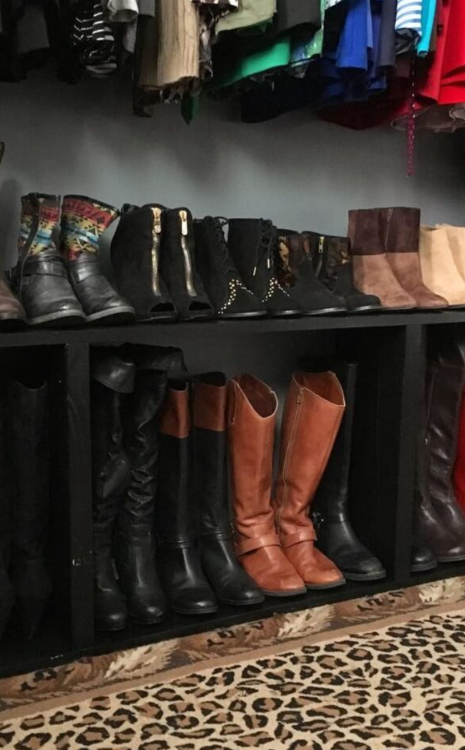
Standard shoe shelves don’t always have enough height for tall boots. Open boot cubbies solve this problem by giving each pair its own vertical compartment.
Choose a low cubby bench or storage unit with enough space for your tallest boots. The side panels help keep pairs separated and prevent them from leaning against each other.
Place one pair in each compartment so you can quickly see what you own. Dark wood and black finishes are practical choices for everyday entryway storage because they can help hide minor scuffs.
5. Peg Rack
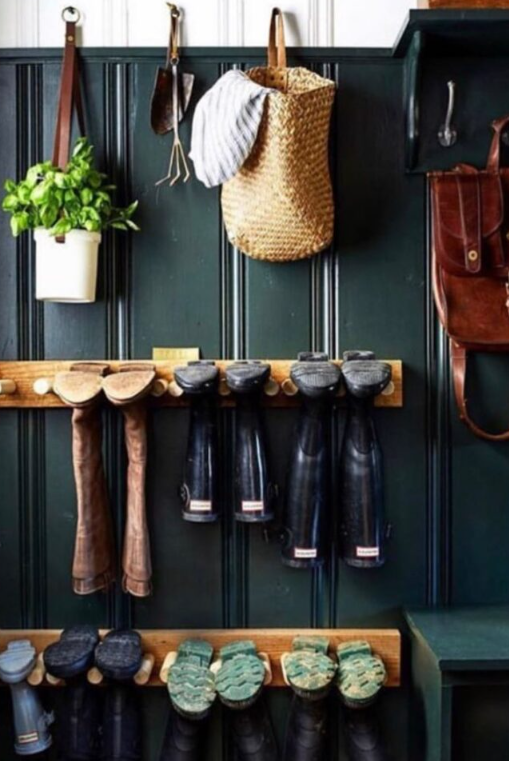
Wet rain boots can leave water and dirt around the entryway when they’re stored directly on the floor.
A wooden peg rack offers another way to organize outdoor footwear. Position the boots upside down over suitable pegs so water can drain and air can circulate.
Install the rack in a mudroom, garage entrance, or near a back door where outdoor boots are regularly removed.
For additional storage, use two rows of pegs if the wall has enough space. A small bench nearby also makes it easier to sit while removing footwear.
6. Boot Cabinets
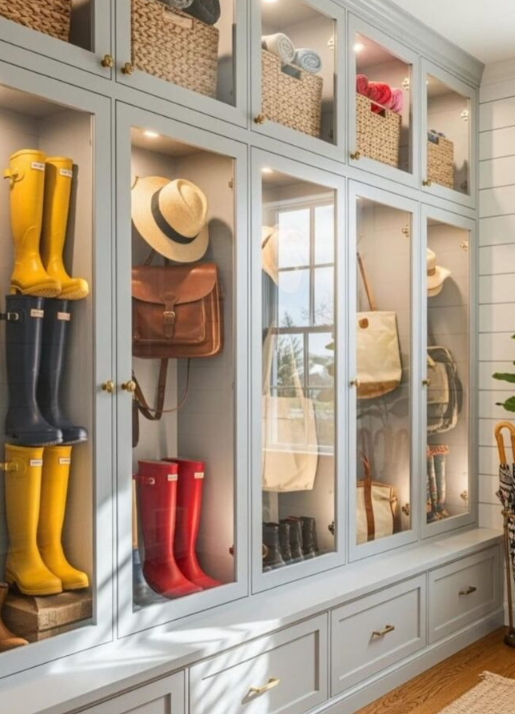
A tall storage cabinet is a good option if you prefer an entryway without visible footwear.
Choose a cabinet with enough vertical space for rain boots and tall leather pairs. Glass doors can make it easier to see what’s stored inside while protecting footwear from dust.
Use the lower section for boots and the upper shelves for smaller shoes, bags, and seasonal accessories.
You can also add interior lighting or small hooks for hats and bags. If several family members share the cabinet, assign each person a separate shelf or section.
7. Boot Section
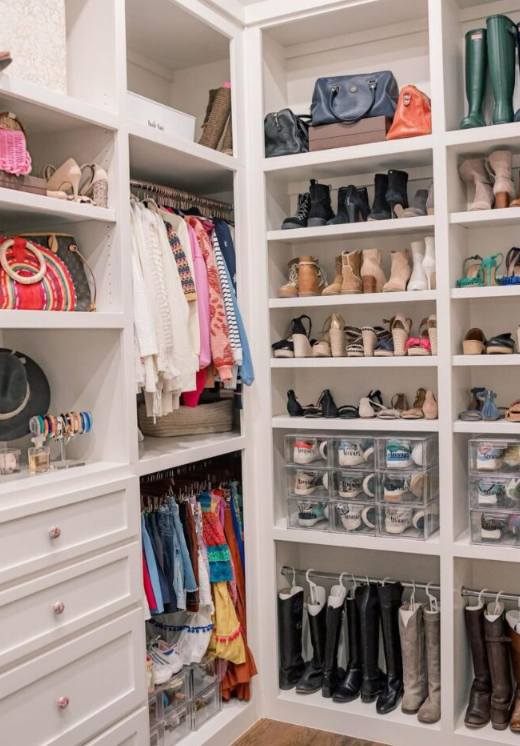
A dedicated boot section inside an existing closet can make a big difference without requiring a complete storage makeover.
Keep the bottom shelf open so tall boots have enough room to stand upright. Add boot shapers to support the shafts and help prevent creases.
Use the upper shelves for regular shoes, handbags, and accessories. Keeping boots on the lower level also makes them easier to reach when you’re getting ready to leave.
This idea works particularly well in walk-in closets with unused vertical space near the bottom.
8. Boot Bags
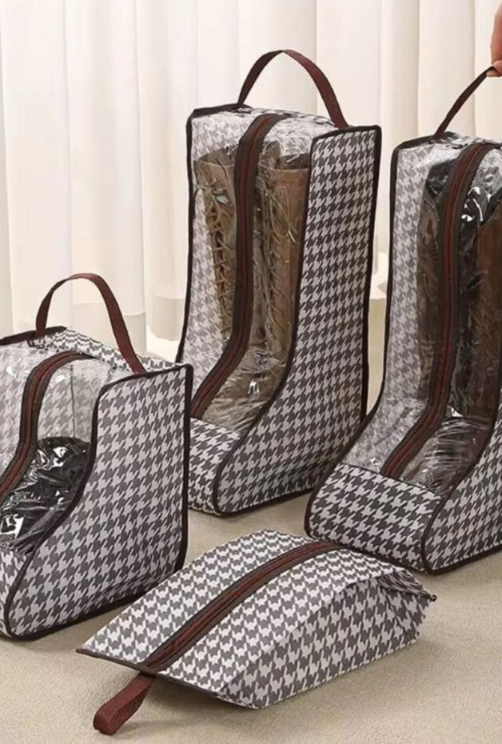
Boot storage bags help protect footwear when you aren’t using it regularly.
Choose structured bags with separate sections so each pair has enough room. Zippered designs protect boots from dust and scratches, while transparent panels make it easier to identify what’s inside.
Store the bags on closet shelves or arrange them neatly along the floor. Handles are also useful when you need to move seasonal boots or pack them for a trip.
For leather and suede footwear, make sure the boots are clean and completely dry before placing them in long-term storage.
9. Boot Display

If you have attractive boots that you wear frequently, open display storage can make them part of your room’s decor.
Install a floating shelf with a hanging rod underneath. Use the shelf for smaller shoes, handbags, or accessories, and hang tall boots below with suitable boot hangers.
This arrangement keeps your footwear visible and easy to reach. You can also add soft lighting beneath the shelf to brighten the display.
It works well in dressing rooms, walk-in closets, and larger entryways where open storage fits the overall design.
10. Boot Tower
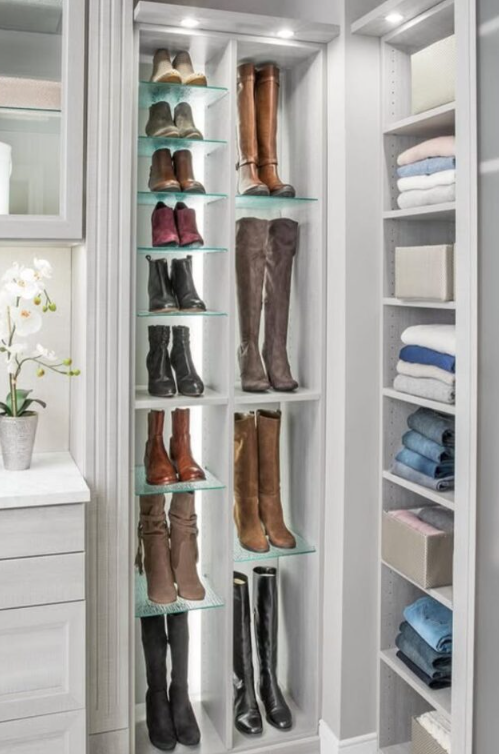
A narrow boot tower makes good use of vertical space when you don’t have much floor area.
Choose a tall shelving unit with separate levels for different types of footwear. Keep taller boots on the lower shelves so they have enough room and are less likely to tip over.
Use the upper shelves for ankle boots, shorter shoes, and small accessories.
Open shelving makes it easy to see every pair, while built-in lighting can help brighten the storage area. This is a useful option for narrow closets and dressing rooms.
11. Boot Rack
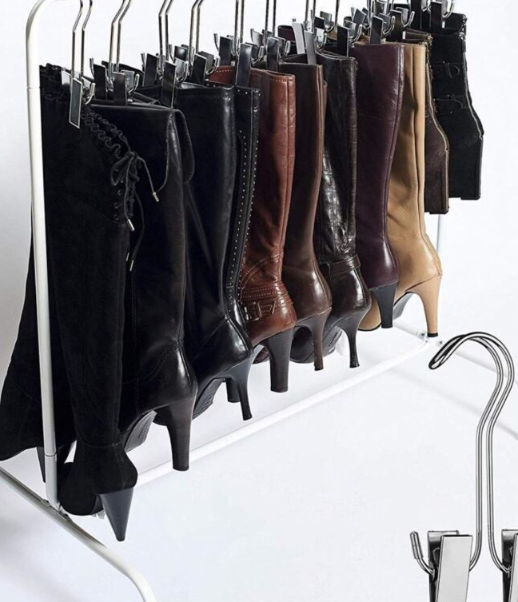
A standing boot rack with clip hangers keeps tall footwear off the floor and helps maintain its shape.
The metal clips hold the upper edge of each boot while the shafts hang naturally. This prevents them from collapsing into a pile on crowded shelves.
Place the rack inside a closet or along an unused wall. It can also make seasonal footwear easier to rotate because you can add or remove hangers as needed.
Choose a rack with secure clips that won’t damage delicate materials.
12. Boot Slots
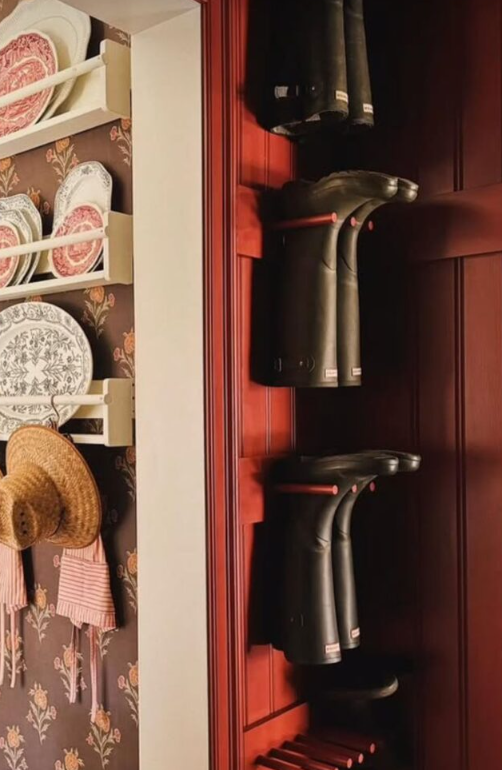
Wet boots often collect near the entrance after rainy or snowy weather. Separate boot slots provide a dedicated place for each pair.
Use a wall-mounted holder with horizontal supports that allow boots to rest upside down. This position helps water drain and allows air to circulate.
Install a drip tray underneath to catch excess moisture and protect your flooring.
This setup works particularly well in mudrooms, back entrances, and other areas where outdoor footwear is regularly used.
13. Boot Rail
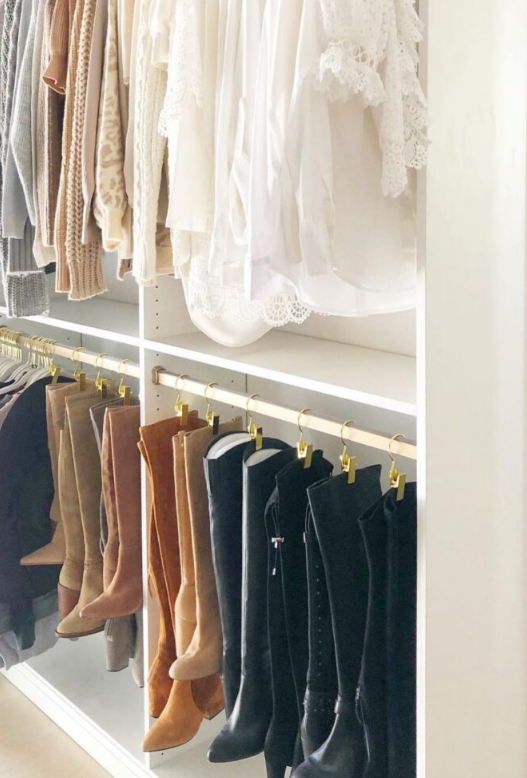
The space beneath hanging clothes is often underused in entryway closets. Adding a second rail can turn that area into practical boot storage.
Install a lower rod and use clip-style hangers to suspend tall boots. The clips hold the top edges while the shafts hang naturally.
Position the rail low enough to keep boots accessible without interfering with longer coats and jackets above.
This is a useful option for leather and suede footwear that can develop creases when folded.
14. Boot Shelf
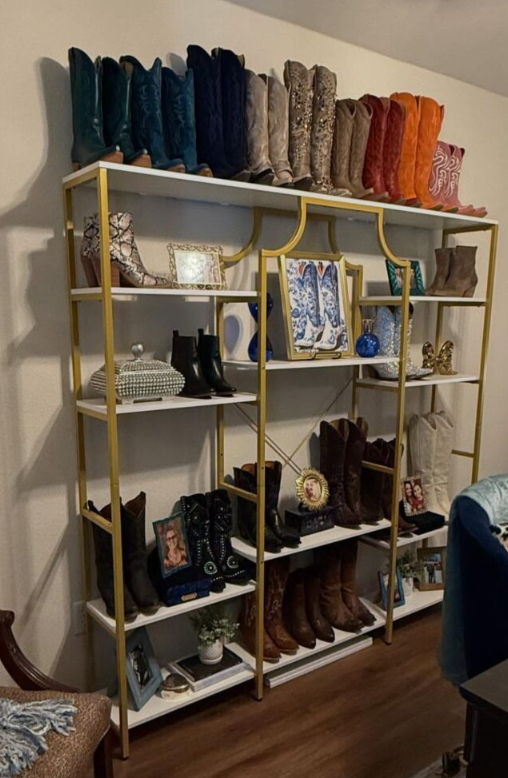
A tall, freestanding shelf gives each pair its own storage level while keeping your footwear visible.
Choose a shelf with enough height for your tallest boots. Place shorter shoes and accessories on the remaining levels.
You can arrange the boots by color, style, or how frequently you wear them. This makes the display look more organized and helps you find the right pair quickly.
Open shelving works well in bedrooms, dressing rooms, and larger entryways where you have enough space for a separate storage unit.
15. Boot Drying
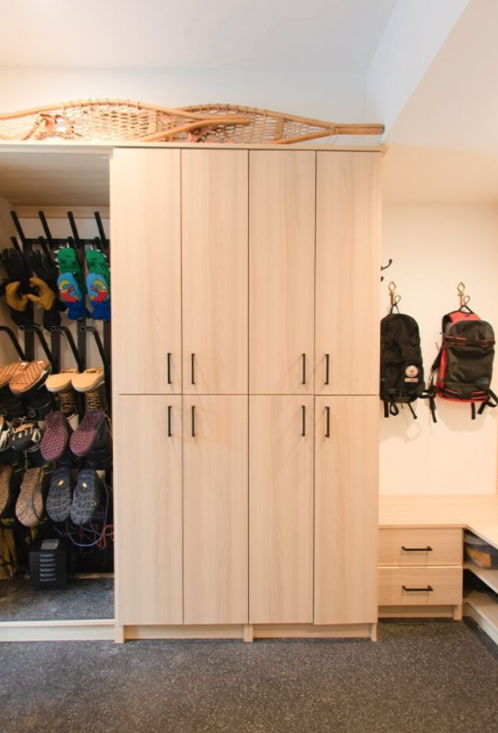
Outdoor boots often bring mud, rain, and snow into the house. A dedicated drying rack helps manage moisture before the footwear goes back into storage.
Choose a wall-mounted rack with angled supports that allow boots to sit upside down. This helps water drain while improving airflow around the inside.
Place a waterproof mat beneath the rack to catch drips and dirt. Once the boots are completely dry, move them back to their regular storage area.
This arrangement is particularly useful for mudrooms and garage entrances.
16. Boot Locker
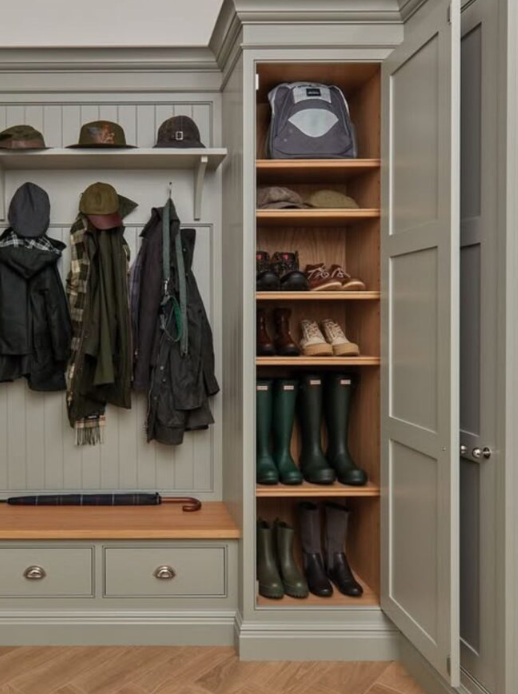
A tall mudroom locker provides hidden storage for families with several pairs of boots.
Choose a cabinet with deep lower shelves so tall footwear can stand upright without bending. Assign each family member a separate section to make everyday storage easier.
The upper shelves can hold smaller shoes, bags, hats, and seasonal accessories.
A locker-style cabinet keeps footwear out of sight while creating a dedicated place for everything near the entrance.
17. Boot Basket
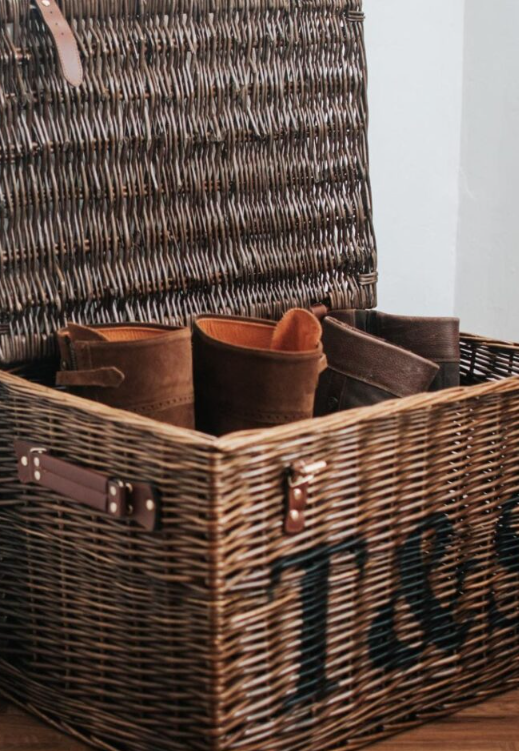
A large woven basket creates a simple drop zone for footwear near the front door.
Choose a basket with tall sides so boots can stand more securely instead of falling across the floor. Place it close to the entrance so everyone can put their footwear away when they come inside.
Wicker and rattan baskets work well with rustic, cottage, and natural-style interiors.
Add a washable mat underneath to catch dirt and moisture. Make sure wet boots are allowed to dry properly rather than leaving damp footwear inside a closed basket.
18. Boot Bench
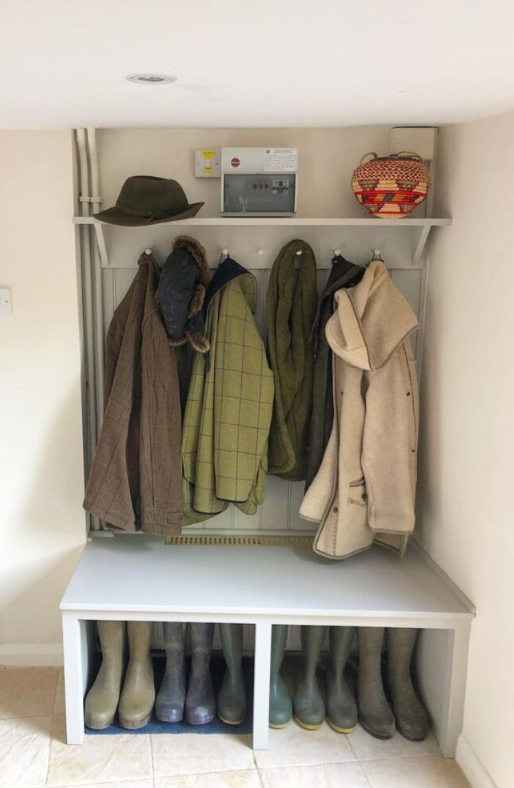
A storage bench is one of the most practical additions to a busy entryway.
The top provides a comfortable place to sit while putting on or removing boots. Underneath, open cubbies keep footwear organized and prevent pairs from spreading across the floor.
Choose a bench with enough vertical space for taller boots. You can also place waterproof trays inside the compartments to catch dirt and moisture.
This idea works especially well in mudrooms, family entryways, and back doors.
19. Boot Organizer

A vertical wall-mounted organizer helps use space that would otherwise remain empty.
Choose a design with upper shelves for regular shoes and a lower hanging rod for tall boots. Clip hangers keep the shafts supported while leaving the floor area free.
This combination makes it easier to store different footwear styles in one place.
It’s particularly useful in small closets and narrow entryways where adding another large storage cabinet isn’t practical.
20. Boot Hooks
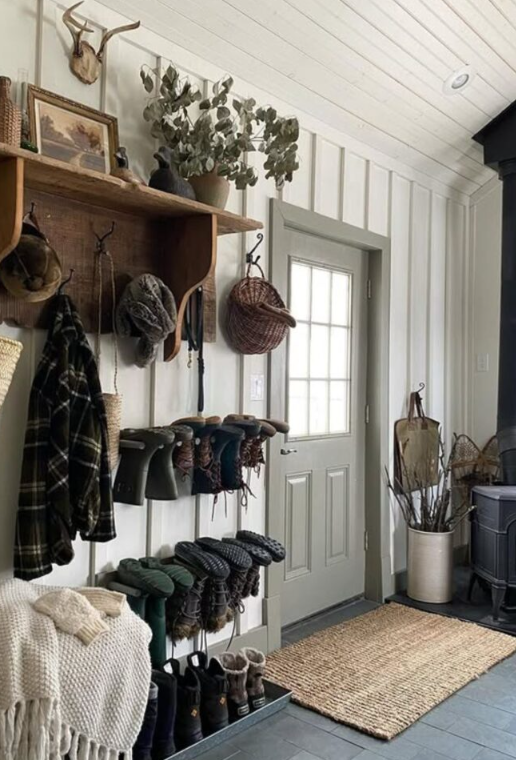
Strong wall hooks offer a simple way to lift outdoor boots off the floor.
Install hooks at suitable heights and use them to hang compatible boots upside down. This helps water drain and keeps dirty soles away from the entryway floor.
Make sure the hooks are securely attached to wall studs or suitable wall anchors. They should be strong enough to support the weight of your footwear.
Leave some space underneath for everyday shoes or a waterproof tray.
21. Boot Cubby

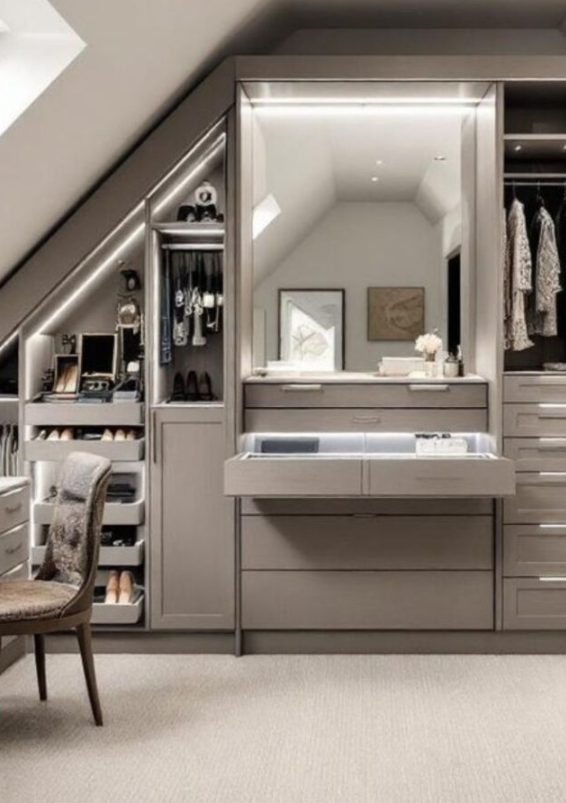
Awkward corners and sloped ceilings can make closet organization difficult. A built-in cubby system can turn these unused areas into useful boot storage.
Create taller compartments for boots and shorter shelves beside them for flats, heels, or ankle boots.
Wooden dividers keep pairs separate and help prevent footwear from leaning against each other. Position the boot compartments along the lower section for easier access.
You can also install floating shelves above the storage area for bags and smaller accessories.
FAQs
How Can You Store Tall Boots Without Ruining Their Shape?
The best way to store tall boots is to keep them upright instead of folding or squeezing them into tight spaces.
Use boot shapers, boot hangers, or tall cubbies to support the shafts. These options help prevent the material from collapsing and developing creases.
Leave a little space between pairs so they don’t press against each other. For leather and suede boots, make sure they’re clean and completely dry before storing them.
What Is the Best Place to Store Boots in an Entryway?
The best place is usually near the door where you naturally remove your footwear.
A storage bench with cubbies, a small boot rack, or a wall-mounted organizer can work well depending on the available space.
If your boots are often wet or muddy, use a waterproof tray or drying rack to protect the floor. Keep frequently worn pairs within easy reach and store seasonal footwear in a closet or cabinet.
Final Thoughts
Boot storage doesn’t have to be complicated. A few practical changes can make your entryway look cleaner while helping your footwear stay in good condition.
From boot hangers and vertical racks to storage benches and woven baskets, these 23 boot storage ideas offer solutions for different home sizes and styles.
Start by choosing one dedicated spot for your boots. Add storage that suits your available space, keep wet footwear separate until it dries, and return each pair to its place after use. A simple routine will help your entryway stay organized throughout the year.