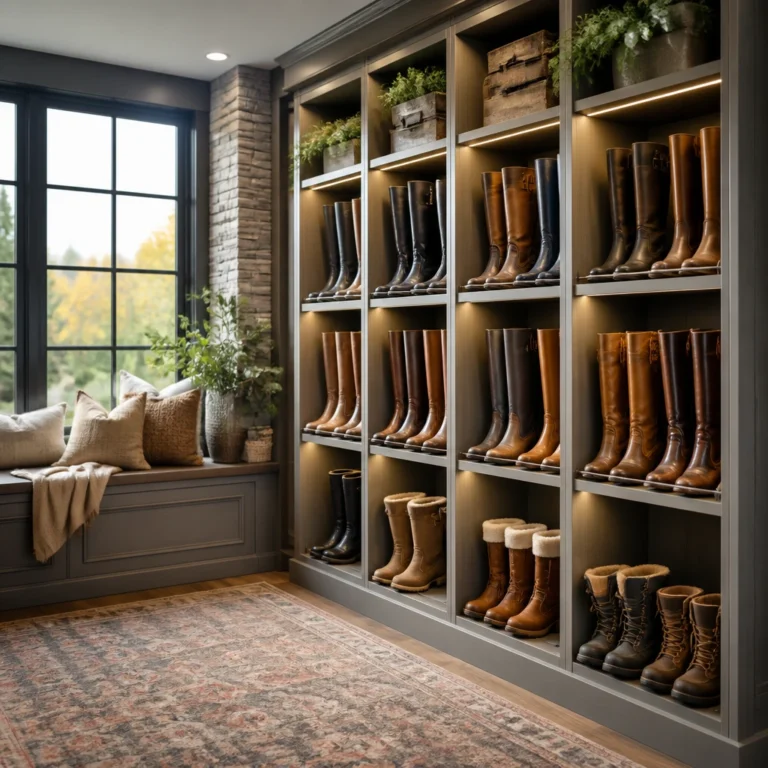
18 Attic Storage Ideas for 2026
Attic storage can be much more useful when I plan the layout around the roof slopes, low walls, and available floor space. From built-in cabinets and custom shelves to labeled storage bins and open wardrobes, there are plenty of ways to keep belongings organized without making the attic feel crowded. I focus on using awkward corners, keeping the center walkway clear, and choosing storage that fits the shape of the room. With the right setup, an attic can hold seasonal clothes, shoes, luggage, decorations, books, and household extras while staying easy to access.
In this guide, I’m sharing practical attic storage ideas for different room sizes and layouts, along with simple tips for protecting stored belongings and making better use of low-ceiling areas.
Key Takeaways
- Use low attic walls and sloped corners for custom cabinets, shelves, and drawers.
- Keep the center walkway open so stored items remain easy to reach.
- Choose sturdy, lidded storage bins to help protect belongings from dust and pests.
- Label containers clearly to make seasonal items and keepsakes easier to find.
- Install suitable flooring or raised platforms without compressing insulation.
- Check the attic’s ventilation, moisture levels, and load capacity before adding heavy storage.
How Can I Turn My Attic Into Useful Storage Space?
I start by clearing the attic so I can see the available floor area, roof height, and awkward corners. This makes it easier to decide where cabinets, shelves, and storage containers will fit without blocking access.
Next, I check whether the floor is suitable for storage. Exposed ceiling joists are not automatically safe to walk on or cover with plywood, so I confirm the floor structure and load capacity before installing a storage platform. Properly supported attic flooring can create a stable surface while helping prevent insulation from being crushed.
I then use the lower sections along the sloping walls for shallow cabinets, labeled bins, or low shelves. Keeping the middle area open creates a clear walkway and makes it easier to reach boxes without moving everything around.
For long-term storage, I choose sturdy containers with secure lids and label each one by category. I also check for leaks, condensation, pests, and excessive heat before storing clothes, photographs, documents, or other sensitive belongings. These simple steps help turn a cluttered attic into a more practical storage area.
Pro tip: Before buying storage furniture, measure the floor space, ceiling height, and narrowest sections of the roof. A few measurements can prevent wasted money on units that do not fit.
Knee Cabinets
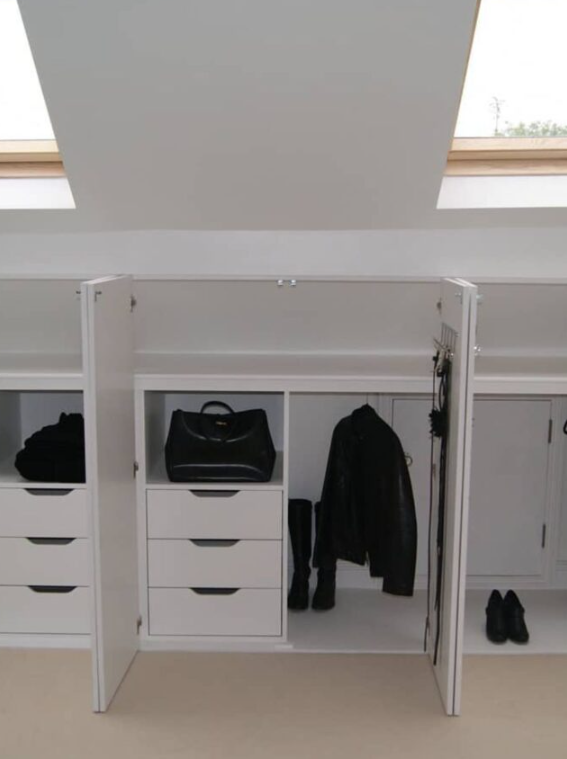
Knee-wall cabinets are a smart choice for attic areas where the roof slopes too low for standing or full-height furniture. I would use this space for built-in cupboards that fit neatly beneath the roofline instead of leaving the lower wall empty.
A row of low cabinets can include drawers, adjustable shelves, or short hanging rails, depending on what I need to store. These sections work well for shoes, folded clothes, backpacks, linens, and seasonal accessories.
Simple cabinet doors keep belongings out of sight and reduce dust buildup. If the attic has a skylight, placing the storage nearby can also help brighten the area, making it feel more like a small dressing room than an unused corner.
Pro tip: Measure the depth of the low wall before choosing cabinet doors. Shallow units can provide useful storage without taking up too much of the walking space.
Triangle Shelving
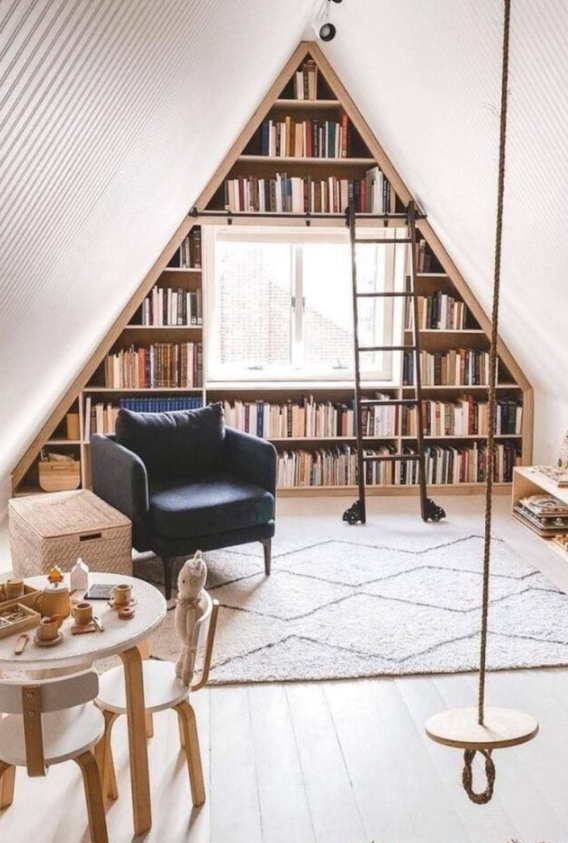
The triangular spaces beneath attic roof peaks can be difficult to furnish with standard bookcases. Custom triangular shelving makes better use of these areas by following the angle of the roof.
I would build or install a frame that matches the roofline, then divide it into shelves for books, decorative pieces, small baskets, or lightweight storage boxes. Heavier items should stay on lower shelves, where they are easier to reach and less likely to fall from a height.
A sliding ladder may suit a tall shelving wall, but it needs a properly designed track, secure installation, and enough clearance to use safely. For most homes, keeping frequently used items on reachable shelves is the simpler option.
This design turns an awkward roof peak into a useful feature while keeping the rest of the attic floor free for other purposes.
Walk-In Layout
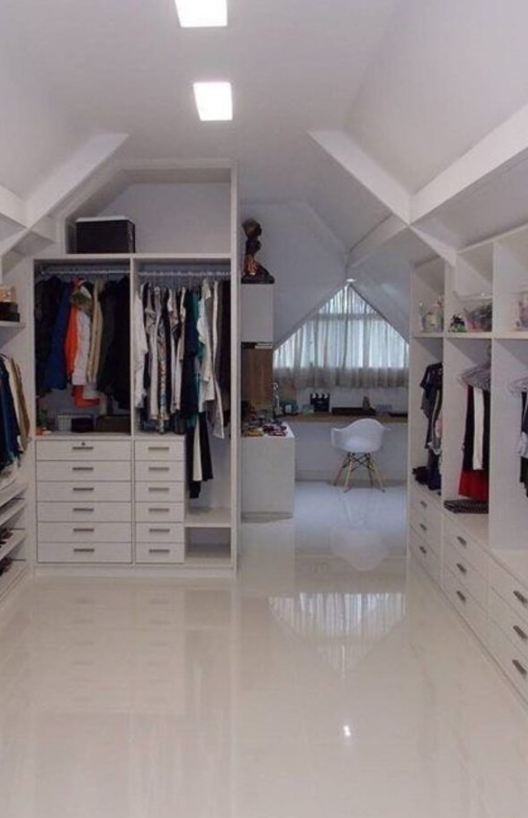
A long attic can work well as a walk-in wardrobe when storage is arranged along both walls. Instead of placing random furniture throughout the room, I would create matching storage sections with a clear aisle in the middle.
Hanging rails can hold shirts, jackets, and dresses, while drawers provide space for accessories and smaller clothing items. Upper shelves are useful for labeled boxes, folded bedding, and seasonal belongings that do not need to be accessed every day.
Good lighting is important because attic corners can be darker than the rest of the home. Ceiling lights or suitable wall fixtures help me see the contents of shelves and drawers without adding bulky furniture.
Before choosing this layout, I would check the height along both sides of the room. The center should have enough clearance for comfortable movement, and the storage units should not block doors, stairs, or access points.
Window Shelves
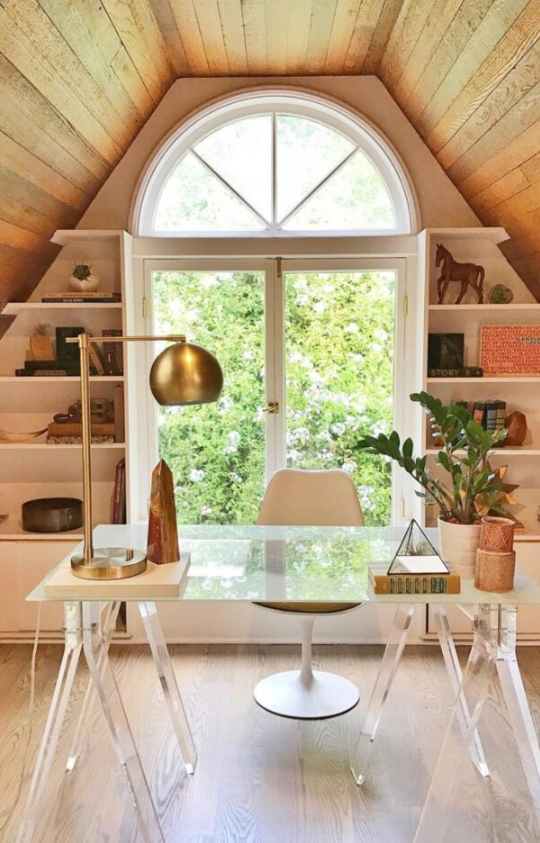
Attic windows often sit between sloping sections of wall, leaving narrow spaces on either side. I can use these gaps for stepped shelving that follows the roofline and makes the most of the available height.
Lower shelves are suitable for books, small baskets, and heavier items, while upper shelves can hold lightweight decorations or occasional-use supplies. The shelves should not obstruct the window, its opening mechanism, or access needed for cleaning and maintenance.
If I want to use the attic as a home office, I can keep the area directly beneath the window open for a desk. This arrangement provides storage on both sides while allowing natural light to reach the workspace.
Matching the shelf depth and finish to the rest of the room helps the design look intentional. I would also avoid overcrowding the shelves, since leaving a little open space makes the window area feel brighter and less cluttered.
Shoe Wall
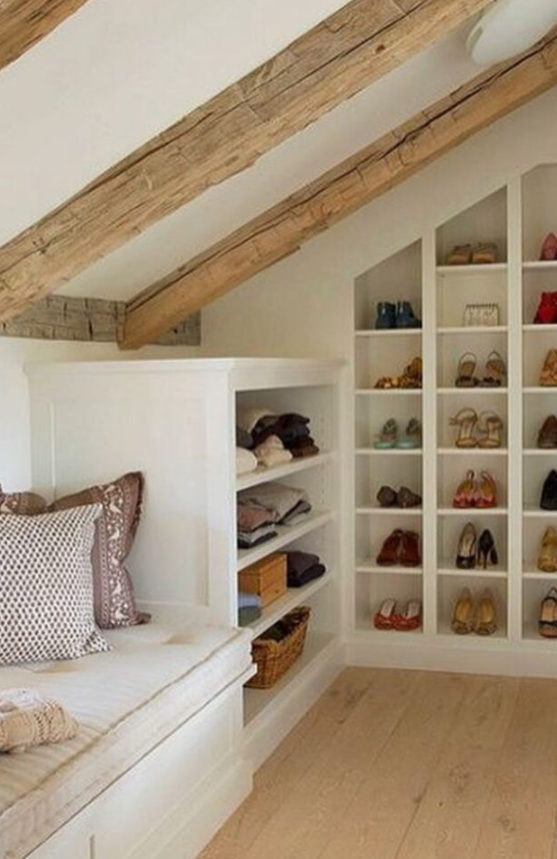
A dedicated shoe wall is a useful way to organize footwear in an attic bedroom or dressing area. Sloping walls often have enough height for shallow cubbies, even when they cannot accommodate a standard wardrobe.
I would divide the wall into small compartments for sneakers, sandals, heels, and everyday shoes. Taller sections near the highest part of the roof can hold boots, while lower cubbies are convenient for frequently worn pairs.
The most important measurement is the depth of each compartment. It should fit the footwear comfortably without making the walkway too narrow. I would also leave enough room for shoes to dry before putting them away, especially after wet weather.
If the wall is long enough, I can organize shoes by type or season. This makes it easier to find a pair quickly and avoids the messy piles that often build up in unused attic corners.
Peak Storage
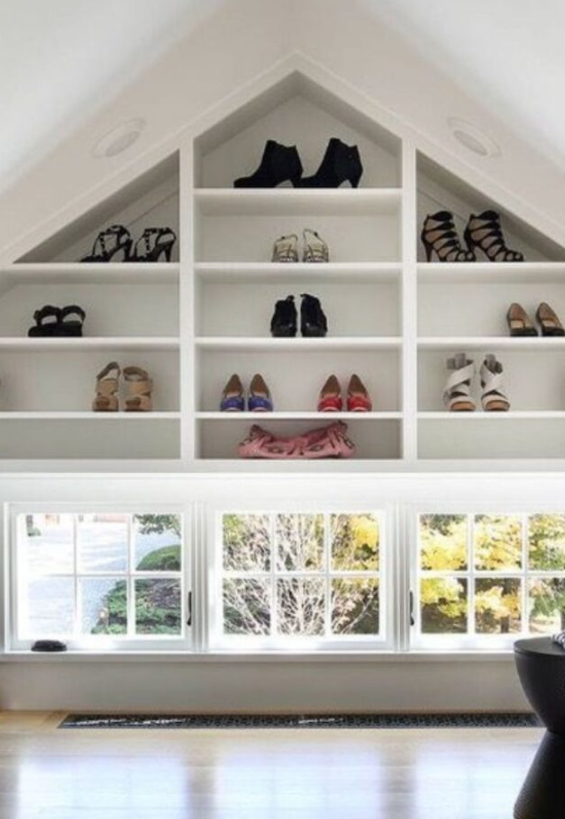
The tall triangular area beneath an attic roof peak can become a practical storage wall when shelves are designed to fit the shape. Instead of leaving the upper section unused, I can divide it into several levels for lightweight boxes, bags, books, or decorative items.
I would place items used most often on lower shelves and reserve higher sections for things I rarely need. Larger containers may fit better in deeper lower cabinets, while smaller shelves can make use of the narrowing space near the peak.
If a window sits beneath the roofline, shelves can be arranged around it without blocking the glass or access. This allows the wall to provide storage while keeping the floor available for other uses.
For safety, I would make sure every shelf is properly secured to suitable structural supports. High shelves should not hold heavy objects that are difficult to lift down safely.
Slope Shelving
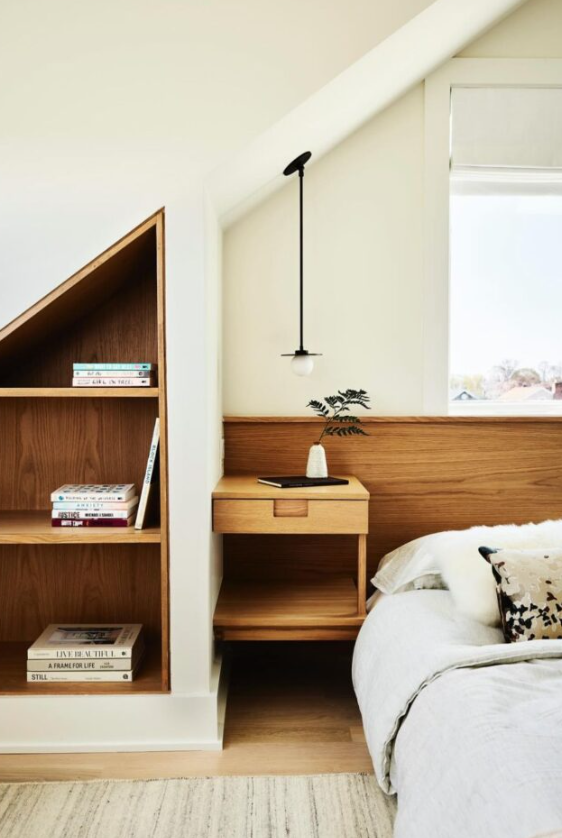
Standard bookcases often waste space in attic rooms because their straight tops do not match the angled ceiling. Custom slope shelving solves this problem by following the roofline and fitting more naturally into the room.
I would use these shelves for books, baskets, framed photographs, and small household items. Deeper storage can go along the bottom, while the narrowing upper section is better suited to lightweight objects.
Open shelving is especially useful in a small attic bedroom or reading nook because it avoids the visual weight of large cabinets. I can place a few shelves near a chair or bed to keep books and everyday essentials within reach.
Before installing them, I would check that the shelves do not interfere with headroom or make it difficult to get in and out of the seating area. A simple, well-fitted design can make an awkward corner useful without making the room feel crowded.
Rafter Shelves
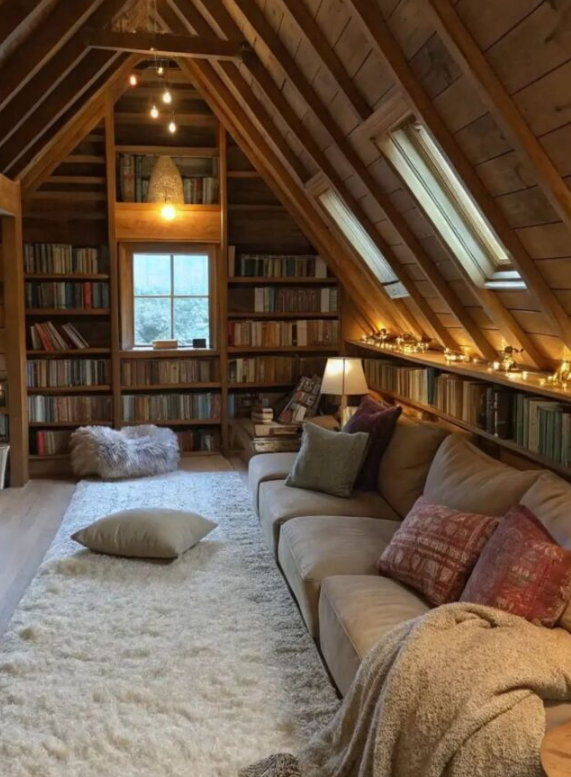
The area beneath exposed rafters can provide a natural place for low-profile storage. I would install a shelf along the lower roofline for items such as books, small storage boxes, and decorations that do not need much vertical clearance.
Wooden shelves can complement exposed beams and create a consistent look throughout the attic. However, the shelves should be attached to suitable supports rather than relying on decorative roof boards that may not be designed to carry weight.
I would keep the shelf low enough to reach comfortably from the nearby seating area or walkway. Small lights can improve visibility, provided they are suitable for the location and installed with the required clearance from insulation and combustible materials.
This approach is particularly useful when I want extra storage without adding a large cabinet or taking up valuable floor space.
Wardrobe Wall
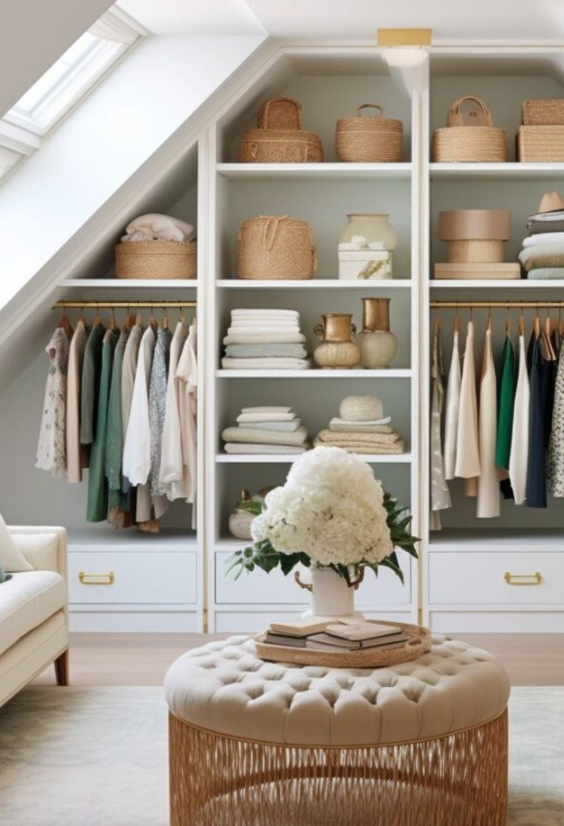
A built-in wardrobe wall can make attic clothing storage much more efficient. By designing the units around the roof slope, I can combine hanging rails, shelves, and drawers without leaving large unused gaps above standard furniture.
The tallest section is best for dresses, jackets, and other garments that need hanging space. Lower sections can hold folded clothes, shoes, handbags, and storage baskets, while drawers keep smaller accessories organized.
I would plan the wardrobe as one continuous unit so the different storage sections work together. Matching cabinet finishes and handles can also help the room look neat rather than crowded with separate pieces of furniture.
If space allows, a small bench or chair opposite the wardrobe can create a comfortable dressing area. I would still keep enough room to open drawers fully and move around without bumping into furniture.
Angled Closet

Attic ceilings can make ordinary wardrobes difficult to fit, especially where the roof slopes down close to the floor. A custom angled closet uses the available height more effectively by fitting the cabinets to the shape of the room.
I would put hanging rails in the taller sections for shirts, jackets, and other garments. The shorter sections can hold folded clothes, shoes, bags, and storage boxes, while bottom drawers provide space for belts, scarves, and smaller accessories.
Built-in units can also create a cleaner appearance because they sit closer to the wall instead of projecting into the room. This can be particularly helpful in small attic bedrooms where every bit of floor space matters.
Before ordering custom cabinets, I would measure the roof angle and the height at several points along the wall. Accurate measurements help avoid unusable gaps and make sure doors and drawers have enough clearance.
Island Storage
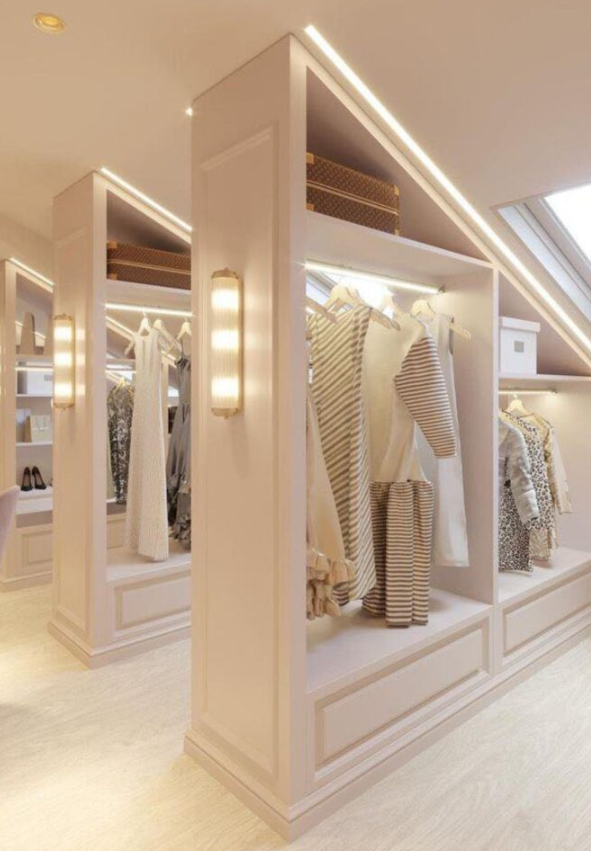
An attic with good central headroom may have enough room for a freestanding wardrobe island. This option adds storage in the middle of the room while leaving the sloping walls available for other furniture or built-in cabinets.
I would choose an island with open shelves, drawers, or short hanging sections based on the items I need to store. Frequently worn clothing can go in easy-to-reach sections, while baskets and seasonal accessories can be placed in the upper compartments.
Lighting inside or around the unit can improve visibility, especially in an attic with limited natural light. However, the island should not block windows, doors, stairs, or the main route through the room.
I would measure the available clearance before buying one. There needs to be enough space around the island to walk comfortably and open any drawers without hitting nearby furniture.
Hidden Cabinets
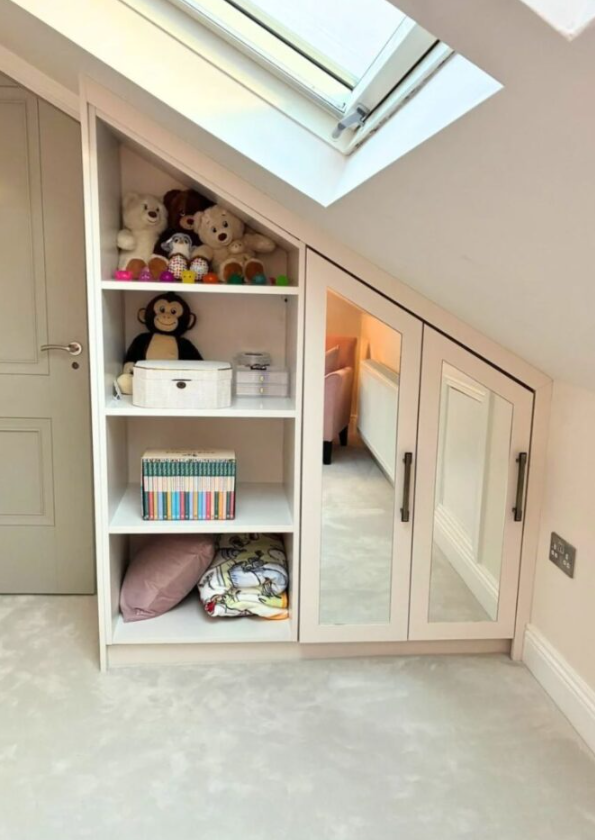
The lowest parts of an attic can hold useful storage even when they are too short for ordinary furniture. Built-in cabinets that follow the roofline can turn these awkward corners into cupboards for household extras and items I want to keep out of sight.
I would combine closed cabinets for larger belongings with open shelves for books, baskets, or everyday items. This gives me a place for both attractive displays and things that are better kept behind doors.
Mirrored cabinet doors may help reflect light and make a small room feel brighter. I would choose suitable fittings and make sure the doors can open fully without hitting furniture or blocking the walkway.
Hidden storage is especially useful when I want the attic to serve more than one purpose, such as a bedroom, office, or hobby room. A well-planned cabinet wall keeps supplies accessible without leaving boxes scattered across the floor.
Vanity Storage
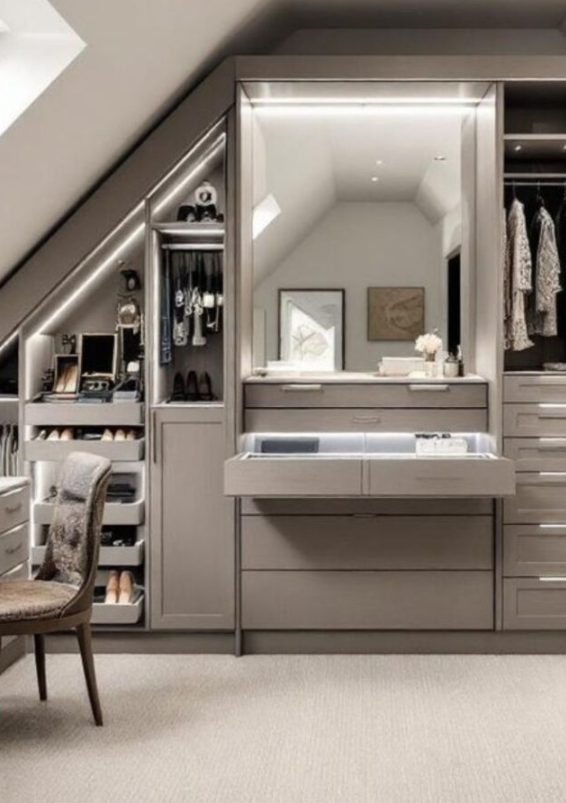
An attic corner near a window or skylight can make a useful dressing area when the furniture fits the available height. I would use built-in drawers and cabinets along the sloping wall, then place a compact vanity where there is enough headroom to sit comfortably.
The vanity drawers can hold makeup, jewelry, hair accessories, and other small items. Nearby cabinets provide room for clothing, folded garments, and bags, keeping the tabletop clear for daily use.
A mirror positioned where natural light reaches it can make the area easier to use during the day. For evening use, suitable task lighting around the mirror helps provide more even illumination.
I would keep frequently used items in the top drawers and store less-used belongings in the lower cabinets. This simple arrangement makes the dressing area easier to maintain without requiring a large amount of floor space.
Vanity Cabinets
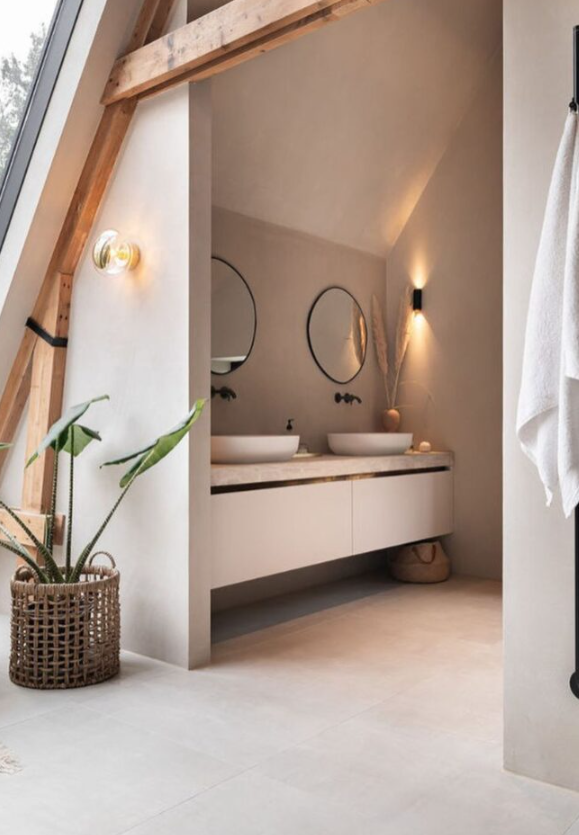
Attic bathrooms often have low walls and limited storage, so a compact vanity with drawers can be a practical choice. A unit that fits beneath the available ceiling height can hold toiletries, towels, and other bathroom essentials while keeping the countertop clear.
I would measure the space around the sink carefully before choosing a floating or floor-mounted vanity. A wall-mounted unit can leave more visible floor area, but the wall must be strong enough to support the cabinet and its contents.
Because bathrooms have higher moisture levels, I would choose materials and finishes suitable for humid conditions. Proper ventilation is also important to help prevent dampness, swelling, and mold.
A mirror with suitable lighting can make the room easier to use, particularly when natural light is limited. I would keep cleaning products stored safely and away from children, following the product labels.
Rack Storage
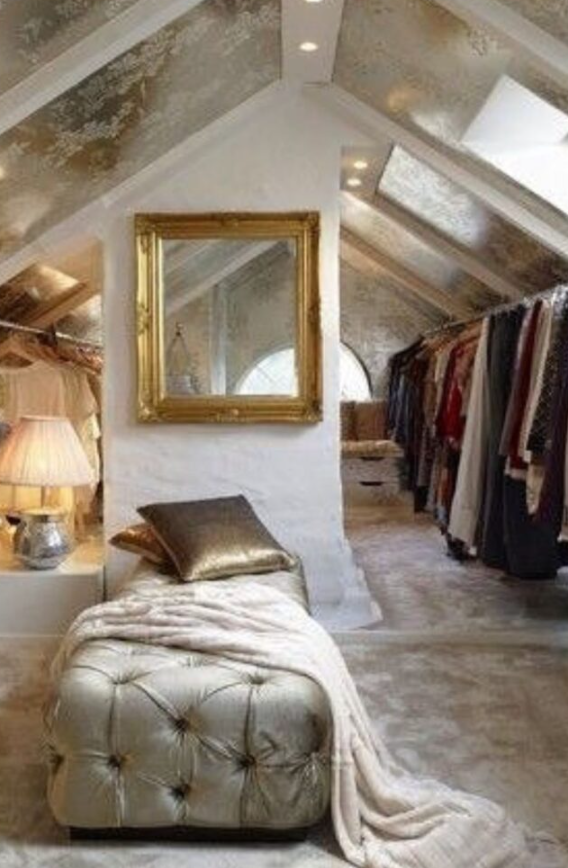
A long attic wall can provide plenty of hanging space when fitted with a properly supported clothing rack. This works well for jackets, shirts, dresses, and other garments that are easier to store on hangers than in boxes.
I would position the rack where the ceiling height allows clothes to hang without touching the floor. If there is a skylight nearby, I would avoid blocking the window so natural light can still reach the room.
Shallow shelves or cubbies at either end can hold shoes, handbags, and folded clothing. Drawers beneath the hanging area can provide extra space for smaller items without needing a separate chest of drawers.
This layout is particularly useful in narrow attics because it keeps most clothing along one wall. Before installation, I would check the wall supports and the rack’s weight limit so it can safely hold the clothes.
Bin Stacking
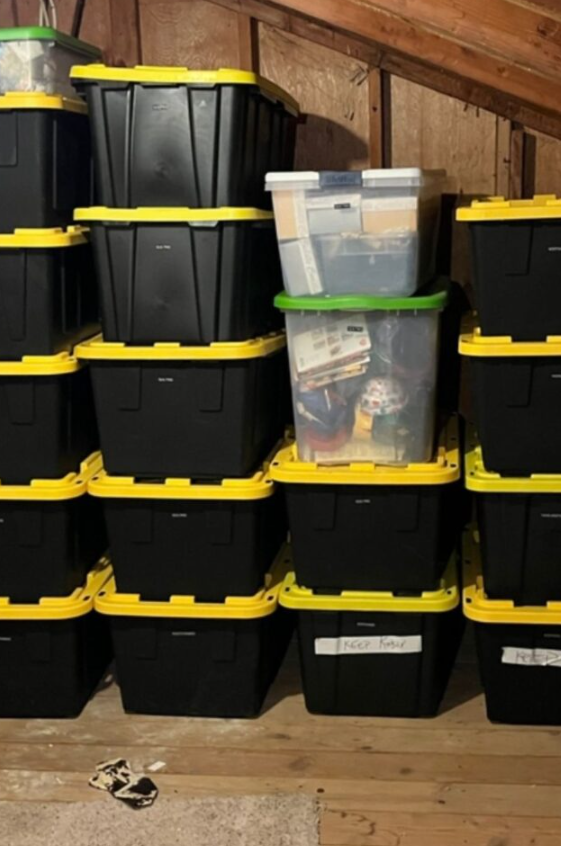
Stackable storage bins are a practical choice for unfinished attics where built-in furniture is unnecessary. I would use sturdy containers with secure lids to help keep belongings clean and reduce exposure to dust and pests.
Choosing bins of the same size makes stacking easier and helps use the available floor space efficiently. However, I would follow the manufacturer’s stacking limits and avoid creating tall, unstable piles, especially on uneven surfaces.
Clear labels on the front of each bin make it easier to find holiday decorations, old documents, spare bedding, or keepsakes. I would group similar items together and keep frequently used containers near the access point.
Before placing bins on the floor, I would confirm that the area can support the load and that the platform does not compress the insulation. I would also avoid storing items that can be damaged by extreme heat or moisture unless the attic conditions are suitable.
Corner Shelving
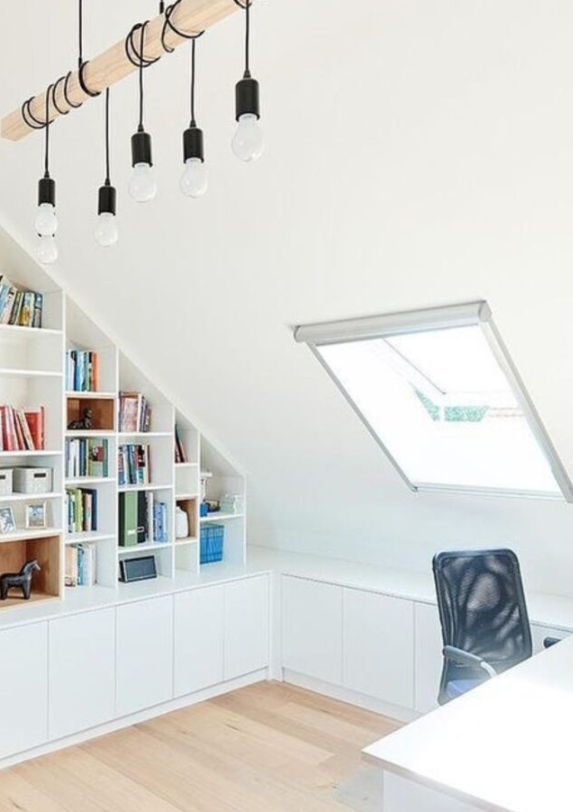
Awkward attic corners can become useful storage areas with shelves designed around the roof slope. I would use the space for books, office supplies, small baskets, or decorative objects, depending on how the attic is used.
If the room doubles as a home office, open shelves above a lower cabinet can keep everyday supplies within reach. Files, electronics, and less attractive items can go behind cabinet doors to reduce visual clutter.
Matching the shelf dimensions to the ceiling angle helps use the available space without adding furniture that sticks too far into the room. I would keep heavier items on lower shelves and leave enough clearance for anyone using the desk or chair nearby.
This setup can work well in small attic offices, hobby rooms, and reading corners because it provides storage without taking away the main working area.
Open Wardrobe

An open wardrobe can be a good alternative to bulky cabinets in a narrow attic. A combination of hanging rails, shelves, and small compartments keeps clothing visible and makes it easier to organize different types of items.
I would use taller sections for coats and dresses, then place shirts, folded clothes, and accessories in lower compartments. Upper shelves can hold handbags, labeled boxes, or seasonal clothing that I do not need every day.
Because the storage remains open, I can see what I own without searching through deep cupboards. Matching hangers and grouping clothes by type can make the wardrobe look tidier, while baskets help contain smaller items.
One thing I would consider is dust. Open clothing storage may need more frequent cleaning than closed cabinets, so I would reserve it for a clean, dry attic and use covered boxes for items that are stored for long periods.
FAQs
Can attic storage damage insulation?
Yes. Placing heavy boxes directly on attic insulation can compress it and reduce its ability to resist heat transfer. Insulation should generally maintain its intended thickness to perform properly.
I would check the attic structure and install a suitable raised platform or properly supported flooring before adding storage. The platform must be designed for the joists and intended load, and it should not block required ventilation or create unsafe access.
I would also avoid covering recessed lights, electrical equipment, or other components that need clearance. If I am unsure whether the attic floor can support storage, I would ask a qualified professional to inspect it before making changes.
What type of storage works best in small attics?
In a small attic, I would start with storage that follows the roof slope. Knee-wall cabinets, shallow shelves, low drawers, and stackable bins can use areas that are too short for standing or full-height furniture.
The best option depends on what I need to store. Built-in wardrobes suit clothing, small cubbies work well for shoes, and lidded bins are useful for seasonal decorations and household extras.
I would keep the central walkway clear, store heavier items in accessible lower areas, and place things I rarely use farther away. Measuring the available height and depth before buying storage units helps prevent wasted space and keeps the attic easier to navigate.
What should I avoid storing in a hot or damp attic?
I would avoid keeping heat-sensitive items, delicate photographs, important documents, candles, electronics, and other belongings in an attic that experiences extreme temperature changes or moisture. Some plastics, adhesives, fabrics, and personal-care products can also deteriorate in unsuitable conditions.
Before storing anything valuable, I would check for roof leaks, condensation, pests, and adequate ventilation. Important documents and sentimental items are usually better kept in a stable indoor environment.
How can I keep attic storage organized?
I would group belongings by category, use matching containers where practical, and label every box clearly. A simple list of what is stored in each container can save time when I need to find something later.
I would also keep frequently used items near the attic entrance and reserve harder-to-reach areas for seasonal belongings. Reviewing the storage every few months helps me remove items I no longer need and prevents clutter from building up again.