21 Small Fridge Organization Ideas for 2026
A small refrigerator can hold more food than you might expect when you choose the right containers and give everything a proper place. I find that square storage boxes, clear stackable bins, labeled organizers, and slim drink baskets are especially useful for making the most of limited shelf space. Grouping fruits, vegetables, snacks, drinks, leftovers, and meal-prep ingredients also makes everyday cooking easier and helps prevent food from getting forgotten at the back.
In this guide, I’ll cover practical ways to organize a compact fridge using produce bins, drawer organizers, glass jars, rotating trays, and vertical storage. I’ll also explain how shelf zoning, simple labels, and smart container sizes can reduce clutter, along with answers to common questions about maximizing refrigerator space and choosing the right place for different foods.
Key Takeaways
- Choose square containers: They fit together neatly and help reduce wasted shelf space.
- Use clear storage bins: See what you have without moving several containers.
- Make use of vertical space: Stack compatible containers to create extra storage levels.
- Group similar foods: Keep produce, snacks, drinks, and leftovers in separate zones.
- Label bins when needed: Make everyday items easier for everyone to find.
- Store food safely: Keep perishable items in appropriate areas and follow recommended storage temperatures.
Shelf Zoning
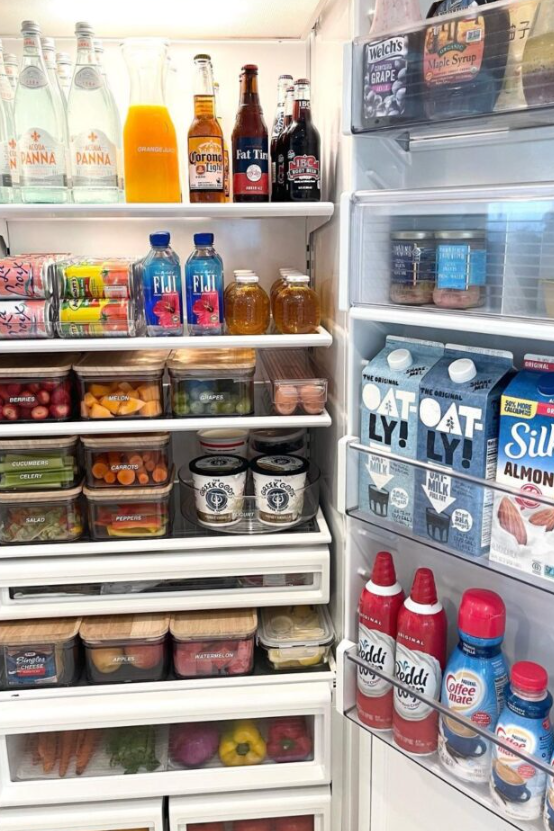
I find it much easier to manage a small refrigerator when each shelf has a clear purpose. Instead of placing groceries wherever there is room, I would keep drinks together, store ready-to-eat foods in a separate area, and use clear bins for fruits and vegetables.
This setup makes it easier to put groceries away after shopping and find ingredients during meal preparation. Separate containers also help prevent smaller items from rolling behind larger bottles.
For example, one bin can hold berries, another can hold grapes, and a separate area can keep prepared snacks together. Just make sure the arrangement leaves enough room for cold air to circulate.
Clear Stacking

Clear stackable containers are useful when refrigerator shelves are shallow and space is limited. Because I can see the contents through the sides, I don’t have to open every container to find what I need.
I would choose containers in different sizes that stack securely. Larger boxes can hold chopped watermelon or meal-prep ingredients, while smaller ones work well for strawberries, raspberries, and individual snack portions.
Open bins can also keep jars and packaged foods grouped together. Before stacking, check that the containers are stable and that their lids fit properly. Avoid building stacks so high that food becomes difficult to reach or cold air cannot circulate freely.
Produce Bins
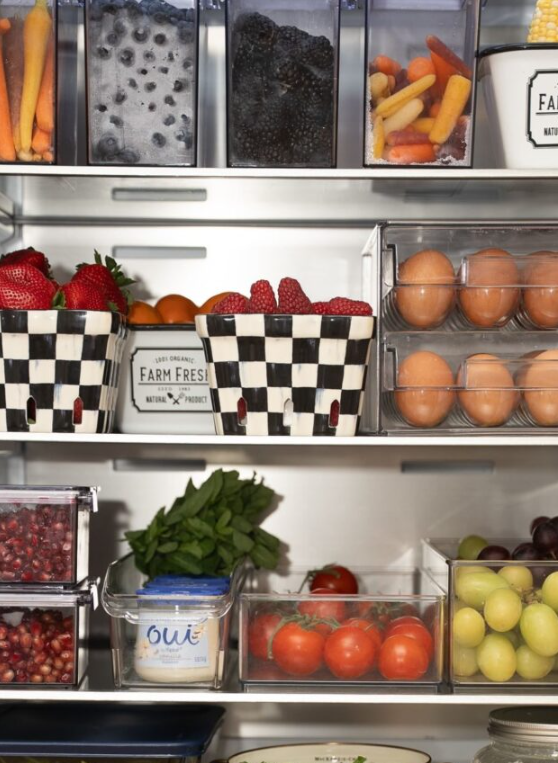
Loose fruits and vegetables can quickly make a small refrigerator look crowded. I prefer using separate clear bins to keep produce organized and prevent smaller items from disappearing beneath larger groceries.
Tall containers can hold carrots or celery, while wider bins are suitable for grapes, tomatoes, and other produce. Small containers are particularly helpful for cut fruit, pomegranate seeds, and prepared vegetables that need a little extra protection.
I would also keep delicate produce away from heavier items that could crush it. Use containers with suitable ventilation when needed, and avoid washing produce before storage unless it will be dried properly or stored according to its specific needs.
A few containers in different sizes are often enough to create a useful system without filling every inch of the refrigerator with organizers.
Color Coding
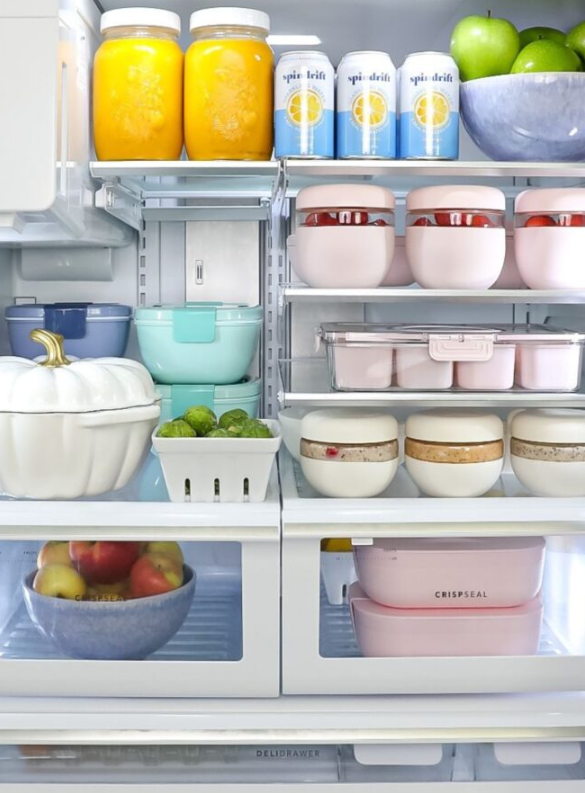
Color coding is another way to make refrigerator storage easier to understand. Matching containers, colored lids, or small labels can help distinguish snacks, leftovers, and different types of groceries.
I would use a simple system rather than assigning too many colors. For example, one color could identify ready-to-eat snacks, while another could mark meal-prep ingredients. Clear containers still help because I can see the food without relying on the color alone.
Containers with similar shapes also tend to fit together more neatly than a random collection of bowls and dishes. This can reduce awkward gaps and make stacking easier.
Small containers are useful for yogurt, chopped fruit, and individual portions. Choose food-safe containers that are easy to clean, and make sure any lids fit securely.
Vertical Storage
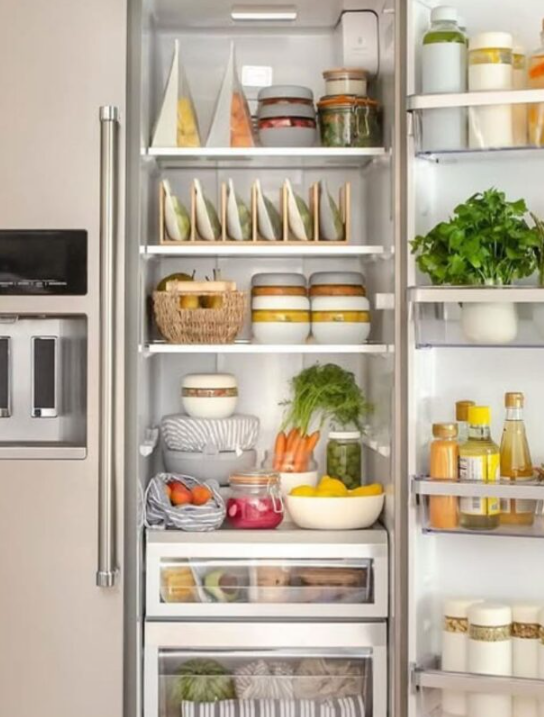
The empty space above food can be useful in a compact refrigerator. Instead of spreading everything across a shelf, I would use appropriately sized stackable containers to make better use of the available height.
Tall, narrow organizers work well for small vegetables, snack packs, and packaged ingredients. Glass jars and shallow dishes can hold sauces, leftovers, and smaller portions without requiring several large containers.
Try to group containers of similar heights so they fit together neatly. However, don’t stack food so high that it blocks air vents or makes items difficult to remove.
Fresh herbs can also be kept upright in suitable containers when that storage method works for the particular herb. The main goal is to use vertical space without overcrowding the refrigerator or making everyday ingredients harder to reach.
Labeled Bins
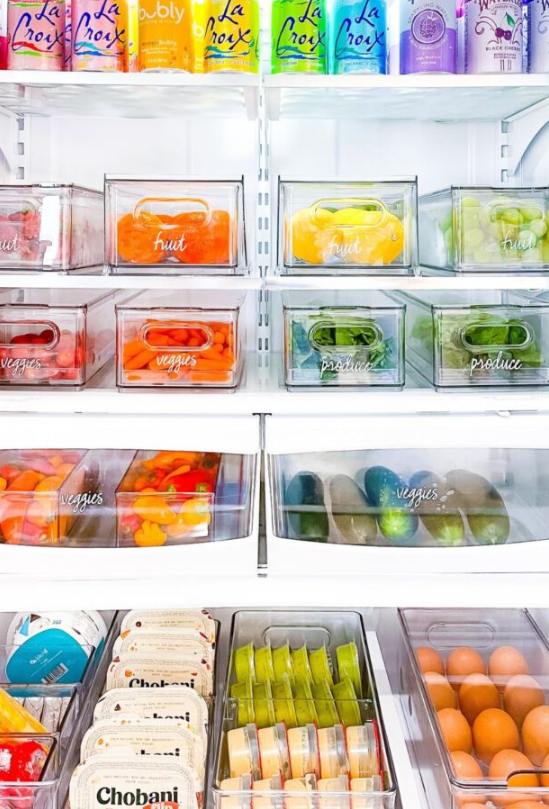
Clear bins are helpful, but labels make the organization system even easier to follow. I would label containers with simple names such as “Snacks,” “Fruit,” “Vegetables,” or “Meal Prep” so everyone in the household knows where items belong.
Small bins can hold sliced peppers, grapes, carrots, and other ready-to-eat foods. Larger organizers can keep yogurt cups, cheese sticks, and packaged snacks together instead of allowing them to spread across the shelf.
Labels are particularly useful when several people share one refrigerator. They make it easier to return groceries to their proper places after use.
I would keep the wording short and easy to read. If the contents change frequently, reusable labels are a practical option because they can be updated without replacing the entire container.
Category Grouping
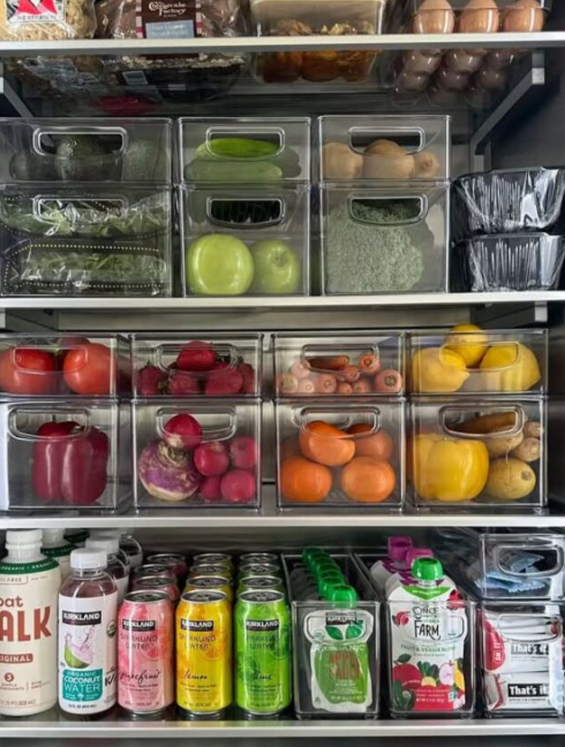
Grouping groceries by category is one of the simplest ways to organize a small refrigerator. When similar items stay together, I can check what I have before preparing a meal or making another shopping list.
For example, I would keep drinks in one area, fruit in a dedicated bin, and vegetables grouped separately. Sauces and condiments can stay together as well, provided their storage requirements are followed.
Clear containers help keep each category contained and prevent small items from rolling around. Smaller organizers are especially useful for ingredients such as radishes, lemons, and carrots that can easily get lost among larger groceries.
This approach also makes it easier to notice food that needs to be used soon. Keep in mind that grouping should work alongside food-safety requirements, rather than forcing every item into a category that isn’t suitable for its storage needs.
Produce Sections
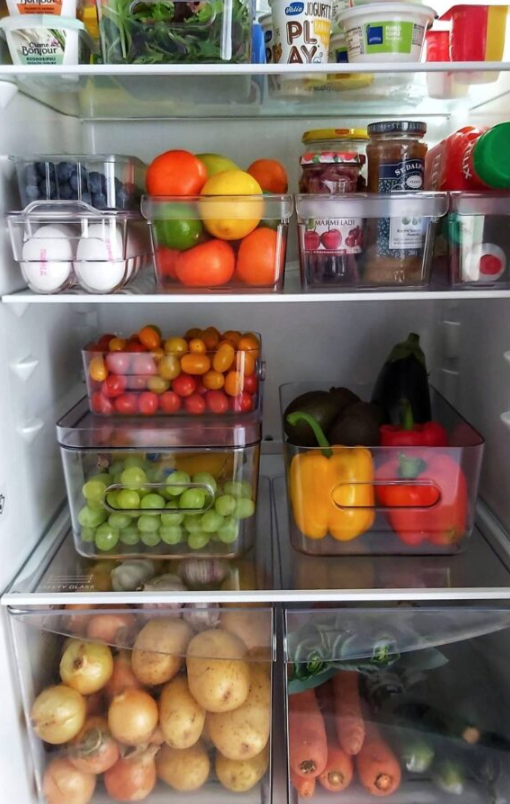
Different fruits and vegetables need different amounts of space, so separating them can make a small refrigerator easier to manage. I would use individual bins for items such as grapes, cherry tomatoes, peppers, and citrus fruits instead of allowing everything to mix together.
Small containers work well for berries and grapes because they keep these items contained and easy to see. Wider bins are more suitable for larger produce, including bell peppers and eggplants.
Separating delicate produce from heavier groceries can help prevent bruising and crushing. It also makes it easier to remove one ingredient without disturbing everything else on the shelf.
Before choosing your containers, consider how much produce you normally buy and how quickly your household uses it. A few appropriately sized bins are often more practical than filling the refrigerator with organizers you rarely need.
Drawer Bins
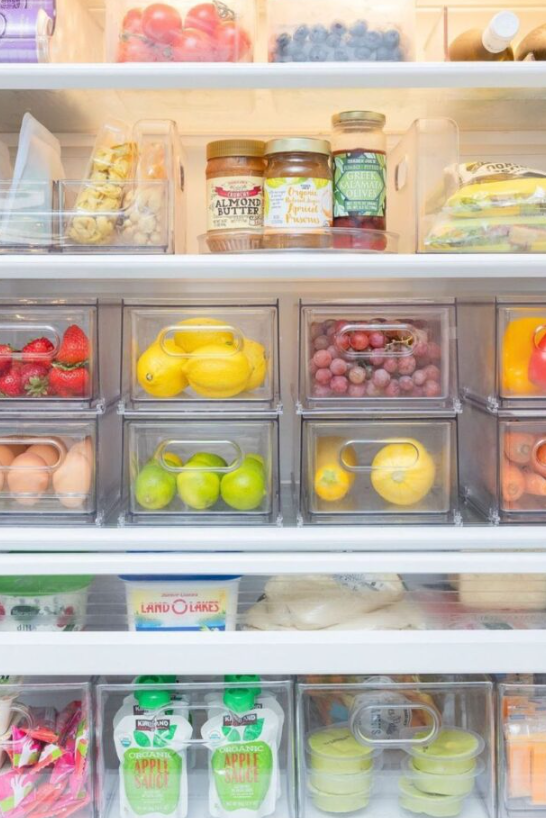
Small pull-out bins can make deep refrigerator shelves easier to use. Rather than reaching around several packages, I can slide a container forward and see the items stored inside.
I would use separate bins for snacks, fruit, and vegetables, choosing sizes that fit the available shelf depth. Uniform containers can create a neat arrangement, while smaller organizers help protect delicate produce from heavier items.
Bins with handles are particularly useful because they make everyday ingredients easier to reach. For example, one container can hold strawberries and grapes, while another keeps yogurt cups or snack packs together.
The main benefit is that food stays grouped even when the refrigerator gets busy. Just check that the bins slide out easily and don’t block the door, drawers, or air vents.
Jar Storage
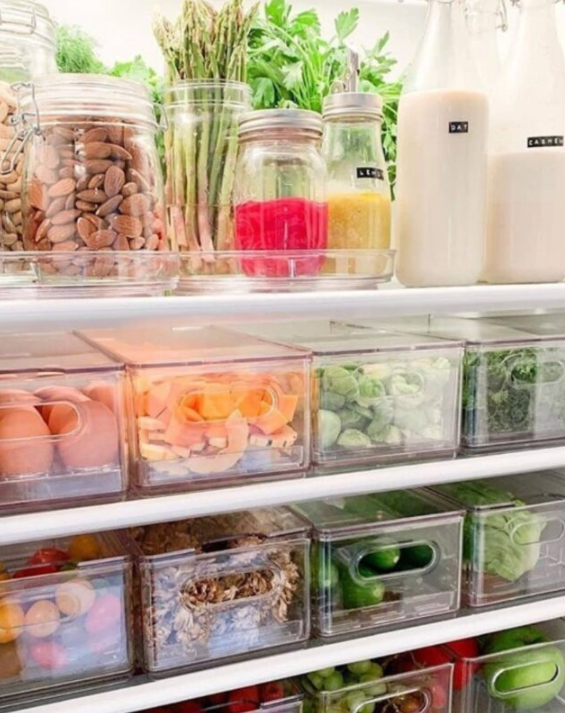
Glass jars can be useful for storing certain refrigerator ingredients in a compact space. I like the idea of using jars for prepared ingredients, suitable leftovers, sauces, and other foods that fit their shape.
Using jars of similar sizes can create a neat row and make better use of shelf depth. They can also replace bulky packaging when the food can be transferred safely and the jars are easy to clean.
Some fresh herbs can be stored upright in a jar with a little water around their stems, depending on the herb and the recommended storage method. Keep leaves above the water and monitor them regularly to prevent spoilage.
I would reserve the surrounding space for ingredients used together, such as cooking vegetables or prepared foods. Choose jars with secure lids, avoid overfilling them, and leave enough room to remove each one without knocking over the others.
Vertical Bins
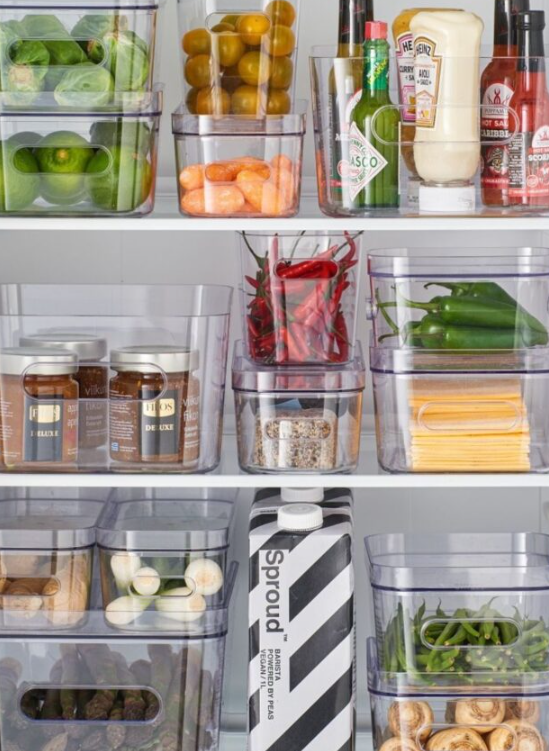
Tall stackable bins can help organize food when a refrigerator has unused space above its shelves. Instead of allowing vegetables and small packages to spread out, I would use containers that fit the available height and depth.
Separate bins can hold Brussels sprouts, limes, carrots, cherry tomatoes, and other small ingredients. Clear sides make it easier to identify the contents, while built-in handles help bring items to the front.
A narrow organizer can also keep condiment bottles together when they fit securely. This helps stop small bottles from tipping over whenever the refrigerator door opens.
Choose bins that stack safely and are easy to clean. I would avoid placing heavy containers above delicate produce or using tall organizers that interfere with proper airflow.
Meal Prep
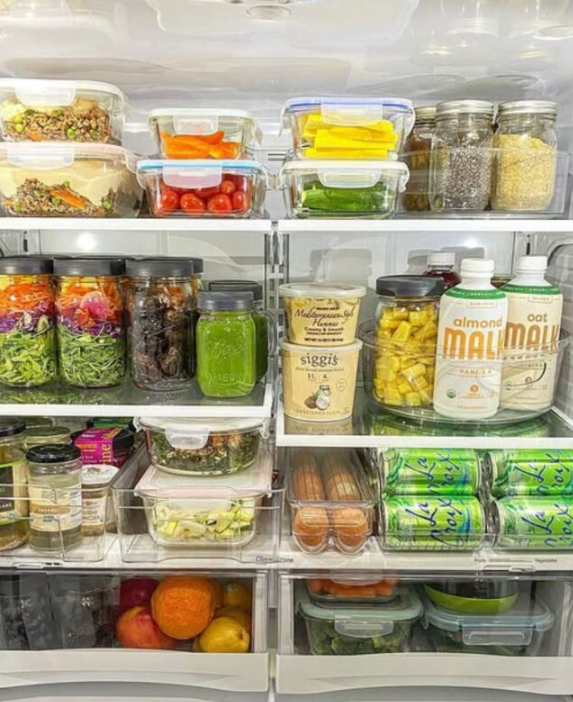
Meal-prep containers are especially useful when I want to make weekday meals easier to manage. Preparing ingredients in advance and storing them in individual containers can help keep the refrigerator organized and reduce the time needed to assemble lunch or dinner.
Glass containers with secure lids work well for many leftovers and prepared meals. Clear lids or sides make the contents easy to identify, while stackable shapes help save shelf space.
Mason jars can be useful for suitable salads and layered ingredients, provided the food is stored safely and the jars fit securely on the shelf. A small rotating tray can keep frequently used items, such as yogurt cups, together and within reach.
I would also label prepared food with its contents and preparation date. Refrigerate perishable food promptly, and follow recommended storage times rather than assuming that a sealed container will keep food safe indefinitely.
Snack Stations
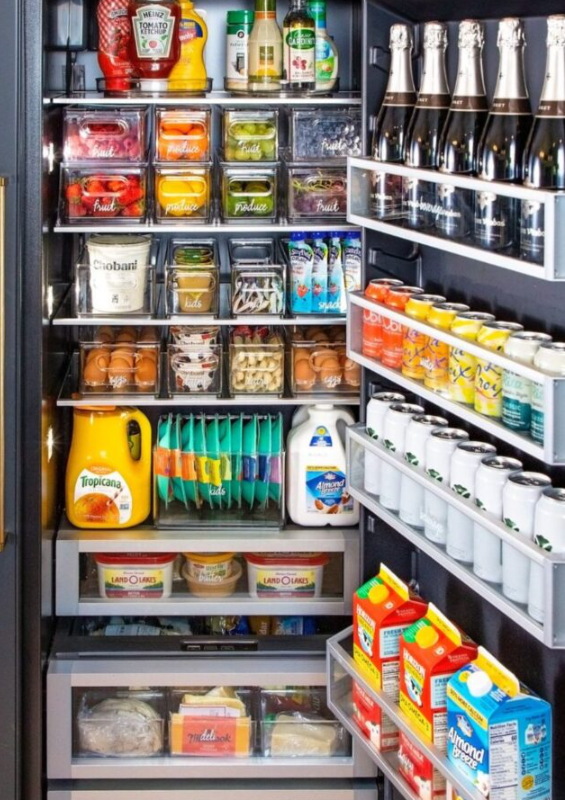
A dedicated snack station makes a shared refrigerator easier to use. I would keep frequently eaten items in one accessible bin so family members can grab a snack without moving other groceries.
Small clear containers work well for prepared fruit, yogurt cups, and individual snack portions. Larger bins can hold suitable packaged snacks, while a separate organizer can keep juice pouches upright.
Simple labels such as “Fruit,” “Snacks,” or “Kids’ Snacks” help everyone return items to the correct place. This is particularly useful when children regularly open the refrigerator themselves.
Use door shelves for products that are suitable for door storage, such as many condiments and certain bottled drinks. Keep foods that need more stable, colder temperatures in appropriate interior areas, and make sure the snack bins don’t block the refrigerator’s airflow.
Shelf Labels
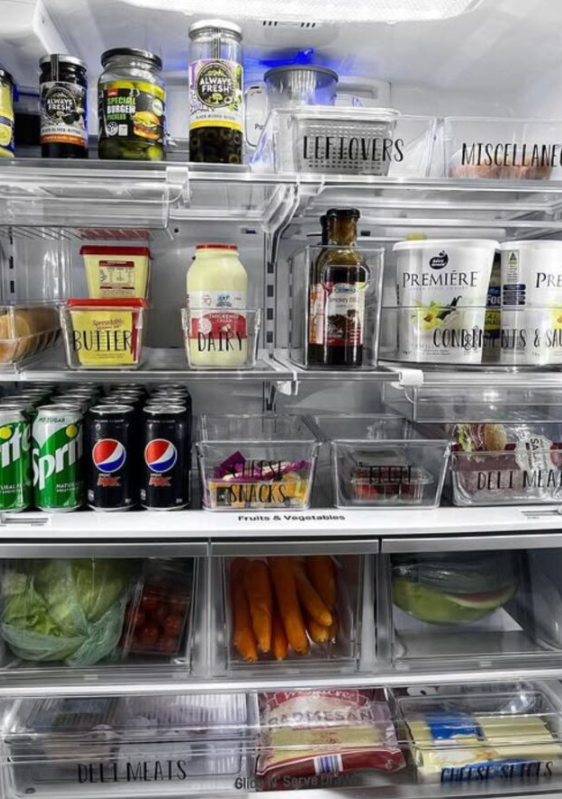
Shelf labels can turn a collection of storage bins into a simple system. Instead of deciding where every item belongs each time, I would assign clear areas for suitable food categories and label them accordingly.
For example, labels might identify snacks, leftovers, condiments, or prepared ingredients. Small bins can hold items that would otherwise scatter across the shelf, while bottles and cans can be arranged in stable rows.
This approach is helpful in busy households because everyone can follow the same arrangement. It can also make it easier to notice when a category is running low or when stored food needs attention.
However, I wouldn’t assign food to a shelf based on labels alone. The refrigerator’s temperature zones and food-safety requirements should determine where perishable items belong. Labels should make the system easier to use, not override safe storage practices.
Drink Row
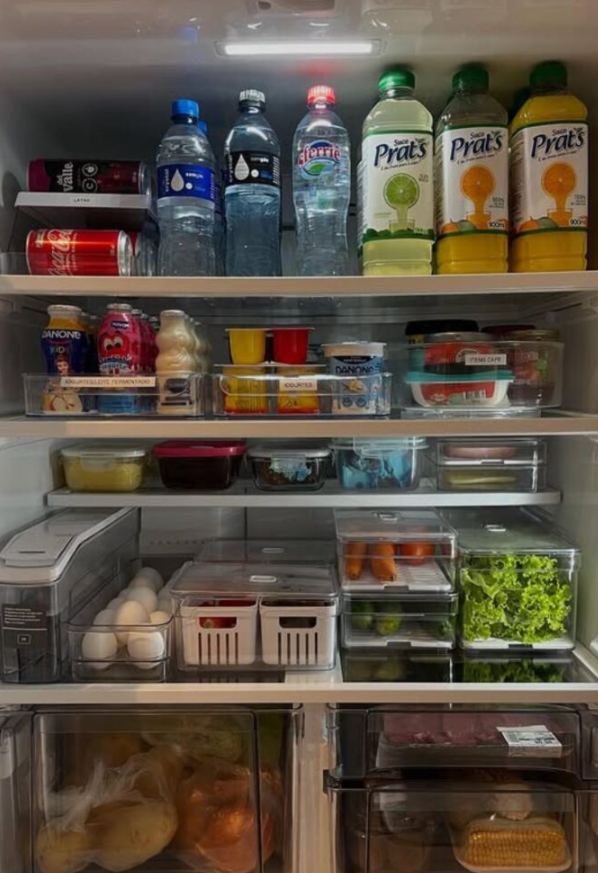
Bottles and cans can take up more room than expected when they are scattered across several shelves. I would keep drinks together in a single row or use a narrow beverage bin to prevent them from rolling around.
Water bottles, juice cartons, and suitable canned drinks are easier to manage when they have a designated space. Short organizers can also hold small yogurt cups, pudding cups, and other packaged items that tend to move around.
Below the drink area, stackable containers can keep vegetables and prepared ingredients visible. This arrangement separates everyday beverages from the food needed for cooking.
Before setting up a drink row, measure the shelf and check the height of your bottles. A container that is too tall or deep can make the refrigerator harder to use, even if it looks organized.
Fresh Herb Storage
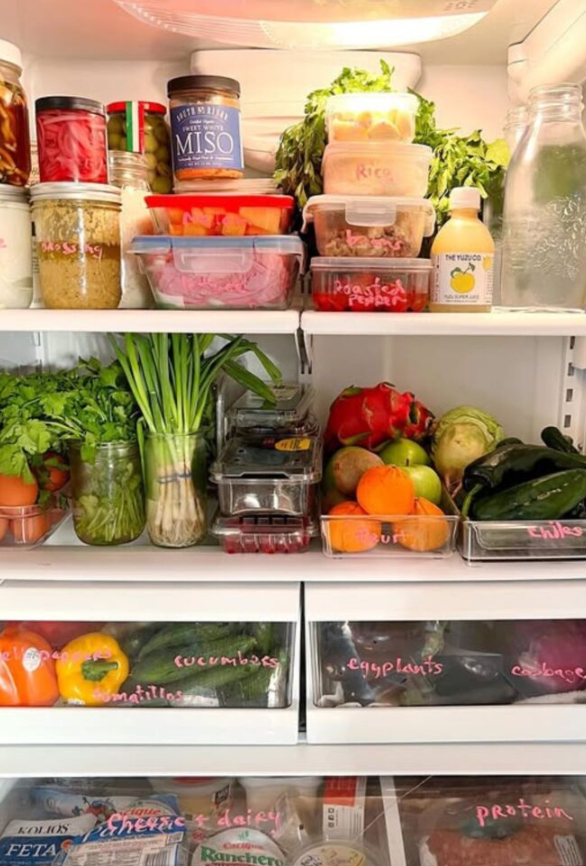
Fresh herbs can quickly become difficult to manage when they are buried beneath other groceries. I would give herbs such as cilantro, parsley, and green onions their own space so they remain easy to find and handle.
For herbs that benefit from upright storage, place the stems in a clean jar with a small amount of water, following the appropriate storage method for that herb. Keep the leaves dry when required and remove any damaged parts regularly.
A narrow jar takes up relatively little shelf space and can keep stems from being crushed. You can place it near suitable cooking ingredients, making it easier to collect everything needed for a meal.
Small bins nearby can hold prepared vegetables and other ingredients. Just remember that herbs have different storage needs, so one method may not work equally well for every variety.
Category Zones

I find that category zones are most useful when I need to find ingredients quickly. Rather than moving several containers to reach one item, I would keep similar foods together in clearly defined areas.
For example, suitable dairy products can share an area, condiments can stay together, and leftovers can be grouped in sealed containers. A separate snack bin helps keep smaller packages from spreading across the shelves.
Clear organizers make these zones easier to maintain because their contents remain visible. A small rotating tray can also be useful for frequently used condiment bottles, allowing you to reach items at the back with less effort.
Use the lower drawers and other designated compartments according to their intended purpose and the storage needs of the food. The goal is to create an arrangement that makes sense for your household while keeping ingredients safely stored.
Stack System
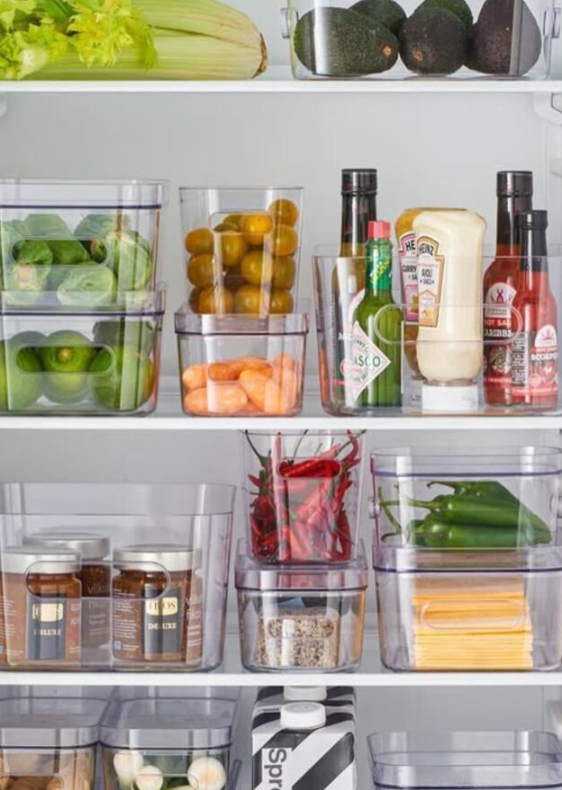
Stackable containers can make a noticeable difference in a small refrigerator because they use available height instead of spreading everything across the shelf. I would choose containers with flat, stable lids that are designed to support stacking.
Smaller bins can hold Brussels sprouts, limes, cherry tomatoes, and other ingredients that are easy to lose among larger groceries. Taller organizers can keep suitable bottles and condiments together.
For vegetables used during cooking, separate containers help prevent smaller items from becoming buried. Wider bins on lower shelves can hold jars and packaged foods when there is enough clearance.
Measure your shelves before buying a set. Containers should fit without pressing against the refrigerator door, obstructing air vents, or making it difficult to reach food at the back.
Drink Baskets
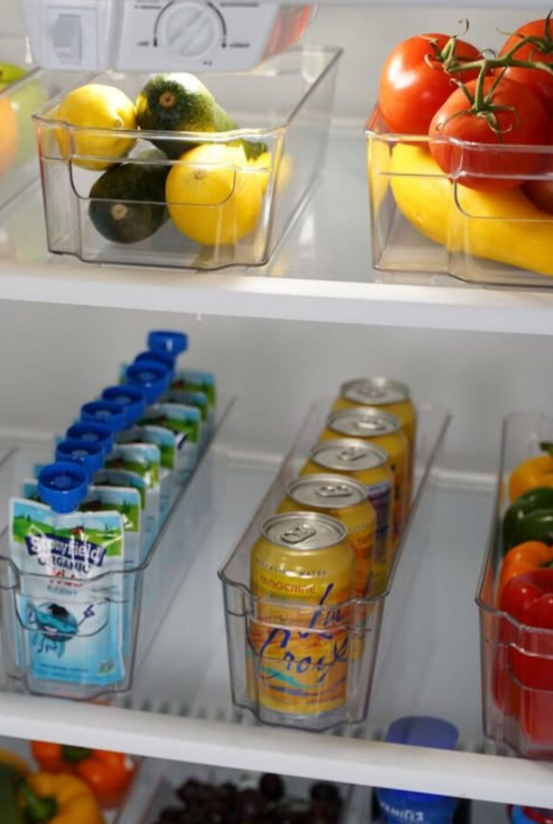
A narrow drink basket is a practical option when cans, cartons, and juice pouches keep moving around the refrigerator. Instead of spreading beverages across the shelf, I would keep similar drinks together in a container that fits the available space.
Baskets with handles are convenient because they can be pulled forward when someone needs a drink. A separate bin can hold juice pouches upright, making them easier for children to reach.
The same arrangement works for suitable canned drinks and small beverage packages. It also makes restocking easier because you can see when the basket is nearly empty.
Choose a food-safe organizer that is easy to clean and doesn’t restrict airflow. Avoid packing drinks so tightly that removing one causes the others to fall over.
Produce Dividers

When different fruits and vegetables share one container, delicate items can get crushed and smaller ingredients can disappear underneath larger ones. Divided storage containers provide separate sections while keeping everything in one place.
For example, one compartment could hold cucumbers and another could hold carrots or celery. Smaller sections are also useful for grapes, cut vegetables, and prepared snack portions.
I would choose a divider that matches the types of produce I buy most often. There is little benefit in using a large organizer with several empty sections if a smaller container would do the job.
Clear dividers make it easy to check the contents without opening several boxes. Keep cut produce in suitable food-safe containers, and store each item according to its temperature and freshness requirements.
Lazy Turntable
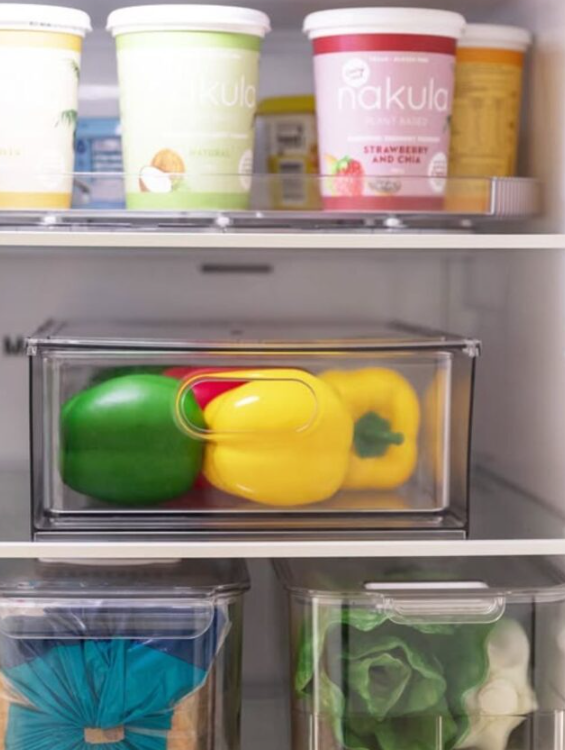
A small lazy Susan can make the back of a refrigerator shelf easier to reach. Instead of moving several containers to find one item, I can rotate the tray until the product I need comes to the front.
This works particularly well for yogurt cups, jars, and frequently used condiments, provided the turntable fits securely on the shelf. It is best suited to small, stable items rather than heavy containers that could tip when rotated.
I would use clear bins on nearby shelves to keep vegetables and packaged foods contained. A separate organizer can hold bell peppers or other small produce, while suitable vented containers can help manage moisture for certain foods.
Before buying a turntable, measure the shelf width and depth. Make sure it can rotate freely without hitting the walls or door, and avoid placing it where it blocks airflow.
FAQs
How do you maximize space in a small refrigerator?
I would start by removing bulky containers that waste space and replacing them with appropriately sized, stackable options. Square and rectangular containers generally fit together more efficiently than round ones because they leave fewer gaps.
Next, group similar groceries in clear bins. Keep snacks, produce, drinks, and leftovers in designated areas so you can see what you have and avoid moving several items to reach one ingredient.
Use vertical space with stable, compatible containers, but don’t overcrowd the shelves. Leave room for cold air to circulate, and keep food stored at safe temperatures.
Finally, measure the refrigerator before buying organizers. A few well-fitting containers are usually more useful than a large collection that takes up valuable space.
What foods should not be stored in the refrigerator door?
The refrigerator door experiences greater temperature fluctuations because it is opened frequently. For this reason, I would avoid storing highly perishable foods there when they need more consistent cooling.
Milk, eggs, and fresh meat are generally better stored in suitable interior areas rather than the door. In particular, raw meat should be kept in a sealed, leakproof container on a low shelf to prevent juices from contaminating other foods.
The door is often more suitable for condiments, sauces, and other products whose labels permit door storage. Some bottled drinks can also be kept there if their storage requirements allow it.
For food safety, keep your refrigerator at or below 40°F (4°C), and follow package instructions and local food-safety guidance. The best storage arrangement is one that saves space without compromising food safety.