21 Shower Organization Ideas for 2026
I style my shower by keeping everyday products organized, making good use of vertical space, and choosing storage that suits the available room. A clean shower does not need lots of shelves or decorative accessories. I start by removing products I rarely use, grouping similar items, and deciding where shampoo, conditioner, body wash, and other essentials should go. Wall-mounted baskets, corner organizers, hanging racks, built-in niches, and refillable bottles can all help create a neat setup. With the right arrangement, I can make even a small shower feel more spacious, attractive, and easier to maintain.
Key Takeaways
- Keep shampoo, conditioner, and body wash within easy reach.
- Use vertical shelves and hanging baskets to save floor space.
- Choose rust-resistant organizers designed for wet environments.
- Store occasional-use products and extra supplies outside the shower.
- Use matching refillable bottles to create a cleaner appearance.
- Give every family member a separate storage area when sharing a shower.
- Clean shelves regularly to prevent soap residue and product buildup.
Vertical Wire Storage
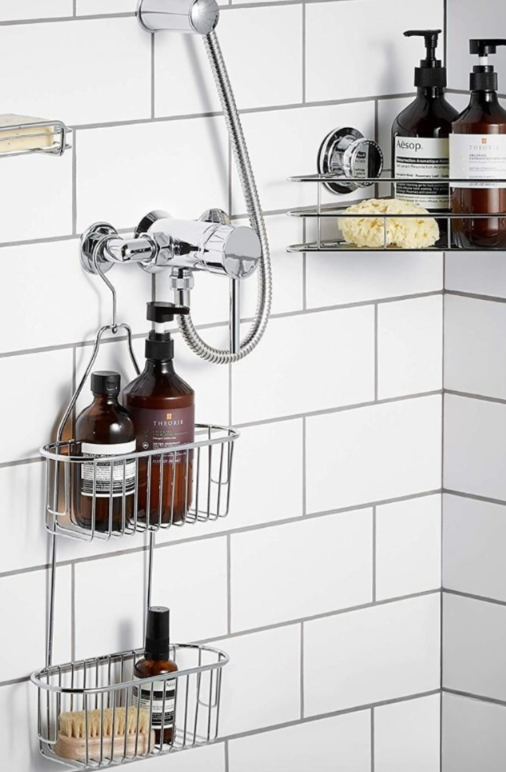
Wall-mounted wire baskets are a practical choice when shower floors and corners have limited space. I like this option because it keeps bottles off the floor while providing separate storage for everyday toiletries.
I would install two or three baskets at different heights, depending on the size of the products. Shampoo and body wash can stay on the middle shelf, while smaller items can go on the upper shelf.
Choose rust-resistant metal with proper drainage so water does not collect inside the baskets. Before installing anything, check that the mounting system is suitable for your shower walls.
Bottle Line System
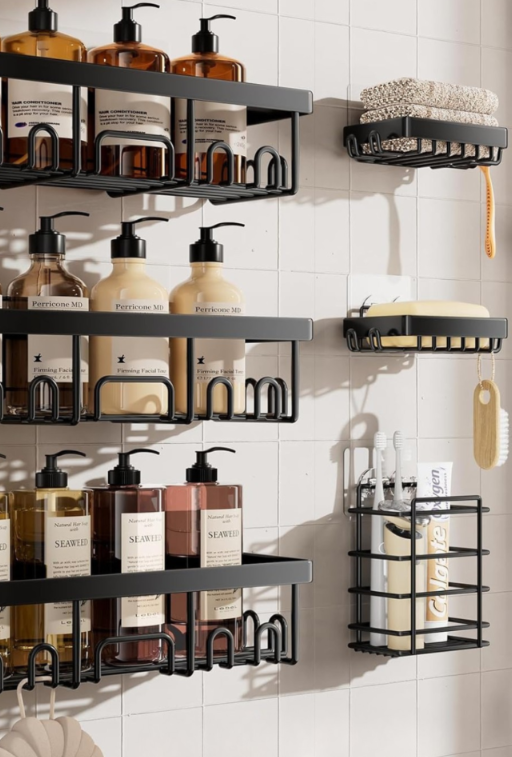
A row of matching bottles can make a shower look cleaner without adding extra decorations. I find this arrangement especially useful when several products are normally scattered across different shelves.
I use identical refillable pump bottles for shampoo, conditioner, and body wash. Arranging them in one straight line on a narrow shelf keeps the products easy to reach and gives the shower a consistent appearance.
Label each bottle clearly so nobody accidentally uses the wrong product. Choose waterproof labels and bottles made from materials suitable for bathroom use.
Minimal Shelf Edit
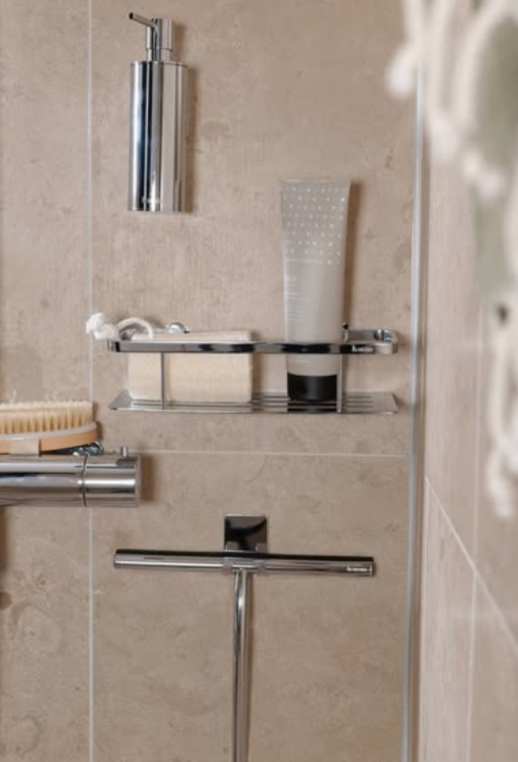
A single narrow shelf can be enough when I want to keep my shower simple. Instead of filling every available surface, I keep only the products I use regularly.
A slim metal or suitable waterproof shelf works well for shampoo, conditioner, and body wash. Wall-mounted dispensers are another option because they reduce the number of individual bottles taking up space.
I also leave some empty space between products so the shelf does not look overcrowded. This setup works particularly well in small showers where bulky storage can make the area feel restricted.
Showerhead Caddy Stack
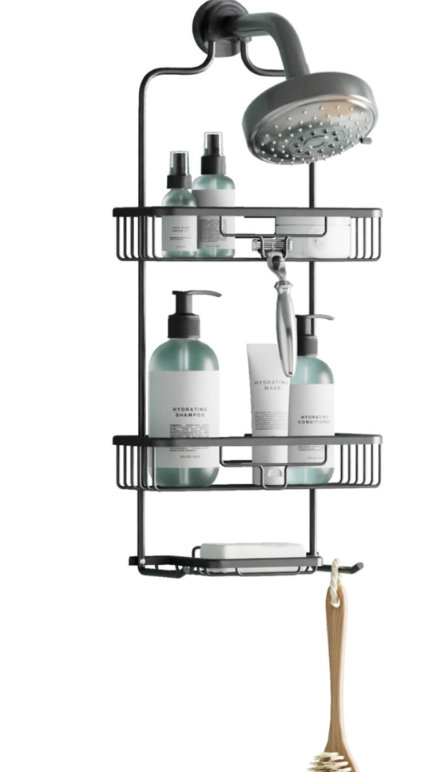
A showerhead caddy is useful when I need extra storage without drilling into the wall. It hangs around the showerhead pipe and provides several levels for organizing toiletries.
I would place taller bottles on the lower baskets and smaller products on the upper levels. This arrangement keeps frequently used items accessible while making use of otherwise unused vertical space.
Look for a sturdy caddy with adjustable baskets, drainage holes, and a secure attachment. Make sure it fits your showerhead design and does not interfere with the water flow.
Floating Wire Layers
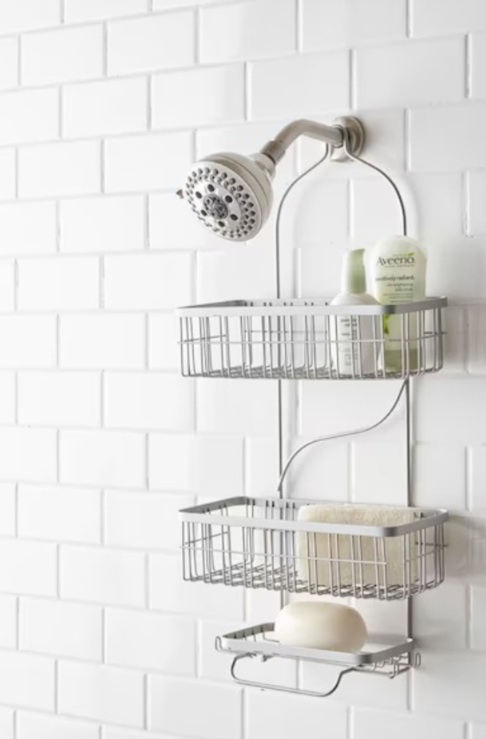
Stacked wire baskets are a good way to organize several products while keeping the shower walls visible. I like this arrangement because it provides separate spaces without requiring a large shelf.
I would mount two or three slim baskets vertically and leave enough room between them for taller bottles. Shampoo and conditioner can go on one level, while smaller toiletries and soap can occupy another.
Choose baskets with drainage openings and secure wall fittings. Keeping the shelves evenly spaced also makes it easier to remove bottles for cleaning.
Contrast Hanging Rack
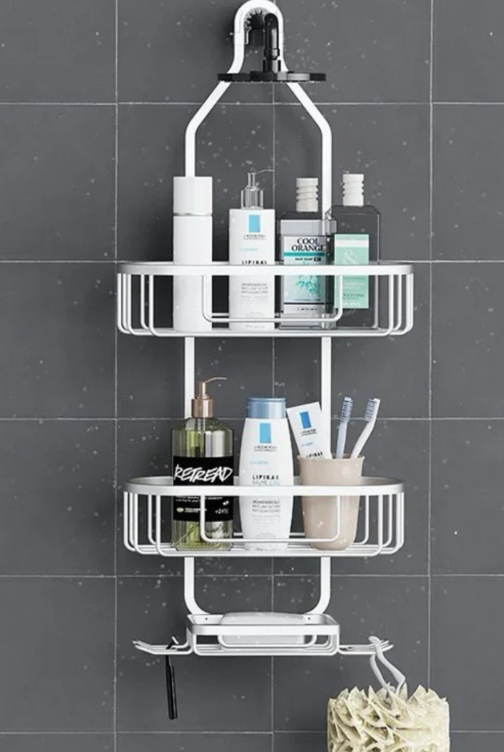
A contrasting shower organizer can add a little style while keeping toiletries organized. For example, a black or dark metal rack against light-colored tiles creates a simple visual difference.
I would choose a hanging rack with separate levels for tall pump bottles, smaller containers, and bathing accessories. This keeps everything visible instead of allowing products to collect around the shower floor.
Before buying one, check its weight capacity and hanging mechanism. A stable organizer is important because several full bottles can become heavy.
Glass-Mounted Frame
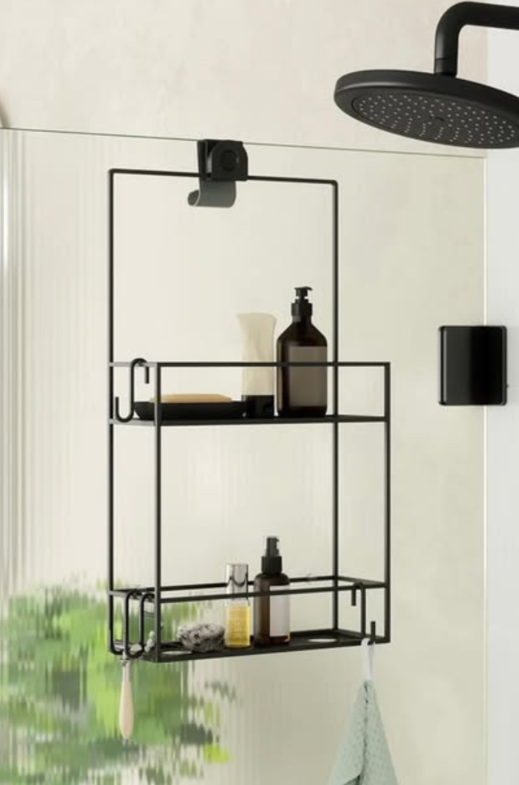
Shower glass can provide useful storage space when the walls have limited room. I find this option helpful in modern bathrooms where I want to avoid drilling into tiled surfaces.
A clamp-style organizer can attach to suitable shower glass and hold everyday toiletries. I would choose a slim metal frame with secure fittings and enough space for the bottles I use regularly.
Always check the glass thickness and the organizer manufacturer’s installation instructions before attaching it. Use a design specifically made for shower glass rather than an ordinary shelf or clamp.
Color-Coded Column
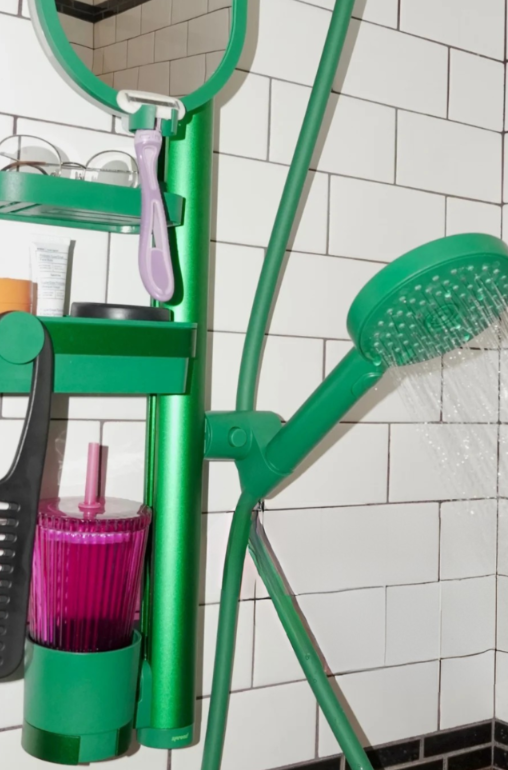
A colorful vertical organizer can make a shower more practical, especially when several people share the same space. I like the idea of using different colors to separate personal products and make everything easier to identify.
Choose a tall storage frame with integrated trays, hooks, and bottle holders. Each section can have a specific purpose, such as haircare, skincare, or bathing accessories.
I would avoid adding too many products to the organizer. Keeping only the necessary items in each section helps the colors and storage arrangement look intentional rather than crowded.
Balanced Vertical Grid
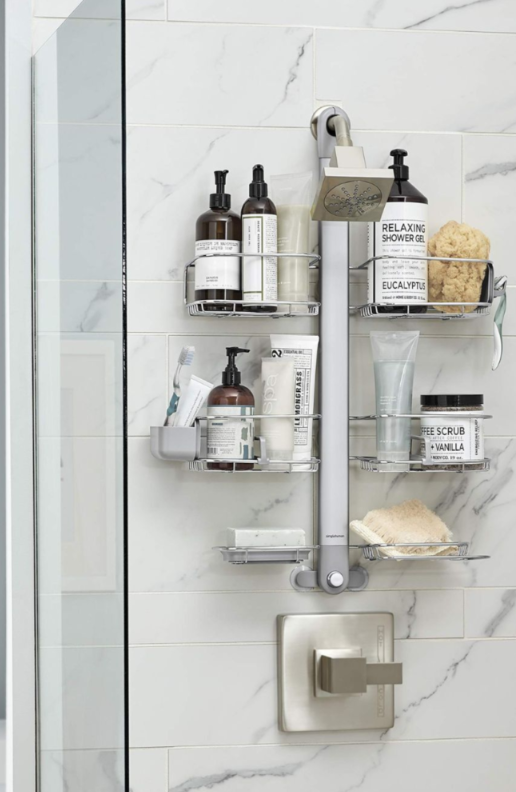
A symmetrical shower storage arrangement can make a busy bathroom feel more organized. I would use a vertical rail with shelves placed at similar heights on both sides.
One side can hold shampoo and conditioner, while the other can store body wash, soap, and smaller accessories. Giving each shelf a specific purpose makes it easier to return products after use.
This layout works best when there is enough wall space for both storage sections. I also leave some open space around the shelves so the shower does not feel packed with accessories.
Corner Chain Organizer

Shower corners are often overlooked, even though they can provide useful storage space. A hanging chain organizer makes use of this vertical area without taking up much room.
I would choose a lightweight design with several hooks or small baskets for washcloths, loofahs, and lightweight bottles. The organizer should hang securely and allow water to drain easily.
Before using this arrangement, check that the chain and hooks are made from bathroom-safe materials. Avoid placing heavy products on a hanging system that is not designed to support them.
Tension Pole Tower
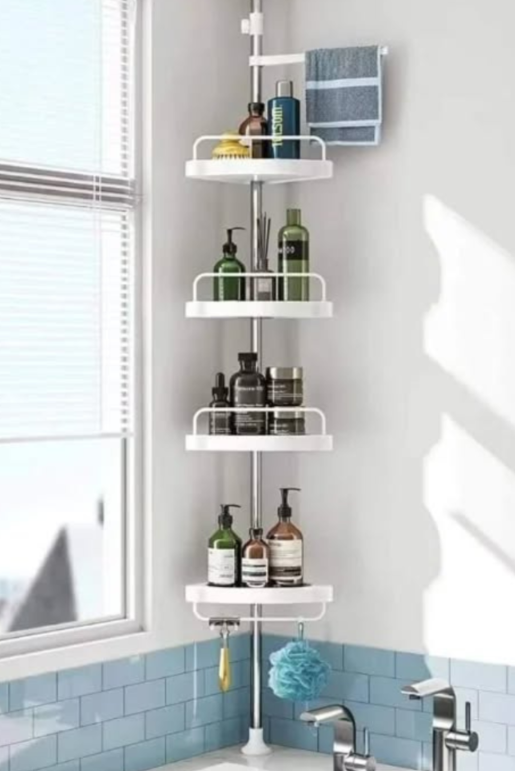
A tension pole organizer is a useful option when I need several storage levels without attaching shelves directly to the walls. It extends vertically and uses adjustable baskets to hold shower products.
I would place heavier bottles on the lower or middle shelves and keep smaller accessories near the top. This helps distribute the weight and makes frequently used products easier to reach.
Choose a pole made for wet bathroom environments and install it according to the manufacturer’s instructions. Check that it is firmly secured before placing bottles on the shelves.
Slim Corner Spine
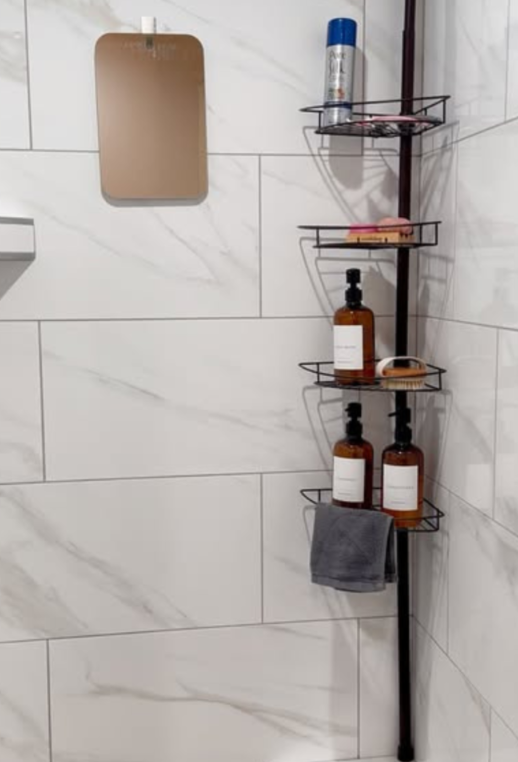
A slim corner organizer can make a small shower more functional without taking up much standing room. I like this idea because it uses an area that might otherwise remain empty.
A floor-to-ceiling pole with narrow wire shelves can hold shampoo, conditioner, soap, and smaller toiletries. I would adjust the shelf heights according to the size of the bottles rather than spacing them equally without a plan.
Make sure the organizer is stable and suitable for the shower’s ceiling height. A narrow design is particularly useful when there is little wall space available.
Daily-Use Zone
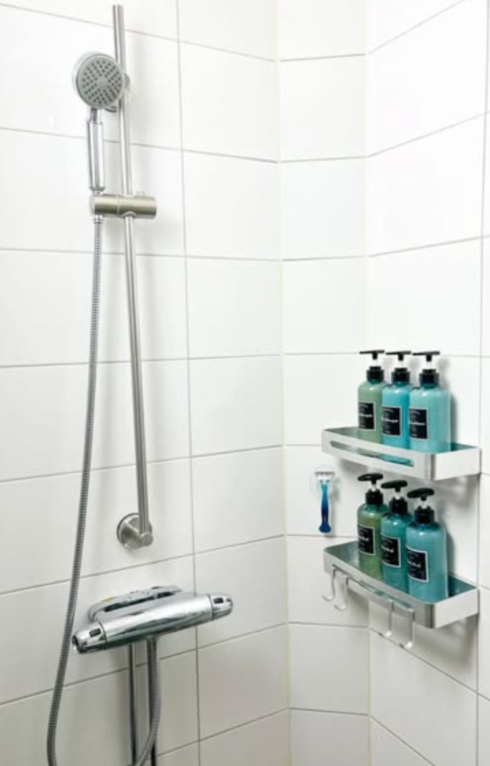
I find that keeping everyday shower products together makes the morning routine much easier. Instead of spreading bottles across different corners, I create one dedicated area for the products I use most.
Two narrow shelves can hold shampoo, conditioner, and body wash at a comfortable reaching height. I keep occasional-use products, such as hair masks and body scrubs, on a separate shelf.
This arrangement also makes cleaning easier because fewer items need to be moved. I avoid placing shelves too close together, as bottles should be easy to remove and return.
Mixed-Use Rail
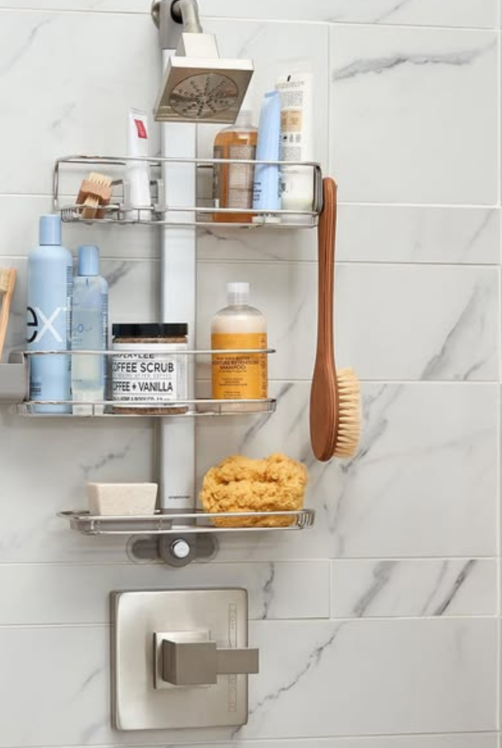
A vertical rail with staggered baskets works well when I need separate storage for skincare, haircare, and bathing accessories. Each level can hold a different category without requiring several individual shelves.
I would place heavier bottles on the lower baskets and reserve upper sections for lighter items. Soap, brushes, and washcloths can have their own spaces so they do not get mixed with skincare products.
Choose a rail with secure fittings and good drainage. I also check the space between baskets to make sure taller bottles can fit comfortably.
Built-In Niche Zones
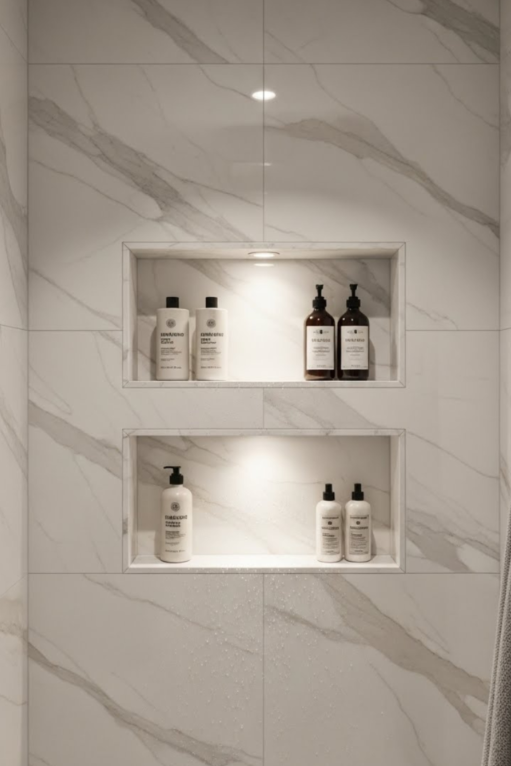
Built-in shower niches provide storage directly inside the wall, keeping bottles from sticking out into the shower area. I consider them a useful option when planning a bathroom renovation or building a new shower.
I would divide the niche into sections according to the products I use. One side can hold shampoo and conditioner, while the other can store body wash and soap.
The size and placement should be planned before tiling so the niche can accommodate regular product bottles. Proper waterproofing is essential to protect the wall from moisture. I also avoid filling every inch because some open space makes the niche easier to clean.
Magnetic Razor Spot

A magnetic razor holder is a small accessory that can help keep shaving tools organized. Instead of leaving razors on the shower shelf, I can give them a dedicated storage spot.
I would choose a bathroom-safe magnetic holder designed for wet conditions and install it where the razor is easy to reach but away from direct water spray.
The holder should be compatible with the razor and securely attached. I also make sure the razor can dry properly between uses and keep sharp blades out of children’s reach.
Over-Bar Hooks
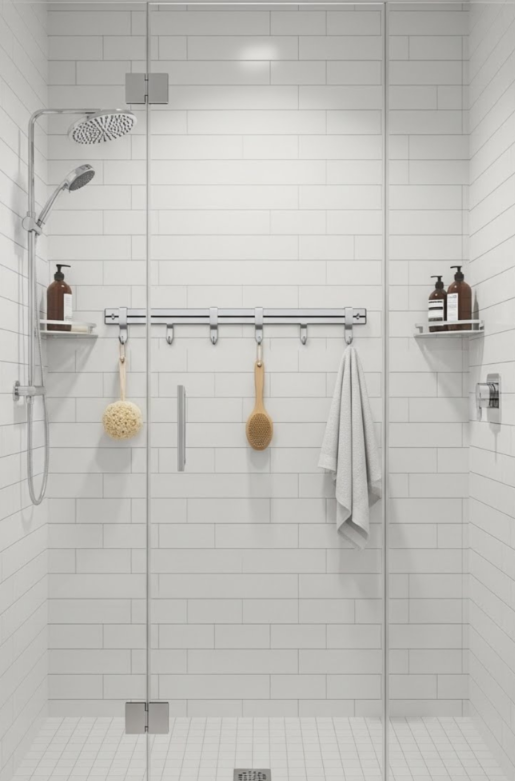
Shower bars can provide extra hanging space when shelves are already full. I use detachable hooks to keep lightweight accessories organized without adding another storage unit.
These hooks work well for washcloths, loofahs, shower brushes, and other items that need to hang and dry. I position them so they do not interfere with the shower curtain, door, or daily movement.
Choose hooks made from rust-resistant materials and check that they fit the bar securely. Leaving enough space between accessories also helps improve airflow and prevents everything from becoming tangled.
Family Split Shelves

Shared showers are easier to manage when everyone has a designated storage area. I would assign one shelf or basket to each family member rather than allowing personal products to spread throughout the shower.
Different shelf levels or labeled containers can help distinguish everyone’s belongings. Matching bottles can also make the overall arrangement look more consistent.
I keep commonly used products at comfortable heights and avoid placing heavy bottles on high shelves. This setup reduces confusion during busy mornings and makes it easier for everyone to put their products back in the right place.
Refill Bottle Row

Refillable bottles are a simple way to reduce visual clutter in the shower. I prefer using matching dispensers because they create a consistent appearance and make open shelves look less crowded.
I would arrange shampoo, conditioner, and body wash in one row, keeping only everyday essentials on display. Clear or waterproof labels help identify the contents, especially when the bottles have similar colors.
Choose refillable bottles that are easy to clean and suitable for the products being stored. I also avoid mixing different products inside one dispenser without washing it properly first.
Fold-Down Seat Shelf

A fold-down shower seat can provide occasional storage space, but I would use it carefully. It is useful for temporarily holding a washcloth, soap, or a small bathing accessory while showering.
I avoid turning the seat into a permanent storage shelf because it needs to remain available for sitting. Keeping the surface clear also makes the shower easier to clean.
After using the shower, I remove any items from the seat and allow the surface to dry. If the seat is designed for sitting, I never place heavy storage loads on it or block its folding mechanism.
Outside-Shower Storage
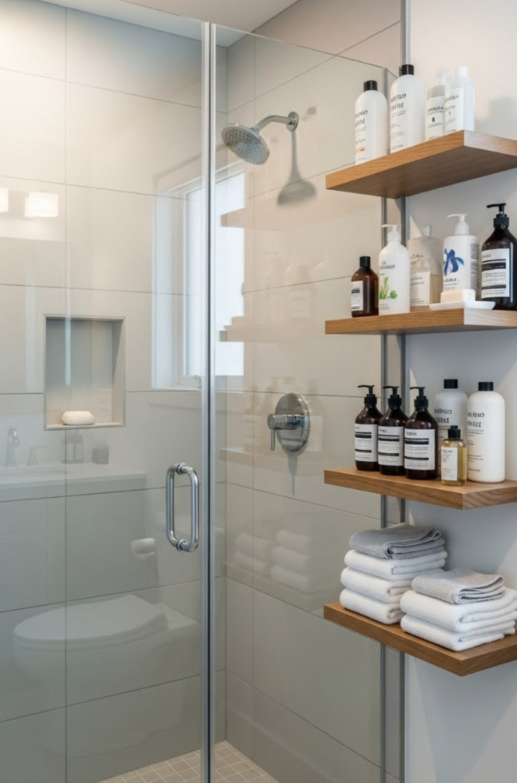
Not every bathroom product needs to stay inside the shower. I find that moving extra bottles and occasional-use items outside the wet area makes the shower feel more open.
An adjacent cabinet, vanity drawer, or narrow wall shelf can hold backup shampoo, extra soap, skincare products, and hair treatments. This keeps the shower storage focused on the items needed during bathing.
I also separate clean, dry supplies from wet products to reduce moisture exposure. Keeping backups outside makes it easier to restock the shower without overcrowding the shelves.
FAQs
What Is the Best Way to Organize My Shower?
I find that the best way to organize a shower is to start with the products I use regularly and give each one a specific place. Shampoo, conditioner, and body wash should stay within easy reach, while occasional-use products can be stored elsewhere.
I also recommend using vertical storage instead of placing bottles across the floor or around the edges of the shower. Wall-mounted baskets, corner shelves, and showerhead caddies can help make better use of limited space.
Avoid keeping too many products inside the shower. When every item has a purpose and a designated location, the space becomes easier to clean and maintain.
Where to Put Products in the Shower?
I arrange shower products according to how often I use them. Everyday essentials, such as shampoo, conditioner, and body wash, stay on the middle shelves where they are easy to reach.
Smaller or occasional-use products, including scrubs, hair masks, and shaving accessories, can go on separate shelves. I keep heavier bottles on lower or stable surfaces and avoid placing items where they could easily fall.
Extra supplies and backup products are better stored outside the shower in a dry cabinet or bathroom organizer. This keeps the main shower area clear and makes daily routines more convenient.
Final Thoughts
I believe a well-styled shower should be easy to use, simple to clean, and free from unnecessary clutter. Vertical wire baskets, corner organizers, refillable bottles, built-in niches, and hanging racks can all improve storage without taking up too much room.
Start by removing products you no longer use, then choose storage that fits your shower layout. Keep everyday essentials nearby and move extra supplies outside the wet area. A few practical changes can make your shower feel cleaner, more spacious, and better organized.