20 DIY Cat Toy Ideas for 2026
Making a fluffy cat toy at home is a simple way to keep your cat entertained without spending money on expensive store-bought toys. I like using soft materials such as fleece, felt, old socks, and leftover fabric because they’re easy to work with and can be turned into different shapes. You can add polyester stuffing to give the toy its shape and a little catnip to encourage playful behavior.
The best DIY cat toys offer different textures and movements that encourage cats to chase, grab, kick, and explore. In this article, I’ll share creative ideas, including fluffy kick balls, fabric mice, wool pom-poms, feather wands, cardboard puzzles, and treat-dispensing games. You’ll also learn how to reuse everyday household materials to create affordable toys while keeping safety in mind.
Key Takeaways
- Use soft fabrics such as fleece, felt, and cotton to make comfortable toys.
- Add securely enclosed stuffing to create fluffy shapes for batting and kicking.
- Use catnip or silvervine to make certain toys more interesting.
- Reuse cardboard boxes, toilet paper rolls, and old socks for inexpensive DIY projects.
- Try different textures and movements to keep your cat interested.
- Inspect homemade toys regularly and remove loose strings, small parts, or damaged materials.
Cardboard Play Zone

A cardboard play zone gives curious cats a simple place to investigate, hide, and play. I like this idea because you can create several activities using materials that would otherwise go into the recycling bin.
Start with a few small cardboard boxes and sturdy tubes. Cut different-sized openings in the boxes so your cat can reach inside with its paws. You can also place lightweight balls or other suitable toys inside to encourage batting and hunting behavior.
Put the finished play area on a comfortable mat so your cat has a stable surface for exploring. Keep the cardboard dry and replace any pieces that become damaged from scratching or chewing.
Flat Scratcher Board
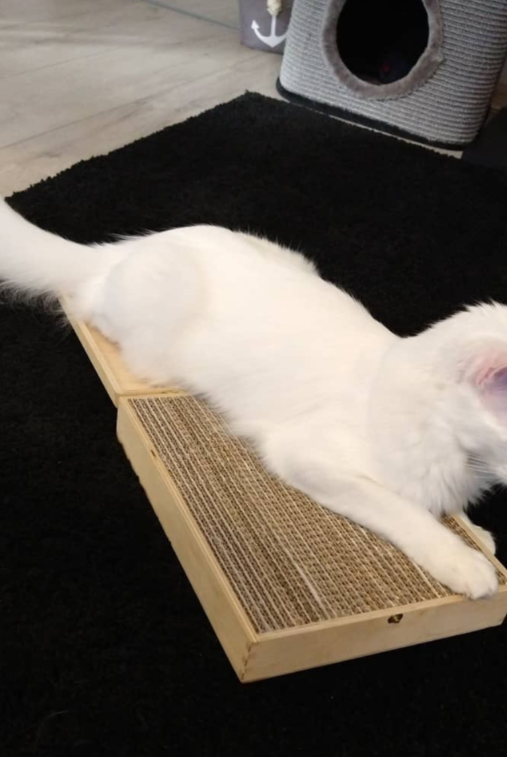
A flat cardboard scratcher is a useful DIY project for cats that enjoy stretching and scratching. Instead of buying a new scratcher, you can reuse clean corrugated cardboard to make a simple version at home.
Cut cardboard into equal-sized strips and arrange them tightly inside a shallow wooden frame. Make sure the pieces fit securely so they don’t slide around while your cat scratches.
Place the board near your cat’s favorite resting area or along a regular walking route. This gives your cat an appropriate place to scratch while helping protect furniture and other household surfaces.
Doorway Batting String

A doorway batting toy can encourage playful movement without requiring you to hold a wand throughout the entire session. Cats that enjoy swatting at moving objects may particularly enjoy this type of activity.
You can make one using soft felt shapes, such as circles or half-moons, attached to a short piece of string. Secure the string to a suitable door-mounted attachment that cannot fall or become tangled around your cat.
Keep the toy light enough to move when touched, but avoid leaving loose strings accessible when nobody is supervising. This idea works well during supervised play in a quiet area where your cat feels comfortable.
Ribbon Walk-Through
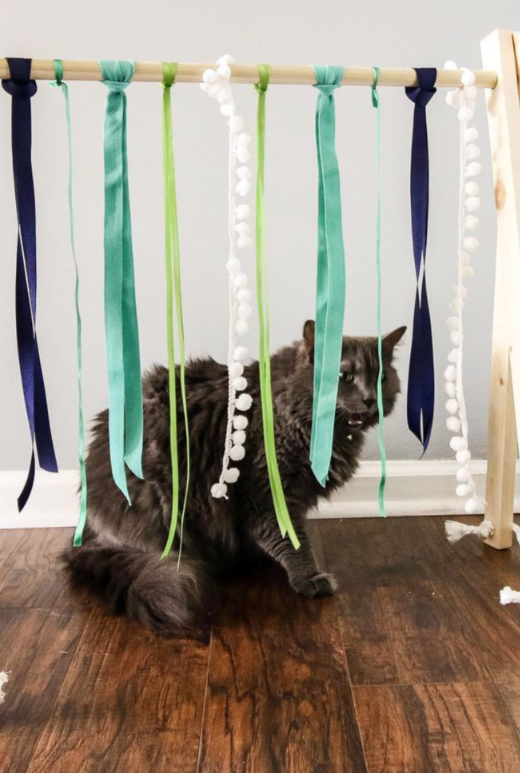
A ribbon walk-through adds movement and texture to your cat’s play area. Cats that enjoy exploring different surfaces may be interested in walking between soft hanging materials and batting at them.
To make this setup, use a stable wooden frame and a securely attached horizontal dowel. Tie short pieces of fabric or suitable pet-safe ribbons along the dowel at different heights.
Choose materials that won’t easily fray or shed small pieces. Place the structure on a flat floor where it cannot tip over when your cat brushes against it.
The movement of the hanging fabric creates an interesting play experience. However, supervise your cat and remove the ribbons after play to prevent chewing or entanglement.
Wool Pom-Pom Balls
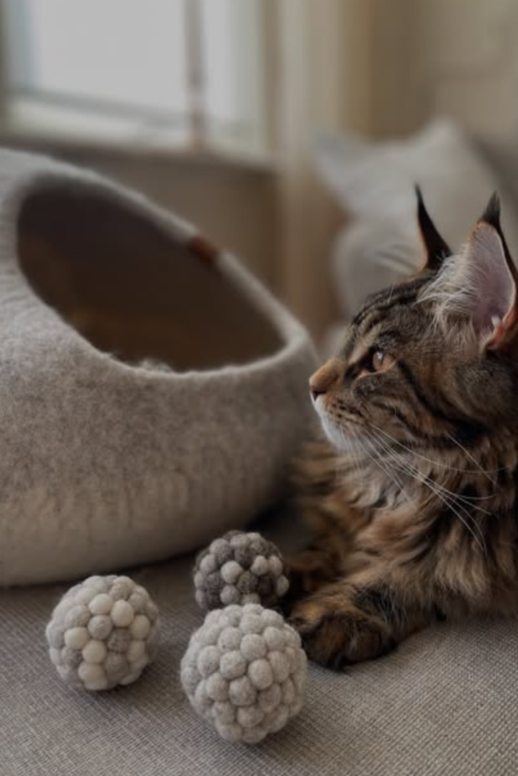
Wool pom-pom balls are simple toys for cats that enjoy batting lightweight objects across the floor. Their soft texture makes them different from harder plastic balls and other traditional cat toys.
You can make these by wrapping wool yarn around your fingers or a small piece of cardboard. Tie the center securely, cut the loops, and trim the loose ends to create a rounded shape.
For a firmer option, use suitable wool roving and felt it into a small ball. Make sure the finished toy has no loose fibers, long strands, or parts that your cat could swallow.
Create a few different sizes to see which ones your cat enjoys batting around. Always supervise play and remove damaged pom-poms.
Peek-Hole Box Game
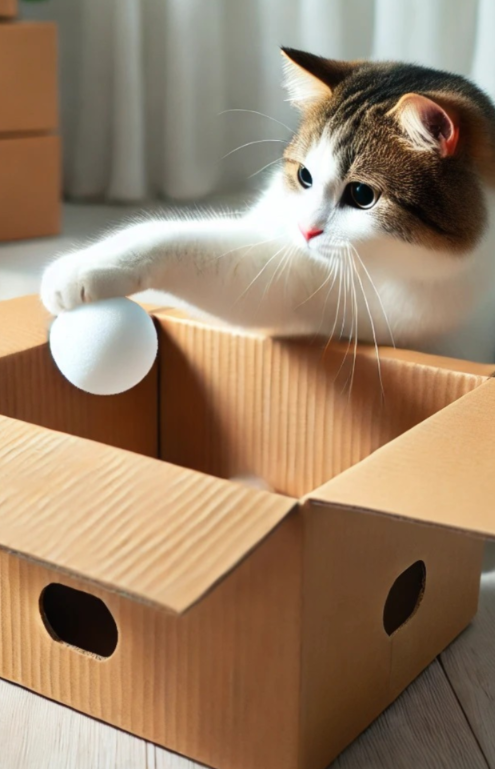
A peek-hole box game gives cats a chance to use their paws and natural hunting instincts. It’s especially useful for curious cats that enjoy investigating objects hidden inside small spaces.
Start with a sturdy cardboard box and cut several paw-sized openings around the top and sides. Smooth the edges so there are no sharp cardboard pieces that could scratch your cat.
Place a lightweight ball inside and let your cat reach through the openings to move it around. You can also use a suitable large toy that cannot fit through the holes.
Keep the box on a stable floor and check it regularly for damage. This simple activity provides entertainment without needing complicated materials.
Bottle Spinner Puzzle

A bottle spinner puzzle can turn treat time into an interactive activity. It’s a useful idea for cats that enjoy working out how to reach food or small rewards.
You can create a safer version using a sturdy, purpose-made pet puzzle feeder or a secure treat-dispensing container. Add a few pieces of your cat’s regular treats and allow your cat to move the toy to release them.
Start with an easy setup so your cat can understand how the activity works. As your cat becomes familiar with it, you can gradually introduce a little more challenge.
Avoid using exposed bottle caps, sharp edges, or loose parts. Always choose a container designed for pet use and supervise your cat while playing.
Fluffy Kick Ball
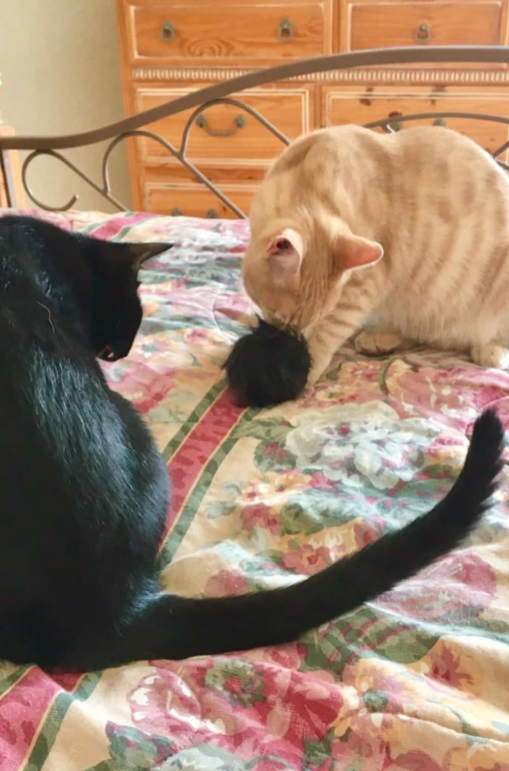
A fluffy kick ball is a great option for cats that enjoy grabbing toys with their front paws and kicking with their back legs. I would make this one using soft fleece or faux fur with securely enclosed stuffing.
Cut two matching fabric pieces into a rounded or oval shape. Sew the edges together, leaving a small opening for the stuffing. Add polyester filling and close the opening with strong, secure stitching.
You can also add a small amount of catnip inside if your cat enjoys its scent. Make sure all seams are secure before giving the toy to your pet.
Choose a size that your cat can comfortably hold and kick. Check the stitching regularly, especially if your cat plays roughly.
DIY Foraging Board
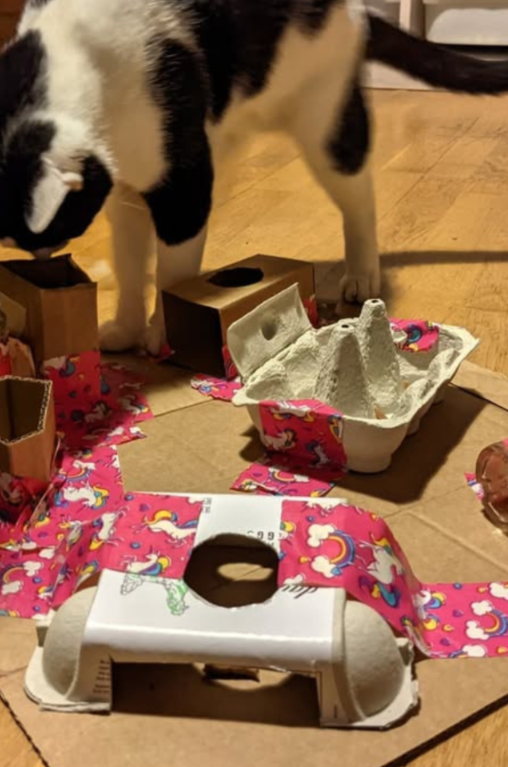
A DIY foraging board gives your cat an opportunity to use its paws and nose to work for small treats. It’s a good activity for curious cats that enjoy searching and investigating.
Use a sturdy, shallow cardboard base and attach several clean cardboard compartments. You can create different sections with empty paper tubes or small cardboard dividers.
Place a few treats in easy-to-reach sections and allow your cat to investigate. Keep the challenge simple at first so your cat doesn’t become frustrated.
Use only clean materials without staples, sharp edges, or loose decorations. Remove the board if your cat begins chewing or swallowing the cardboard.
Giant Whack-a-Mole Box

A giant whack-a-mole box creates an exciting play area for active cats that enjoy surprise movements. The idea is to encourage your cat to reach, swipe, and pounce when a toy appears through an opening.
Choose a large, sturdy cardboard box and cut several smooth-edged holes around the top and sides. During supervised play, move a soft toy or teaser wand through different openings to make it appear and disappear.
Change the direction and speed of the toy to keep the activity interesting. Allow your cat to catch the toy occasionally rather than making it chase continuously.
This game works well in a spacious play area where your cat has enough room to move comfortably.
Sock Toy Trio
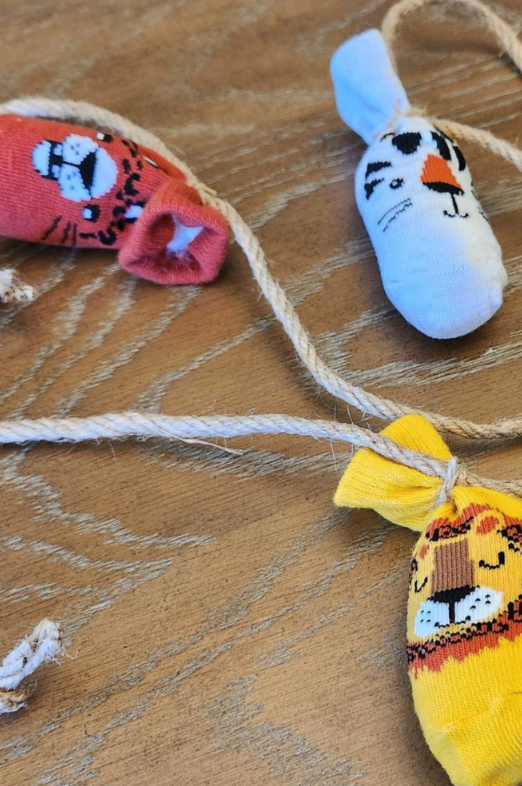
Old clean socks can be turned into simple homemade cat toys. I like this idea because it requires very few materials and lets you reuse fabric that might otherwise be discarded.
Take small socks and fill them with polyester stuffing or clean fabric scraps. Add a little catnip if your cat enjoys it, then close the opening with strong stitching.
You can make several toys in different shapes and sizes. However, avoid using buttons, beads, loose decorations, or long strings that could become choking or swallowing hazards.
Keep the finished toys in a small basket and rotate them during supervised play. Inspect each one regularly to make sure the fabric and seams remain intact.
Mixed Fabric Toy Set
A mixed fabric toy set gives your cat several textures and shapes to enjoy. Instead of making one large toy, you can create a small collection using leftover fleece, cotton, felt, and other suitable fabrics.
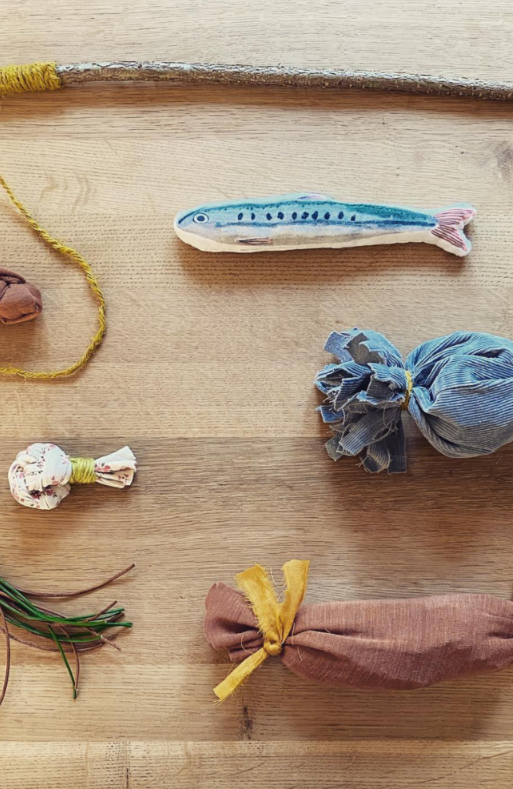
Cut the materials into small pieces and sew them into simple shapes. You can make soft bundles, small fabric balls, or stuffed shapes that are easy for your cat to bat around.
Use different colors and textures to create variety. Keep every piece securely stitched and avoid adding loose leather strips, yarn, feathers, or decorative parts that your cat could swallow.
Store the toys together and offer a few at a time. Changing the available toys occasionally can help keep play sessions interesting.
Yarn & Tassel Play Set

A yarn and tassel play set can be colorful and entertaining for cats that enjoy chasing moving objects. You can make soft pom-poms and fabric tassels using suitable materials.
For a simple project, wrap yarn around a cardboard template, tie the center securely, and trim the loops. Check the finished pom-pom carefully to ensure no long strands are loose.
You can also create tassels from short fabric strips and attach them to a supervised teaser wand. Avoid giving cats loose yarn or string because swallowing it can cause serious intestinal injuries.
Use these toys only during supervised play and put them away afterward. A variety of safe shapes and textures can make each session more interesting.
Feather Teaser Wand
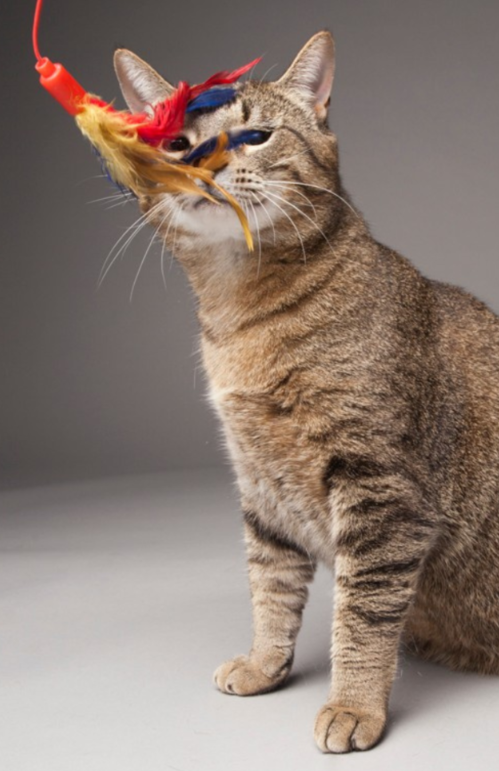
A feather teaser wand is a useful toy for encouraging cats to stalk, chase, and jump. The movement of the feathers can imitate the quick motions of small prey.
You can make a basic version using a lightweight pet-safe wand and a securely attached feather attachment. Move it slowly across the floor, then lift it slightly to encourage your cat to follow.
Give your cat opportunities to catch the toy rather than keeping it out of reach throughout the entire session. This helps make the activity more rewarding.
Check the feather attachment before and after every play session. Remove the toy if feathers become loose or damaged, and store the wand somewhere your cat cannot access without supervision.
Twine Chase Ball

A twine chase ball is another simple idea for cats that enjoy rolling objects across the floor. It can be made using a small, sturdy core covered with suitable material.
However, loose cotton or jute twine can be dangerous if a cat chews and swallows it. For this reason, I recommend choosing a commercially made, pet-safe ball instead of giving your cat an exposed twine-wrapped ball.
If you make a fabric-covered alternative, ensure all materials are firmly enclosed and there are no loose threads or detachable parts.
Place the ball on a smooth floor and encourage your cat to bat it around. Always remove damaged toys before your cat can swallow any loose material.
Fabric Mouse Toys

Fabric mouse toys are a fun option for cats that enjoy chasing small objects. Their familiar shape can encourage stalking, chasing, and pouncing during playtime.
To make one, cut two matching pieces of suitable fabric into a simple mouse shape. Sew the edges together, add a small amount of stuffing, and close the opening securely.
You can use different fabrics, such as fleece, felt, or cotton, to create several variations. Avoid adding small plastic eyes, buttons, bells, or other detachable decorations.
Keep the tail short, securely attached, and made from a material that won’t easily fray. Check the toy regularly for loose stitching and damaged fabric.
Toilet Roll Treat Box
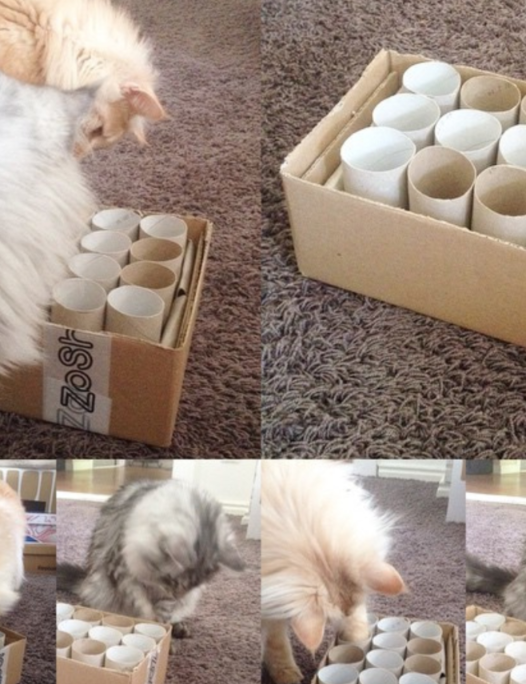
A toilet roll treat box is an inexpensive activity for cats that enjoy reaching into small spaces. It gives them a chance to use their paws and investigate hidden rewards.
Start with a clean cardboard box and several empty toilet paper rolls. Place the rolls upright inside the box so they fit closely together without falling over.
Add a few pieces of dry cat treats or your cat’s regular food inside selected tubes. Let your cat work out how to reach the rewards.
Keep the activity simple and supervise your cat while using it. Replace the cardboard pieces if they become wet, torn, or heavily chewed.
Cardboard Tube Set

Empty cardboard tubes can be turned into several simple toys without much preparation. They’re especially useful when you want a quick activity using household materials.
You can flatten a tube, cut a few short openings along its edges, or create a small rolling toy using a clean cardboard piece. Another option is to place a few treats inside a tube and fold the ends loosely for a supervised food puzzle.
Avoid attaching small pom-poms or decorations with glue because they may come loose during play. Check the tubes for sharp edges and replace them when they become damaged.
Offer one activity at a time to see which design your cat prefers. Some cats enjoy batting rolling tubes, while others prefer reaching inside for treats.
Hanging String Stick
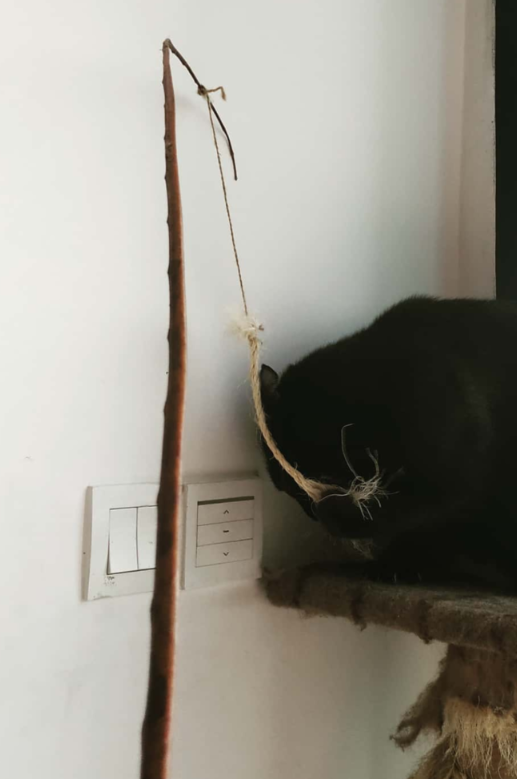
A hanging toy can give cats something to bat at while they explore their surroundings. However, I recommend using a purpose-made hanging cat toy rather than leaving a loose string attached to a stick.
Choose a sturdy attachment that cannot fall, tip over, or become wrapped around your cat. Keep the hanging part short and use a pet-safe toy that does not have small detachable pieces.
Place the toy in an area where your cat can reach it comfortably during supervised play. Avoid positioning it near electrical cords, furniture gaps, or places where your cat could become trapped.
Remove the toy when playtime ends. This is particularly important with hanging toys because loose strings can be dangerous if swallowed.
Feather Catch Toy
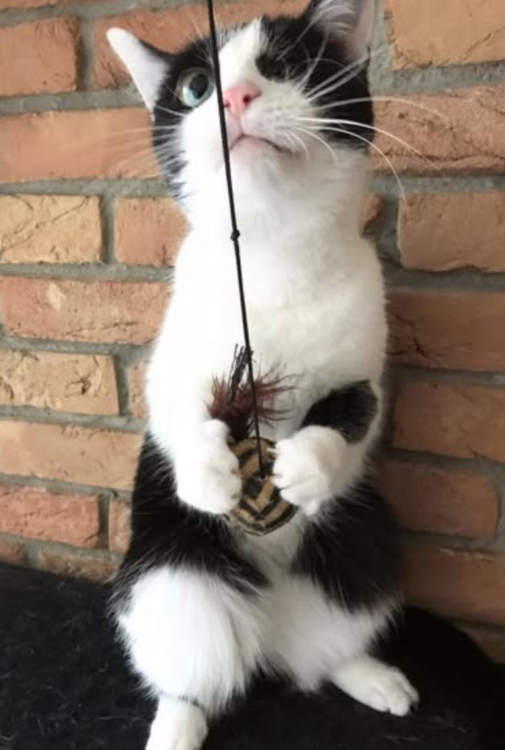
A feather catch toy is a simple way to encourage swatting and grabbing. Cats that enjoy catching moving objects may respond well to the soft movement of a feather attachment.
Use a lightweight teaser wand with a securely fitted pet-safe feather toy. Move it gently from side to side and allow your cat to catch it with its paws.
You can also change the height and direction to encourage different movements. Keep the play area clear of fragile objects so your cat has room to move.
Always inspect the feather attachment for loose pieces before playing. Put the toy away after each session to prevent unsupervised chewing or swallowing.
FAQs
What Toys Do Cats Never Get Bored With?
No single toy will keep every cat interested all the time. Most cats enjoy toys that encourage natural behaviors such as stalking, chasing, batting, grabbing, and pouncing.
Rolling balls, feather teaser wands, soft kick toys, and interactive puzzle feeders can provide different types of play. I recommend trying a few options to understand which movements and textures your cat prefers.
Rotating toys is another useful way to maintain interest. Put some toys away for a few days and bring them back later. Even familiar toys can feel more interesting when they’re not available all the time.
Are DIY Cat Toys Cheaper to Make?
Yes, many DIY cat toys are inexpensive because you can reuse materials you already have at home. Clean cardboard boxes, toilet paper rolls, old socks, and leftover fabric can become simple toys with very little effort.
The total cost depends on the materials and tools you need. Some projects may cost almost nothing, while others require stuffing, sewing supplies, or purpose-made pet-safe attachments.
I recommend starting with simple cardboard activities and soft fabric toys before buying additional materials. Always prioritize safe construction over appearance, and replace any toy that becomes damaged.