17 Foyer Storage Ideas for Entryway 2026
When kids come home from school, their shoes, backpacks, jackets, and sports equipment often end up scattered across the entryway. Without a proper storage system, this small area can quickly become one of the messiest spaces in the house.
The best Entryway Storage Ideas for Families With Kids combine easy-to-reach hooks, shoe storage, baskets, benches, and cabinets. Every family member needs a designated place for everyday belongings so children can put things away without constant reminders.
Whether you have a spacious foyer, a narrow hallway, or a small apartment entryway, these 17 ideas can help you create a practical setup that keeps everyday clutter under control.
Key Takeaways
- Give each child a dedicated hook, basket, or storage cubby.
- Choose low hooks and open shelves that children can reach independently.
- Use benches with drawers or compartments to store shoes.
- Combine open and closed storage to balance convenience and appearance.
- Make use of vertical wall space in small entryways.
- Keep everyday belongings near the door and seasonal items in upper cabinets.
What’s the Most Practical Entryway Storage Setup for Families With Kids?
The most practical entryway storage setup is one that makes it easy for everyone to put their belongings away. Families need more than a decorative console table or a few wall hooks. They need a system that handles shoes, backpacks, coats, lunchboxes, and everyday accessories.
I recommend starting with a sturdy bench where children can sit while putting on their shoes. Add open shoe compartments underneath, wall hooks at different heights, and labeled baskets for smaller belongings.
If your entryway has enough space, include closed cabinets or drawers for seasonal accessories and items you don’t use every day. In a smaller hallway, a narrow bench and a few well-placed hooks may be enough.
The important thing is to create a designated place for everything. When children can reach their storage easily, they’re more likely to put their things away instead of leaving them on the floor.
1. Hidden Bench Drawers
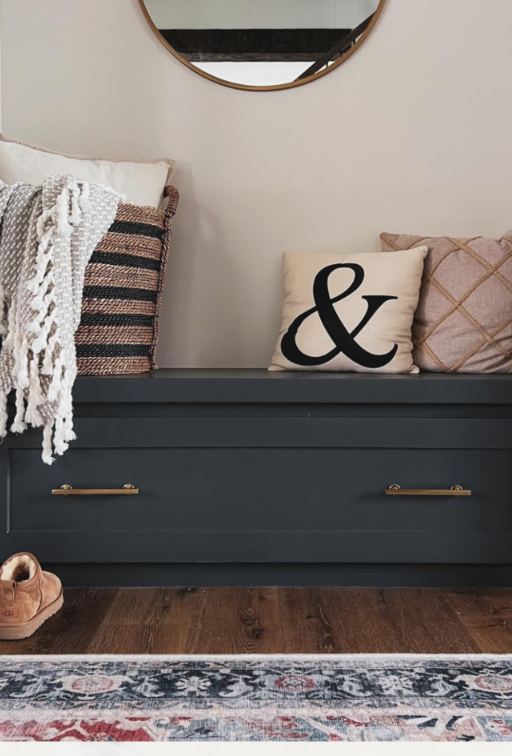
A storage bench with hidden drawers is a practical option when shoes and everyday accessories make your entryway look messy. Instead of leaving everything visible, you can give each family member a separate drawer.
Choose a bench with deep drawers that can hold sneakers, sandals, gloves, and other frequently used items. A cushioned top also gives children a comfortable place to sit while changing shoes.
I suggest using drawer labels or assigning one drawer to each person. This makes it easier for everyone to remember where their belongings belong.
If you’re working with a narrow entryway, choose a bench that provides plenty of storage without blocking the walkway.
2. Open Basket Cubbies
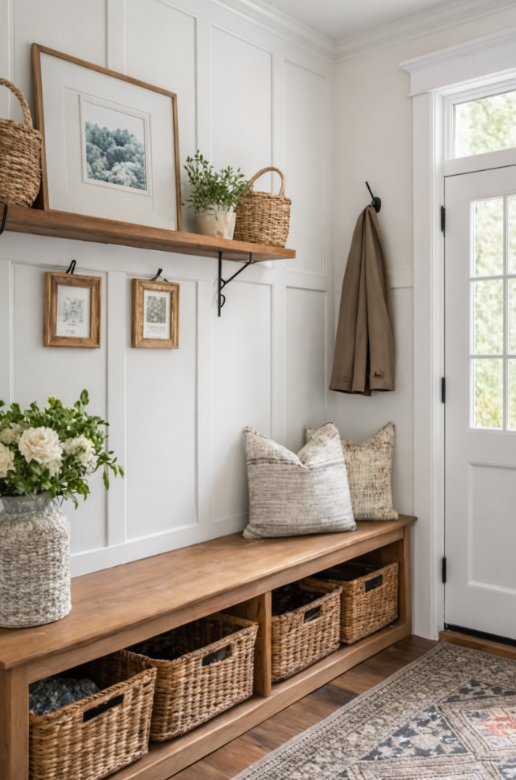
Open basket cubbies make it easier for children to organize their belongings without needing to open several doors or drawers. Each basket can hold shoes, hats, gloves, scarves, or small sports accessories.
Choose baskets that slide easily into the compartments and are lightweight enough for children to carry. You can use different labels or colors to give every family member an individual storage space.
A bench with divided sections works well for this setup. Add a floating shelf above it for extra baskets, small storage containers, or everyday essentials.
This arrangement is especially useful for families who want a simple system that children can use independently.
3. Full Mudroom Wall
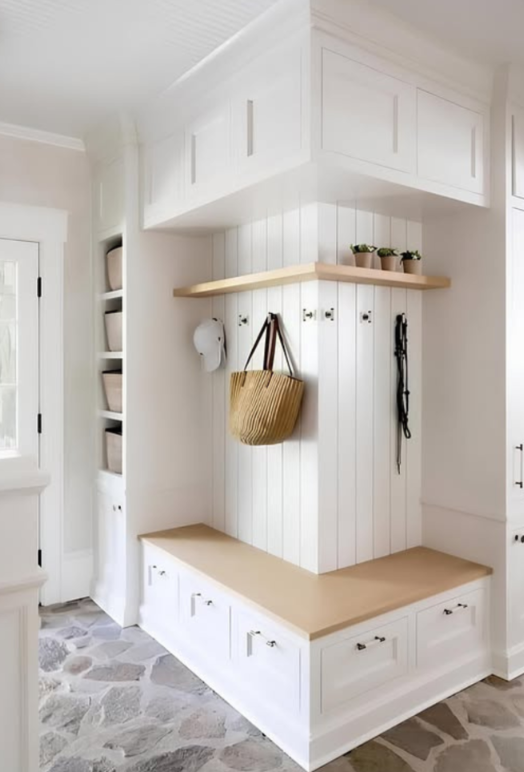
If your entryway has an entire wall available, turn it into a family mudroom. A floor-to-ceiling storage arrangement gives you space for shoes, jackets, backpacks, seasonal accessories, and household essentials.
Start with lower cabinets or drawers for shoes. Add a bench in the middle and install sturdy hooks above it for coats and school bags. Upper cabinets can hold items that children don’t need every day.
You can also include open shelves with baskets for smaller belongings. Assigning one section to each family member helps prevent items from getting mixed up.
This setup requires more planning and space, but it can make a busy family entryway much easier to manage.
4. Wood Hook Nook
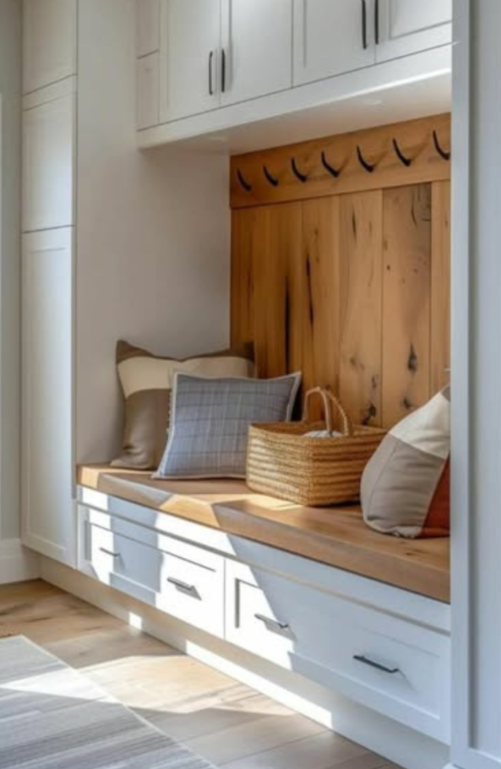
A wooden hook nook creates a dedicated drop zone for coats, backpacks, and everyday bags. It works particularly well when you want a built-in appearance without filling the entire entryway with furniture.
Install a wooden back panel with several sturdy hooks. Place a bench underneath so children have somewhere to sit while taking off their shoes.
If space allows, add drawers below the bench and cabinets above the hooks. These provide additional room for shoes and seasonal accessories.
Use hooks at different heights so both adults and children can reach their belongings comfortably. A simple wooden finish also adds warmth to the entryway.
5. Open Closet System

An open closet system is useful for families who have several coats, jackets, and backpacks to organize. Instead of keeping everything in one crowded closet, divide the available space into individual sections.
Install double hanging rods where possible to make better use of vertical space. Lower hooks can hold children’s jackets and backpacks, while upper shelves can store baskets filled with gloves, scarves, and seasonal accessories.
Keep shoes organized underneath the hanging area using a shoe rack or small cubbies.
You can also assign one section to each family member. This makes it easier to identify personal belongings and keeps the closet from becoming a shared pile of clothes and bags.
6. Cabinet and Hooks
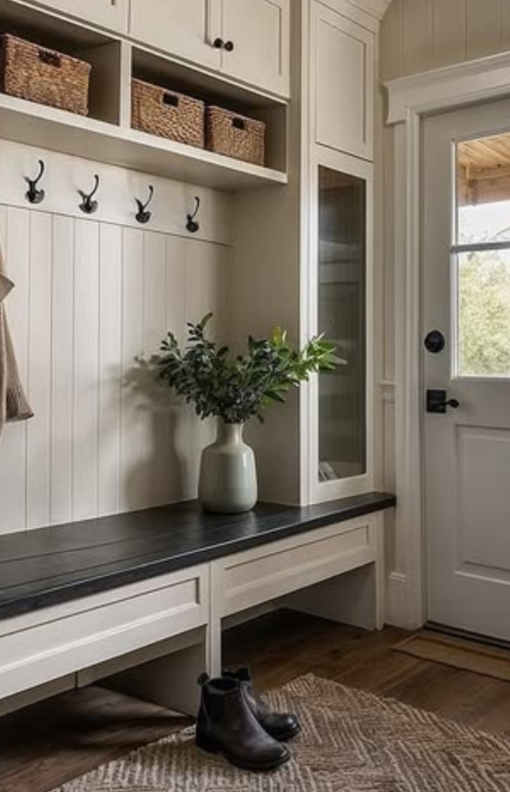
Combining cabinets and wall hooks gives you both accessible and hidden storage. This arrangement is helpful when you want everyday items within reach but don’t want every belonging on display.
Use sturdy hooks for backpacks, jackets, and frequently worn coats. Place cabinets above or beside the hooks for seasonal clothing, extra bags, and accessories.
Inside the cabinets, use smaller baskets to separate gloves, hats, and other loose items. Lower drawers can hold shoes or belongings that you want to keep out of sight.
This combination works in both traditional and modern entryways because you can adjust the cabinet size and hook arrangement to match your available space.
7. Slim Cabinet Combo

A slim cabinet combination is a smart choice for small entryways where bulky furniture can make the walkway difficult to use.
Choose a shallow cabinet with a mix of open shelves and closed compartments. Use the open sections for baskets, mail, keys, or small accessories, while the closed section keeps extra belongings hidden.
You can place a narrow shoe rack underneath and install a few wall hooks nearby for backpacks and jackets.
Before purchasing a cabinet, measure the available wall depth and walkway clearance. A storage unit should make the entryway more useful without making it uncomfortable to pass through.
8. Labeled Family Stations
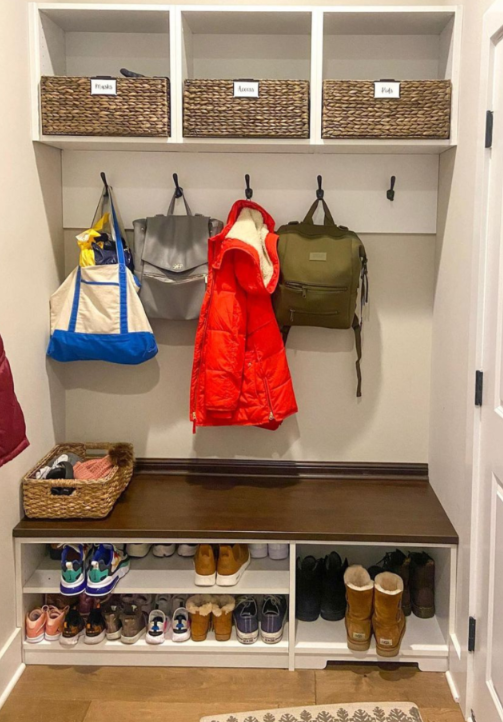
Labeled family stations help children understand exactly where their belongings should go. Instead of sharing one crowded hook area, give every person a small section of the entryway.
Install individual hooks for coats and backpacks. Add a labeled basket or cubby for shoes, hats, gloves, and other accessories.
You can also place a small shelf above each station for lunchboxes or school-related items. Keep frequently used belongings at a height that children can reach without assistance.
For a family with multiple children, this arrangement can reduce morning confusion and make it easier to check that everyone has their essentials before leaving home.
9. Deep Bench Cubbies

A long bench with deep cubbies underneath is a useful solution for wider entryways. It provides seating while creating separate storage spaces for shoes, bags, and everyday accessories.
Divide the lower section into individual compartments so each family member has a place for their belongings. Add woven baskets if you want to keep smaller items together.
Install wall hooks above the bench to prevent coats and backpacks from taking up the seating area. A shelf above the hooks can provide additional space for seasonal storage.
Choose a durable bench material that can handle regular use, especially if several children will be sitting on it every day.
10. Slatted Storage Wall
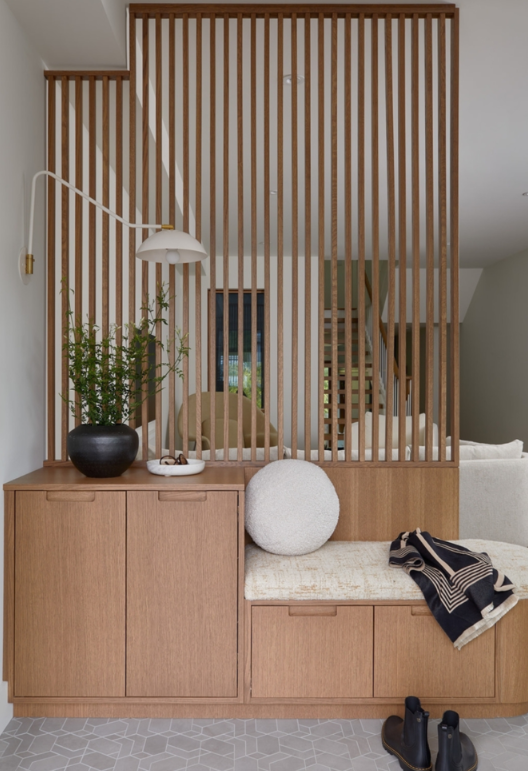
A slatted storage wall adds visual structure while helping define the entryway in an open-plan home. It can separate the entrance from the living area without creating a completely closed space.
Install a vertical wooden slat panel behind a bench or storage cabinet. Add hooks for jackets and bags, and use lower cabinets to keep shoes and other belongings hidden.
A cushioned bench makes the setup more comfortable, while closed compartments help control visual clutter.
This idea works particularly well in modern homes where you want the entryway storage to feel like part of the overall interior design.
11. Minimal Hook Bench
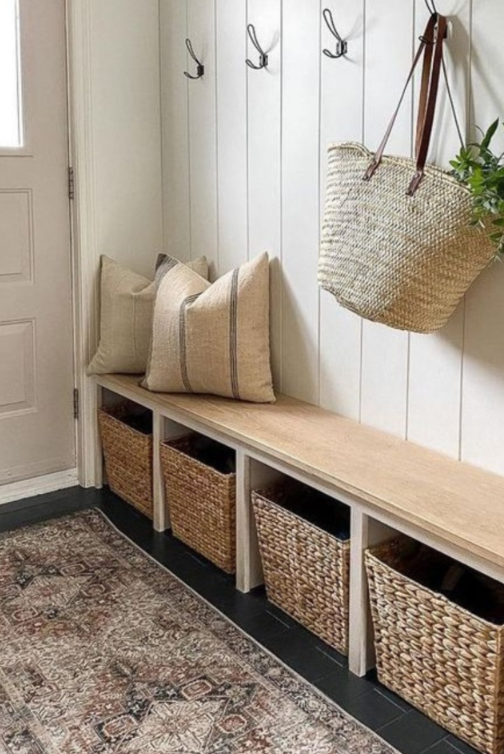
A simple hook-and-bench arrangement can be enough for a small family entryway. You don’t always need custom cabinets or complicated built-ins to keep everyday belongings organized.
Install a row of sturdy hooks on the wall and place a bench underneath. Use baskets or open compartments below the seat for shoes, scarves, and small accessories.
Choose hooks that are easy for children to reach, and leave enough space between them so backpacks don’t overlap.
This setup is affordable, easy to arrange, and useful for homes where the entryway has limited floor space.
12. Shelf and Rail

A wall shelf and hook rail make good use of vertical space while keeping the floor area open. This is a practical option when you need storage but don’t have room for a large bench or cabinet.
Install a strong rail with evenly spaced hooks for coats, backpacks, hats, and everyday bags. Place a floating shelf above it for baskets containing seasonal accessories or extra supplies.
You can add a small shoe rack underneath to keep footwear organized and prevent it from spreading across the entrance.
Make sure the shelf and hooks are securely attached to the wall, especially if children will regularly hang heavy school bags on them.
13. Compact Hall Tree
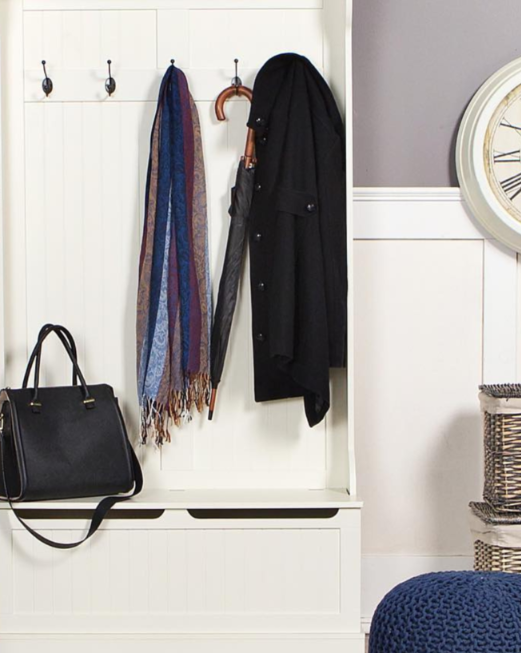
A compact hall tree combines several useful storage features in one piece of furniture. Most designs include hooks, a small bench, and shelves or compartments for shoes and accessories.
This makes it a convenient option for apartments and narrow foyers where separate furniture pieces would take up too much room.
Choose a model with enough hooks for your household and a lower shoe compartment that can hold everyday footwear. If the unit includes a shelf or cabinet, use it for hats, gloves, and other small items.
Measure the available space before buying one. A hall tree should fit against the wall without interfering with the entrance or door movement.
14. Narrow Wall Built-In

Narrow walls and awkward corners can still provide useful storage space. A slim built-in bench with drawers underneath can turn an otherwise unused area into a practical family drop zone.
Install a few hooks above the bench for lightweight jackets and bags. A shallow floating shelf can hold small baskets or everyday essentials.
If the wall has enough height, add upper cabinets for seasonal accessories and belongings that aren’t needed regularly.
This arrangement is especially helpful in tight hallways where you need storage but cannot install deep furniture. Keep the design shallow and make sure the walkway remains clear.
15. Double Bench Alcove
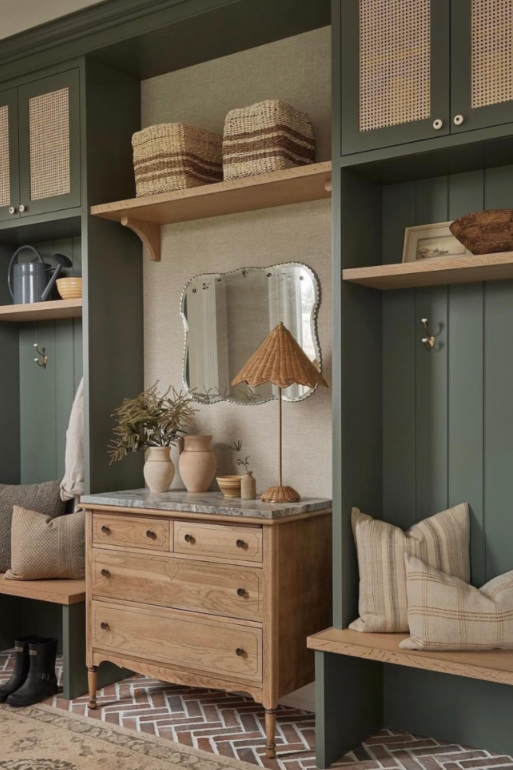
A double bench alcove is a useful option for larger families who need more than one seating and storage area. Two separate bench sections give children their own spaces for shoes, backpacks, and jackets.
You can place tall cabinets at either end for seasonal clothing and additional household supplies. Open shelves above the benches can hold baskets for hats, gloves, and other accessories.
Use the middle section for frequently used items such as keys, lunchboxes, or small bags. You can also label each section to make the arrangement easier for children to follow.
This setup works best in a wider foyer where you can dedicate one wall to a complete storage system.
16. Simple Shoe Rack
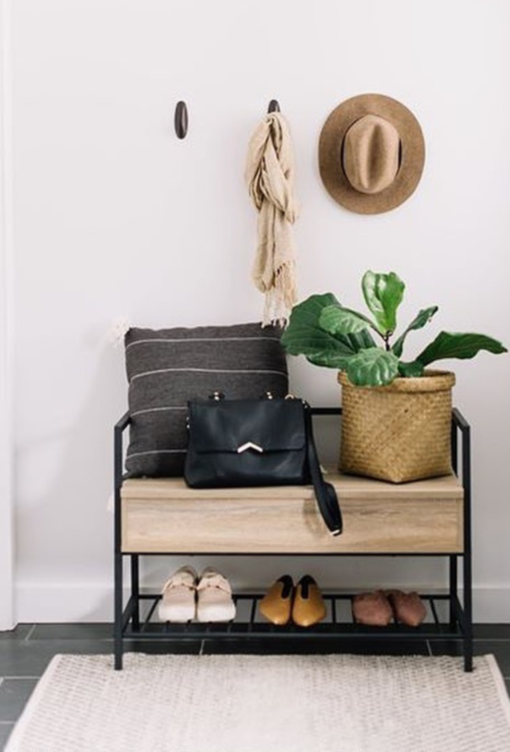
A simple shoe rack is one of the easiest ways to control footwear clutter near the front door. It doesn’t require a large storage unit and can fit into small corners or narrow entryways.
Choose a compact rack with enough space for the shoes your family wears regularly. A bench with an open shoe rack underneath is even more useful because children can sit down while changing footwear.
Install a few hooks above the rack for jackets, hats, and backpacks. This creates a basic drop zone without taking up much floor space.
If several people share the rack, assign a shelf or section to each family member to keep pairs together.
17. Closet Turned Mudroom
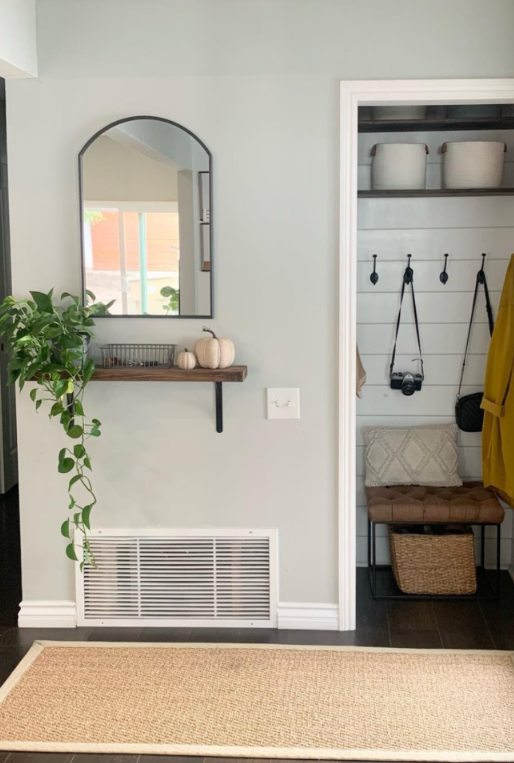
An unused entryway closet can become a small mudroom without requiring a major renovation. This is a practical solution for families who don’t have enough wall space for a separate storage unit.
Start by removing the closet door if the layout allows it. Install sturdy hooks along the back wall for jackets and backpacks, then use the upper shelf for baskets containing hats, gloves, and seasonal accessories.
Add a small bench or shoe storage unit at the bottom if there is enough room. Lower bins can hold shoes and other belongings that would otherwise collect near the entrance.
You can also add labels to make each section easy for children to identify. This turns an underused closet into a dedicated family organization area.
FAQs
How Do You Keep Kids From Dumping Everything on the Floor?
The easiest way is to give children storage they can reach and use without help. If hooks are too high or baskets are difficult to open, they may leave their belongings wherever they take them off.
Install hooks at child-friendly heights and give each child a labeled basket, cubby, or shoe compartment. Keep everyday items near the entrance so putting them away takes only a few seconds.
It also helps to establish a simple routine. Ask children to hang their backpacks, put away their shoes, and place small accessories in their assigned baskets as soon as they come home.
The goal isn’t to make the entryway perfect. It’s to create a system that makes tidying up easier to maintain.
What’s Better for Families: Open or Closed Storage?
Both open and closed storage have useful benefits, so I recommend combining them.
Open storage is better for everyday belongings such as shoes, backpacks, jackets, and school bags. Children can see what they need and put things away quickly.
Closed storage works better for seasonal clothing, extra accessories, cleaning supplies, and belongings you don’t use every day. Cabinets and drawers also help the entryway look less crowded.
If everything is open, the space can look messy even when items are organized. If everything is hidden, children may struggle to use the system independently. A combination of both gives you convenience and a cleaner-looking entryway.
Final Thoughts: Entryway Storage Ideas for Families With Kids
A family entryway needs to handle daily routines, changing seasons, school bags, shoes, and plenty of everyday belongings. The right storage setup makes these tasks easier while keeping clutter from spreading into the rest of your home.
Start with the space you already have. A simple shoe rack, a few low hooks, and labeled baskets may be enough for a small hallway. If you have more room, consider a built-in bench, individual family stations, or a complete mudroom wall.
Choose Entryway Storage Ideas for Families With Kids that match your family’s needs and make everything easy to reach. When every item has a clear place, keeping the entryway organized becomes a much simpler daily habit.