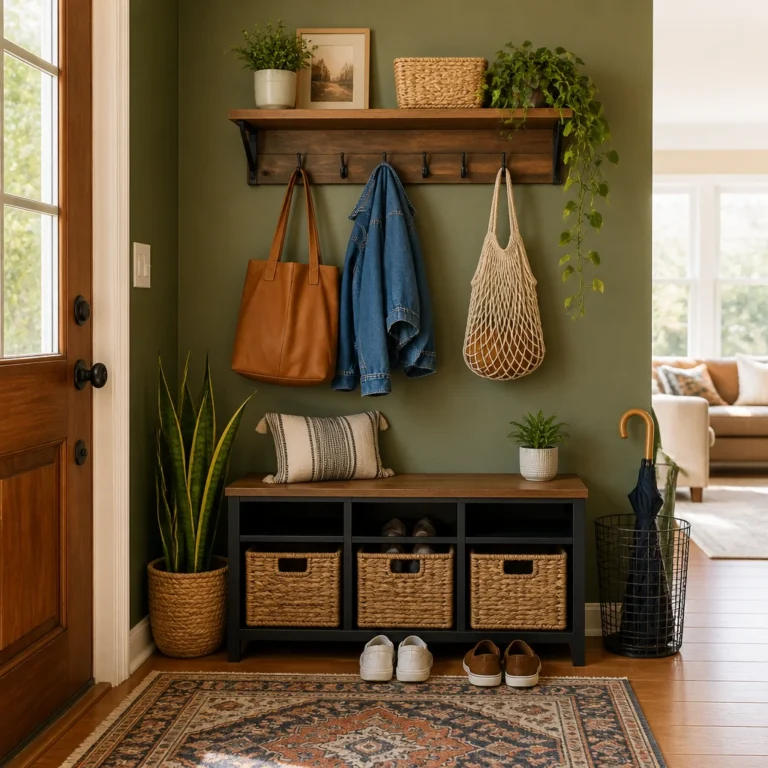
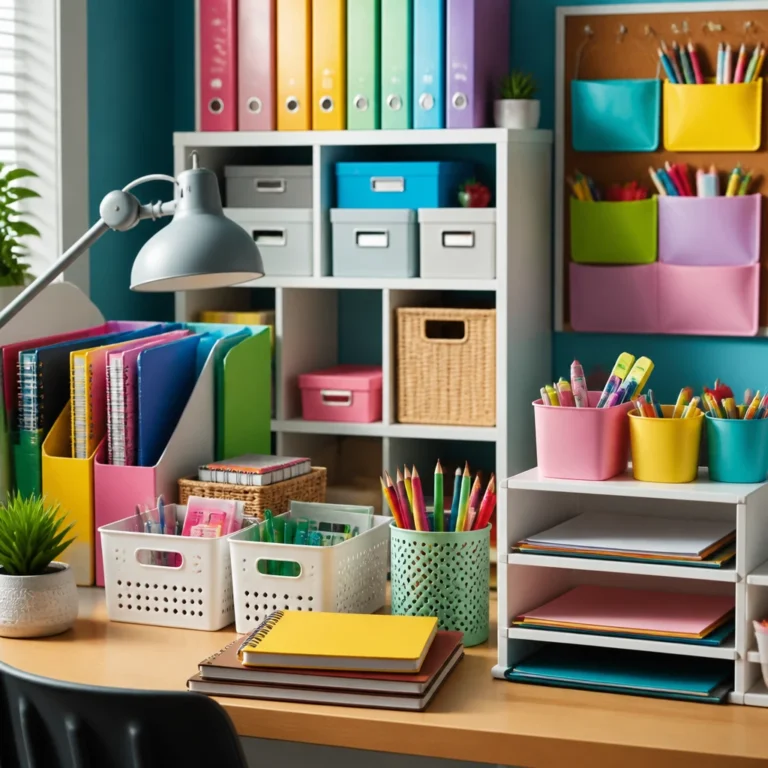
21 Basket Organization Ideas for 2026
When I organize a small home, I try not to add storage just for the sake of having more storage. I look for baskets that solve a specific problem without taking away useful floor, shelf, or cabinet space.
The best basket organization ideas for small spaces help me group similar items, use vertical or hidden areas, and keep everyday clutter out of sight. I can use shelf baskets for loose belongings, labeled bins for household supplies, pull-out baskets for deep cabinets, and stackable designs when floor space is limited.
I also find that the right basket matters as much as the location. I use ventilated baskets for produce and laundry, washable plastic or mesh baskets in damp areas, and woven baskets when I want storage to blend into a living space.
Key Takeaways
- I give every basket one clear purpose instead of creating random catch-all storage.
- I use vertical storage when floor space is already limited.
- I keep frequently used items between waist and eye level whenever possible.
- I choose breathable baskets for produce and laundry where airflow matters.
- I measure shelves, cabinets, and cubbies before buying baskets.
- I avoid overfilling baskets because hidden clutter is still clutter.
Shelf Baskets
I use shelf baskets when an open shelf has too many small objects competing for space. Instead of leaving bottles, accessories, paperwork, or household supplies scattered across the shelf, I group similar items into one container.
For open shelving, I prefer baskets that are easy to lift or slide forward. A perforated plastic basket can work well for bathroom or utility items because I can see part of the contents and wipe the basket clean when needed.
I usually place the things I reach for most often at a comfortable height. Less-used supplies can go higher or lower. This simple arrangement saves me from moving several containers just to reach one item.
Before buying several baskets, I measure the shelf’s width, depth, and height. I also leave a little clearance so the baskets can be removed without scraping against the shelf.
Labeled Baskets
I find labels especially useful when several baskets look identical. Without labels, I tend to forget which container holds spare towels and which one has cleaning supplies.
I use simple labels such as “Towels,” “Hair Care,” “Toiletries,” or “Backstock.” The goal isn’t to label every individual product. I label the category so I can put things away quickly.
For bathrooms, I prefer materials that can handle occasional moisture. Woven baskets can look good, but I keep them away from places where they may stay wet. Plastic or coated baskets are often easier to clean in areas close to sinks and tubs.
I also keep daily-use items where I can reach them easily. Backup products can take the higher or lower spaces. That keeps my most-used storage from becoming a daily obstacle.
Closet Zones
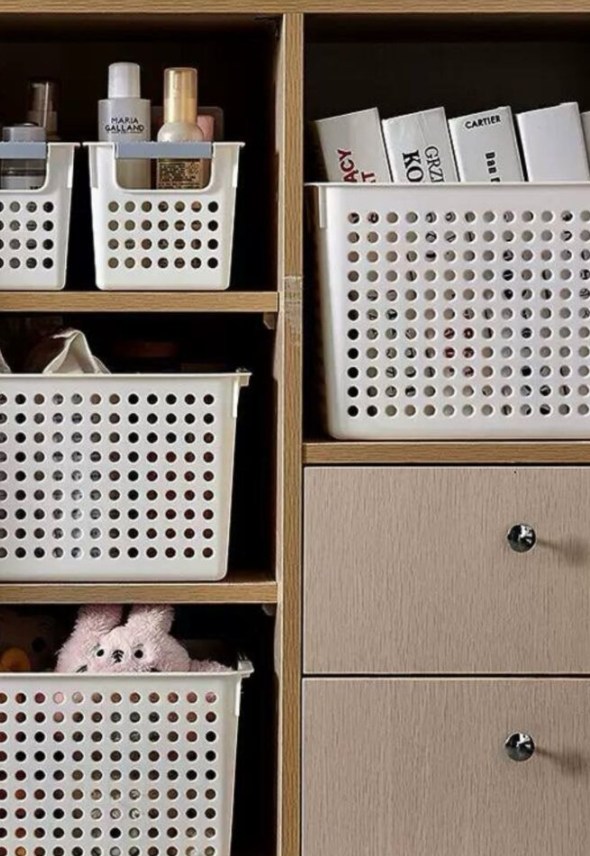
I don’t get much benefit from putting baskets randomly inside a closet. I get better results when I divide the closet into clear zones first.
I might use a large basket for spare bedding, another for seasonal clothing, and smaller containers for accessories. The important part is that each basket has a defined job.
For heavy items such as blankets, I prefer sturdy baskets placed on lower shelves. I keep lighter and frequently used items higher up where they are easier to lift.
Using similar baskets can also make a small closet look less crowded. I don’t need every container to match perfectly, but keeping similar shapes or colors together gives the shelves a cleaner appearance.
Produce Baskets

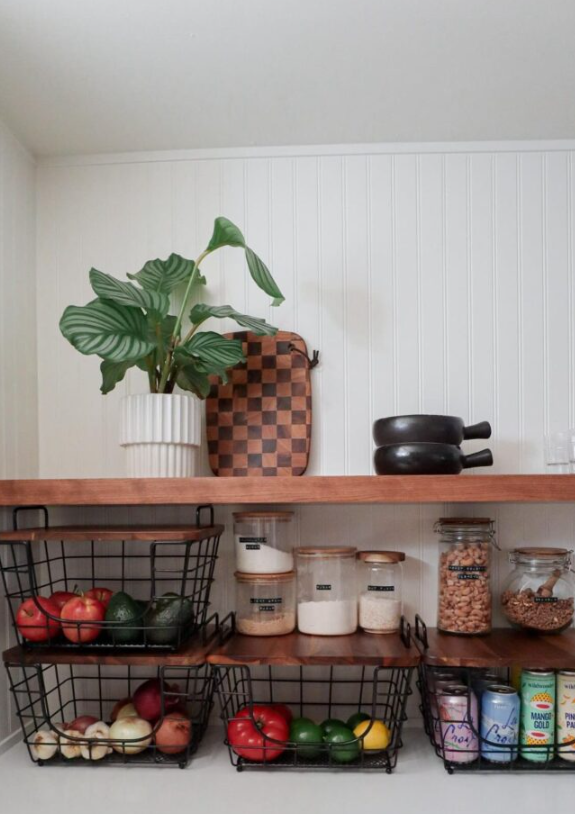
I use produce baskets when my kitchen counter or pantry becomes crowded with loose fruits and vegetables. The biggest advantage is that I can give different foods their own space instead of creating one large pile.
For foods that benefit from ventilation, I choose open baskets rather than sealed containers. Air movement is useful for produce such as onions and potatoes, although I still follow the storage guidance appropriate for each food.
I also avoid putting every type of produce together. Some fruits release ethylene gas, which can speed up ripening in nearby produce. Separating certain items can therefore be more useful than simply making everything look tidy.
I place heavier vegetables in sturdy, lower baskets and lighter items where they are easier to reach. I also prefer shallow baskets when possible because I can see what I have before buying more groceries.
Vertical Storage
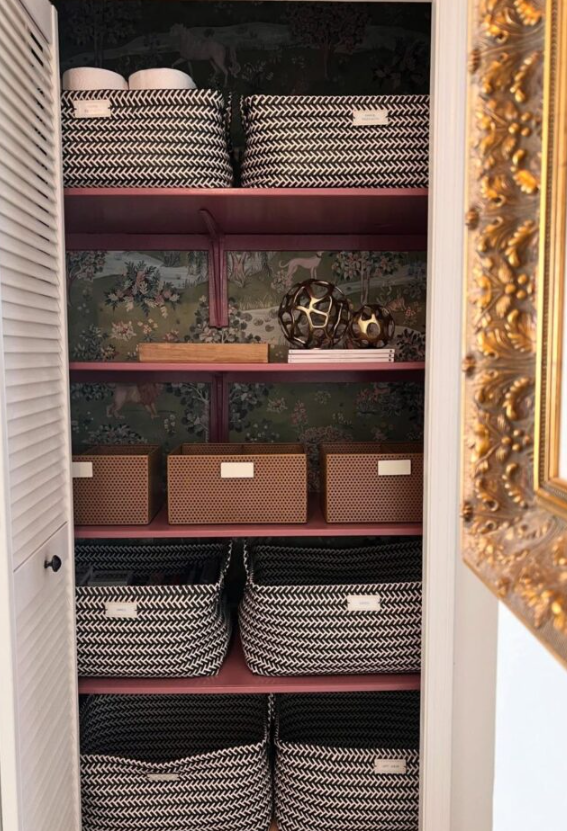
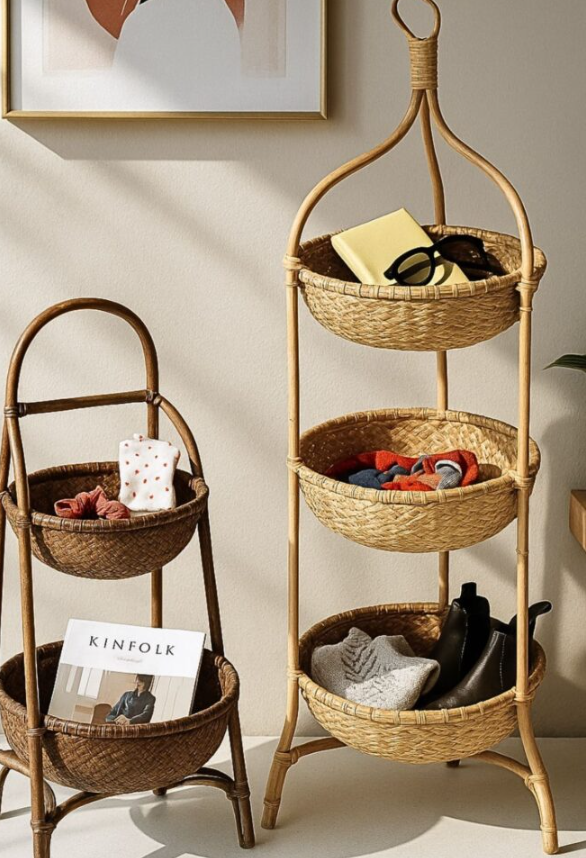
When floor space is limited, I look upward. Vertical basket storage lets me use unused wall height, shelving height, or the space above existing furniture.
A tiered basket stand can work well beside an entryway, in a bedroom, or in a laundry area. I might use one level for scarves, another for small bags, and the lowest level for heavier items.
I avoid making tall stacks unstable. If I am stacking separate baskets, I check that the base is wide enough and that the baskets are designed to sit securely together.
This approach is especially useful in small apartments because I can add several storage levels without occupying the floor area that a wide cabinet would require.
Basket Display
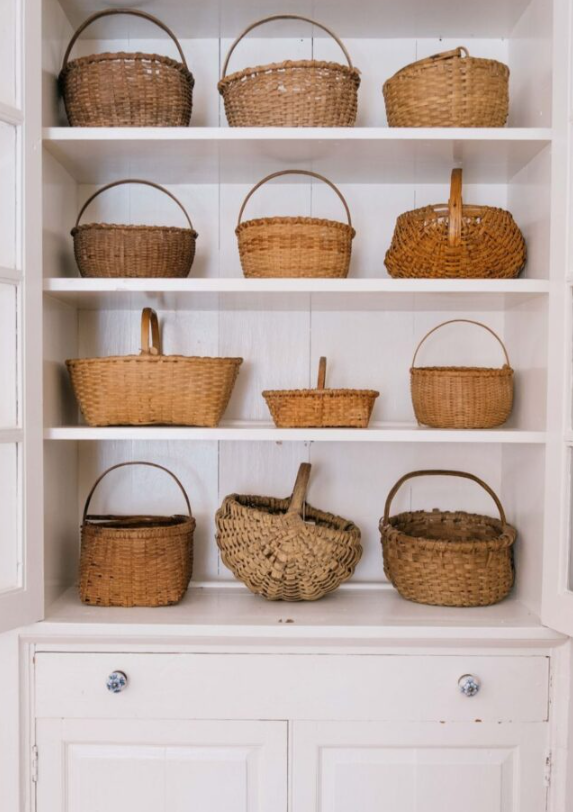
I don’t always hide baskets inside cabinets. Sometimes I use them as part of the room’s storage and decor.
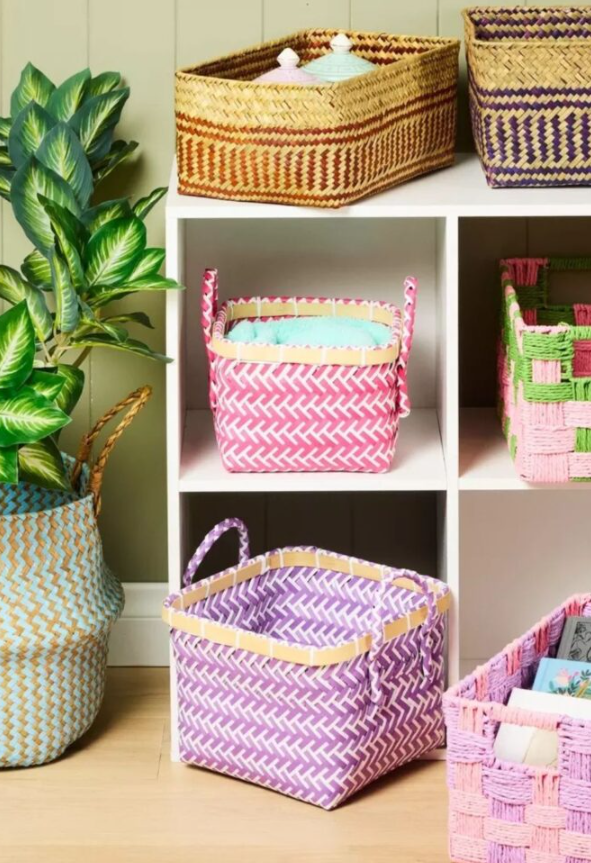
For open shelves, I like combining a few basket sizes while keeping a consistent material or general style. Large baskets can hold blankets or spare linens, while smaller ones can handle books, craft materials, accessories, or other loose items.
I also pay attention to handles. If I expect to move a basket often, handles make a noticeable difference because I can pull the container down instead of reaching deep into the shelf.
I leave some breathing room around the baskets rather than filling every available shelf. A storage display works better when I can still see and access each basket easily.
Category Baskets
I get the most value from baskets when I organize by category instead of by random objects. One basket might hold office supplies, another personal-care products, and another small household tools.
This approach reduces the amount of searching I have to do. When I need something, I know which category to check instead of opening several containers.
I also avoid making categories too narrow. If I create ten tiny categories for a small shelf, the system becomes harder to maintain. A few broad and useful groups usually work better.
I keep frequently used categories within easy reach and move occasional-use items to less convenient shelves. That small change makes the system much easier to live with every day.
Laundry Sorter
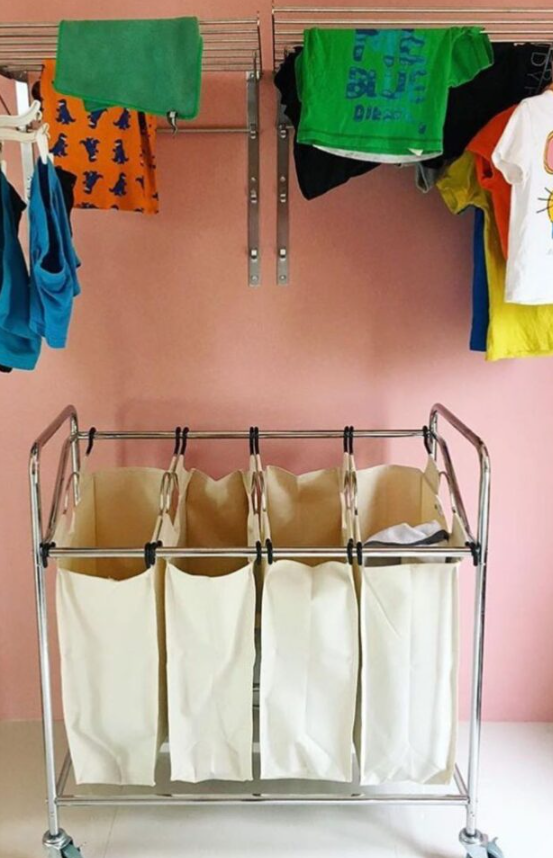
I prefer sorting laundry before wash day instead of creating one large pile and dealing with it later. A multi-section laundry basket makes that habit much easier.
I can separate lights, darks, towels, or delicate items as they are removed. The exact categories depend on how I wash my clothes, so I don’t create sections I don’t actually need.
For a small home, a vertical laundry sorter can save floor space. A model with removable bags is also useful because I can carry one section directly to the washing machine.
I avoid leaving damp clothes sitting in a closed basket for long periods. Ventilated materials and prompt washing are better choices when moisture or odor is a concern.
Cube Baskets

Cube storage is useful in small rooms, but open cubes can quickly become messy. I use fabric or woven cube baskets to turn those open compartments into simple pull-out storage.
I can give each cube a purpose, such as toys, books, cables, craft supplies, or clothing accessories. This keeps small objects from spreading across the entire shelf.
I especially like baskets with handles because they behave much like lightweight drawers. I can pull one out, use what I need, and return it without disturbing the other cubes.
Before buying cube baskets, I measure the actual interior of the cube. A basket that is even slightly too large can make the entire unit frustrating to use.
Toy Baskets
I use large toy baskets when I want children to have an easy cleanup system. The main advantage is simplicity: toys can be returned to the basket without requiring every item to be perfectly arranged.
Open-top baskets work well for larger toys, stuffed animals, building pieces, and frequently used play items. I can keep the basket low enough for children to reach without asking for help.
For smaller toys, I prefer separate containers so tiny pieces don’t disappear underneath larger items. I also avoid making one huge basket the home for every toy because finding anything inside it can become difficult.
I keep everyday toys in accessible baskets and move less-used toys to higher storage. That gives the room a practical cleanup routine without needing a complicated organization system.
Pantry Baskets
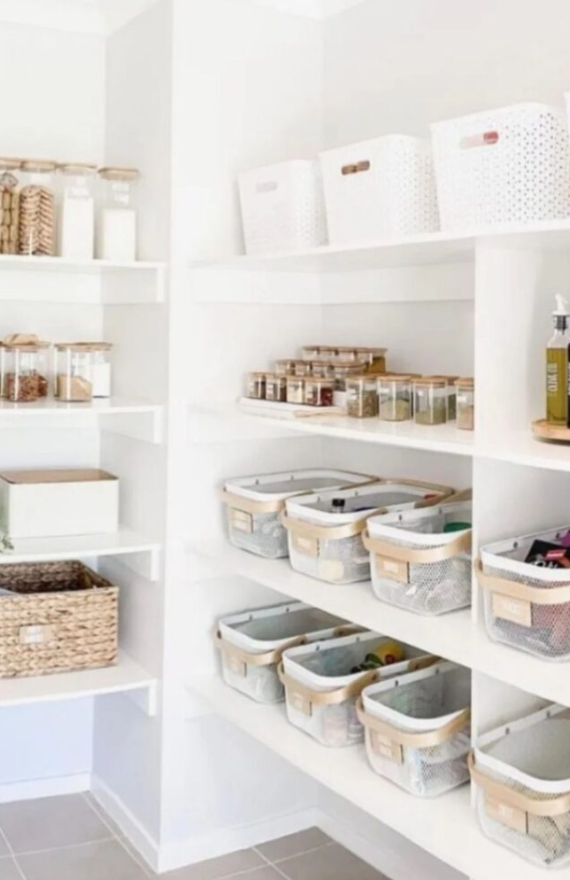
I use pantry baskets to create zones for foods that would otherwise become mixed together. For example, I can keep snacks in one basket, baking supplies in another, and packets or breakfast foods in a third.
I prefer open or clear-sided baskets when I need to check stock quickly. This helps me see what I already have before adding another item to my shopping list.
I also avoid putting loose food directly into a basket unless the food packaging is suitable for that type of storage. For opened dry goods, airtight containers can be a better option when freshness and pest protection are priorities.
My main goal is to make every basket easy to pull out. If I have to remove five things to reach the back of the pantry, the storage system isn’t really saving me time.
Pull Baskets

Deep cabinets are some of the hardest spaces to organize because the back can become a forgotten zone. Pull-out baskets solve this by bringing stored items toward me.
I use them for packaged food, kitchen supplies, cleaning products, and other items that tend to disappear inside deep cabinets.
For produce, I only use a pull-out basket when the basket and location provide suitable ventilation and the food is appropriate for that storage method. I don’t treat every fruit or vegetable the same way.
One of my favorite benefits is visibility. When the basket slides forward, I can see more of the cabinet without kneeling down and reaching into a dark corner.
Wall Baskets
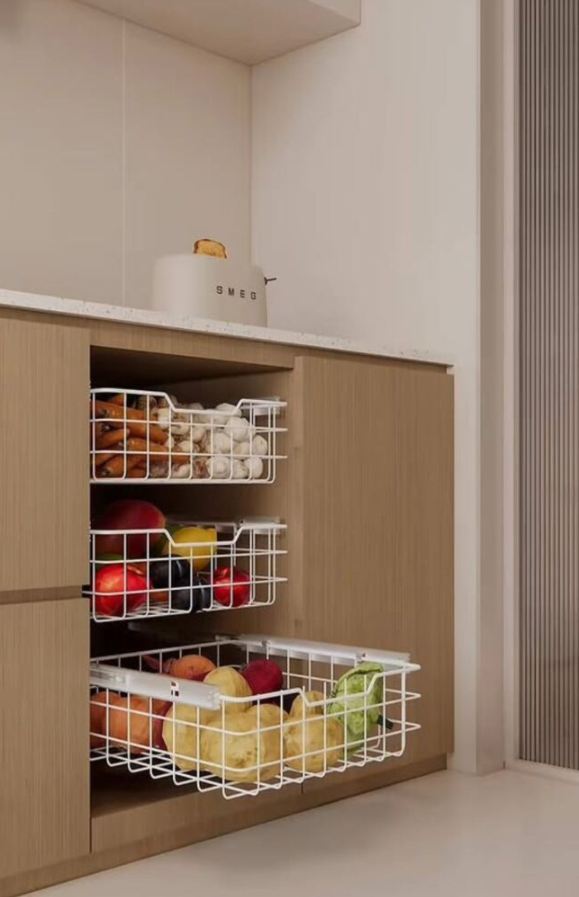
When my kitchen counters are full, I look at the walls before adding another piece of furniture. Wall-mounted baskets can turn unused vertical space into practical storage.
I can use them for produce, towels, small kitchen tools, mail, or other lightweight household items. For food storage, I choose a basket based on the needs of the specific food rather than assuming every item can share one container.
I also check the mounting hardware and the wall material before installing anything. A basket full of groceries becomes much heavier than an empty basket, so secure mounting matters.
If I use multiple baskets, I assign each one a category. This prevents the wall from becoming another place where miscellaneous items collect.
Bedside Baskets
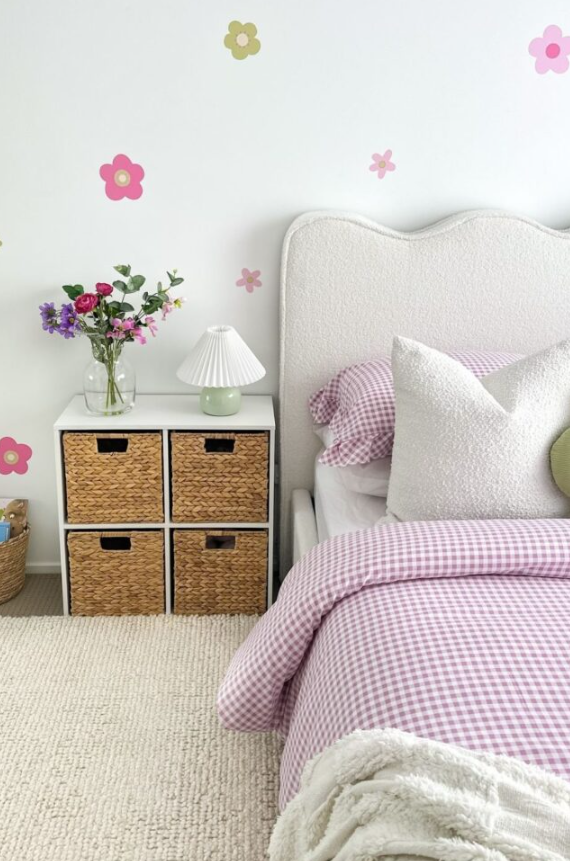
I find bedside clutter easy to ignore until books, chargers, notebooks, glasses, and small personal items start taking over the nightstand.
A compact basket gives those things a temporary home without requiring another large storage unit. I can place it on a small shelf, inside a cube unit, or underneath a bedside table if the space allows.
I usually keep charging cables and small electronics together, while books and notebooks get their own section. That makes nighttime and morning routines quicker.
For bedrooms, I like baskets that have a soft appearance and won’t create unnecessary noise when I move them. I also avoid filling the basket to the top because bedside storage is most useful when I can reach inside easily.
Pantry Layers

I like to think of pantry storage in layers rather than treating every shelf the same way. Different food types need different containers and different levels of access.
I can use sealed containers for dry foods such as rice, pasta, cereal, and grains when appropriate. These containers make it easier to see how much is left and can help protect dry goods from moisture and pests.
On middle shelves, I keep packaged foods that I reach for regularly. Lower shelves are better for heavier items because lifting a heavy container from above shoulder height isn’t convenient or safe.
For produce, I use suitable open storage where ventilation is helpful. The main idea is to match the basket and container to the food rather than choosing everything based only on appearance.
Drawer Laundry
If I have available cabinet space, pull-out laundry baskets can turn an ordinary cabinet into a sorting station.
I can assign separate sections for lights, darks, towels, or delicate garments depending on my normal washing routine. By sorting clothes as they accumulate, I reduce the work waiting for me on laundry day.
Ventilated baskets are useful when clothes may sit for a while because trapped moisture can contribute to unpleasant odors. I still avoid putting genuinely wet clothing into a closed basket for extended periods.
The pull-out design is especially helpful in a small laundry area because I can access one load without moving the entire hamper.
Bathroom Tower
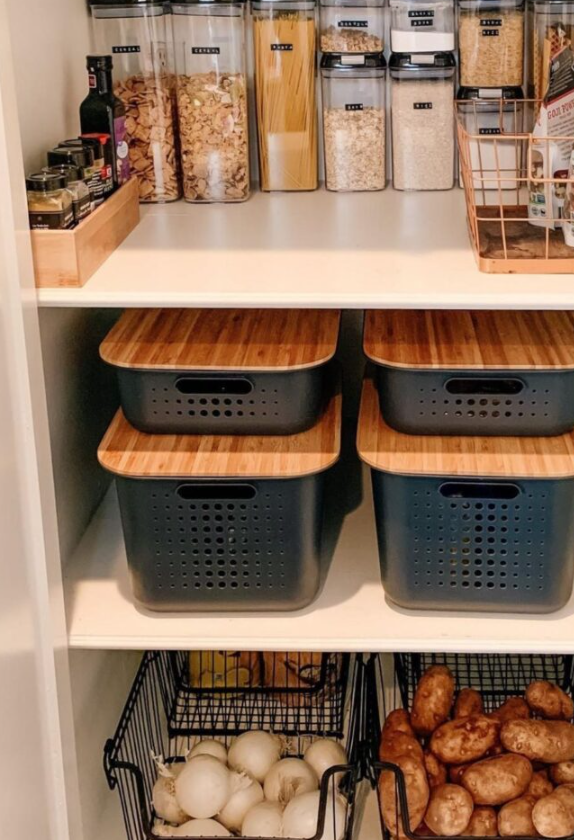
Bathrooms often have very little floor and counter space, so I make use of vertical storage whenever possible. A narrow basket tower can fit beside a sink, toilet, or bathtub where a wider cabinet might not.
I use the upper section for lightweight everyday items and lower levels for towels or larger supplies. Keeping heavier items low also makes the tower easier to manage.
For a humid bathroom, I prefer materials that tolerate moisture and allow adequate airflow. Open metal or plastic designs are often easier to clean than materials that stay damp.
I also avoid placing baskets where they will regularly get splashed. Even moisture-resistant storage lasts longer when it isn’t constantly exposed to water.
Produce Zones

I use separate produce zones when vegetables and fruits start getting lost inside a pantry or cabinet. A dedicated basket for onions, another for potatoes, and another for suitable root vegetables can make the inventory much easier to manage.
I prefer wide, shallow baskets when I need to see the contents regularly. Deep baskets can hide older produce underneath newer items, which makes food waste more likely.
Ventilation also matters. I use open baskets for foods that benefit from airflow and avoid sealing produce into containers that can trap moisture.
One simple habit helps even more: I check the baskets before grocery shopping. If I can see what I already have, I am less likely to buy duplicates and let food sit unused.
Carry Baskets
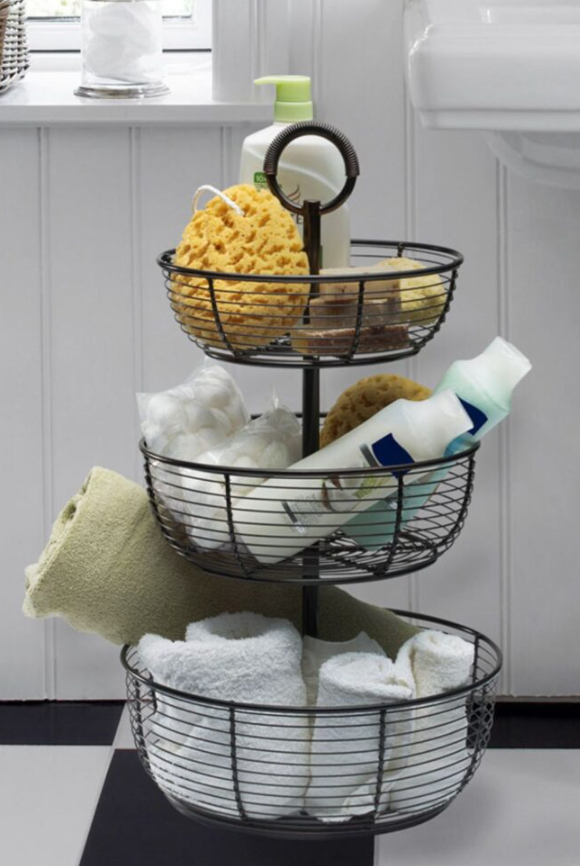
I use carry baskets when the same cleaning supplies are needed in several rooms. Instead of keeping separate bottles scattered around the house, I can create a portable cleaning kit.
For example, I might have one basket for bathroom cleaning, one for laundry-related products, and another for general household cleaning. The exact setup depends on what I actually use.
A strong handle is important because cleaning bottles can become heavy. I also prefer a basket with a stable base so bottles remain upright while I carry it.
I keep cleaning products safely stored and follow the labels for proper use. I never mix cleaning chemicals simply because they are kept together in the same basket.
Stack Crates
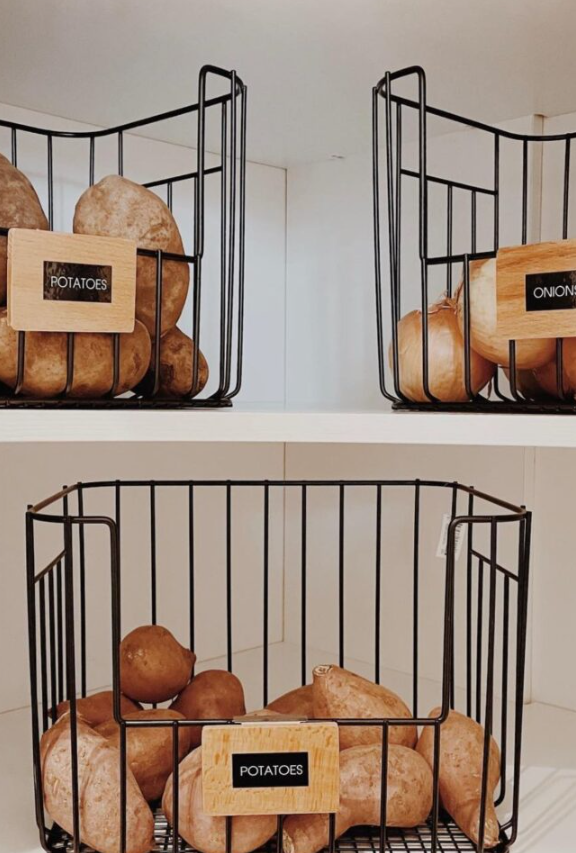
Stackable crates help me use vertical space when I don’t have room for a wide storage cabinet. I can create several levels while keeping the overall footprint relatively small.
I use this approach for craft supplies, toys, pantry items, or household equipment. If I need regular access, I prefer designs where individual baskets or crates can be removed without dismantling the entire stack.
Stability is the first thing I check. I don’t stack containers higher than the structure is designed to support, and I keep heavier items toward the bottom.
This setup works particularly well in closets, utility areas, laundry spaces, and small rooms where permanent built-in storage isn’t practical.
Cabinet Baskets
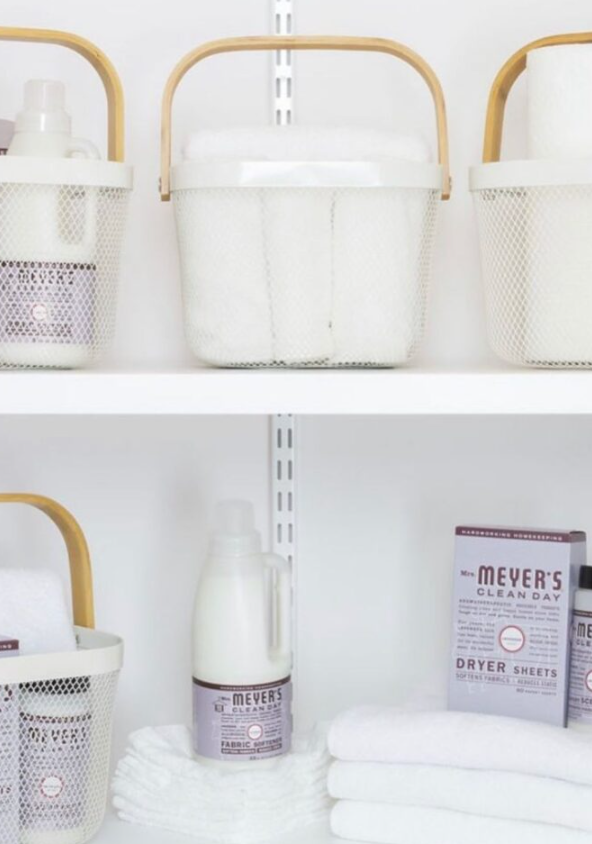
Deep cabinets often have valuable space that I can’t easily reach. I use pull-out baskets or sliding trays to bring those items forward.
I can assign each basket to a category, such as snacks, kitchen towels, baking equipment, or cleaning supplies. Instead of reaching behind several objects, I pull the basket toward me and see the contents.
Before installing a sliding system, I measure the cabinet opening and check how much weight the hardware can safely support. This is especially important with heavy pantry goods or cookware.
For everyday use, I prefer baskets that slide smoothly and can be removed for cleaning. A storage system should make access easier, not create another maintenance problem.
FAQs
How many baskets should you use in a small space without creating more clutter?
I don’t follow a fixed number because the right amount depends on the size of the space and what I need to store. My rule is simple: I add a basket only when it gives a specific category a clear home.
If I need separate storage for skincare, hair products, and cleaning supplies, three baskets may make sense. If two categories can comfortably share one larger basket, I don’t add another container just to make the shelf look more organized.
I also leave some spare capacity. A basket that is packed completely full becomes difficult to use, and that usually leads to items being left outside it.
What type of basket works best for everyday organization?
I choose the basket based on where I will use it and what I plan to store. Woven baskets work well when I want to hide visual clutter in bedrooms and living areas, while plastic or mesh baskets are practical in bathrooms, laundry spaces, and utility areas.
For produce, I look for suitable open storage that provides ventilation. For heavy household items, I choose a strong basket with a stable base and handles that can handle regular use.
My best advice is to measure first and shop second. A basket can look perfect online or in a store, but if it wastes shelf depth, blocks a cabinet door, or cannot slide out properly, it isn’t a good fit for a small space.