16 DIY TV Stand Ideas for 2026
What Material Is Used for TV Stands?
When I plan a DIY TV stand, I start by choosing a material that can support the television safely while matching the room’s style. Wood, plywood, MDF, and metal are popular options, and each works well for different designs and budgets.
Plywood is my practical choice for many DIY TV stands. It is strong, easy to cut with the right tools, and holds screws well when assembled correctly. For many projects, ¾-inch plywood is a useful starting point, but the final thickness and support structure should depend on the TV’s weight and the stand’s design.
MDF is another option if I want a smooth surface for painting. It is often affordable, but it can sag under heavy loads and may swell when exposed to moisture. I would use it only when the design provides enough support.
Solid wood, including pine and oak, offers a natural appearance and can last for years with proper care. It usually costs more than sheet materials and needs a suitable finish to help protect it from moisture and changes in humidity.
For an industrial-style TV stand, I can combine a wooden top with a metal frame or legs. Before choosing any material, I check the television’s weight, available floor space, storage needs, and overall room decor. Most importantly, I make sure the finished stand is stable and wide enough for the TV.
Key Takeaways
- Plywood: A versatile option for sturdy DIY TV stands.
- MDF: Suitable for smooth, painted finishes when adequately supported.
- Solid wood: Offers natural character and long-term durability.
- Metal and wood: Work well together for industrial and modern designs.
- Safety first: Check the TV’s weight, support the shelves properly, and secure tall furniture against tipping.
Modern Farmhouse Mesh Stand
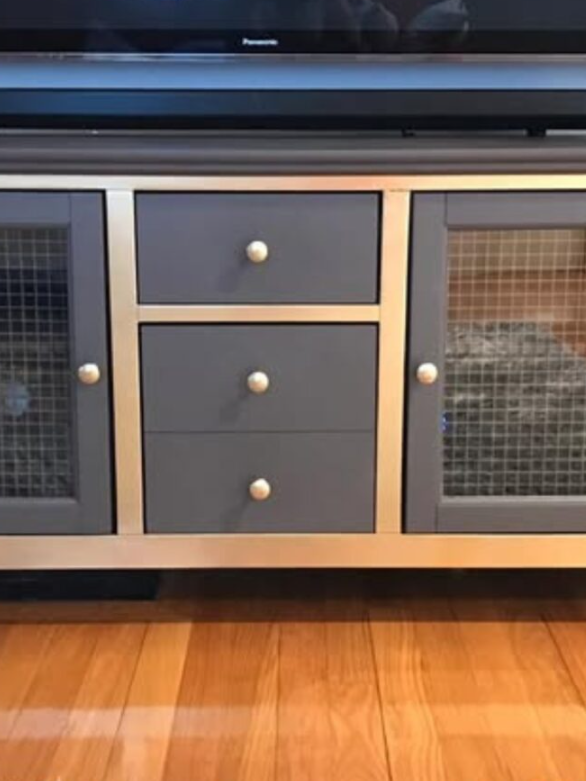
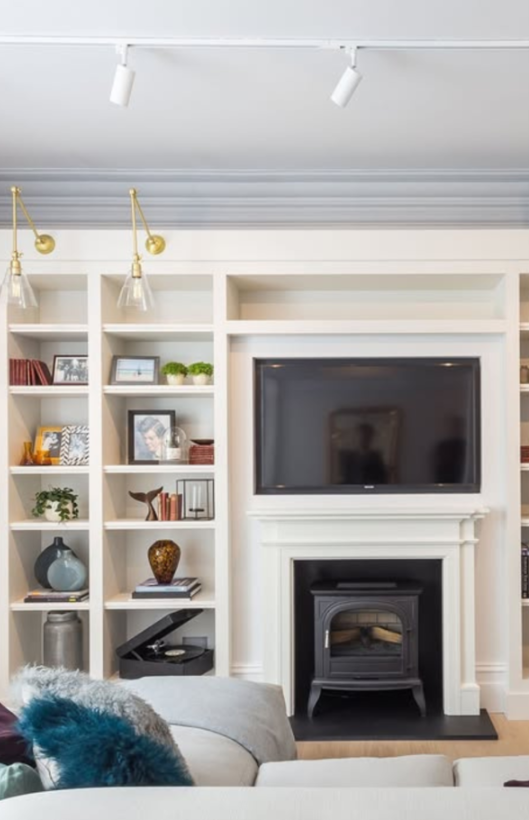
A modern farmhouse TV stand combines simple lines with warm materials and decorative details. I like this style because it can make a living room feel welcoming without looking outdated.
To recreate the look, I would use a sturdy plywood cabinet, decorative mesh panels, and metallic hardware. Gold-finished handles can add contrast, while a neutral paint color keeps the design balanced.
For extra atmosphere, I would install warm LED lighting inside the cabinet. I would also leave enough ventilation around electronic equipment so that heat does not build up inside the storage space.
Distressed Cottage Charm

A distressed cottage-style TV stand brings a relaxed, vintage feel to the living room. A white or cream finish works particularly well with natural wood, soft fabrics, and muted wall colors.
I would start with a sturdy wooden stand and apply chalk paint in a shade that suits the room. Light sanding along the edges can create a gently worn appearance without making the furniture look overly damaged.
A small table lamp, a stack of books, or a simple decorative piece can complete the setup. I would keep the surface relatively clear so the television remains the main focus of the space.
Bright Coastal Farmhouse Setup
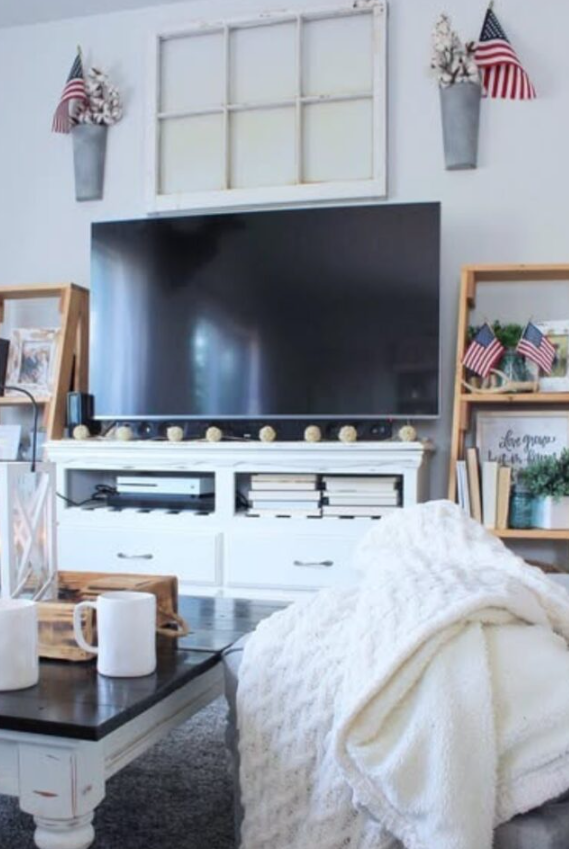
A coastal farmhouse TV stand uses light colors and natural textures to create a fresh, relaxed atmosphere. White furniture, pale wood, woven baskets, and subtle decorative accents work well together.
To recreate this style, I would paint a wooden stand white and use baskets to organize remotes, cables, and other small accessories. This keeps everyday items accessible without making the room look cluttered.
For a softer evening atmosphere, I would add warm string lights or a nearby floor lamp. This design works particularly well in bright living rooms where natural light and light-colored furniture help the space feel open.
Cozy Cottage Glow
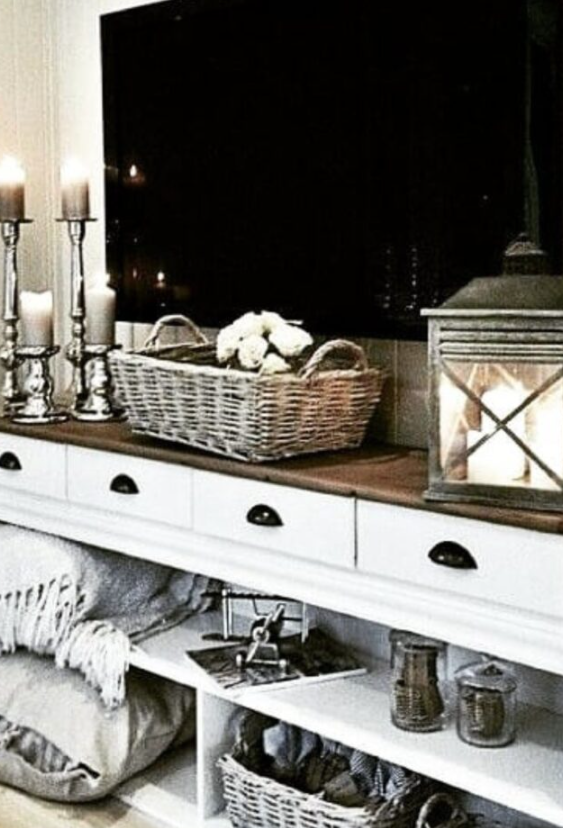
A cozy cottage TV stand combines a painted base, a natural wood top, and practical storage. I like this combination because the wood adds warmth while the painted surface keeps the furniture looking light.
I would choose a white or cream base and finish the wooden top with a suitable protective coating. Woven baskets can fit neatly underneath, providing space for blankets, magazines, or small accessories.
To finish the arrangement, I would place a small lamp beside the stand or use warm ambient lighting nearby. I would avoid placing open candles close to electronics, cables, or other materials that could catch fire.
Minimal Rustic Bench Stand

A rustic bench-style TV stand is a useful option for small living rooms, studio apartments, and spaces where bulky furniture feels overwhelming. Its low profile keeps the television area simple and uncluttered.
I would use a solid wooden board supported by a properly designed base or sturdy storage units. If I use crates or metal bins, I would check that they can carry the combined weight without shifting or bending.
The open space underneath can hold baskets, media equipment, or neatly arranged storage boxes. A warm floor lamp or small side light can highlight the natural wood grain without adding unnecessary decoration.
Clean Plywood Minimalist Stand
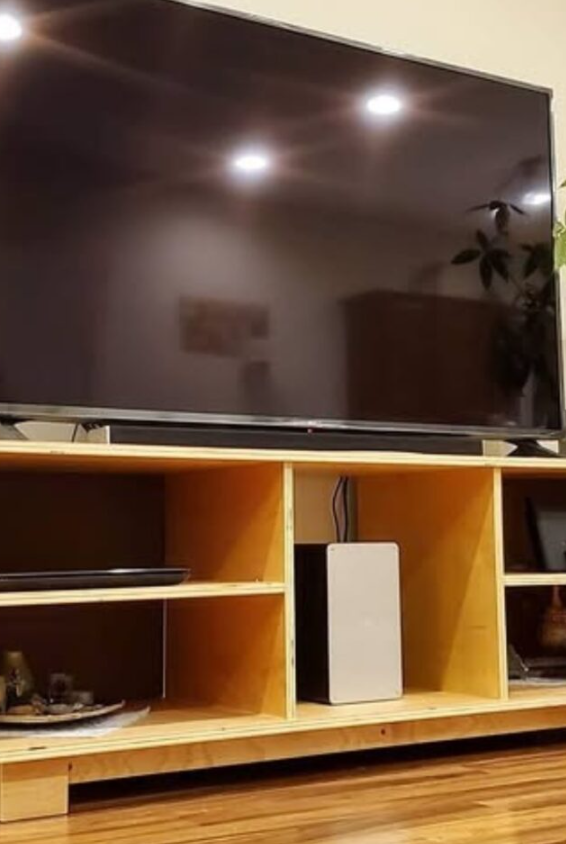
A minimalist plywood TV stand works well in modern homes because its natural finish adds texture without making the room feel busy. The clean lines also make it easier to combine the stand with different furniture styles.
I would cut the plywood panels to the required dimensions and sand the exposed edges for a neat finish. Open shelves provide convenient access to media devices, books, and everyday accessories.
For a more finished appearance, I could apply a clear protective coating that preserves the wood’s natural color. A warm LED strip or floor lamp nearby can add a soft glow while keeping the overall design simple.
Sleek Floating Panel Stand
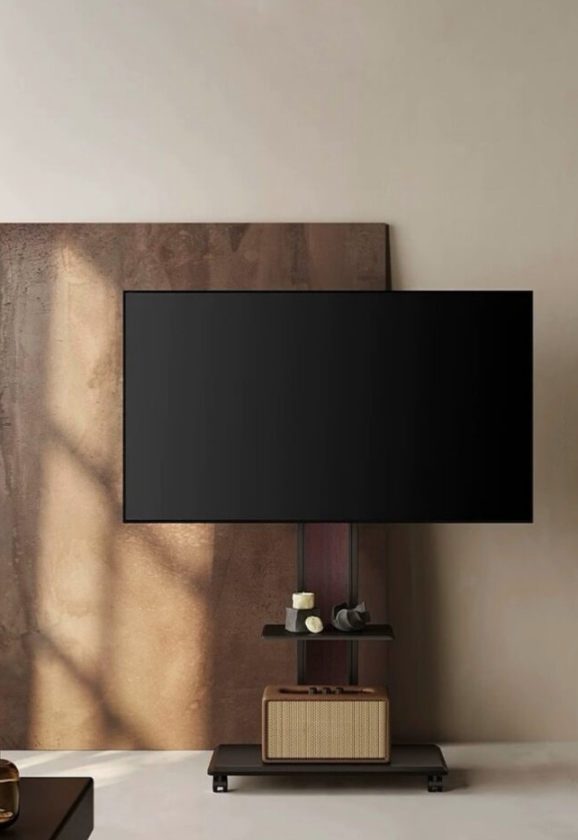
A floating TV stand creates a clean, modern appearance by keeping the floor area open. This design is especially useful in compact rooms where visible floor space can help the layout feel less crowded.
To recreate it, I would use a wall-mounted metal support system with suitable wooden shelves or a purpose-built floating cabinet. The mounting hardware must match the wall type and support the combined weight of the furniture and everything stored on it.
Before installation, I would locate the wall studs or use an appropriate mounting system for the wall construction. I would also plan cable routing in advance to avoid exposed wires around the television.
Soft wall lighting can emphasize the floating effect. However, I would never rely on decorative shelves alone to support a heavy TV unless they are specifically designed and rated for that purpose.
Modern Geometric Stand
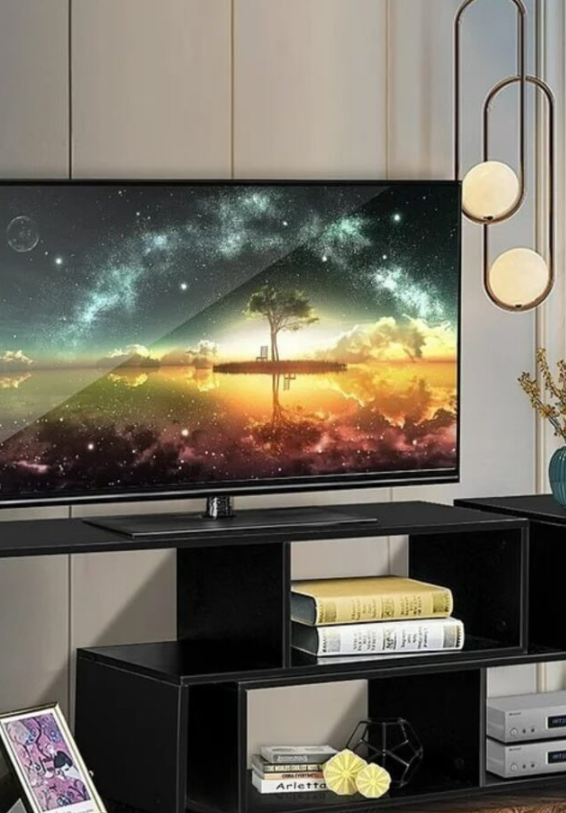
A geometric TV stand adds visual interest through square compartments, layered shelves, and bold shapes. I would choose this design when I want the television area to look more distinctive than a standard rectangular cabinet.
Plywood or MDF can work for this project, depending on the load requirements and finish. I would measure each compartment carefully and provide enough internal support to prevent the shelves from bending.
A matte black finish creates a strong contrast against light walls, while natural wood can soften the overall look. Warm LED lighting beneath a shelf can highlight the shapes, and baskets or decorative boxes can keep smaller items organized.
For safety, I would secure tall or stacked furniture to the wall and avoid placing heavy objects on unsupported sections.
Rustic Corner Stand
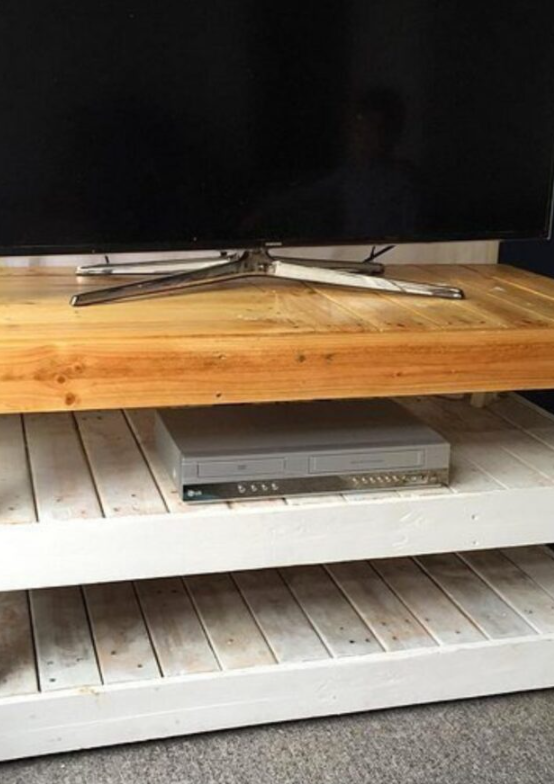
A rustic corner TV stand makes use of an area that might otherwise remain empty. It can be a practical choice for smaller living rooms, bedrooms, or awkward layouts where a full-length entertainment unit would take up too much space.
I would build the stand from pine boards or suitable reclaimed wood, making sure the dimensions fit the corner. A natural wood top paired with white-painted shelves creates a farmhouse look without requiring complicated detailing.
A clear wood finish can help protect the surface and bring out the grain. I would also measure the television’s width and viewing angle before building to make sure the screen fits comfortably in the chosen position.
For the finishing touches, I would use a small lamp, woven basket, or subtle string lighting. Keeping decorations simple helps the corner feel organized rather than crowded.
Sleek Floating Minimalist Stand
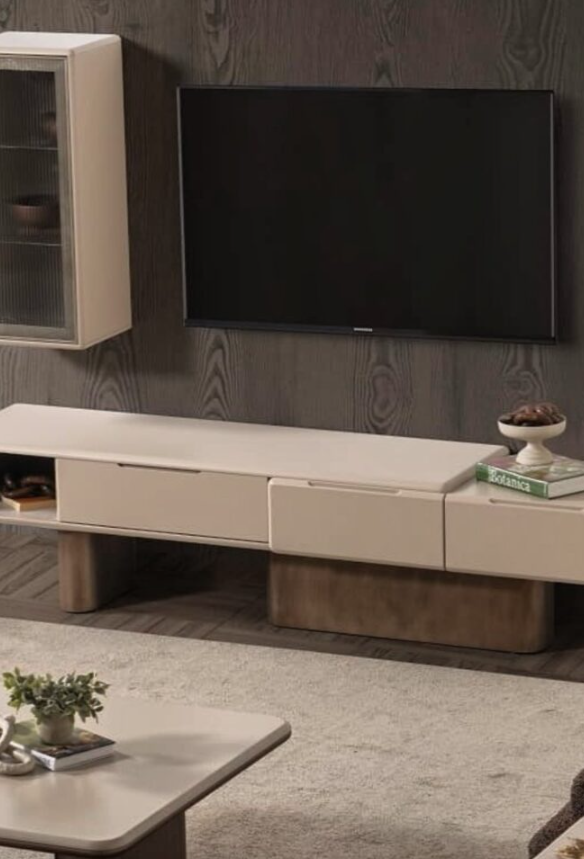
A floating minimalist TV stand focuses on clean edges, neutral colors, and hidden storage. I like this style when the goal is to keep the living room looking organized without adding bulky furniture.
I would use properly supported plywood or MDF panels with a smooth painted finish. A matte white, beige, or charcoal surface can blend with the room’s color scheme and keep the design understated.
The stand should be mounted at a practical height with suitable brackets and secure fixings. I would also leave enough space for ventilation around gaming consoles, streaming devices, and other electronics.
Soft recessed lighting or a wall-mounted light can highlight the simple design. Before mounting anything, I would confirm that the wall and fixings can safely carry the total load.
Rustic Open-Shelf Stand
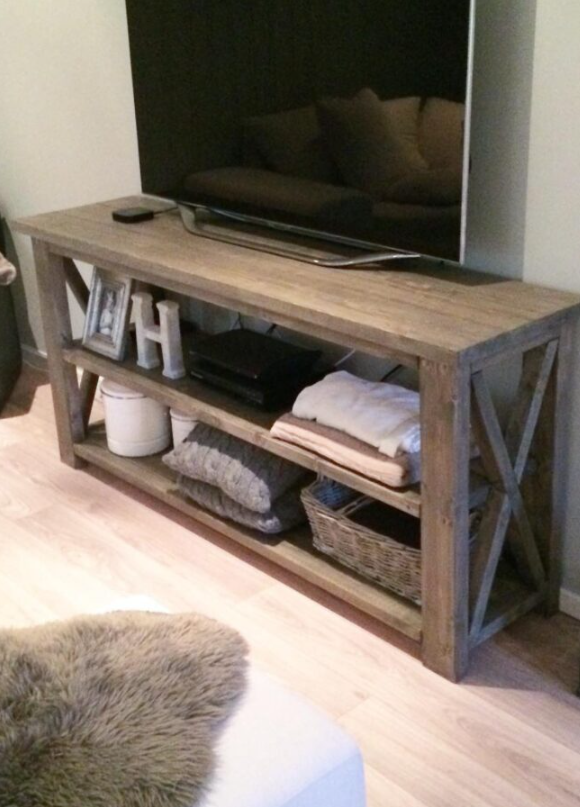
An open-shelf rustic TV stand combines practical storage with the natural appearance of wood. It is a good choice for anyone who wants easy access to media equipment without installing a large cabinet.
I would use sturdy pine boards and properly secured side supports. Cross-bracing can help reduce side-to-side movement, while a protective finish helps the wood withstand regular use.
The shelves can hold a media player, books, baskets, and neatly folded blankets. I would leave enough clearance around electronic devices for ventilation and keep cables organized behind the unit.
A nearby lantern-style lamp or floor light can bring out the wood’s texture. The key is to balance storage with open space so the stand remains functional and attractive.
Industrial X-Frame Stand
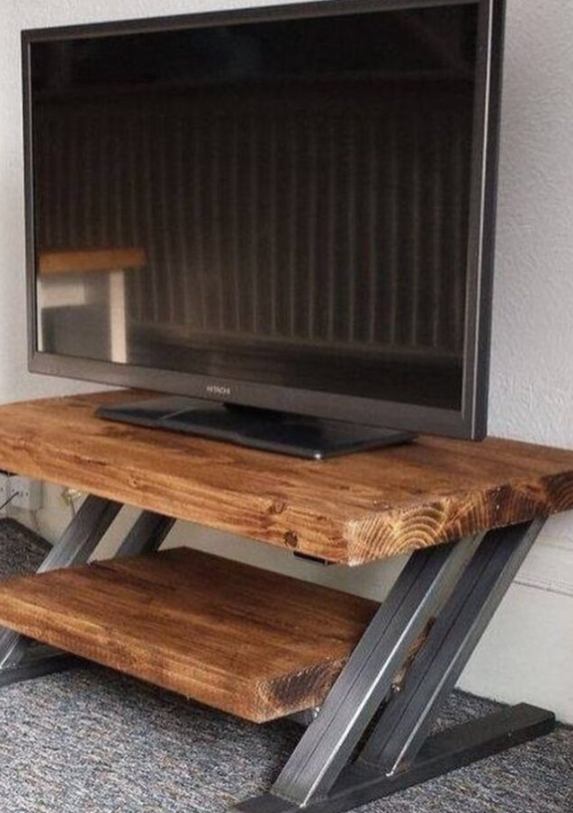
An industrial X-frame TV stand combines the warmth of wood with the strong appearance of metal. The angled supports give the furniture a distinctive look, making it a good fit for industrial, rustic, or contemporary interiors.
I would pair a solid wood top with a metal frame designed to support the intended load. Reclaimed wood can add character, but I would check it for cracks, loose sections, protruding nails, and other damage before using it.
The frame needs to sit level, and all joints should be secured properly. I would also make sure the top is firmly attached so it cannot slide when someone moves equipment or cleans the surface.
To complete the look, I would add a warm side lamp or subtle accent lighting. Keeping the surrounding decor simple allows the contrast between the wood and metal to stand out.
Curved Wood Minimal Stand
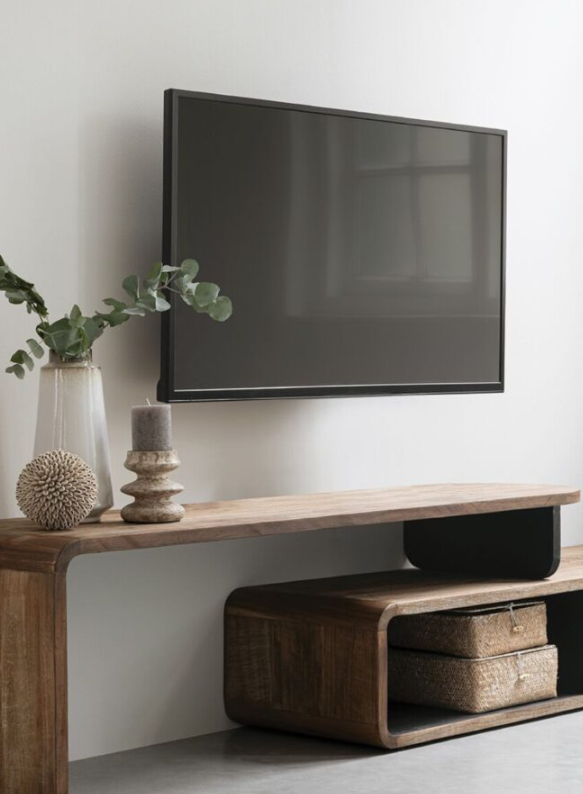
A curved wood TV stand softens the straight lines commonly found in modern furniture. Its rounded edges and natural finish can make the television area feel more relaxed without losing a clean, contemporary appearance.
I would use a suitable curved plywood construction or a properly formed MDF design. Creating smooth curves requires careful measuring and the right tools, so I would plan the shape before cutting any material.
Open shelves can provide space for streaming devices, books, or a few decorative items. I would avoid overcrowding the compartments because the curved design looks best when its shape remains visible.
Natural wood tones work well with neutral walls and simple furnishings. Soft daylight or diffused wall lighting can highlight the rounded edges without making the area feel too bright.
Cinder Block Minimal Stand
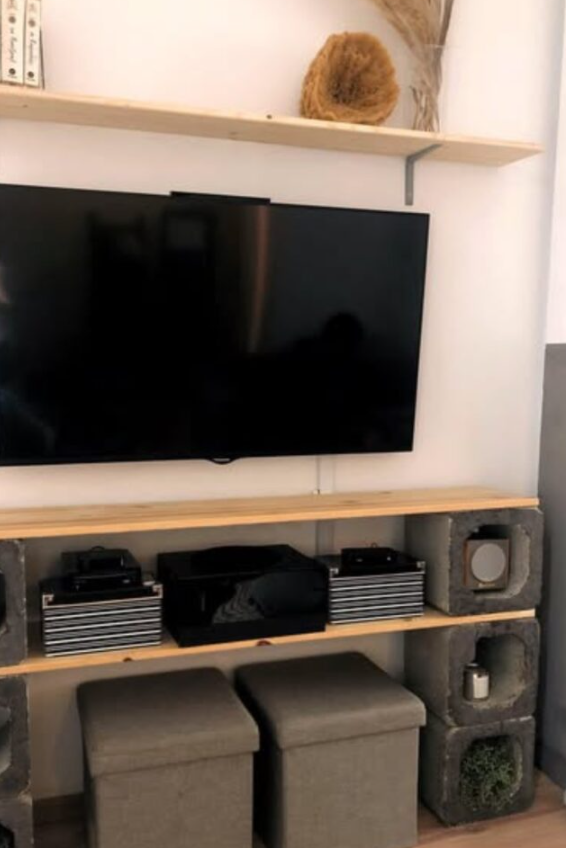
A cinder block TV stand is a straightforward DIY option that uses masonry blocks and wooden boards. It can suit a basic, industrial-style room, especially when the materials are arranged neatly.
To build this style, I would place the blocks on a firm, level floor and position suitable wooden boards across them. The blocks must sit securely, and the boards need enough thickness and support to handle the intended load without bowing.
I would check that the structure cannot shift easily and keep the television centered on a stable surface. Because stacked blocks can create a tipping or slipping hazard, I would not use this arrangement for a heavy television unless its stability and load capacity have been properly established.
The open spaces can hold lightweight storage bins or neatly arranged accessories. Warm lighting nearby can soften the raw materials and make the setup feel more inviting.
Mid-Century Modern Stand

A mid-century modern TV stand is known for its clean lines, tapered legs, and simple mix of wood and painted surfaces. This style can make a living room feel open while adding a little vintage character.
I would choose a sturdy cabinet with a natural wood finish and slim, angled legs. A white or light-colored frame paired with wood-grain doors creates a balanced appearance that works well in bright rooms.
Storage compartments help keep remotes, cables, and media equipment out of sight. I would also check that the legs are securely attached and that the stand remains stable when the television is placed on top.
A small plant, a few books, or a simple table lamp can finish the setup. I would avoid adding too many accessories because the furniture’s shape should remain the main design feature.
Boho Book Stack Stand
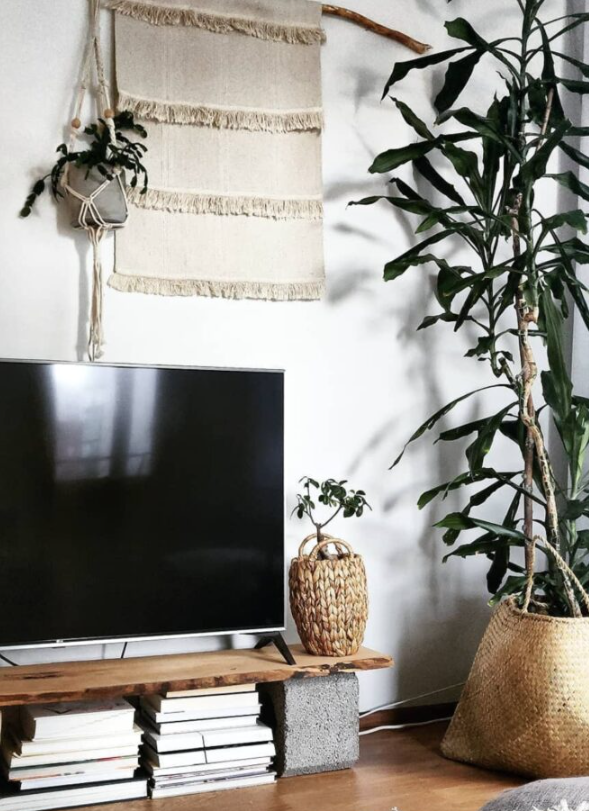
A book-stack TV stand offers a creative, casual look using a wooden board and sturdy supporting elements. However, I would treat this arrangement as a decorative idea rather than assuming that ordinary stacks of books can safely support a television.
For a safer version, I would use purpose-built supports or stable storage units beneath a thick wooden top. If I want the appearance of stacked books, I could arrange them around the base as decoration instead of relying on them to carry the TV’s weight.
Natural wood, woven textures, and earthy colors work well with a bohemian interior. I would keep the surface simple and organize cables so they do not hang loosely around the setup.
Warm fairy lights can add a soft glow to the surrounding decor. I would keep lighting away from heat sources and ensure that cables do not create a tripping hazard.
FAQS
How to make a TV stand without a stand?
If I need a temporary alternative to a traditional TV stand, I would first choose a stable piece of furniture designed to support the television’s weight. A sturdy media cabinet or properly rated console table is generally a safer option than improvised stacks of books or loose crates.
For a DIY solution, I would use a level, solid base with suitable structural supports and a top large enough for the TV’s feet. I would check the weight limit before placing the television on it and secure the furniture against tipping where necessary.
If the television is wall-mounted, a separate media shelf can hold the streaming box, gaming console, or remote controls. The shelf and its mounting hardware must be suitable for the wall type and the equipment’s weight.
I would avoid unstable stacks of cinder blocks, books, or unsecured wooden boards, particularly in homes with children or pets. A homemade stand should be stable and properly assembled before the TV is placed on it.
What do you store in a TV stand?
I use TV stand storage to keep the living room organized and make everyday electronics easier to access. The best arrangement depends on the stand’s design, available space, and the equipment used in the room.
Open shelves work well for gaming consoles, streaming devices, speakers, and media players. I would leave enough space around electronics for ventilation and avoid covering their air vents.
Drawers and baskets are useful for storing remotes, charging cables, spare batteries, controllers, and other small accessories. Simple labels can make it easier to keep track of everything without searching through several compartments.
I can also use a few sections for books, magazines, or decorative objects. However, I would keep liquids, candles, and heavy decorations away from electronics and avoid overcrowding the stand.
A practical TV stand should provide a balance between storage and open space. When every item has a place, the television area looks tidier and is easier to clean.