21 DIY Cat House Ideas for 2026
Creating a comfortable DIY cat house is a simple way to give your cat a private place to sleep, play, hide, and relax. I like using everyday materials such as plastic storage totes, wooden crates, cardboard boxes, old furniture, and fabric because they make it possible to build a useful cat space without spending too much money.
In this guide, I’ll share different DIY cat house ideas for indoor and outdoor spaces, including plastic tote shelters, cardboard castles, wooden playgrounds, wall cubes, suitcase hideaways, and cozy fabric houses. I’ll also cover the materials you need, ways to keep your cat house warm and safe, and how to choose the right size for your cat.
Key Takeaways
- Plastic totes and wooden boxes are practical choices for sturdy DIY cat houses.
- Cardboard houses work well for indoor play and temporary sleeping spaces.
- Straw is a better bedding option than blankets for many outdoor shelters because it handles moisture more effectively.
- Small entrances and proper insulation help outdoor cat houses retain warmth.
- Old furniture, drawers, suitcases, and shelves can become useful cat hideaways.
- Always check for sharp edges, loose parts, toxic paint, and materials that could harm your cat.
What Materials Do You Need for a DIY Cat House?
Before I start building a DIY cat house, I think about where it will be placed and how my cat will use it. An outdoor shelter needs different materials from an indoor sleeping space, so choosing the right base is important.
For a basic indoor cat house, I can use thick cardboard, wooden crates, plywood, or an old storage box. These materials are easy to work with and can be adjusted to fit the available space.
For an outdoor cat house, I prefer a durable plastic tote or weather-resistant wood. I also use insulation, waterproof materials, and straw bedding to help protect cats from cold and damp conditions.
Here are some useful supplies:
- Base material: Plastic tote, cardboard box, wooden crate, or plywood.
- Insulation: Rigid foam boards or suitable insulating panels.
- Waterproofing: Exterior-grade sealant and weather-resistant covering.
- Bedding: Clean straw for outdoor shelters or washable cushions for indoor houses.
- Tools: Measuring tape, utility knife, saw, sandpaper, and screws.
- Finishing materials: Non-toxic paint, fabric, and pet-safe adhesive.
Pro tip: I always check the materials before using them. Avoid exposed fiberglass, loose foam, sharp metal edges, and strong-smelling chemicals. Give paint and adhesives enough time to cure before allowing your cat inside.
How to Make a Cat House Out of a Plastic Tote?
A plastic storage tote is one of my favorite options for a simple outdoor cat shelter. It is affordable, easy to clean, and more resistant to rain than an ordinary cardboard box.
I start with a clean, sturdy tote and cut a small entrance near one end. Keeping the opening away from the center leaves more protected space inside and helps reduce direct exposure to wind.
Next, I add suitable insulation to the walls and floor. I make sure the insulation is completely covered so my cat cannot chew or scratch it. For bedding, I use clean straw rather than towels or blankets because fabric can hold moisture and become cold.
I also raise the tote slightly above the ground using stable supports. This helps prevent water from collecting underneath and makes the shelter more comfortable during wet weather.
Pro tip: Place the entrance away from the direction of strong winds and make sure the lid fits securely.
Cardboard Castle

I love the idea of turning ordinary cardboard boxes into a small castle for indoor cats. Instead of giving my cat one simple hiding box, I can create several connected spaces for sleeping, climbing, and playing.
I start by choosing thick, sturdy boxes and arranging them into different levels. Then I cut openings in the sides so my cat can move between the sections without struggling.
I secure the boxes together with pet-safe materials and check that every level can support my cat’s weight. Adding a few tunnels, scratching surfaces, and resting areas makes the structure more interesting.
This design works especially well for playful indoor cats that enjoy climbing, hiding, and watching everything from a higher spot.
Wooden Playground
For cats that enjoy climbing, a wooden playground offers more than a basic sleeping house. I can use untreated pallet wood or suitable plywood to build platforms, ramps, and small hiding spaces.
I begin with a strong base and add the platforms one at a time. Each section needs proper support, especially when I build several levels. I also sand the wood carefully to remove splinters and rough edges.
A scratching post, soft resting platform, and small enclosed box can make the playground more useful. I like placing these features at different heights so cats have several ways to use the structure.
This idea is suitable for indoor cat rooms or larger living spaces where I want to create a dedicated play area without allowing climbing activities to damage other furniture.
Wall Cubes
Wall cubes are a practical choice when floor space is limited. I can arrange wooden cubes vertically to create small resting areas that also give my cat a chance to climb.
I choose sturdy wooden cubes with enough interior space for my cat to sit, turn around, and lie down. After sanding the edges, I paint or seal the surfaces with a pet-safe, fully cured finish.
Soft removable cushions make the cubes more comfortable and easier to clean. I also make sure every cube is securely attached to wall studs or suitable wall anchors.
This setup works well in indoor cat rooms, apartments, and covered patios. It gives cats extra vertical space while keeping the floor clear.
Retro Cabinet
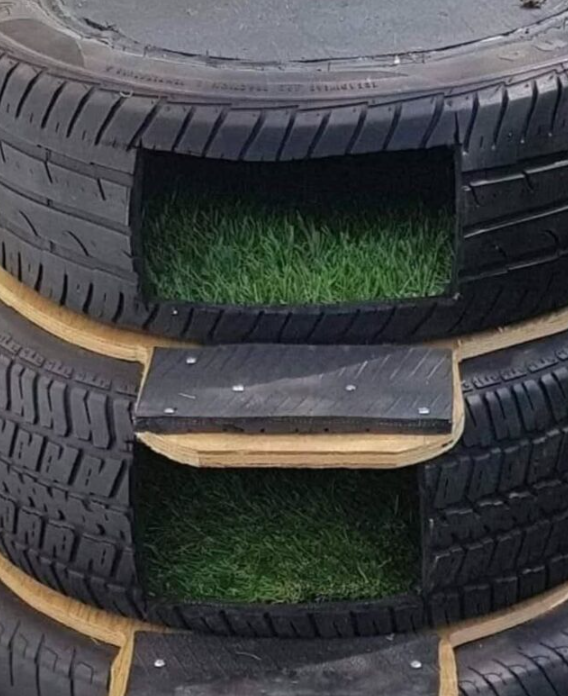
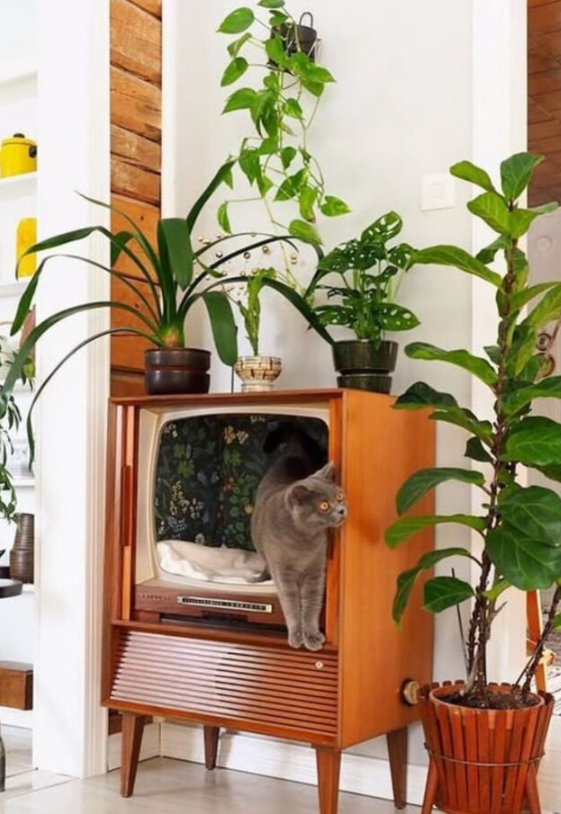
An old television cabinet or side table can become a beautiful cat house without requiring a completely new structure. I like this idea because the furniture already has an enclosed shape that provides a comfortable hiding place.
I first remove unnecessary shelves, damaged panels, and any loose hardware. Then I create a suitable entrance and check that there is enough airflow inside.
A soft washable cushion makes the interior more inviting. I also sand any rough surfaces and make sure the cabinet is stable enough that it cannot tip over.
This design is especially useful when I want my cat’s sleeping area to blend with the existing living room or bedroom furniture.
Box Stack
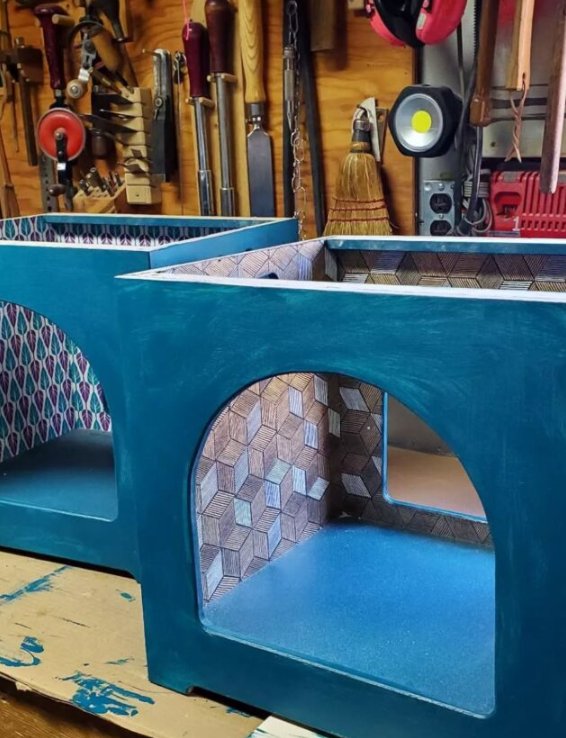
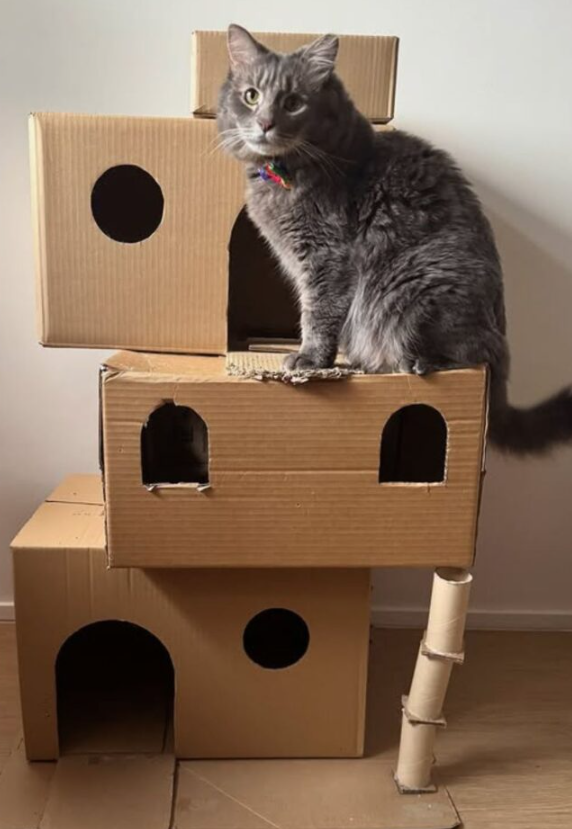
Stacking cardboard boxes is an inexpensive way to create an entertaining space for indoor cats. I can use boxes of different sizes to make a small climbing structure with separate hiding areas.
I arrange the boxes in a staggered pattern rather than placing them directly on top of one another without support. Then I cut openings on different sides to create simple pathways between the levels.
I secure the structure so it cannot collapse when my cat jumps or climbs. A small ramp or scratching surface can also make it more interesting.
This design is best for supervised indoor play, particularly for curious cats that enjoy exploring different levels and having a quiet place to rest.
Tire Shelter

Old tires can be used as part of an outdoor cat shelter, but I would not rely on an exposed tire structure alone for warmth or weather protection.
I prefer combining a stable, insulated wooden or plastic enclosure with a properly cleaned tire as an outer protective feature. The entrance should be smooth, and any supporting steps or platforms must be securely attached.
Inside the actual shelter, I use suitable insulation and dry straw bedding. I also position the structure where rainwater cannot collect around the entrance.
This design can work for outdoor community cats when it is built carefully. However, I always check that there are no exposed wires, sharp edges, loose tire pieces, or materials that could trap the cat.
Painted Cubes
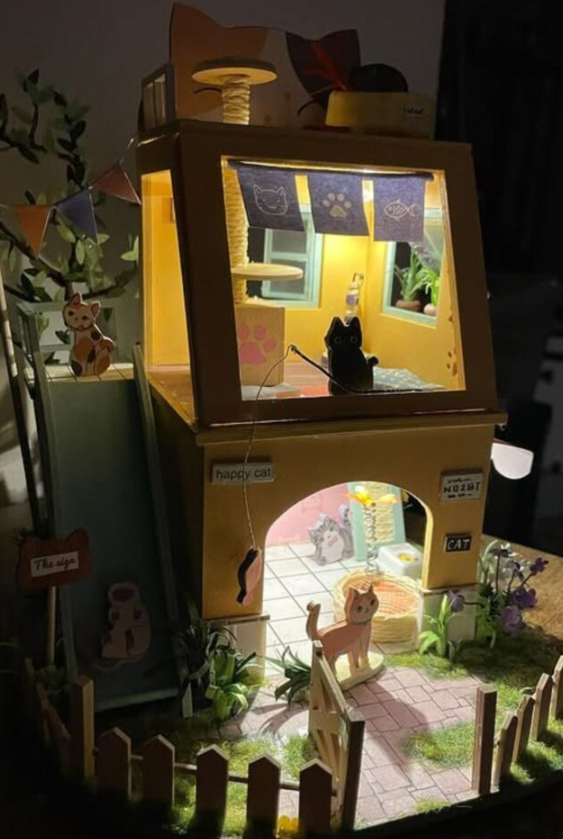
Painted wooden cubes are a good choice when I want a cat house that also works as decorative furniture. A few plywood panels can create a simple structure with individual sleeping spaces.
I start by cutting square or rounded openings into the panels. Then I sand every edge and assemble the pieces using strong, suitable fasteners.
Once the structure is complete, I apply a non-toxic finish that is safe for pets after fully curing. Removable pillows make the individual sections more comfortable and easier to maintain.
I like using neutral shades, soft pastels, or bold colors depending on the room. The important thing is to keep the design sturdy and the openings large enough for comfortable access.
Tote Shelter
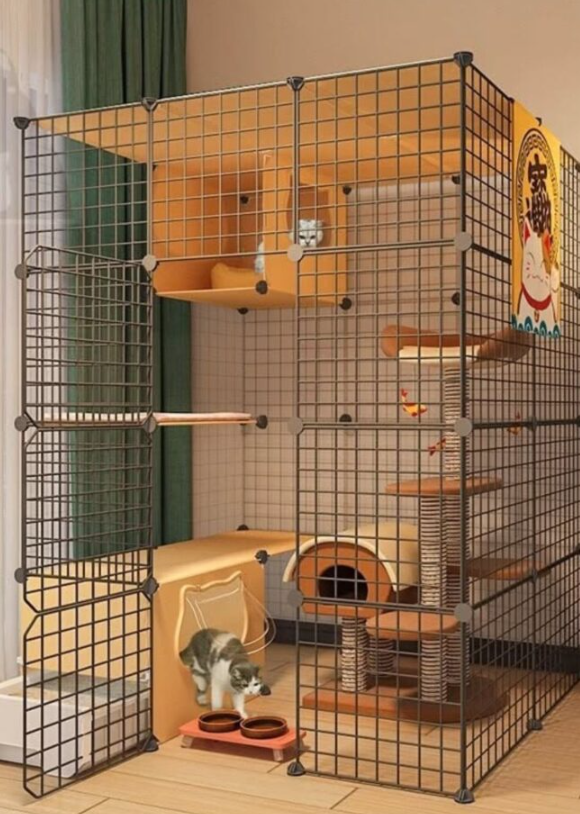
A tote shelter is a practical solution for outdoor cats, especially during colder months. Unlike cardboard, a sturdy plastic storage bin does not absorb rainwater as easily and can be cleaned without much effort.
I choose a tote with a secure lid and create a small entrance near one side. I cover the cut edges with a smooth, weather-resistant material to prevent injuries.
Next, I add insulation to the interior walls and floor. I make sure the insulation is protected behind a solid covering and use clean straw for bedding.
Raising the tote above the ground helps reduce contact with rainwater and cold surfaces. This design is especially useful for community cats that need a simple, protected place to rest.
Playhouse Build
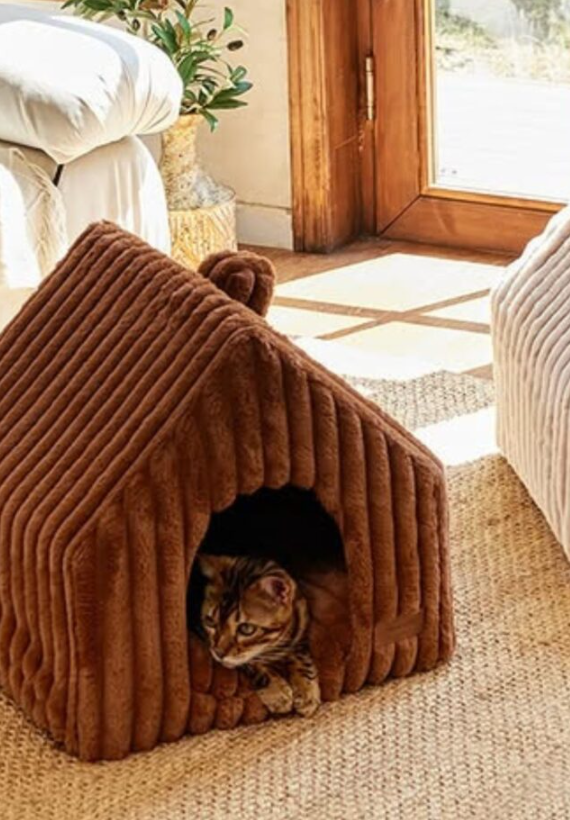
A cardboard playhouse gives me a chance to create something fun while providing my cat with a private resting space. I can make it look like a small home, complete with windows, doors, and different rooms.
I use thick cardboard or sturdy foam board covered with a cat-safe material. The structure needs a strong base, especially if my cat likes jumping onto the roof.
I also make the entrance wide enough for comfortable movement and avoid adding small decorations that could be chewed or swallowed.
This idea is best for indoor use because ordinary cardboard cannot withstand rain or prolonged moisture. It works well as a temporary playhouse or a seasonal addition to a cat’s play area.
Grid Condo
A grid condo is a useful option when I have limited floor space but want to give my cats more room to move. Wire storage panels can be connected to create a tall modular structure.
I start with a stable base and build the frame in sections. Then I add wooden platforms, an enclosed sleeping box, and scratching surfaces at different heights.
I cover exposed wire ends and check that the panels cannot separate when a cat climbs. Every shelf needs secure support, and the structure should be attached to a wall when necessary.
This design is especially useful in homes with multiple indoor cats. I can also change the arrangement later by moving shelves or adding another resting section.
Fabric Hideaway

Some cats prefer soft, enclosed sleeping spaces instead of wooden or plastic structures. A fabric hideaway gives them a comfortable place to relax while keeping the design simple.
I start with a sturdy frame made from suitable foam or a lightweight support structure. Then I cover it with durable, washable fabric that does not easily shed loose threads.
The entrance should be easy to access without being too large. I also make sure the fabric is firmly attached so my cat cannot pull it loose or chew through exposed materials.
This design works well in bedrooms, living rooms, and quiet indoor corners. I prefer removable covers because they make regular cleaning much easier.
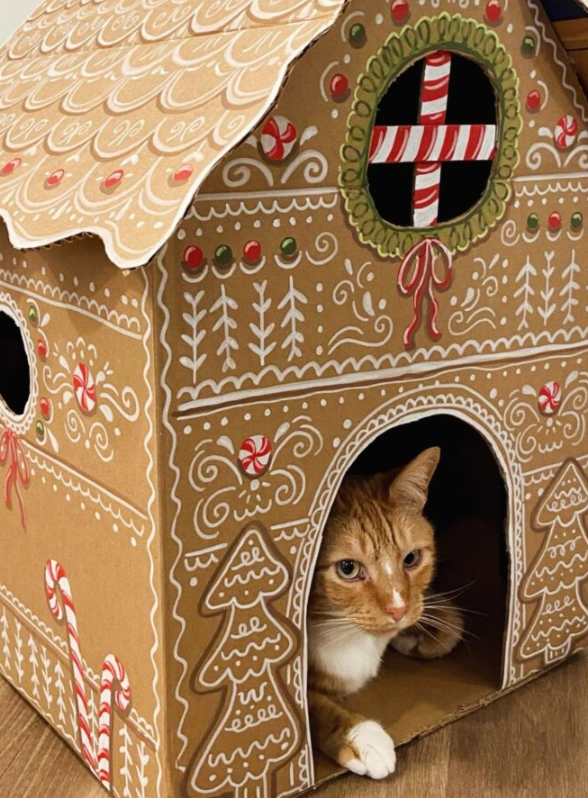
Gingerbread House

A gingerbread-style cat house is a fun seasonal project, especially if I have leftover holiday cardboard boxes. I can turn them into a small festive hideaway without spending much on materials.
I use thick cardboard to create the walls and roof, then add simple windows and an entrance. I prefer larger openings that allow proper movement and prevent the interior from becoming stuffy.
For decoration, I use pet-safe paint and avoid glitter, small buttons, artificial candy pieces, or anything that could become a choking hazard.
This project is best for indoor use and works as a temporary holiday playhouse. Once the cardboard becomes damaged or soft, I replace it rather than continuing to use an unstable structure.
Mini Villa

A mini villa is a creative way to give cats several resting spaces in one structure. I can build it using wooden crates arranged in separate sections, with each level offering a different place to sleep or watch the room.
I make sure the crates are strong and securely connected before adding cushions. Open sides provide airflow, while enclosed sections give cats a quieter place to hide.
I also check the height and stability of the structure. If it is placed on a balcony, it must be protected from rain, strong wind, and the risk of falling.
This design works well in indoor corners and sheltered spaces where cats enjoy having several comfortable resting spots.
Ramp House
A ramp house is a useful option for cats that enjoy climbing but may not feel comfortable jumping onto high platforms. I can create a small structure with an angled ramp leading to an enclosed resting area.
I use thick cardboard or lightweight plywood for the main frame. After assembling the walls, I attach a ramp with a gentle slope and cover it with a material that provides good grip.
I make sure the ramp cannot slide or collapse when my cat walks across it. A soft cushion inside the house creates a comfortable place to rest after climbing.
This design works well in apartments and compact rooms where I want to add vertical activity without taking up too much floor space.
Suitcase Nook
An old suitcase can become a charming cat sleeping nook with very little work. I like this idea because the suitcase already provides an enclosed shape and can easily fit into a bedroom or quiet corner.
I first remove any sharp hardware, broken handles, and loose metal parts. Then I position the suitcase securely so it cannot close or tip over while my cat is inside.
A washable cushion or small pet mattress makes the interior comfortable. I also prefer placing it slightly above the floor to keep the sleeping area clean.
Hard-shell suitcases are particularly useful because they hold their shape. However, I always leave the entrance completely open and make sure there is enough ventilation.
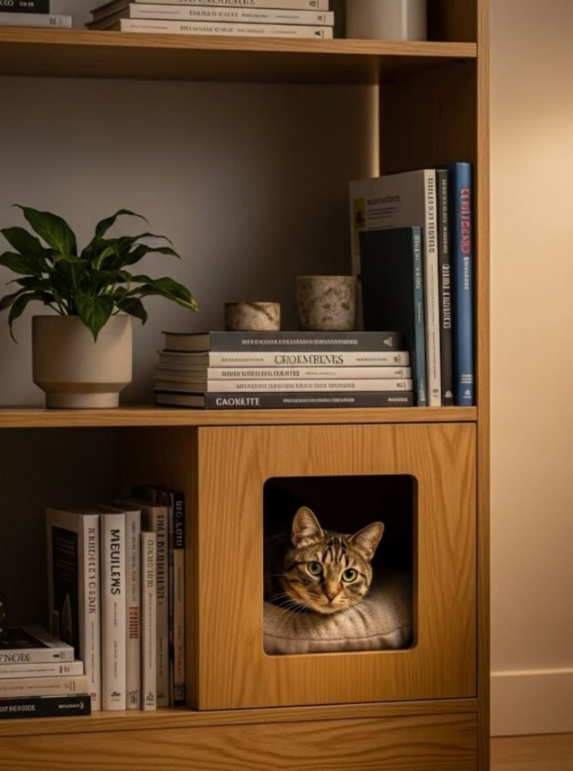
Bookshelf Den
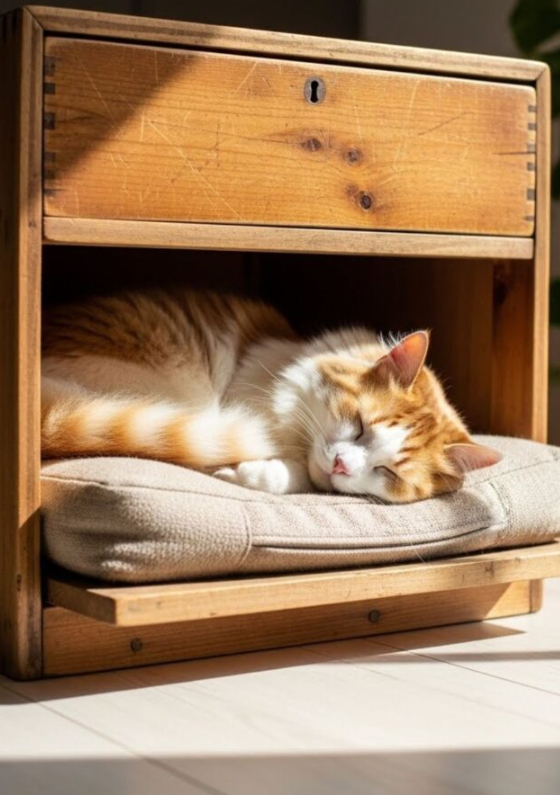
A bookshelf den is a clever way to create a cat house without adding another piece of furniture. I can use an empty lower shelf to build a small enclosed sleeping space.
I start by measuring the shelf and choosing a wooden box or sturdy insert that fits properly. Then I add a soft cushion and leave a comfortable opening at the front.
The sides should provide enough privacy while allowing air to move freely. I also secure the insert so it cannot slide out when my cat enters or leaves.
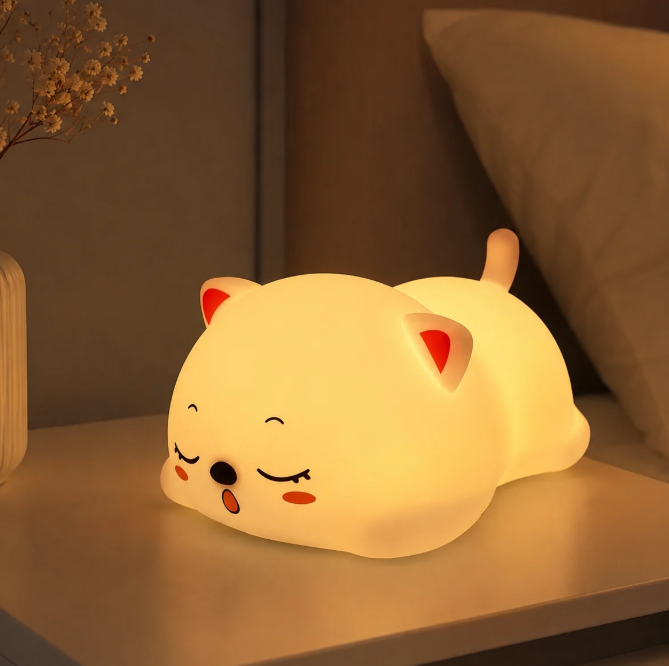
If I want to make the space feel even more inviting, I can place a small cat-themed night light nearby, provided the light and electrical cord are safely out of reach.
This idea works particularly well in apartments and living rooms where I want to use existing furniture instead of taking up additional floor space.
Drawer Retreat
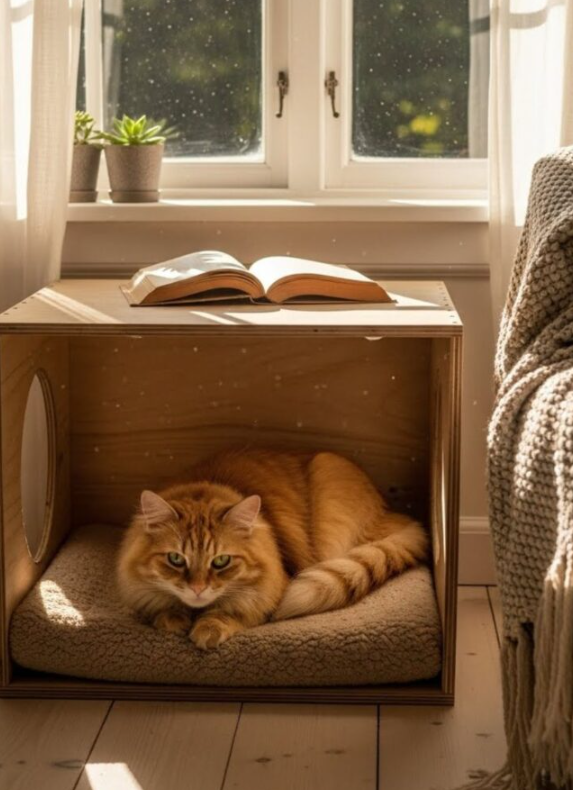
Old dresser drawers can become useful cat hideaways instead of ending up in storage or being thrown away. Their rectangular shape already provides a good base for a simple sleeping area.
I remove the drawer completely and check for loose nails, broken corners, and sharp edges. Then I turn it into a low resting space and secure it so it cannot slide or tip.
A washable cushion makes the inside comfortable. I can also paint the outside with a pet-safe finish that matches the surrounding furniture.
If I want to create multiple levels, I can use two drawers as separate compartments, provided each one has strong support and a safe entrance.
Window Lounge
Cats often enjoy sitting near windows because they can watch birds, people, and movement outside. A window lounge gives them a comfortable place to enjoy natural light while having a small area to rest.
I can use a sturdy wooden box or a purpose-built cat bed and place it near a secure window. The structure should be stable, with enough room for my cat to turn around and stretch.
I add a washable cushion and make sure the window area is safe. If I use a window perch, I check that its brackets and suction cups are properly installed and can support my cat’s weight.
This setup works especially well in apartments and homes where cats spend time watching the outside world.
Table Hideout

An unused side table can become a simple cat house with only a few changes. I like this idea because it creates a private resting spot without making the room look crowded.
I begin by checking the table’s condition and stability. Then I add wooden panels or durable fabric around three sides, leaving the front open for easy access.
The space underneath becomes a shaded sleeping area, while the tabletop remains useful for everyday items. I place a washable cushion inside to make it more comfortable.
This design works well in living rooms and bedrooms where I want to keep my cat’s sleeping area close by but still give it some privacy.
Laundry Cave
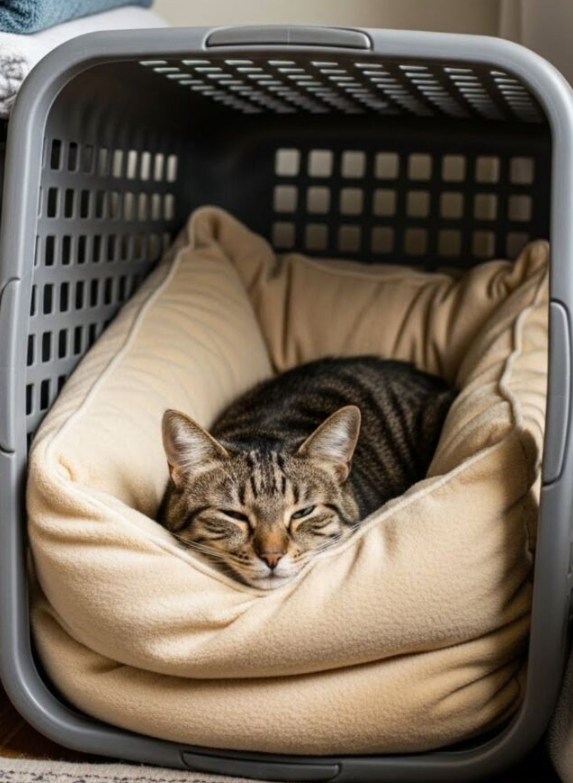
A sturdy laundry basket can become a simple cat hideaway with a little preparation. I prefer plastic baskets with smooth edges because they are easier to clean and do not have exposed wires.
I turn the basket onto its side and secure it so it cannot roll. Then I add a washable cushion or thick fabric liner that fits comfortably inside.
I make sure the entrance stays open and that my cat can move in and out without getting caught. Loose handles, sharp edges, and small detachable parts should be removed.
This idea works well in laundry rooms and bedrooms, especially for cats that like sleeping near familiar household activity.
Closet Corner
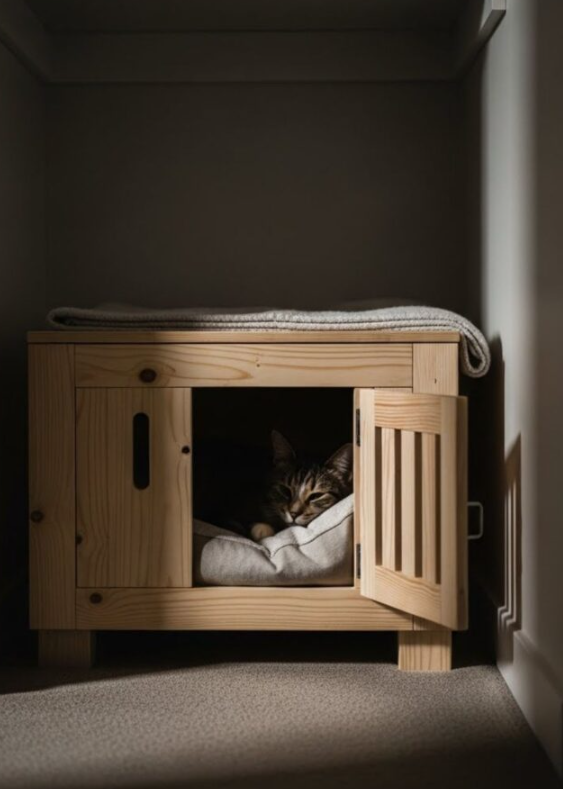
A quiet closet corner can provide the privacy that many cats enjoy. Instead of building a large structure, I can use a small wooden crate or sturdy box to create a comfortable sleeping space.
I begin by choosing a low-traffic corner with enough room for my cat to enter and leave easily. Then I add a washable cushion and make sure the enclosure has proper ventilation.
I also keep cleaning products, shoes, loose cords, and other unsafe items away from the sleeping area. The closet door should never close in a way that traps my cat inside.
This setup is particularly useful for shy cats or those that prefer a quiet place away from busy rooms.
FAQs
Can a DIY cat house really work better than a store-bought one?
Yes, a DIY cat house can work just as well as a store-bought option when it is built with suitable materials and proper safety features.
I like making my own because I can choose the size, shape, entrance, bedding, and location. I can also adjust the design to match my cat’s habits instead of choosing a standard product.
However, a homemade shelter is not automatically better. It still needs good ventilation, stable construction, comfortable bedding, and suitable protection from weather if it is used outdoors.
How do I know if my DIY cat house is the right size for my cat?
I use my cat’s body size and natural movements as a guide. The house should provide enough room for my cat to enter, turn around, sit, and lie down comfortably.
A sleeping space that is too large may not retain warmth as effectively in cold outdoor conditions. On the other hand, an enclosure that is too small can make movement uncomfortable.
For an outdoor shelter, I prefer a relatively compact interior with enough room for the cat to curl up and rest. I also make sure the entrance is large enough for comfortable access without creating an unnecessarily large opening.
My tip: Before finishing the house, let your cat try the space. If your cat can enter, turn around, and settle comfortably, the size is likely suitable.
Final Thoughts
Building a DIY cat house does not require expensive supplies or advanced woodworking skills. I can turn plastic totes, cardboard boxes, wooden crates, old furniture, and even unused drawers into comfortable spaces for my cat.
The most important thing is to match the design to the cat’s needs and the location. Indoor houses can focus on soft bedding, climbing, and play, while outdoor shelters need proper insulation, weather protection, and dry bedding.
I always check the finished structure for stability, sharp edges, and loose materials before allowing my cat to use it. A simple, safe, and comfortable cat house can give a cat its own special place to sleep and relax.
Meta Description: DIY cat house ideas using plastic totes, cardboard, wood, and old furniture, with practical tips for cozy indoor and outdoor shelters.