22 Nightstand Organization Ideas
A well-organized nightstand makes bedtime and morning routines easier. I like to keep bedside essentials within reach while making sure the surface doesn’t become a place for random clutter. The best way to arrange a nightstand is to give every item a purpose, use drawer dividers, create separate storage zones, and keep frequently used things close to the bed. You can use small baskets, trays, charging drawers, open shelves, and vertical storage to make the most of your available space. Whether you have a tiny bedside table or a nightstand with several drawers, these ideas will help you create a clean, practical, and relaxing setup.
Key Takeaways
- Keep only daily essentials on the nightstand surface.
- Use drawer dividers and small baskets to separate belongings.
- Store nighttime items where you can reach them easily.
- Keep charging cables organized and away from the main surface.
- Use trays to contain small items like lip balm and skincare.
- Choose soft bedside lighting for a comfortable nighttime atmosphere.
- Leave some empty space in drawers so items remain easy to access.
How to Arrange a Nightstand?
Before buying organizers, I recommend checking what you already keep beside your bed. Separate nighttime essentials, morning items, electronics, medications, and things you rarely use.
Once everything is sorted, assign each group a specific place. I prefer keeping frequently used items in the easiest-to-reach drawer or on a small tray.
If your nightstand has limited storage, use vertical shelves, baskets, or a nearby wall lamp. The goal is to make your bedside area comfortable without filling every available space.
Drawer Zoning
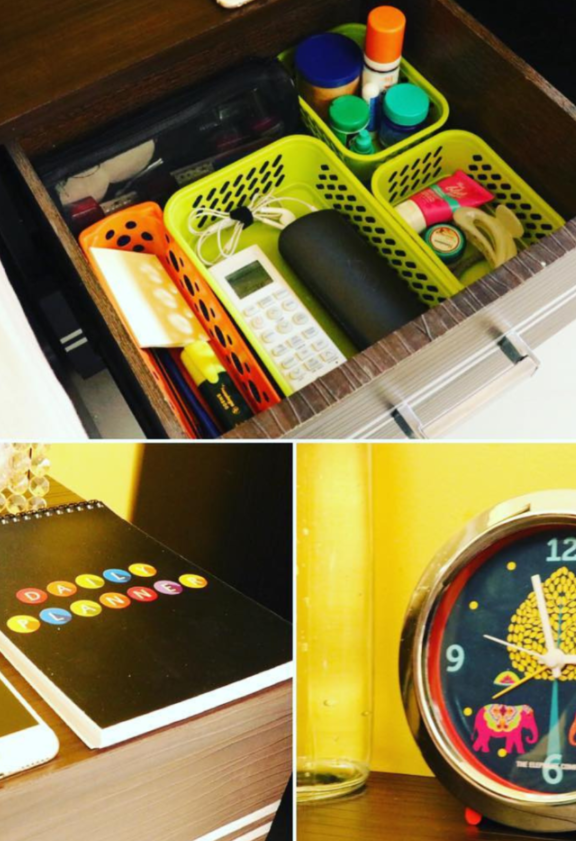
I find that drawer zoning makes a big difference when a nightstand collects too many small belongings. Instead of putting everything together, divide the drawer into sections for medications, grooming products, charging accessories, and personal items.
Small baskets or adjustable drawer dividers help keep each category separate. This is especially useful if your nightstand has deep drawers where smaller belongings can easily disappear.
I also recommend keeping a table lamp on top for comfortable nighttime lighting. This way, the drawer handles storage while the surface stays simple.
Calm Surface
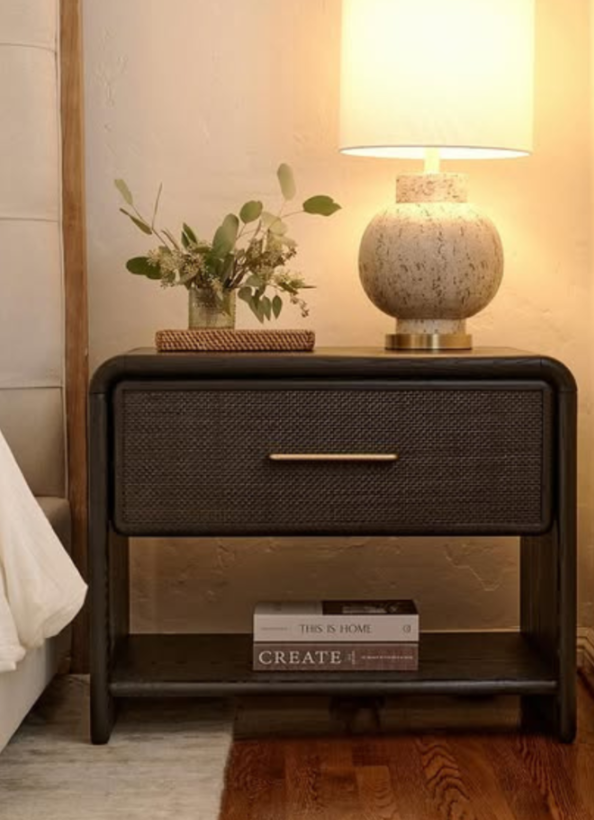
I prefer a simple nightstand surface because too many decorative pieces can make a bedroom feel busy. A table lamp, a small plant, or one decorative tray is often enough to create a finished look.
Move extra books, skincare products, and personal belongings into the drawer. This keeps the surface available for the things you actually use before sleeping.
Choose a warm-light table lamp instead of relying only on bright overhead lighting. It creates a more comfortable atmosphere when you’re getting ready for bed.
Open Layers
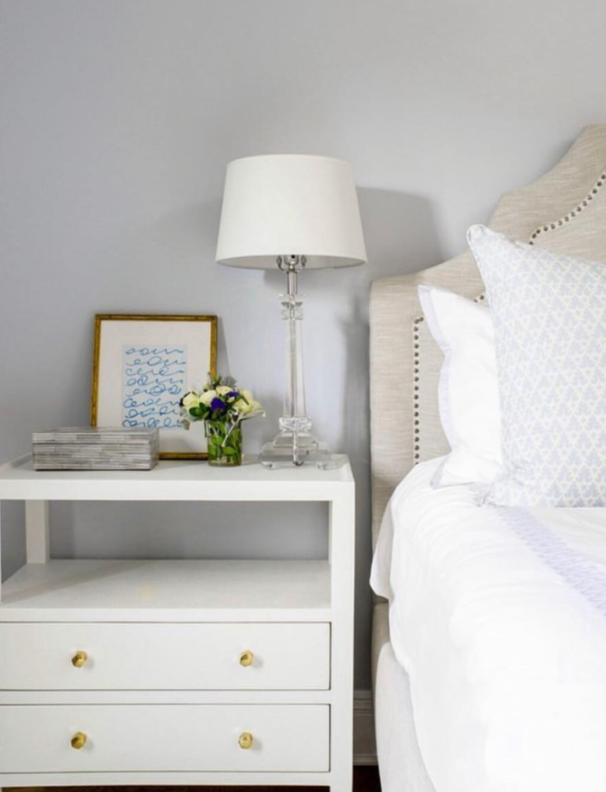
When I have limited bedroom space, I like nightstands that combine drawers with open shelving. This design gives me hidden storage for personal belongings and an accessible place for books or everyday essentials.
Keep private or smaller items inside the drawer and arrange a few frequently used pieces on the open shelf. Avoid filling every section because too many objects can make the furniture look crowded.
A light-colored table lamp works well with this arrangement. It provides useful lighting without making the bedside area feel visually heavy.
Balanced Storage

I like combining open and closed storage because each type serves a different purpose. Drawers are useful for loose belongings, while open shelves make it easier to access books, baskets, and neatly folded accessories.
Keep the tabletop limited to a lamp and one small tray. This arrangement works particularly well in bedrooms with natural light because the furniture doesn’t look overcrowded during the day.
If you have a bedside table with multiple storage sections, assign each one a specific use instead of mixing everything together.
Vertical Substitute
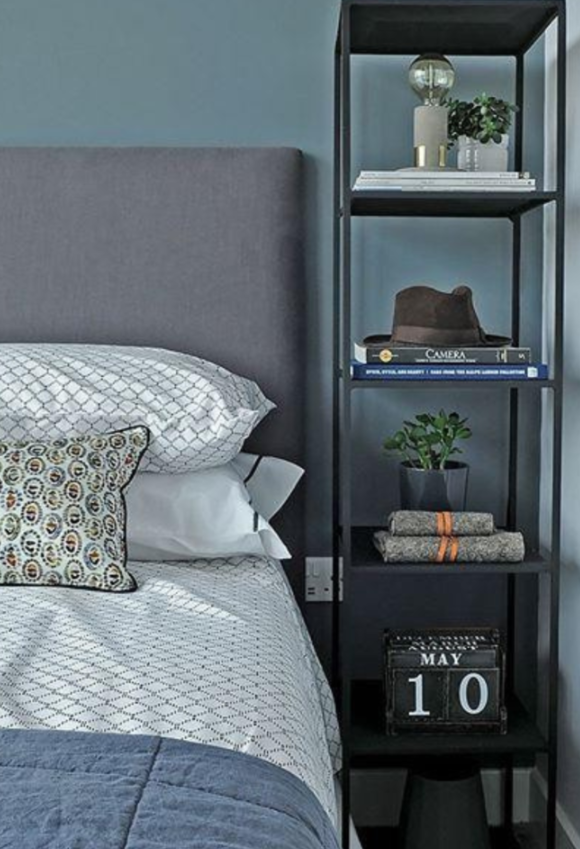
A traditional nightstand isn’t always practical in a small bedroom. When floor space is limited, I recommend using a slim shelving unit beside the bed instead.
Choose a narrow design with several shelves so you can store books, bedtime essentials, and small baskets without taking up much room. Keep frequently used items on the middle shelves and decorative pieces higher up.
A wall-mounted sconce or clip-on reading light is another useful addition. It saves tabletop space while giving you enough light for nighttime reading.
Micro Sections

Small items are often the hardest things to organize because they can easily get mixed together. I recommend using drawer dividers to create smaller sections for lip balm, jewelry, hair accessories, and charging cables.
You can use adjustable dividers or small trays that fit the drawer dimensions. Before purchasing anything, measure the inside of your drawer to avoid wasting space.
A compact lamp on top completes the setup without taking attention away from the organized storage underneath.
Daily Essentials
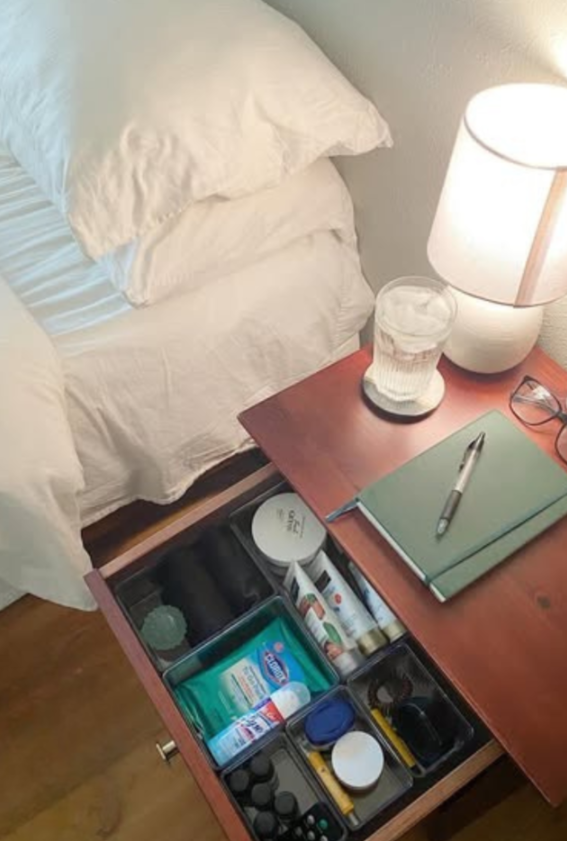
I find it easier to maintain an organized nightstand when everyday essentials have their own sections. Keep frequently used skincare products, personal care items, and other bedtime necessities together instead of scattering them throughout the drawer.
Use deeper containers for bottles and shallow trays for smaller accessories. This makes it easier to take something out and return it to the correct place.
For shared bedrooms, consider giving each person a separate drawer or storage section. A soft bedside lamp also keeps the nighttime setup comfortable.
Mindful Drawer

If you enjoy journaling or having a quiet routine before sleeping, I recommend giving those belongings a dedicated drawer. Keep a notebook, pen, reading glasses, and a few personal care items together.
Shallow organizers work well for separating writing supplies from small self-care accessories. This prevents everything from getting mixed up when you open the drawer.
I also like pairing this setup with a warm table lamp. Gentle lighting makes the bedside area feel more comfortable for reading or writing before bed.
Clear Categories
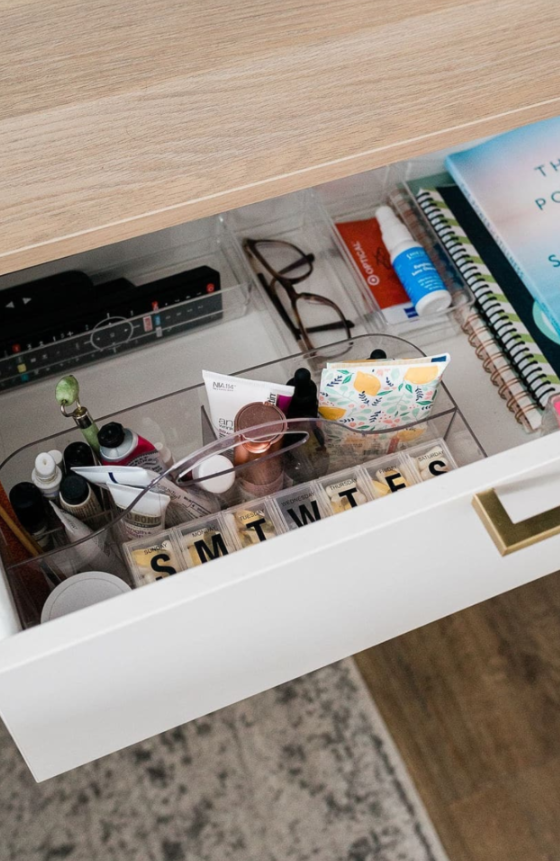
Transparent organizers are useful when I want to see everything without moving several containers around. You can use them to separate skincare products, small notes, personal accessories, and other daily necessities.
The main advantage is visibility. You can quickly check what you have and avoid buying duplicates simply because something is hidden at the back of the drawer.
Group similar items together and use containers that fit the available space. A simple lamp on top keeps the rest of the arrangement looking neat.
Full Control

If you keep several belongings beside your bed, a grid-style drawer organizer can help you manage them. I recommend dividing the drawer into sections for electronics, remotes, wallets, glasses, and other personal items.
Choose divider sizes based on what you actually own. Large sections can hold bigger accessories, while smaller compartments are better for items that are easy to lose.
Keep the tabletop simple and let the drawer handle most of the storage. This approach is particularly helpful when you want everything accessible without making the bedroom look cluttered.
Soft Luxury
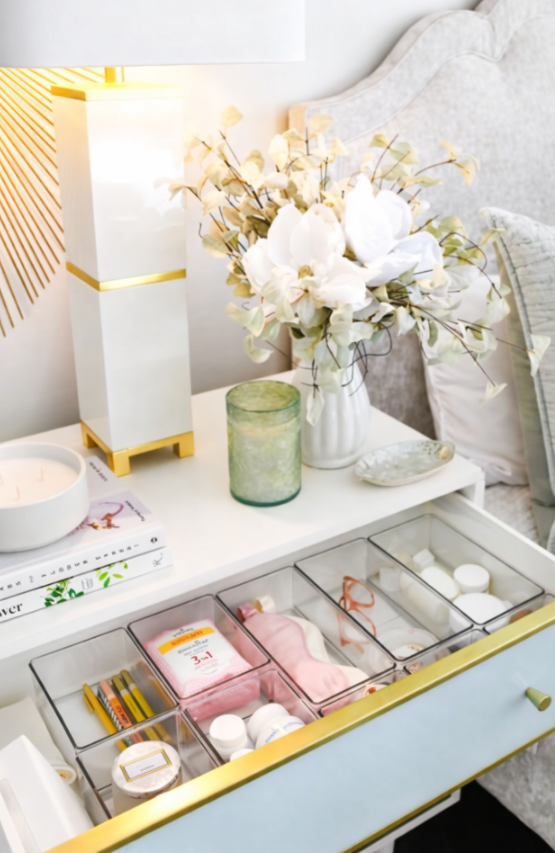
An organized drawer can look just as attractive as the rest of your bedroom furniture. I like using clear dividers with a simple color palette to create a clean and coordinated appearance.
Choose organizers in clear, white, beige, or soft neutral shades. Arrange your nighttime essentials with a little space between them instead of filling every compartment.
To complete the look, use a warm table lamp and a small accent light if needed. The combination creates a polished bedside setup without requiring expensive storage accessories.
Tray Control

A small tray is one of my favorite ways to keep a nightstand organized without adding more furniture. It creates a defined area for items that you use every evening, such as lip balm, hand cream, a watch, or reading glasses.
Choose a tray that fits comfortably beside your lamp. It shouldn’t take up the entire tabletop or make it difficult to place a glass of water.
I recommend limiting the tray to everyday essentials. Anything you don’t use regularly can go inside the drawer.
Charging Drawer
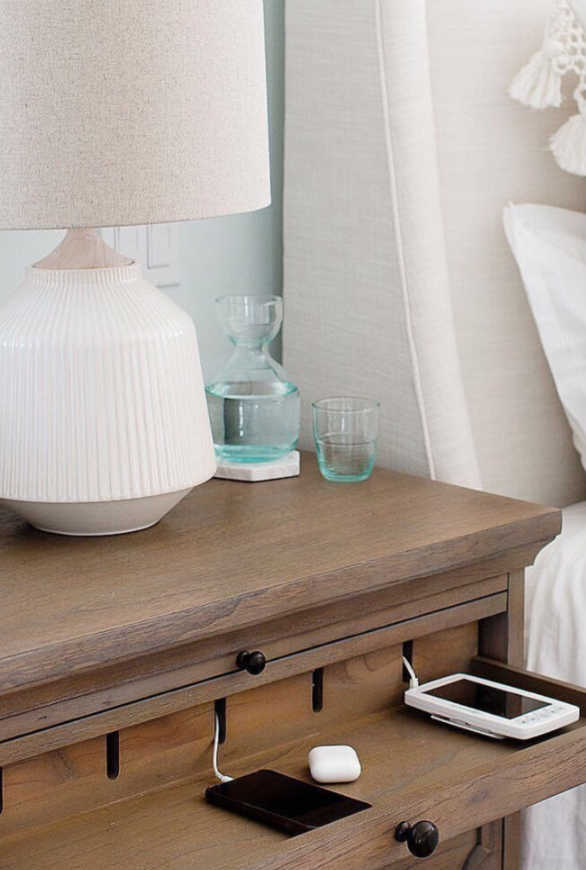
Charging cables can make an otherwise tidy nightstand look messy. A charging drawer is a practical solution if you want your phone, earbuds, and other small devices close to the bed without leaving wires across the tabletop.
Look for furniture with built-in cable openings or use a suitable cable-management system. Give each device its own charging cable and keep extra wires secured separately.
Make sure the charging equipment has proper ventilation and follow the manufacturer’s safety instructions. Avoid charging devices under loose bedding or inside an enclosed space that can trap heat.
Basket Stack
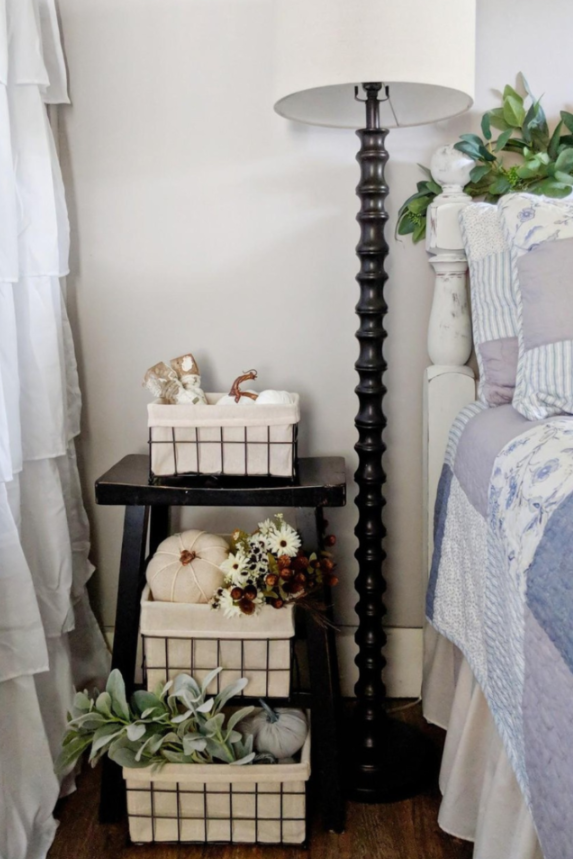
When a regular bedside table doesn’t offer enough storage, I like using a small tiered stand or stool with baskets underneath. It creates additional storage without requiring a large piece of furniture.
Use one basket for books, another for blankets or personal accessories, and keep smaller nighttime essentials in a separate container. This makes it easier to maintain the arrangement.
A floor lamp can provide lighting while leaving the tabletop clear. This is a useful option for narrow bedrooms where every inch of floor space matters.
Medicine Grid
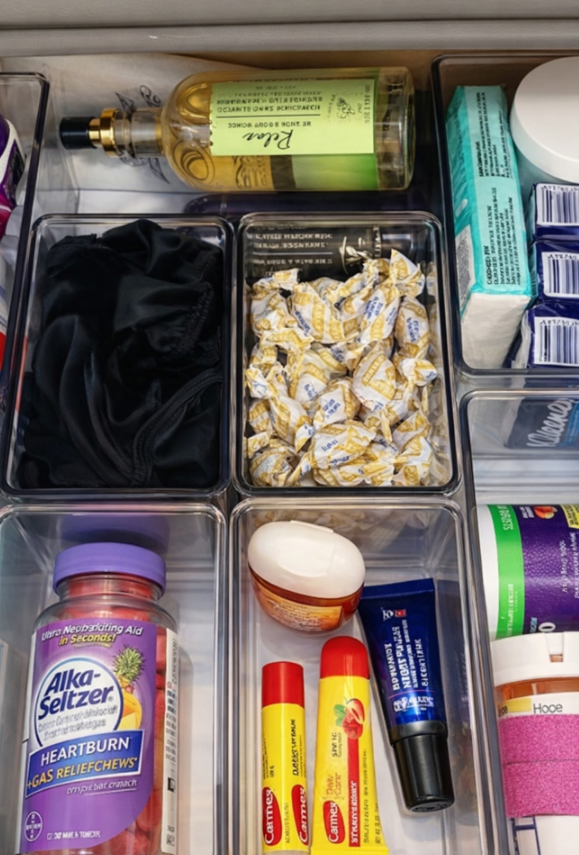
If you keep medications or first-aid supplies near your bed, I recommend storing them in separate, clearly labeled containers. This makes it easier to distinguish daily medication from basic first-aid supplies and other health-related products.
Keep medicines in their original packaging with labels and instructions intact. Check storage requirements because some products need specific temperature or moisture conditions. Also keep medications away from children and pets.
A soft bedside lamp is enough for this setup. The main priority should be making the storage clear, safe, and easy to manage.
Smart Sorting
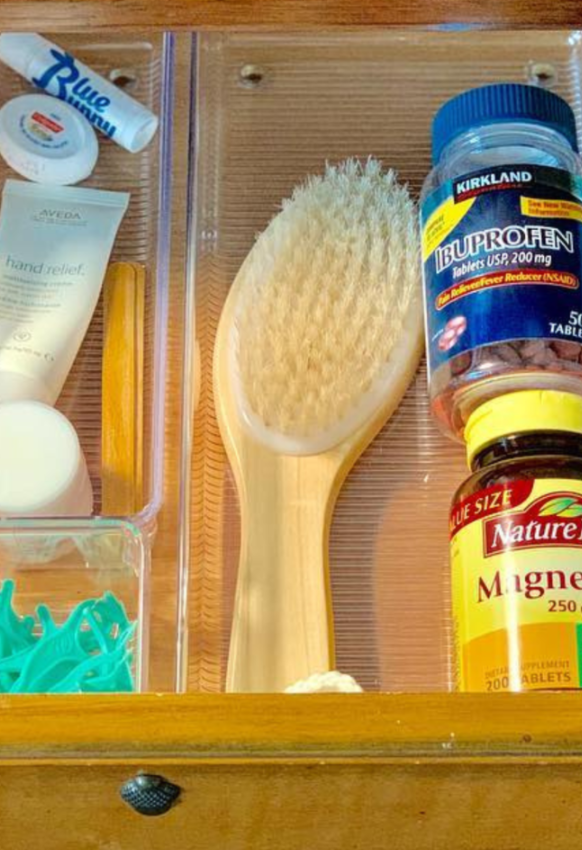
Smart sorting means arranging items according to how you use them. Instead of placing everything in one large container, I prefer separating remotes, personal care products, glasses, and small comfort items.
This system is especially useful for shared nightstands because both people can quickly locate their belongings. You can also assign one side of a drawer to each person.
Choose compartments that match the size of your belongings. A simple bedside lamp provides enough light while the drawer keeps everything organized.
Hidden Charging

If visible cables bother you, hidden charging storage is worth considering. A pull-out drawer with cable openings can keep your phone and other small electronics organized while reducing clutter on the tabletop.
I recommend routing the cables through the back of the furniture and keeping each device in a separate space. Avoid tightly wrapping charging cords or overcrowding the drawer with electronics.
A warm table lamp on top completes the arrangement and keeps the bedside area looking simple.
Light Balance
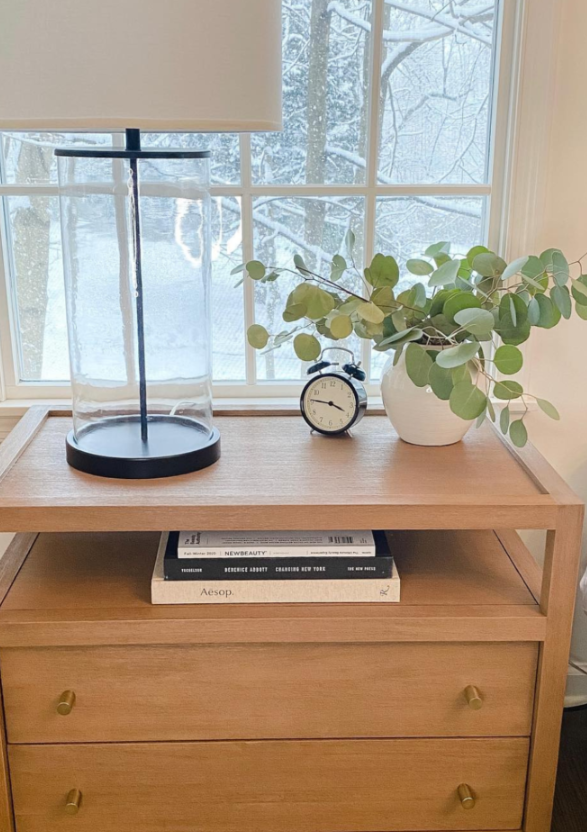
A balanced nightstand doesn’t need many decorative accessories. I like keeping the top limited to three useful or attractive pieces, such as a lamp, a small plant, and an alarm clock.
Move extra books and personal belongings to the open shelf or inside the drawer. This gives the tabletop more breathing room and makes everyday cleaning easier.
A glass or light-colored lamp can also help create an open appearance, especially in a smaller bedroom.
Labeled Zones
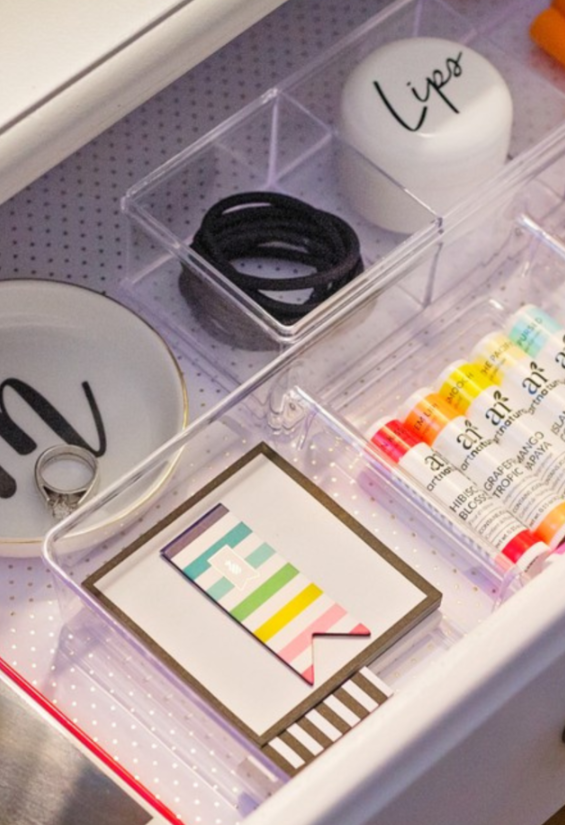
Labels can make a big difference when several people share a bedroom or when drawers contain many different items. I recommend using small clear bins with simple labels to show where each category belongs.
Instead of labeling every individual object, label sections according to their purpose. For example, you could have separate spaces for skincare, electronics, personal care, and accessories.
This system makes it easier to return items to the right place and prevents small belongings from slowly spreading throughout the drawer.
Surface Reset
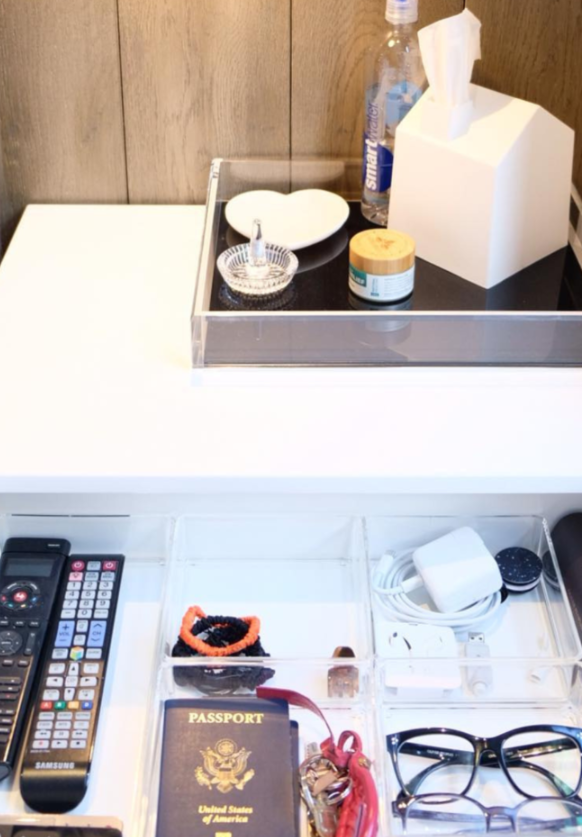
I like using a small tray to keep everyday comfort items together. It can hold tissues, hand cream, lip balm, or a glass of water without allowing everything to spread across the nightstand.
Keep less frequently used belongings in the drawer so the tabletop stays easy to clean. You can also choose a tray with slightly raised edges to prevent smaller items from sliding off.
A soft table lamp adds the finishing touch and makes the entire setup feel comfortable and practical.
Category First
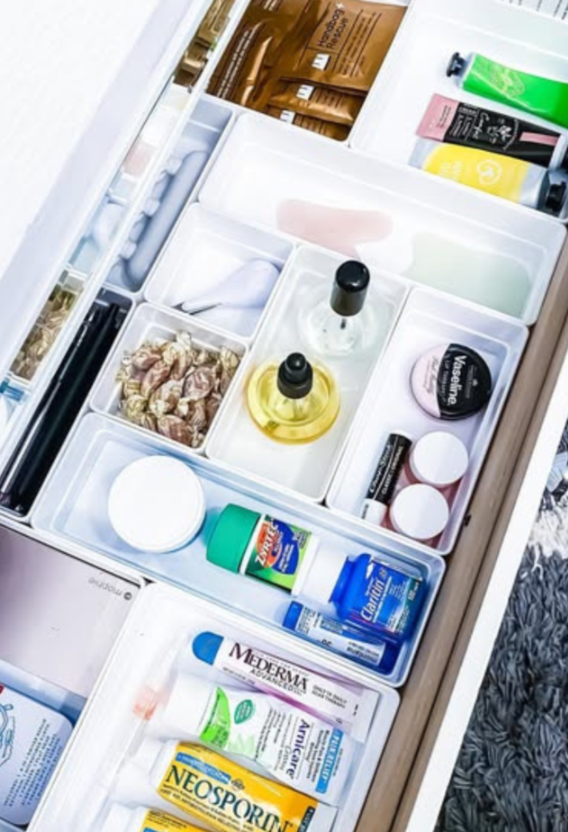
I find that organizing by category is one of the easiest ways to keep a nightstand tidy over time. Give skincare, first-aid supplies, medications, personal accessories, and backup items their own storage areas.
Choose containers according to the amount of space each category needs. Avoid buying too many organizers because they can take up more room than the belongings themselves.
Once a container is full, review what you have before adding more items. This simple habit helps prevent unnecessary clutter and keeps the drawer manageable.
Tech Order
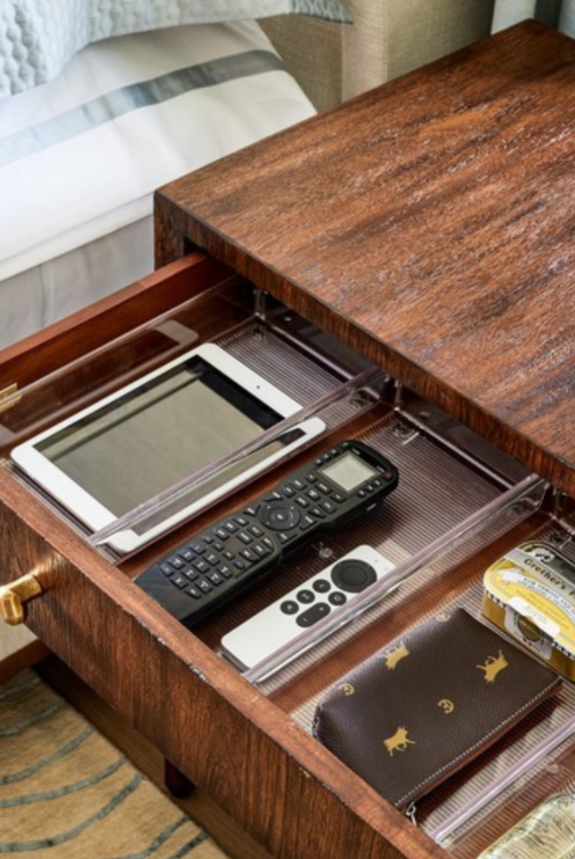
If your nightstand also stores electronics, I recommend using slim drawer dividers to give every device its own place. Tablets, remote controls, wallets, headphones, and charging accessories are easier to manage when they aren’t stacked together.
Create a separate section for each type of device and keep charging cables neatly secured. This makes it easier to grab what you need without moving everything else.
A decorative table lamp can provide soft ambient lighting while the drawer takes care of electronic storage.
FAQs
How many items should stay on a nightstand?
I recommend keeping only the items you regularly use before sleeping or immediately after waking up. A lamp, phone, water glass, alarm clock, and one small comfort item are usually enough.
You don’t need to follow a strict number because everyone’s nighttime routine is different. The important thing is to leave enough open space so you can use the tabletop comfortably.
If you have to move several objects just to reach your phone or water, it’s probably time to remove a few things.
Should nightstand drawers be fully packed?
No, I wouldn’t recommend filling every inch of a nightstand drawer. When everything is packed tightly, it becomes harder to locate belongings and return them to their proper places.
Leave some empty space between organizers and larger items so you can remove things without disturbing the rest of the drawer.
If a drawer feels overcrowded, remove duplicates, relocate backup products, and keep only the belongings you regularly need beside your bed.
Final Thoughts
Arranging a nightstand doesn’t require expensive furniture or complicated storage products. I recommend starting with your daily habits, removing unnecessary belongings, and giving every remaining item a specific place.
Use drawer dividers, small baskets, trays, and hidden charging solutions to make the most of your available space. Keep the tabletop simple with a lamp and a few useful accessories.
The best nightstand arrangement is one that makes your bedtime routine easier while keeping your bedroom comfortable, clean, and clutter-free.