21 Lazy Susan Organization Ideas for 2026
How Do You Organize a Deep Cabinet With a Lazy Susan?
I find that deep cabinets are much easier to manage when I use a Lazy Susan to keep everyday items within reach. Instead of moving bottles and jars around to find something at the back, I can simply turn the tray and see what I have. The key is to choose the right turntable, group similar items together, and leave enough room for everything to rotate freely.
In this guide, I’ll share practical ways to organize deep cabinets with a Lazy Susan, from storing cooking oils and spices to arranging cookware, pantry supplies, and even bathroom products. I’ll also cover a few simple tips to help prevent spills, reduce clutter, and make the most of awkward cabinet corners.
Key Takeaways
- I start by emptying the cabinet, checking expiration dates, and grouping similar items before organizing.
- I choose a Lazy Susan that fits the cabinet and leaves enough clearance to turn without hitting the sides.
- I keep frequently used items easy to reach and separate products by category.
- I use trays with raised edges or nonslip surfaces to help prevent bottles and jars from sliding.
- I avoid overloading rotating shelves, especially when storing heavy cookware or small appliances.
- I check the arrangement regularly so expired products and forgotten items do not build up at the back.
Hidden Milk
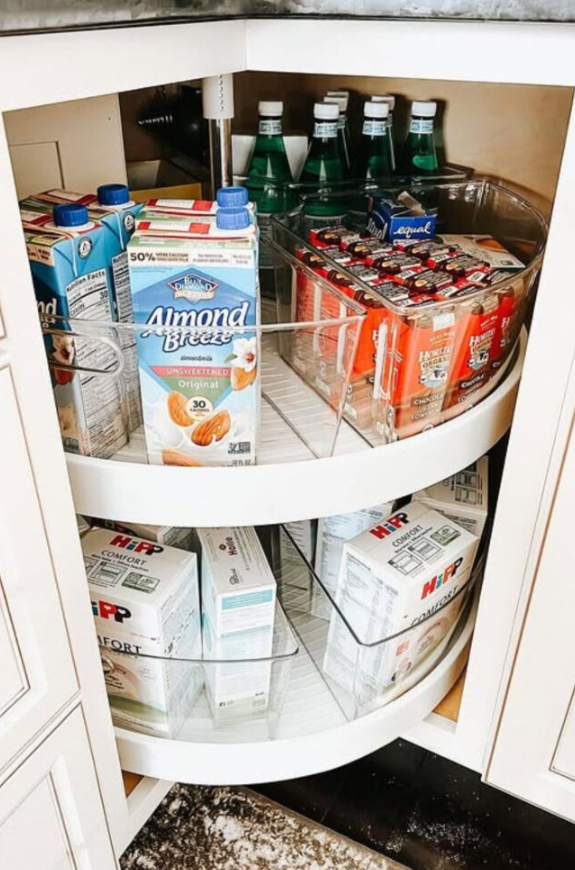
I like to keep milk cartons and other everyday drinks together when organizing a refrigerator or a deep corner cabinet designed for beverage storage. A rotating tray makes it easier to see what is available without moving several cartons around.
I place smaller cartons of milk, almond milk, and juice around the outer edge of the Lazy Susan. If I use a two-tier model, I reserve one level for drinks I reach for daily and the other for suitable backup items. Clear bins can hold juice boxes or small drink containers upright.
Before placing dairy products in a cabinet, I make sure the products are shelf-stable and do not require refrigeration. For refrigerated milk, I use a food-safe Lazy Susan inside the refrigerator instead. This keeps my drinks organized while allowing me to store them at the proper temperature.
Tiered Storage
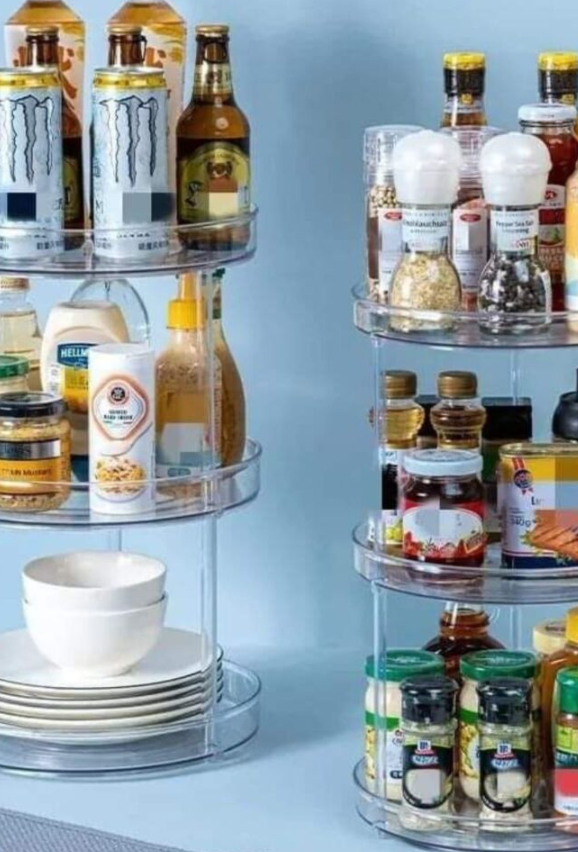
When sauces, spices, and condiments take over a kitchen counter, I find that a tiered Lazy Susan helps me use vertical space more effectively. Instead of spreading everything across the worktop, I can arrange products on separate levels and keep the area looking less crowded.
I put taller bottles on a level where they fit securely without hitting shelves or nearby objects. Frequently used sauces and dressings go on the most accessible tier, while smaller spice jars and seasoning containers stay together on another level.
Before choosing a tiered organizer, I measure the available height as well as the cabinet depth. This matters because a tray that fits across the cabinet may still be too tall to rotate comfortably. I also check that each tier can support the weight of the items I plan to store.
Fridge Spinner

I often find condiment bottles hiding behind leftovers, drink containers, and fresh produce in a crowded refrigerator. A Lazy Susan provides a simple way to keep these bottles visible without rearranging the entire shelf.
I group soy sauce, salad dressings, marinades, and other refrigerated condiments on one rotating tray. Keeping similar products together helps me find what I need quickly and makes it easier to spot bottles that are nearly empty.
I choose a food-safe organizer that fits securely on the refrigerator shelf and is easy to remove for cleaning. I also keep raw meat and any containers that could leak separate from ready-to-eat foods. This arrangement makes the refrigerator easier to maintain and helps prevent sticky spills from going unnoticed.
Beauty Spinner
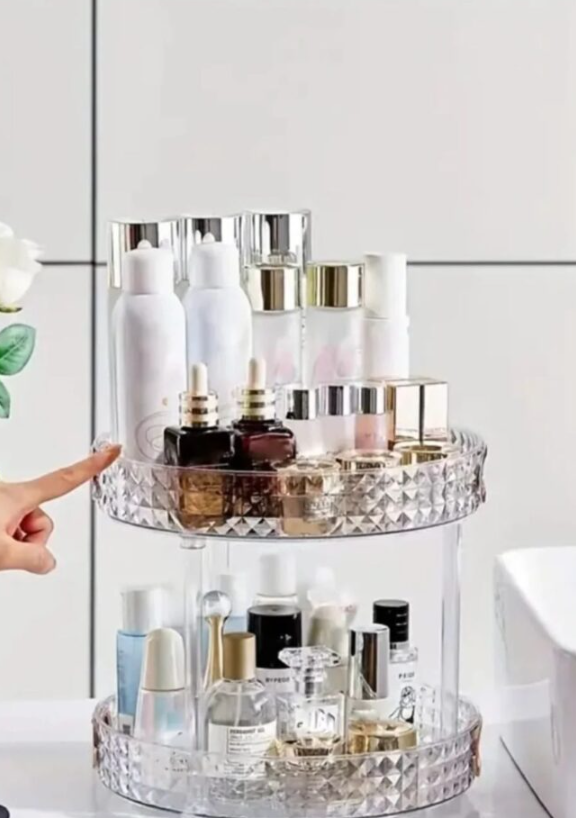
I use the same rotating storage idea for skincare and makeup because small bottles can quickly clutter a bathroom counter. A Lazy Susan gives me one place for the products I use regularly, making my morning routine easier to manage.
I arrange taller skincare bottles and sprays around the tray, provided they fit securely, and place smaller jars, serums, and perfumes in the remaining spaces. A clear acrylic organizer is useful when I want to see the labels without picking up each product.
I keep the tray near my vanity or in a suitable cabinet away from direct water exposure. I also wipe away product residue regularly and avoid overcrowding the surface. That way, I can reach my everyday essentials without turning the counter into another storage pile.
Cooking Hub
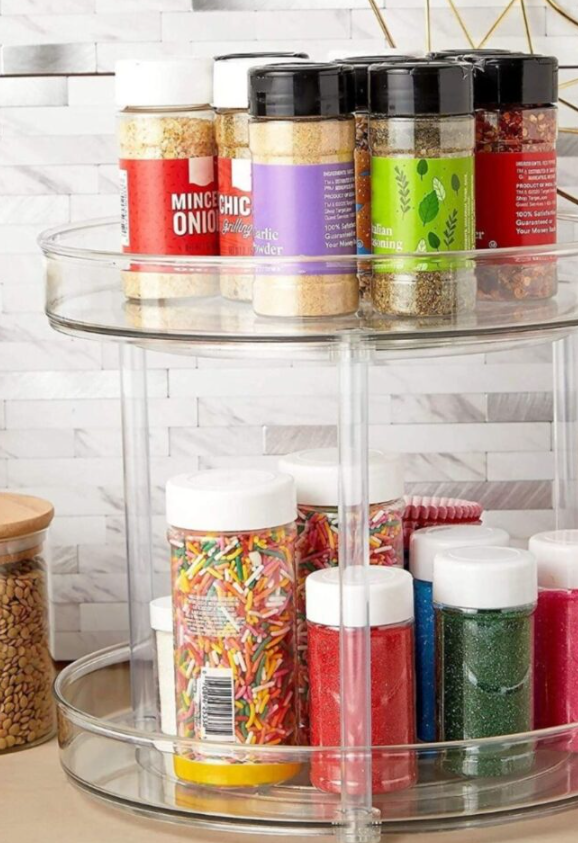
When I cook, I prefer to keep the ingredients I use most often in one convenient place. A divided Lazy Susan can create a compact cooking station for oils, salt, pepper, and frequently used seasonings.
I place small spice jars in their own sections so they stay organized as the tray turns. Bottles of cooking oil and sauces go in secure positions where they can rotate without colliding with nearby containers.
I position the organizer near my food preparation area rather than directly beside a hot burner. Keeping oils away from excessive heat helps protect their quality, while leaving enough room around the stove keeps the cooking area safer. This setup works best when I store only the ingredients I use regularly and move less-used supplies elsewhere.
Yogurt Station
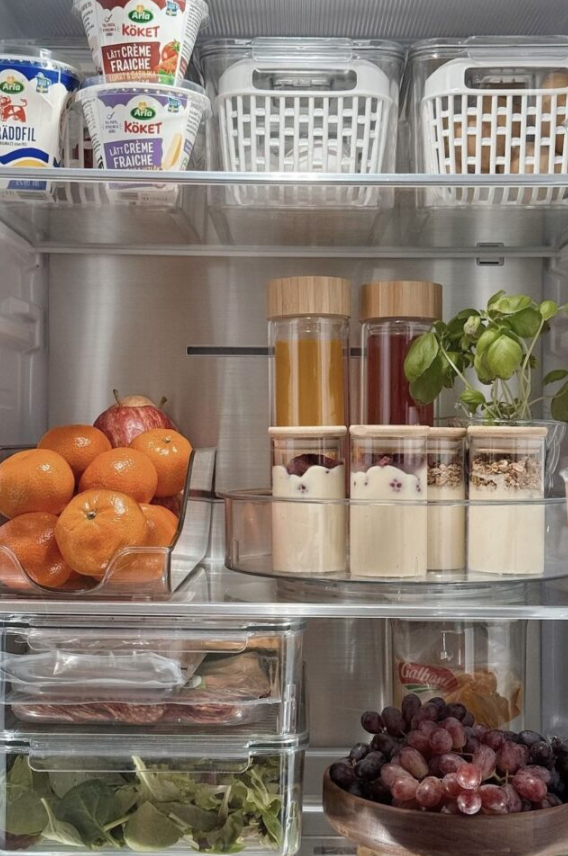
I find that a dedicated snack area can make a busy refrigerator easier for everyone to use. A Lazy Susan is particularly helpful for organizing yogurt cups, pudding containers, and other small snacks that might otherwise disappear behind larger food packages.
I arrange the individual cups around the tray so I can see the available choices with a quick turn. Small containers of suitable toppings can sit in the center if there is enough room and they remain stable.
For families, I like to keep ready-to-eat snacks together on an accessible refrigerator shelf. I make sure the organizer does not block airflow or prevent the refrigerator door from closing properly. I also check expiration dates and keep perishable snacks refrigerated according to their packaging instructions.
Corner Plates
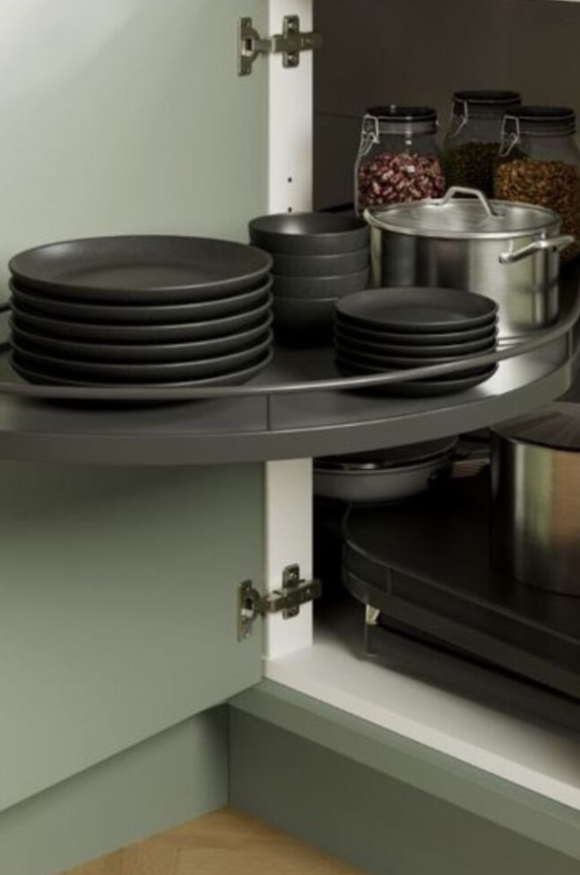
Deep corner cabinets often waste space because plates, bowls, and serving dishes become difficult to reach. A built-in Lazy Susan can help me bring these items forward without having to stretch into the back of the cabinet.
I arrange plates and bowls in stable stacks around the rotating shelf, leaving enough space for the dishes to turn without knocking into one another. Heavier serving pieces should be placed according to the organizer’s weight limits and the cabinet’s design, rather than automatically loading the center or outer edge.
I also avoid stacking dishes too high because they can become unstable when the tray moves. Once everything has a designated place, I can reach the dinnerware I need with less lifting and less rearranging.
Snack Tray
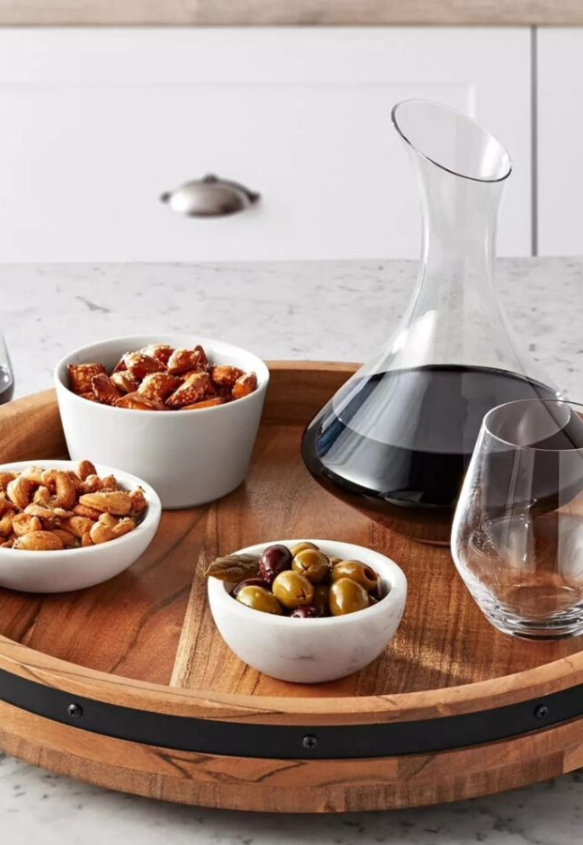
When I entertain guests, I like serving snacks on a large Lazy Susan because everyone can reach the food without stretching across the table. It works well for nuts, olives, crackers, dips, and other small bites arranged in separate bowls.
I use individual serving bowls to keep different snacks apart and place them evenly across the tray. I leave sufficient space between bowls so they do not bump into each other when someone rotates the organizer.
For a dining table or kitchen island, I choose a sturdy tray with a smooth rotating base. If I include drinks or a decanter, I check that the center is wide and stable enough to support them. I also keep the tray away from the table’s edge so it is less likely to tip during use.
Oil Access
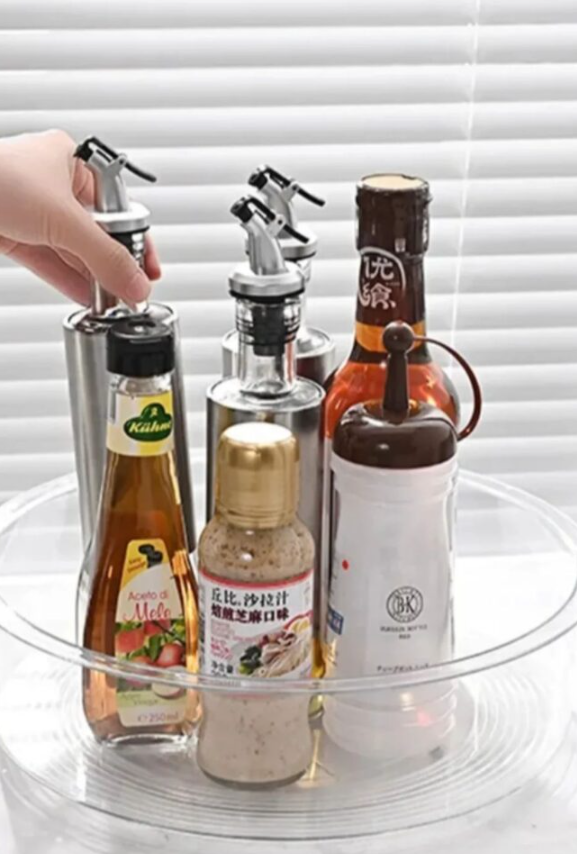
Cooking oils and sauces are easier to manage when I give them a dedicated storage area. A Lazy Susan lets me arrange olive oil, vinegar, soy sauce, and other frequently used liquids in one place rather than spreading them across the counter.
I position bottles so their labels face outward where possible, which makes it easier to identify each one. Taller bottles need enough clearance to rotate safely, while smaller containers can fit into the remaining spaces without crowding the tray.
I prefer to keep the organizer near my preparation area but away from direct heat. I also wipe the tray whenever oil drips onto its surface. A clean, stable organizer makes cooking more convenient and prevents residue from collecting underneath bottles.
Pan Storage
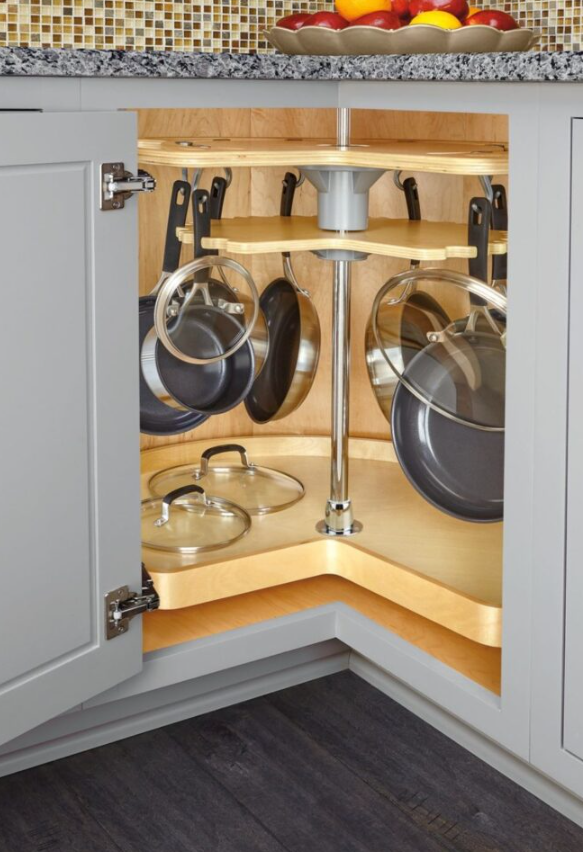
Pans and skillets can take up a surprising amount of space in a deep corner cabinet. I find that a suitable rotating cookware organizer can make it easier to reach individual pieces without lifting an entire stack.
If I use a Lazy Susan with compatible hooks, I hang lightweight pans only where the design specifically supports them. Heavier cookware and lids go on shelves rated for their weight, with enough space to prevent them from sliding or colliding.
Before buying a hanging system, I check the cabinet’s dimensions, shelf clearance, and the organizer’s weight capacity. Not every Lazy Susan is designed to hold hanging cookware, so I choose a model intended for that purpose. This helps me make better use of the cabinet without creating an unstable arrangement.
Pantry Zones
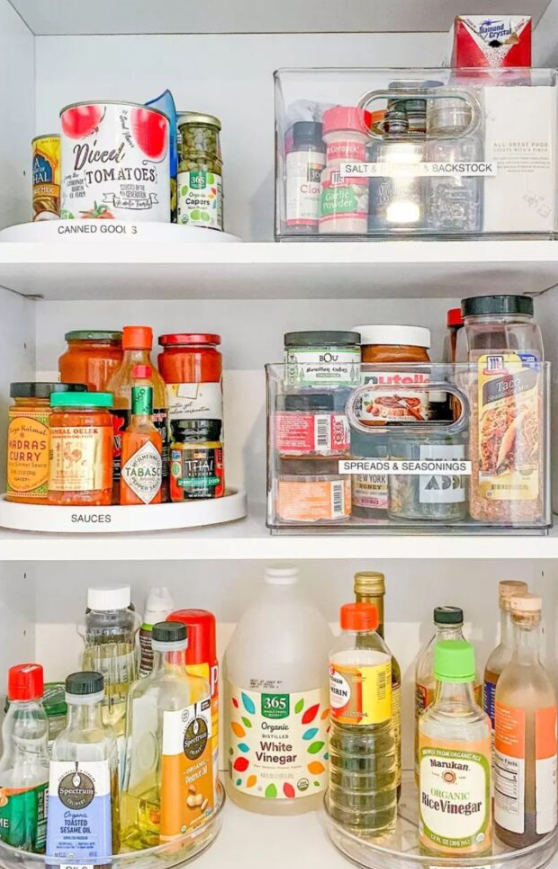
I find that a pantry stays more organized when I divide it into clear categories. A Lazy Susan makes this easier because I can rotate a group of products into view instead of searching behind taller bottles.
I might dedicate one tray to cooking sauces and curry pastes, another to oils, and a third to vinegar and salad dressings. If I have limited space, I use one tray for a single category rather than trying to fit every pantry item onto it.
Labels can help keep each zone consistent, especially when several people use the kitchen. I also place frequently used products where I can reach them easily and check expiration dates during routine cleanups. This approach makes it simpler to see what I already own before buying replacements.
Craft Station
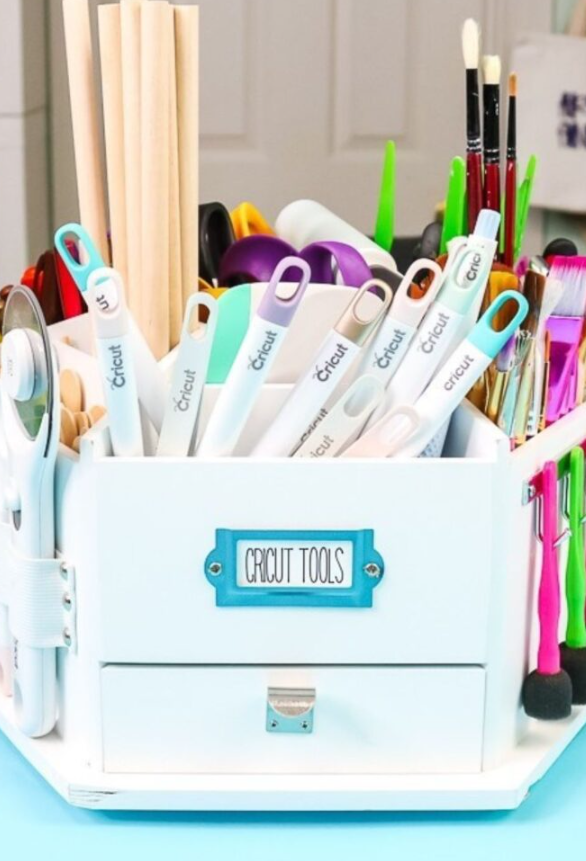
A Lazy Susan can also help organize craft supplies when my desk or worktable starts getting crowded. Instead of keeping markers, brushes, scissors, and small tools scattered across the surface, I can bring them together in one rotating organizer.
I divide the tray into sections based on how I use each item. Markers and paintbrushes can stand upright in suitable containers, while smaller accessories fit into shallow compartments that keep them from mixing together.
I keep sharp tools in secure holders and avoid placing loose items where they could fall as the tray rotates. For a small workspace, I choose an organizer that leaves enough room for the actual project. This gives me convenient access to supplies without sacrificing the space I need to work.
Sauce Carousel
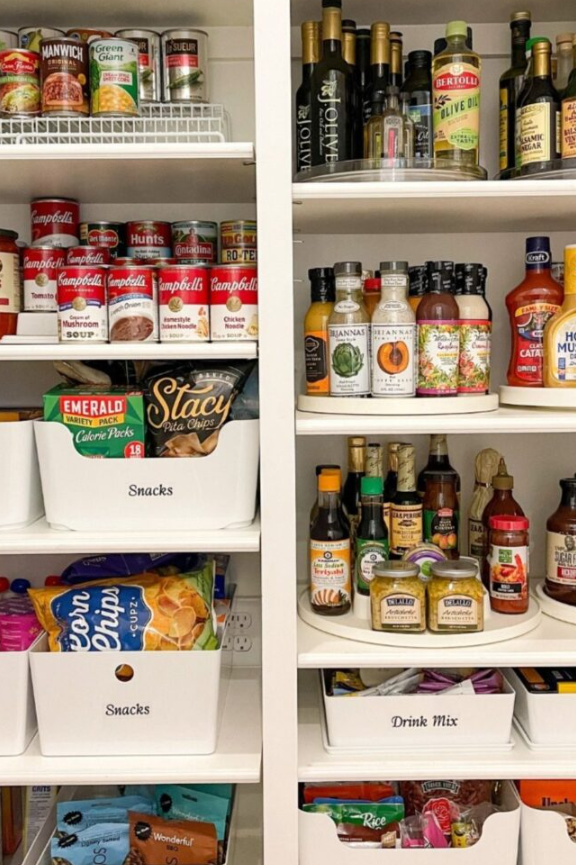
Sauces and marinades can become difficult to find when bottles are arranged in several rows on a pantry shelf. I use a Lazy Susan to create a dedicated sauce section where the labels remain visible and the bottles are easier to reach.
I group similar products together, such as cooking sauces, salad dressings, and marinades. Shorter jars can sit near the front edge if they remain stable, while taller bottles need a position that allows them to rotate without hitting the cabinet or nearby containers.
I also check whether each product belongs in the pantry or refrigerator after opening. Following the storage instructions on the label helps me keep the sauce section organized without overlooking food safety. With a little space between bottles, the tray turns more smoothly and stays easier to clean.
Corner Pantry
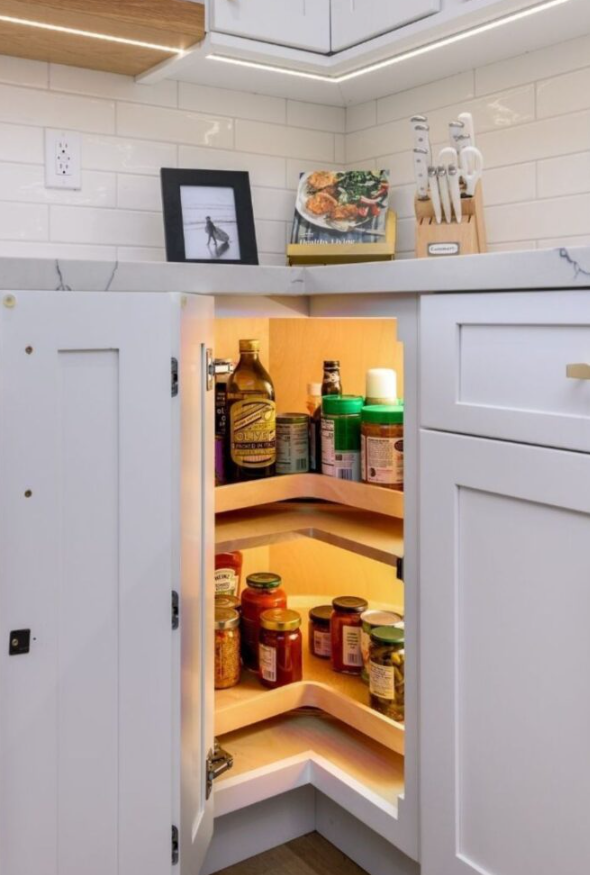
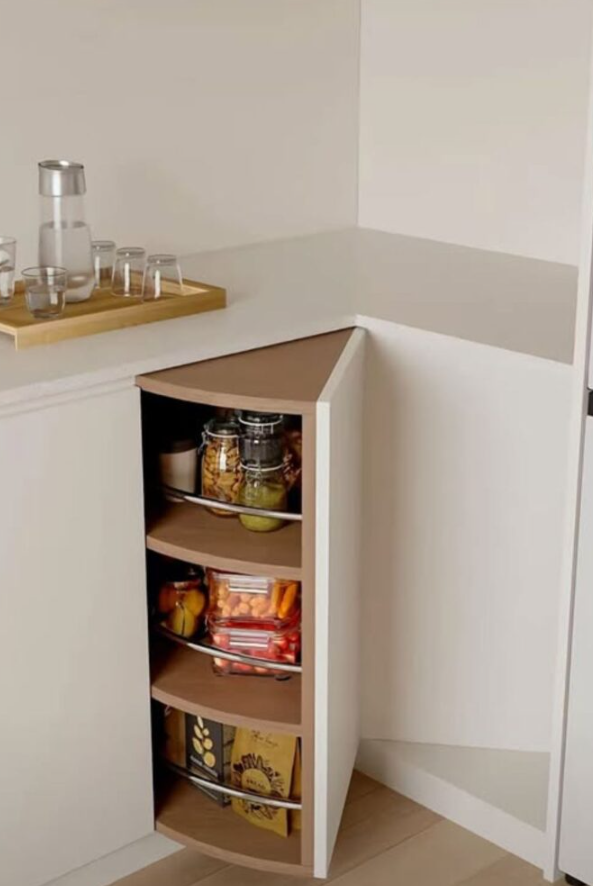
Corner pantries can be awkward to organize because jars and bottles often disappear into the deepest part of the cabinet. A Lazy Susan makes this space more practical by bringing stored items around to the front.
I arrange taller bottles and frequently used pantry products where they can rotate without hitting the shelf above. Smaller jars and condiments fit around them as long as each item remains visible and stable. I avoid piling products on top of one another because this makes them harder to reach.
If the cabinet is poorly lit, I consider adding suitable battery-operated cabinet lighting. Better visibility helps me read labels and notice products that have been pushed out of sight. I also measure the cabinet before purchasing a turntable to make sure the organizer can spin freely.
Dairy Spin

A refrigerator can quickly become cluttered when yogurt tubs, small milk cartons, and other dairy products are scattered across different shelves. I find that a dedicated rotating tray helps keep smaller containers together and makes them easier to see.
I place stable yogurt tubs and appropriately sized dairy containers around the outer part of the tray, leaving room for the organizer to turn. Taller cartons can go in a suitable central position if the design provides enough support and clearance.
I use a food-safe tray that can be removed and washed easily. I also follow the storage instructions on each product and avoid overloading the shelf. Keeping dairy products grouped together makes it easier to check supplies and find what I need during a busy morning.
Appliance Corner
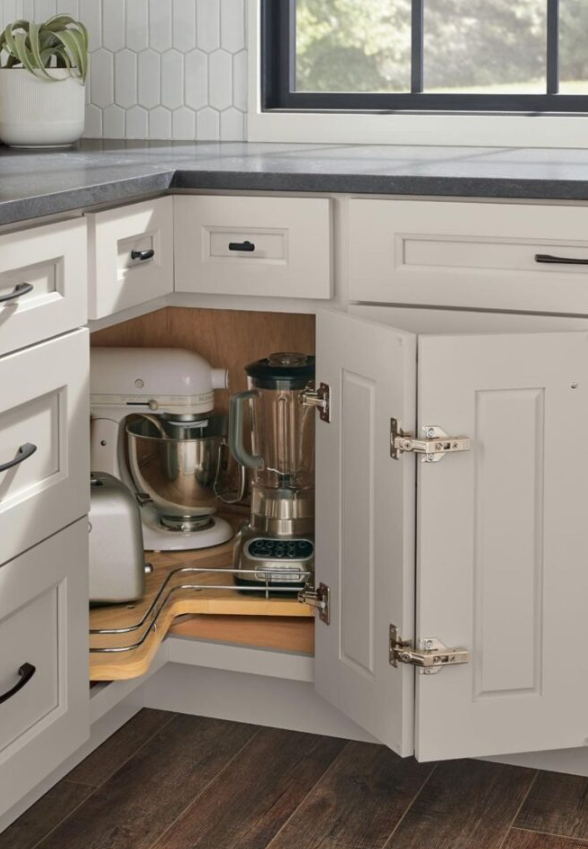
Large kitchen appliances can take up valuable counter space, but storing them in a deep cabinet can make them difficult to reach. I consider a rotating shelf when I want to keep a blender, food processor, or another compatible appliance stored out of sight.
Before placing an appliance on a Lazy Susan, I check the shelf’s weight limit, the cabinet’s dimensions, and the organizer’s stability. Heavy appliances should sit on a surface specifically designed to support their weight, with the load distributed according to the manufacturer’s instructions.
I keep smaller attachments in a separate container so they do not get lost behind the appliance. I also unplug equipment before moving it in or out of storage and make sure the cabinet provides enough clearance for safe handling. A suitable organizer can make stored appliances easier to access without leaving them on the counter all day.
Pot Carousel
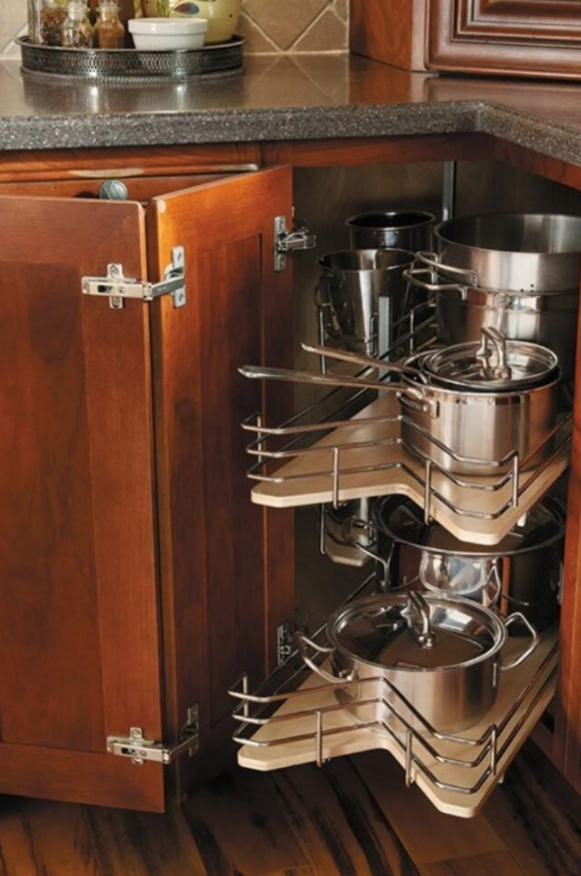
Deep corner cabinets often become difficult to use when pots, pans, and lids are stacked together. I find that a properly fitted pull-out or rotating cookware organizer can reduce the need to remove several pieces just to reach one pot.
I place heavier cookware on the shelves designed to carry the most weight and arrange smaller pans where they can be lifted out easily. If the system has protective rails or dividers, I use them to help prevent cookware from sliding while the shelf turns.
I also separate lids when possible so they do not become wedged between pots. Before loading the organizer, I check the manufacturer’s weight limits and confirm that the shelves move smoothly. This setup makes it easier to find cookware and can help reduce scratches caused by repeatedly moving stacked pieces.
Herb Station
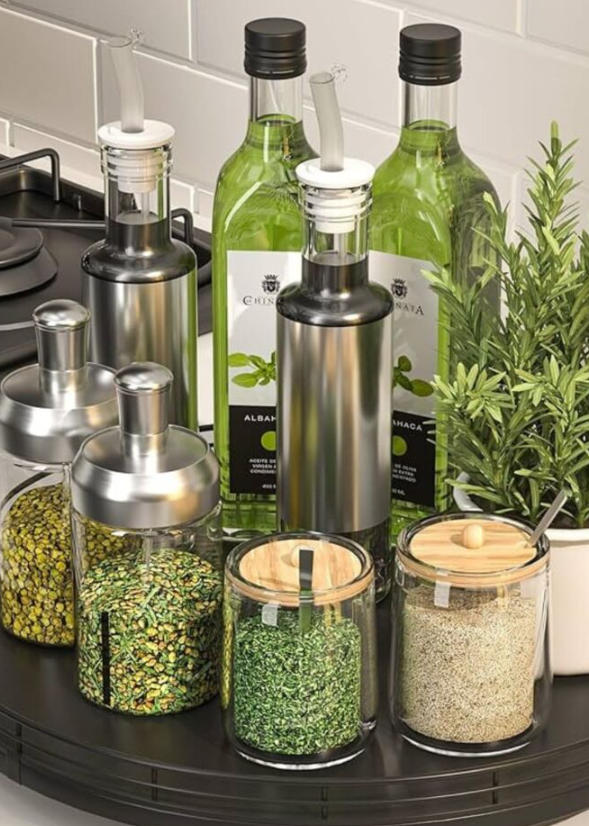
Fresh herbs, seasoning jars, and cooking oils are easier to use when they stay together near my food preparation area. A Lazy Susan can create a compact herb station that keeps the ingredients I reach for most often in one place.
I arrange seasoning containers around the tray and position oil bottles where they can remain upright during rotation. Small herb pots can also fit on a suitable tray, provided there is enough room and the containers will not leak water onto nearby products.
I keep fresh herbs that require refrigeration in the refrigerator rather than leaving them on a warm counter. For herbs stored near the cooking area, I avoid placing them too close to heat or splashes from the stove. This arrangement keeps everyday ingredients accessible while helping me maintain a cleaner preparation space.
Spice Circle

Spice jars are small enough to disappear behind larger containers, especially when I store them in deep cupboards. I use a Lazy Susan to arrange my seasonings in a circle so I can see the labels without moving every jar.
I place frequently used spices, such as cumin, paprika, and garlic powder, in the easiest positions to reach. I group less frequently used seasonings together and use clear, labeled containers when practical.
Matching jars can make the tray look neater, but I focus on readable labels and easy access first. I also keep spices in a cool, dry place away from steam and direct heat. Rotating the tray helps me find ingredients quickly and makes it easier to notice when a spice needs replacing.
Oil Cabinet
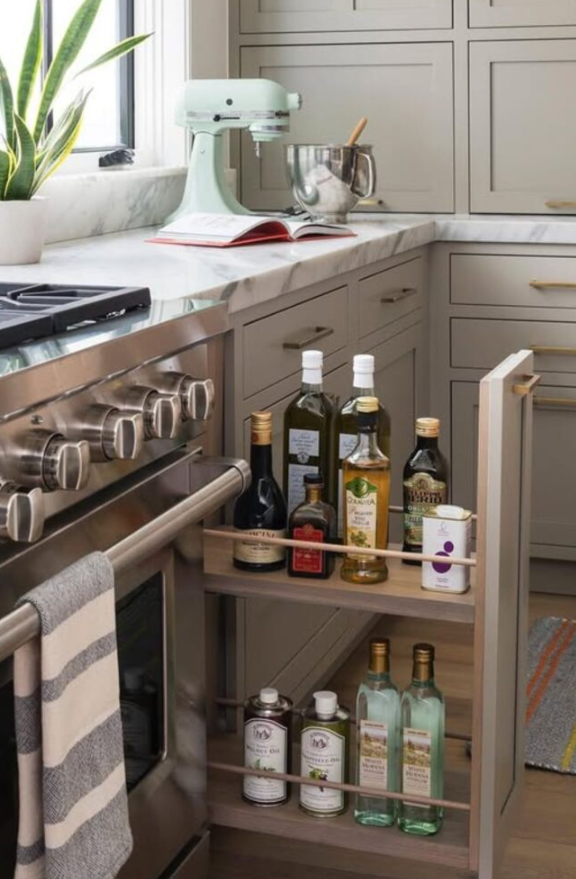
When cooking oils are spread across the counter or stored behind other bottles, finding the right one can take longer than necessary. I use a dedicated cabinet shelf or a suitable pull-out Lazy Susan to keep olive oil, vinegar, and specialty oils organized.
I arrange bottles so I can read their labels and remove them without knocking into neighboring containers. If I choose a two-tier organizer, I check that the lower level has enough clearance for the bottles stored there.
I keep the cabinet away from direct heat and sunlight where possible, since these conditions can affect oil quality. I also wipe bottle bases before returning them to the tray. With a consistent storage spot, I can keep the cooking area less cluttered and find the right ingredient more easily.
Pot Corner
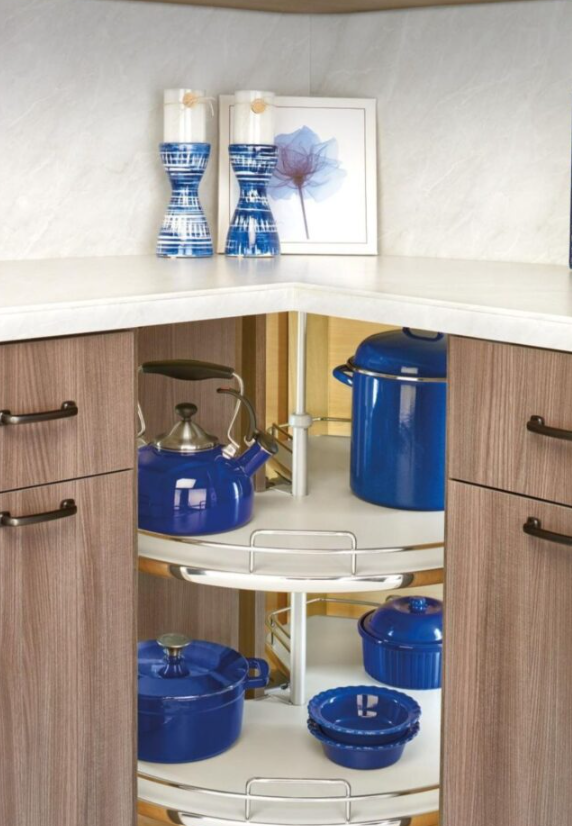
Large pots and Dutch ovens can be awkward to store in corner cabinets, particularly when several pieces are stacked together. I find that a two-tier Lazy Susan can help organize compatible cookware while making individual pieces easier to reach.
I arrange heavier pots according to the shelf’s weight limits and keep them stable during rotation. Smaller saucepans and baking dishes can occupy the remaining space as long as they do not block the tray or interfere with the cabinet door.
I avoid stacking cookware too high or placing heavy items where they could slide off the rotating shelf. When possible, I separate pieces with protective liners to help reduce scratches. This arrangement makes the cabinet more useful and saves me from repeatedly moving several pots to reach the one I need.
FAQs
What size Lazy Susan works best for deep cabinets?
I start by measuring the cabinet’s usable width, depth, and height, including any hinges, pipes, or shelves that might interfere with rotation. The best Lazy Susan is one that fits comfortably and turns without hitting the cabinet walls.
As a starting point, I look for a turntable with roughly 1–2 inches of clearance around its outer edge where the cabinet design allows it. Smaller cabinets may suit a 12-inch organizer, while wider cabinets may accommodate a 15- or 18-inch model. These are general examples, not universal sizing rules, so I always check the product’s actual dimensions before buying.
I also consider what I plan to store. Small spice jars need less space than tall bottles or cookware, while tiered organizers require enough vertical clearance for every level to rotate safely.
How do you keep items from falling off the Lazy Susan?
I keep items from falling by choosing a stable organizer, spreading the weight appropriately, and leaving enough space between containers. Bottles and jars should stand upright, and I avoid overloading the tray or placing items where they can collide as it turns.
Raised edges, divided compartments, and nonslip surfaces can provide extra stability. I also check the organizer’s weight limit and place heavier items according to the manufacturer’s guidance rather than assuming the center or edge is always safest.
Finally, I rotate the tray slowly when it is full and remove any containers that wobble or extend beyond the shelf. A quick check every few weeks helps me spot spills, expired products, and items that need a better storage position.