18 Storage Ottoman Ideas for 2026
A cluttered living room can make even a beautiful space feel untidy. I often notice that everyday items such as blankets, remote controls, magazines, toys, and chargers are the main reasons a room looks messy. Instead of adding more cabinets or shelves, I like the idea of using a storage ottoman to keep these items organized without taking up extra floor space.
A storage ottoman is more than a footrest. It can work as an extra seat, coffee table, side table, shoe bench, or hidden storage unit. Depending on its size and design, I can use one to store cushions, seasonal clothes, books, office supplies, children’s toys, and extra blankets.
In this article, I’ll share 16 practical storage ottoman ideas that can help organize different areas of your home. From compact round ottomans to large modular designs, these options make it easier to control everyday clutter while keeping your living room comfortable and attractive.
Key Takeaways
- I use storage ottomans to hide everyday clutter without adding bulky furniture.
- Large ottomans work well for blankets, cushions, magazines, and extra bedding.
- Small round ottomans provide storage in apartments and tight spaces.
- Bench-style designs offer extra seating and storage near beds and entryways.
- Trays, baskets, and small organizers help keep the inside of an ottoman tidy.
- Choosing the right size, material, and lid style makes everyday use easier.
Hidden Office

A home office doesn’t always need a separate room. Sometimes, I use a small corner of the living room to manage paperwork, chargers, stationery, and other work supplies. However, these little items can quickly take over the coffee table or nearby surfaces.
A long storage ottoman provides a simple place to keep office essentials out of sight. I would use small trays or drawer organizers inside to separate pens, notebooks, scissors, cables, and important papers. This prevents everything from getting mixed together.
Another useful idea is to keep a small reminder board or notepad nearby for appointments and daily tasks. Placing the ottoman against a wall or beside the sofa creates a practical storage spot without making the living room look like an office.
Dual Surface
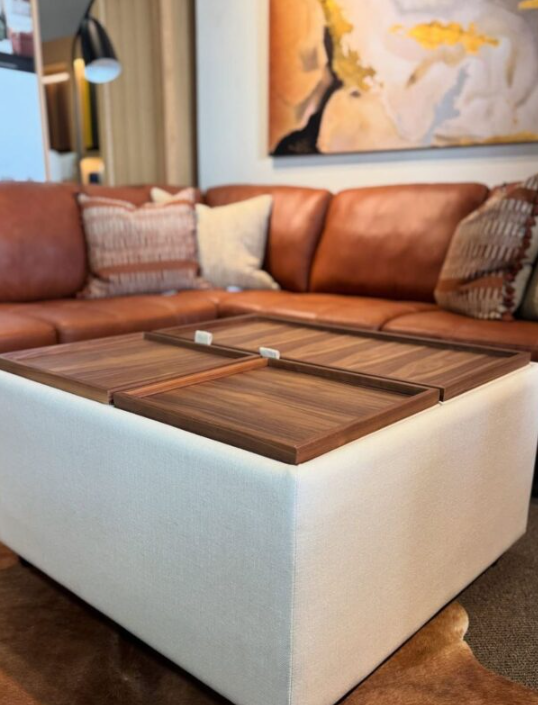
A regular coffee table often becomes crowded with cups, snacks, remote controls, magazines, and decorations. I prefer furniture that offers more than one purpose, and a dual-surface storage ottoman is a good example.
This design combines a hidden storage compartment with a sturdy top that can hold a serving tray, drinks, or decorative accessories. Some models include removable or reversible tops, making it easier to switch between a soft footrest and a firm table surface.
I would place this ottoman in front of the sofa to keep everyday essentials within reach. Before buying one, I recommend checking the weight capacity and whether the top is designed to handle drinks and regular table use.
Soft Minimal

Small living rooms can feel crowded when furniture has heavy shapes and oversized designs. A rounded fabric storage ottoman helps keep the room looking open while providing useful hidden storage.
I would use this style for lightweight blankets, extra cushion covers, books, or small accessories that I don’t need every day. Its soft edges also make it a practical choice for narrow walking areas where sharp furniture corners can get in the way.
Neutral shades such as beige, cream, gray, and soft brown are easy to coordinate with different furniture styles. Placing a rounded ottoman beside an armchair or sofa gives the room a comfortable finishing touch without adding another bulky cabinet.
Cushion Storage
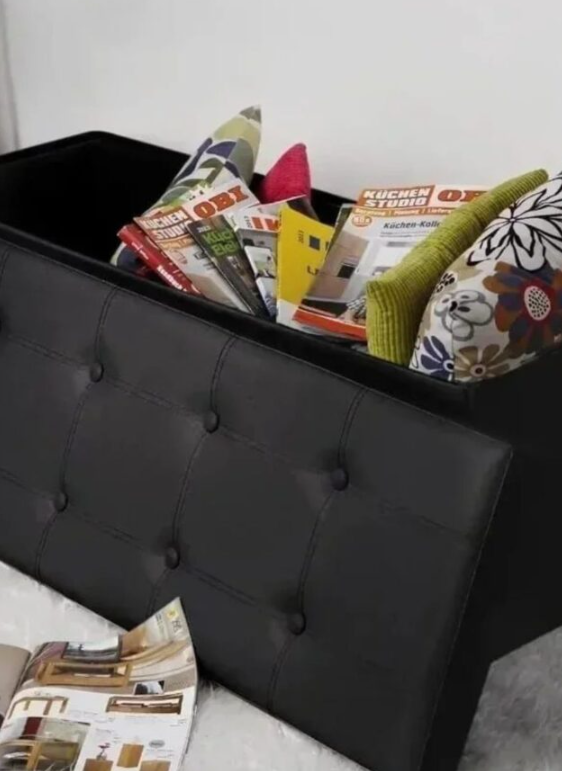
Extra cushions make a sofa more comfortable, but storing them can become a problem when they aren’t being used. I find that large rectangular storage ottomans are especially useful for keeping these soft items together.
The inside can hold decorative pillows, folded throws, magazines, and other lightweight accessories. I would keep similar items in separate groups so I can quickly take out what I need without emptying the entire compartment.
A rectangular ottoman also makes good use of space along a wall or in front of a sofa. If I choose one with a padded top, it can double as extra seating when family or friends visit.
Shoe Storage

Shoes left near the entrance can make an otherwise organized home look untidy. When there isn’t enough room for a full shoe cabinet, a storage ottoman with divided compartments can be a useful alternative.
I like the idea of using individual fabric pockets or sections to keep shoes separated. This makes it easier to organize everyday footwear, slippers, and lightweight shoes without stacking everything on top of each other.
Placing the ottoman near the front door or inside an entryway closet also gives me a comfortable place to sit while putting on shoes. For better organization, I recommend storing only clean and dry footwear inside to prevent moisture and unpleasant odors from building up.
Linen Storage
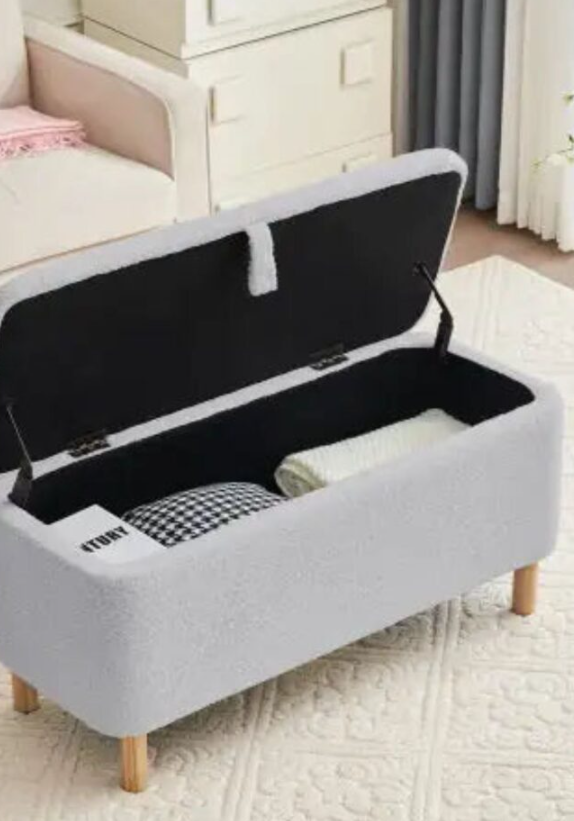
Extra bedsheets, pillowcases, towels, and seasonal bedding can take up a lot of closet space. A bench-style storage ottoman gives these items another place to stay while keeping them easy to access.
I would fold clean linens into separate groups and place them inside the compartment. Smaller fabric organizers can help separate bedsheets from towels and spare pillowcases.
A long ottoman works particularly well along a bedroom wall, near the foot of the bed, or in a spacious living room. I recommend storing only clean, completely dry fabrics inside and avoiding overfilling the compartment so the lid closes properly.
Bedside Bench
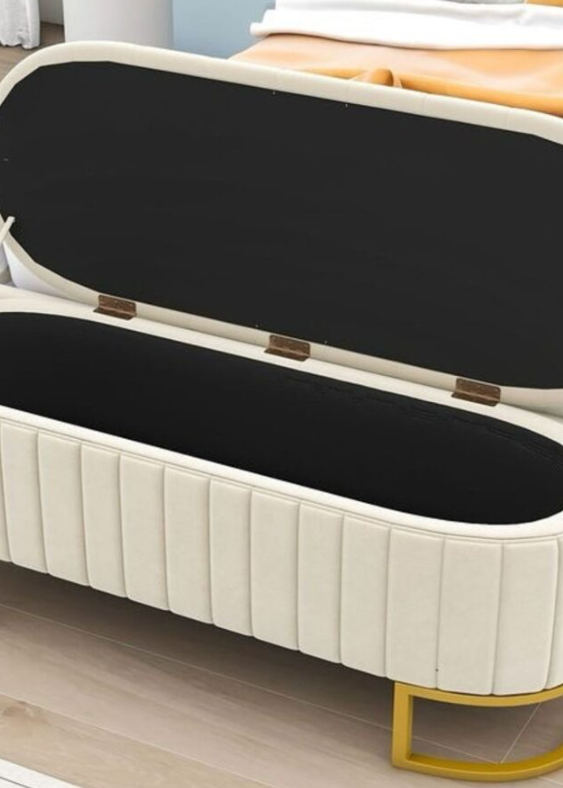
The space at the foot of the bed often goes unused, even though it can provide valuable storage. A storage ottoman bench makes this area more useful by combining a comfortable seat with a hidden compartment.
I would use it for spare blankets, folded clothes, extra pillows, or outfits prepared for the next day. This keeps frequently needed bedroom items close without filling the wardrobe with everything.
The long shape also gives me a place to sit while getting dressed or organizing clothes. When choosing a bedside bench, I recommend measuring the available floor space and leaving enough room to walk comfortably around the bed.
Compact Storage
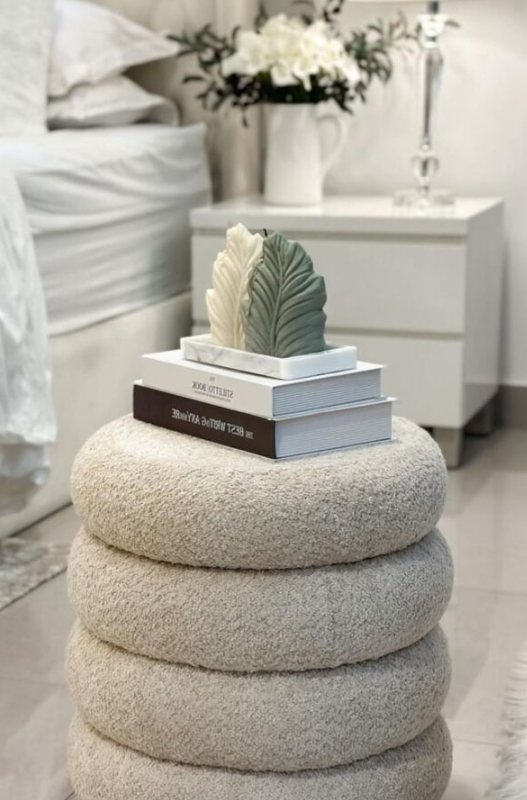
Not every room has enough space for a large storage bench. In smaller apartments, bedrooms, or living rooms, a compact round ottoman can provide extra storage without making the area feel crowded.
I would use a small design for remote controls, phone chargers, reading glasses, small books, and other everyday accessories. Keeping these items in one place makes it easier to find them when needed.
Some round ottomans also work as side tables or footrests. Their smaller size makes them easy to move between the sofa and bedroom. I recommend checking the inside measurements before buying one because the exterior size doesn’t always tell you how much usable storage it offers.
Hidden Essentials

Some of the messiest areas in a living room come from things we use every day but rarely put away. Pet toys, spare throws, children’s books, and small household accessories can quickly spread across the floor.
A low, curved storage ottoman gives these items a dedicated place while keeping them close to the seating area. I would use it for things that need to be available throughout the day rather than storing items that I rarely use.
This design works well in front of a sofa or beside a comfortable chair. If children or pets regularly use the living room, I recommend choosing a stable ottoman with rounded edges and a lid that opens and closes safely.
Shoe Bench
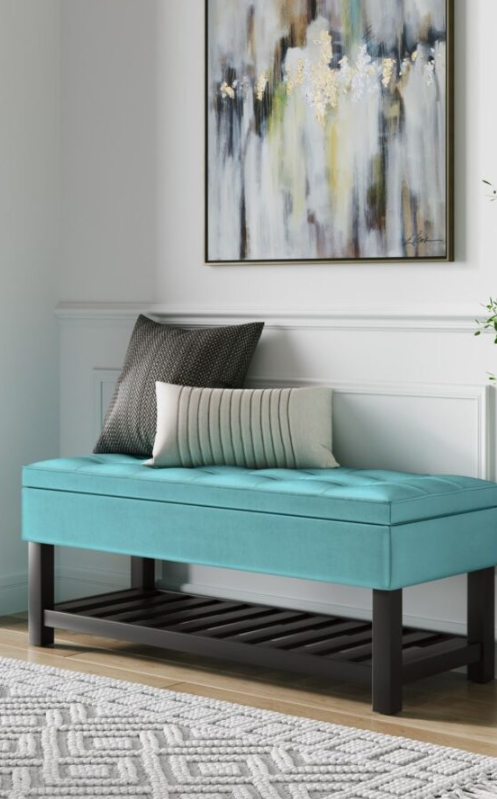
A shoe bench is another practical way to manage clutter near the entrance. Unlike a completely enclosed storage ottoman, this style often includes an open shelf underneath the cushioned seat.
I would place it near the front door and use the lower section for everyday shoes. This keeps footwear off the floor while making each pair easy to reach when leaving the house.
The padded top provides a comfortable place to sit while putting on or removing shoes. For a small home, this combination is especially useful because it offers seating and shoe organization in one compact piece of furniture.
Modular Storage
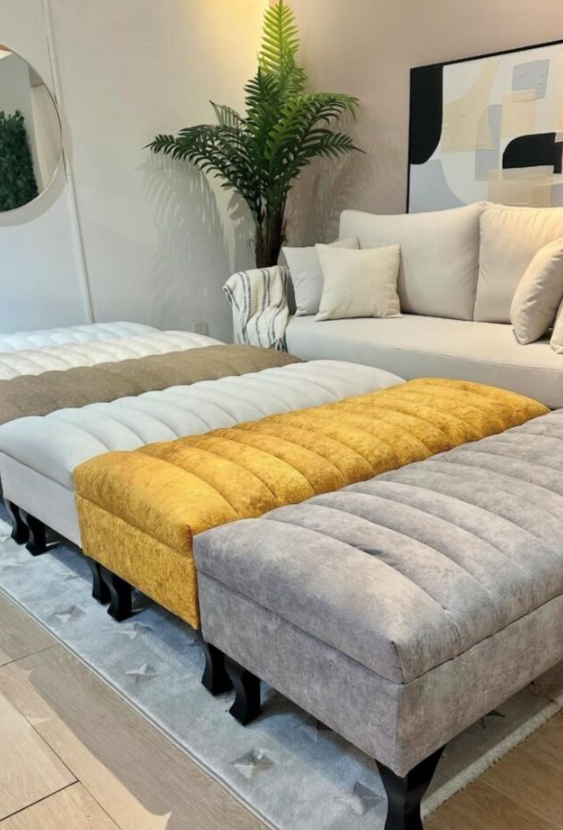
Large living rooms sometimes need more than one storage area, especially when several family members share the same space. Modular storage ottomans make it easier to organize different belongings without relying on one oversized furniture piece.
I like the idea of using separate ottomans for different purposes. One can hold blankets, another can store magazines and books, and a smaller one can keep remote controls and other daily essentials.
The best part is that modular pieces can be moved around whenever the room layout changes. I can arrange them together for additional seating or separate them near different areas of the living room.
This setup is particularly useful for busy family spaces where toys, cushions, and everyday accessories tend to collect in several places.
Kid Storage

Keeping children’s belongings organized can be challenging when toys, coloring books, puzzles, and art supplies are used throughout the living room. Small storage ottomans make cleanup easier without requiring large storage cabinets.
I would assign a separate ottoman to each category. One can hold toys, another can store books, and a third can keep crayons, paper, and other craft supplies.
Ottomans with handles are especially convenient because they are easier to move between the play area and living room. For younger children, I recommend lightweight designs with stable bases and child-safe lids to reduce the risk of trapped fingers.
Keeping the storage close to the play area also encourages children to put their belongings away after playing.
Cozy Storage
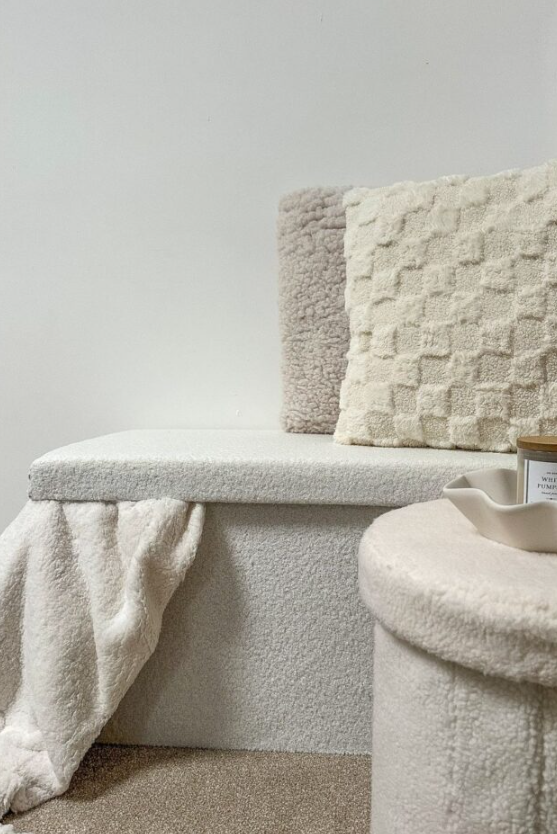
A comfortable living room needs a place for extra blankets and cushions, especially during colder months. Without proper storage, these items often remain piled on the sofa or tucked into random corners.
A soft fabric storage ottoman offers a simple solution. I would use the compartment for folded throws, spare pillow covers, and lightweight seasonal accessories.
Placing it beside a reading chair or near the sofa makes it easy to take out a blanket whenever needed. Textured fabrics, neutral colors, and simple shapes also help the ottoman blend with the existing furniture.
My tip is to avoid using the compartment for damp blankets or recently washed fabrics that haven’t dried completely. Proper airflow and clean storage help prevent musty smells.
Coffee Storage

Coffee tables are often the first place where everyday clutter collects. Books, remotes, chargers, coasters, and small accessories can quickly cover the entire surface.
A large storage ottoman can replace a traditional coffee table while providing additional hidden space. I would keep frequently used items inside and place a decorative tray on top for drinks, candles, or a small vase.
The tray is particularly helpful because it creates a firm surface for items that shouldn’t sit directly on upholstered fabric. It can also be lifted whenever I need to access the storage compartment.
Before choosing this style, I recommend checking the ottoman’s height against the sofa. A comfortable height makes it easier to reach drinks and other items without stretching.
Central Storage

When different household items are scattered throughout the living room, having one central storage area can make a big difference. A square storage ottoman placed in the middle of the seating arrangement can serve this purpose.
I would use it to store remote controls, small blankets, magazines, chargers, and other items that everyone in the family uses. This gives everyday belongings a fixed location instead of allowing them to spread across the room.
The square shape also provides a useful surface for a serving tray or decorative accessories. It can work as a footrest, an occasional seat, and a coffee table alternative.
I recommend measuring the distance between the sofa and surrounding furniture before placing it in the center. There should be enough room to walk around and open the lid comfortably.
Blanket Storage
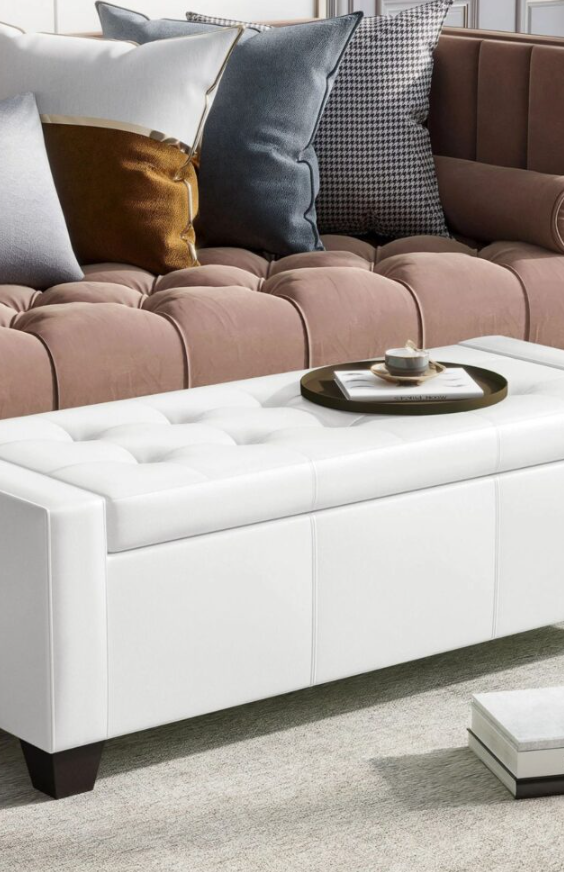
Extra blankets are useful throughout the year, but they can make a living room look messy when left on the sofa. A long storage ottoman provides enough space to keep these items together and out of sight.
I would fold throws and lightweight blankets before placing them inside. This makes better use of the available space and prevents everything from becoming tangled at the bottom.
A long design placed directly in front of the sofa can also serve as a coffee table alternative. Adding a removable tray on top gives me a convenient surface for drinks and decorations.
For seasonal storage, I recommend washing and completely drying blankets before putting them away. This helps keep fabrics fresh and ready for the next time they’re needed.
Statement Storage
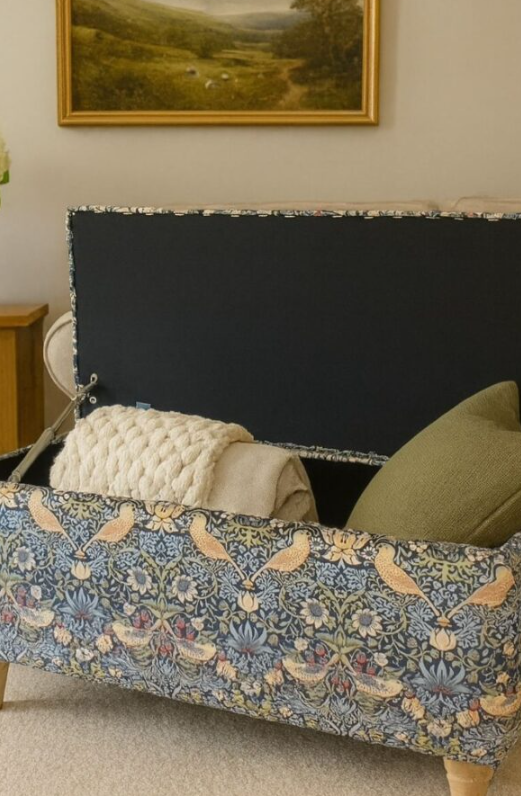
Storage furniture doesn’t have to look plain. A patterned or brightly colored ottoman can become an attractive feature in the living room while providing useful space for everyday belongings.
I would choose a design with interesting fabric, prints, or texture to add personality to a neutral room. Inside, it can hold extra cushions, folded blankets, decorative throws, and other soft accessories.
The key is to balance the pattern with the rest of the furniture. If the sofa and curtains already have bold designs, a simpler ottoman may work better. However, in a room with neutral colors, a patterned piece can add character without requiring additional decorations.
This is a good option when I want storage furniture that also contributes to the overall look of the room.
Accent Storage
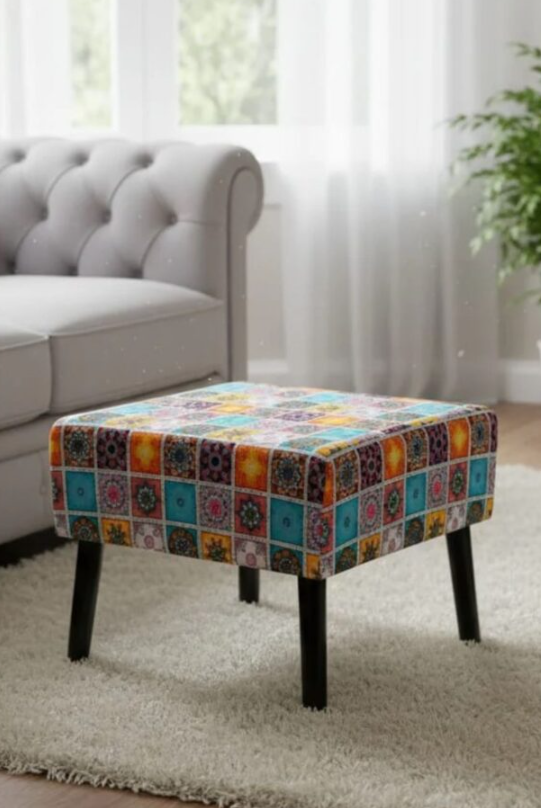
A small accent ottoman can make a living room more organized without looking like another storage box. I like this option for homes where furniture needs to serve a practical purpose while also adding color and style.
The compartment can hold small items such as chargers, remote controls, reading glasses, and children’s toys. Keeping it close to the sofa makes everyday cleanup quicker because I don’t need to walk across the room to put things away.
A distinctive fabric or colorful pattern can also make the ottoman stand out against plain furniture. I would keep the inside limited to regularly used belongings so it doesn’t turn into another place where unwanted clutter collects.
FAQs
Are storage ottomans actually useful for everyday living rooms?
Yes, storage ottomans are useful when everyday belongings don’t have a proper place. I find them particularly helpful for storing blankets, magazines, remote controls, toys, and other small household items.
They can also serve several purposes at once. Depending on the design, I can use one as a footrest, extra seat, coffee table alternative, or hidden storage unit.
For small living rooms, this combination can be especially helpful because it reduces the need for separate furniture pieces.
How do you keep a storage ottoman organized instead of messy inside?
I recommend dividing the available space into categories instead of throwing everything into one compartment. For example, keep blankets together, remote controls in a small tray, and children’s toys in a separate fabric basket.
Here are a few simple ways I would maintain an organized storage ottoman:
- Use small organizers: Separate chargers, stationery, and other tiny belongings.
- Group similar items: Keep blankets, cushions, and magazines in their own sections.
- Store frequently used items on top: Place everyday essentials where they’re easy to reach.
- Avoid overfilling: Leave enough room for the lid to close properly.
- Clean it regularly: Remove everything occasionally and wipe the inside according to the manufacturer’s care instructions.
A quick weekly check can prevent the compartment from becoming another cluttered storage space.