20 Closet Door Storage Ideas for 2026
Narrow Closet Door Storage Ideas to Maximize Every Inch of Space
A narrow closet door may not look like a useful storage spot, but I see it as an easy way to make better use of a small home. With the right organizer, I can keep shoes, cleaning supplies, accessories, toys, and everyday essentials neatly arranged without filling the closet shelves.
In this guide, I’m sharing 18 practical narrow closet door storage ideas, from wire baskets and pocket organizers to shoe racks, craft shelves, and nursery storage. I’ll also explain how to choose slim organizers, keep frequently used items within reach, and avoid putting too much weight on the door.
Key Takeaways
- Use vertical space: I can turn the back of a narrow closet door into extra storage without taking up valuable floor space.
- Choose slim organizers: Shallow baskets, fabric pockets, hooks, and narrow shelves help me store more while allowing the door to close properly.
- Group similar items: Keeping shoes, cleaning products, accessories, and household supplies in separate sections makes everyday tasks easier.
- Keep heavy items low: I place heavier products in lower baskets and reserve upper sections for lightweight belongings.
- Check the door first: Before installing anything, I check the door’s construction, available clearance, and weight capacity to avoid damage.
Wire Baskets
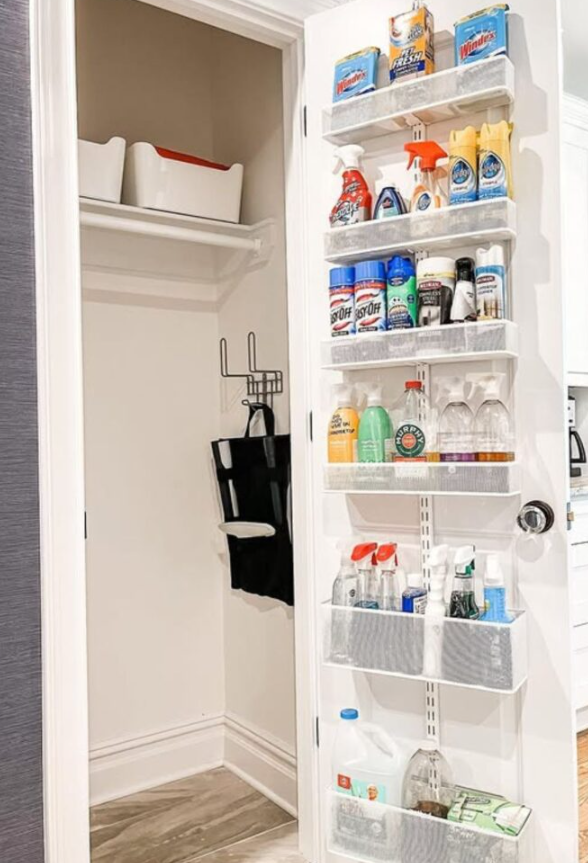
I like wire baskets for narrow closet doors because they keep everyday supplies visible and easy to reach. A vertical arrangement makes good use of the available height while freeing up shelves for larger items.
I can use separate baskets for cleaning sprays, wipes, air fresheners, and refill bottles. Deeper baskets near the bottom are better for heavier products, while shallow baskets above work well for smaller supplies.
For a flexible setup, I recommend an adjustable rail system that lets me move baskets as my storage needs change. Before installing one, I check the door’s strength and make sure the baskets will not hit nearby walls or shelves when the door opens.
Pocket Organizer

A hanging pocket organizer is one of the simplest ways I can organize small items on a narrow closet door. Its fabric compartments provide separate spaces for socks, lotions, hair accessories, toys, and other belongings that often get lost in drawers.
I prefer putting lightweight items in the upper pockets and reserving deeper compartments for slightly larger products. This keeps everything easy to find without making the organizer bulky.
Over-the-door hooks are a convenient choice when I want to avoid drilling holes, especially in a rental home. I still check the hook fit and door clearance before hanging the organizer so it does not interfere with closing the door.
Door Shelves
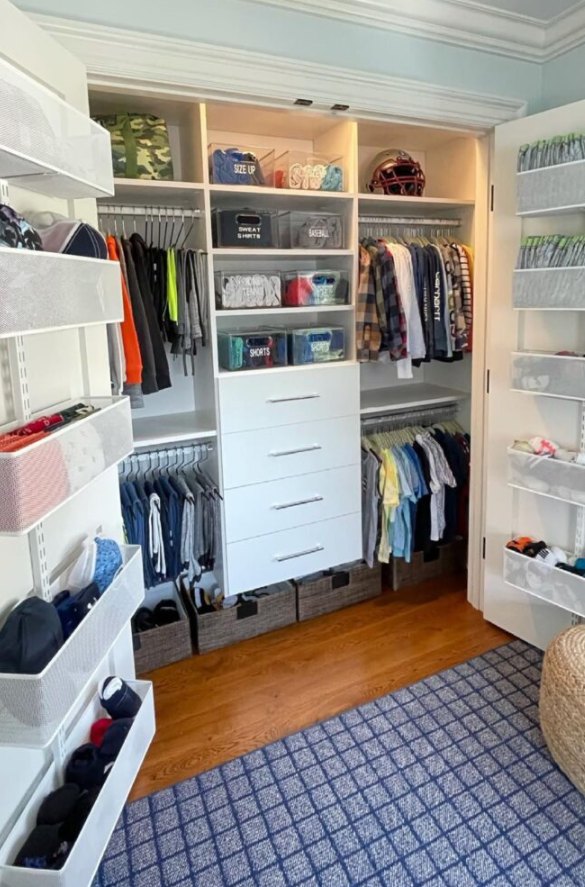
I can turn unused space behind a closet door into practical storage with slim mounted shelves. This works particularly well when I need separate places for accessories, folded clothing, hats, gloves, or small household supplies.
Narrow shelves near the top can hold lightweight items, while deeper compartments below can store larger belongings. Adjustable rails are useful because I can change the shelf spacing as my needs change.
Before choosing this setup, I measure the distance between the door and nearby shelves or walls. I also check whether the door can support the mounting hardware, since even shallow shelves can become heavy when filled.
Shoe Holders
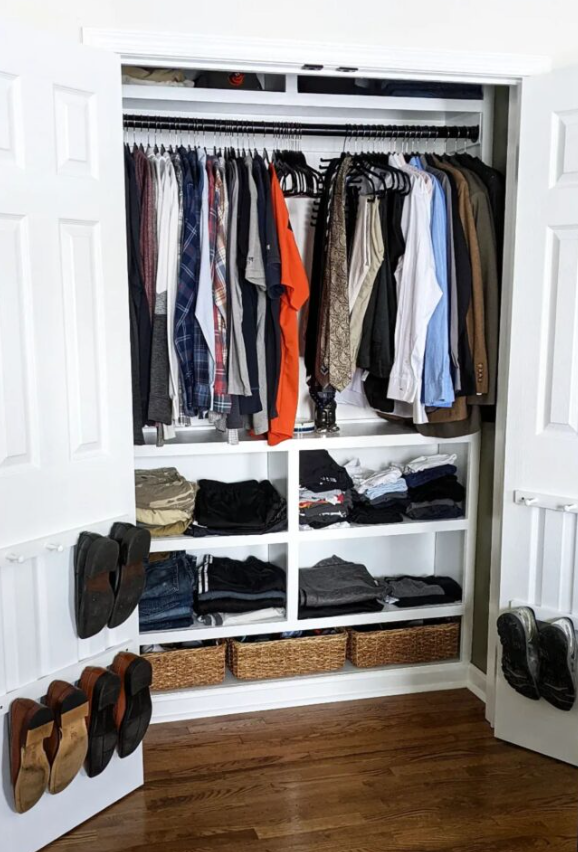
Shoes can quickly take over a small closet floor, leaving little room for baskets or other storage. I use door-mounted shoe holders to move suitable pairs off the floor and keep them easy to see.
Slim horizontal brackets work well for lightweight shoes such as sandals, flats, and loafers. I arrange the rows with enough space between them so that each pair can be removed without disturbing the others.
This idea is useful in bedroom closets, entryway closets, and compact wardrobes. Before installing a shoe holder, I check the shoe sizes, rack depth, and available clearance to make sure the door can open and close without catching on nearby furniture.
Craft Shelves
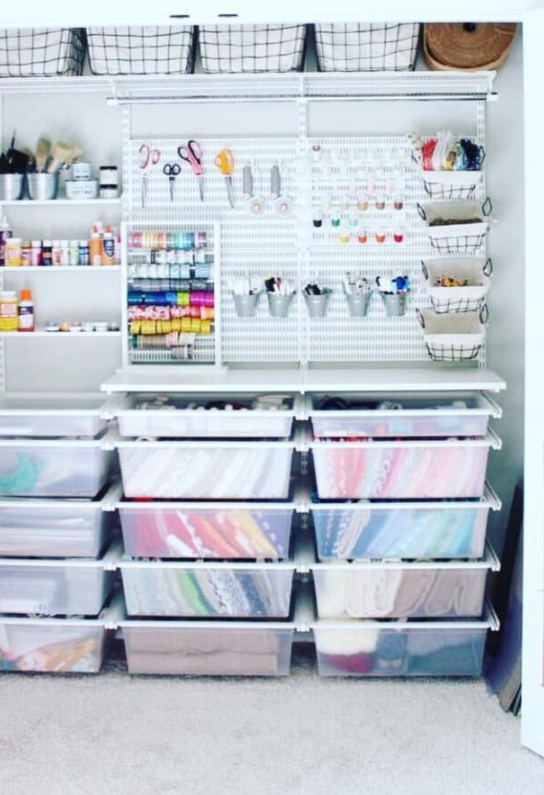
When craft supplies begin spreading across a desk, I find that narrow door shelves can provide a useful alternative to bulky drawers. They create a dedicated place for ribbon, tape, markers, paint bottles, and small containers.
I organize the shelves by activity or material type so I can find what I need without searching through mixed supplies. Shallow ledges are especially useful for small items that I use frequently.
This arrangement works well in craft rooms, hobby closets, and gift-wrapping areas. I make sure bottles are stable, heavier materials are kept on stronger lower shelves, and small items are secured so they do not fall when the door moves.
Bathroom Baskets
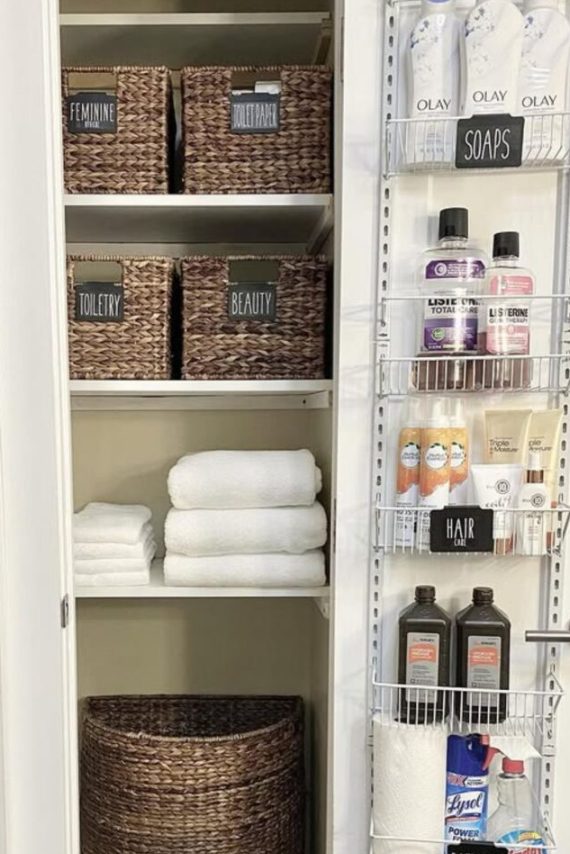
Bathroom and linen closets often become crowded with toiletries, lotions, soap, cleaning products, and spare towels. I can free up some shelf space by adding shallow baskets to the back of a suitable closet door.
I use separate baskets for personal care products, bathroom cleaners, and extra supplies. Smaller bottles fit well in the upper baskets, while larger items can go in lower baskets if the door and mounting system can safely support their weight.
For this setup, I choose materials that are easy to wipe clean and suitable for the room’s moisture levels. I also keep cleaning chemicals away from children and separate them from toiletries to avoid accidental misuse.
Laundry Storage
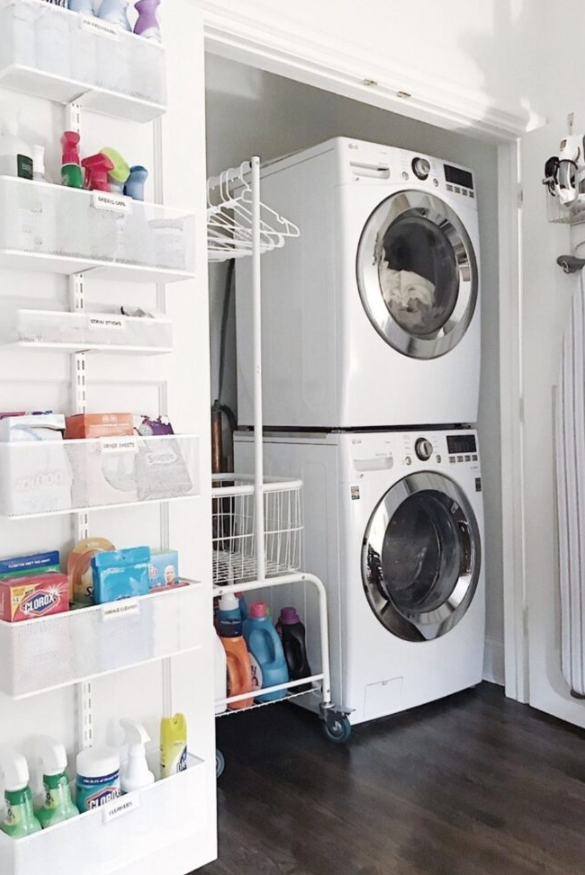
Laundry supplies can take up a surprising amount of room when detergent, stain removers, dryer sheets, and other products share the same shelf. I use vertical door baskets to give each category its own place.
Smaller baskets can hold dryer sheets, laundry pods, and stain-treatment products, while stronger lower baskets can hold heavier bottles. Grouping related items together makes it easier to find everything when I am doing laundry.
I check the weight limit before adding liquid detergent or large refill containers. I also store laundry products in their original containers and keep them out of children’s reach, particularly when the laundry area is easy for little ones to access.
Entry Organizer
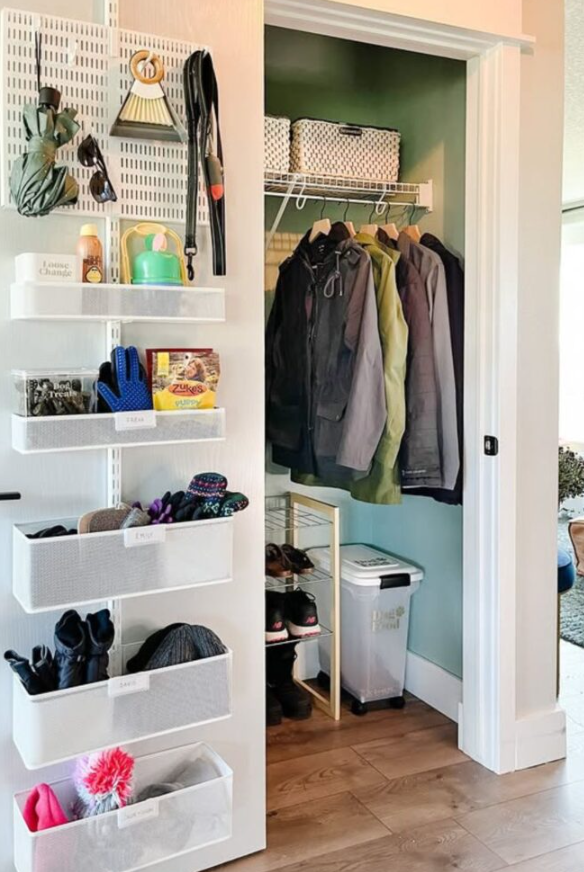
I find an entry closet more useful when everyday essentials have a clear place near the door. A vertical rail system with shallow baskets can hold gloves, hats, sunglasses, dog leashes, and other items I need before leaving home.
To make the setup easier for everyone, I can assign a basket to each family member and add simple labels. A small pegboard or a few suitable hooks can provide extra space for keys and lightweight accessories.
This arrangement helps reduce last-minute searching and keeps small belongings from collecting on tables or closet shelves. I position frequently used items at a comfortable height and avoid hanging anything that could obstruct the doorway.
Hat Hooks
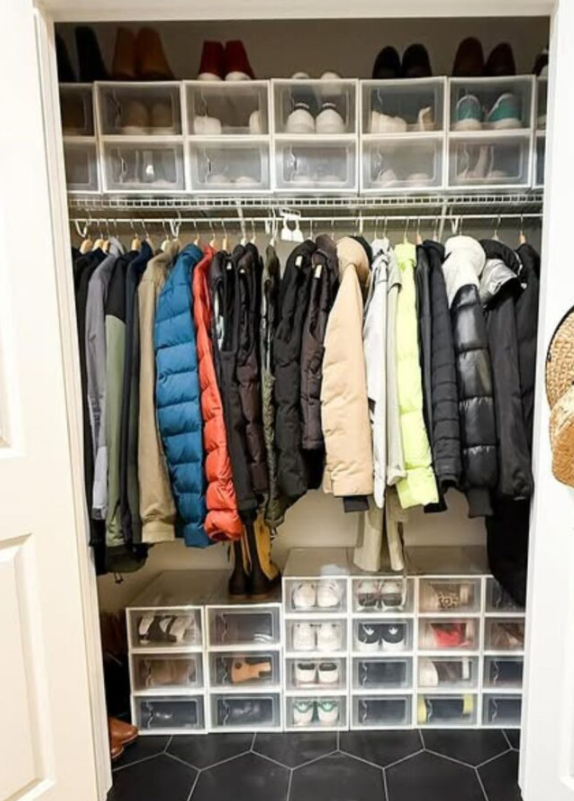
Hats can lose their shape when they are squeezed into crowded drawers or stacked under other belongings. I prefer using a few evenly spaced hooks on the inside of a closet door to keep caps, beanies, and lightweight hats organized.
Arranging the hooks in vertical rows makes good use of a narrow surface. I leave enough space between them so that hats do not overlap too much or become difficult to remove.
Adhesive hooks may work for lightweight hats, while screw-mounted hooks can offer a more secure option when the door supports them. I always follow the manufacturer’s weight limits and check whether the hooks will catch on the closet frame.
Sandal Storage
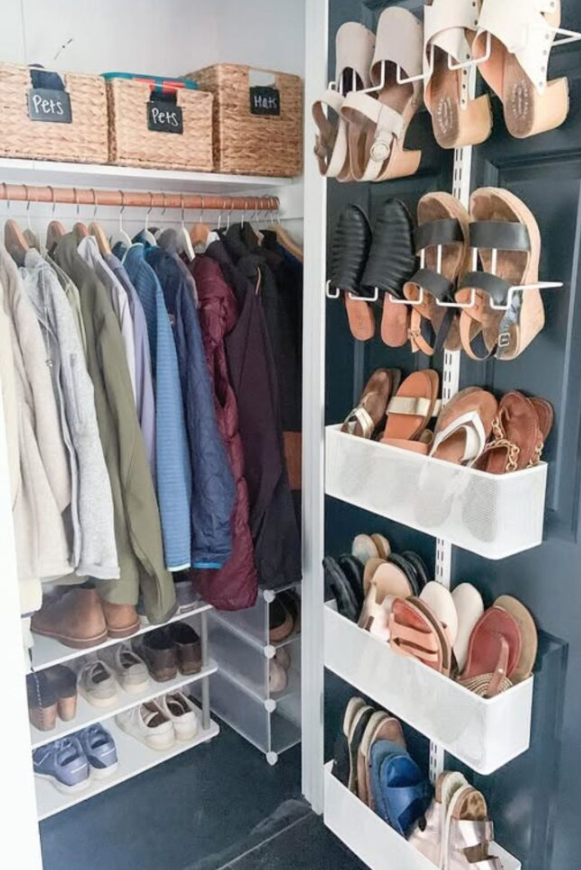
Sandals and flip-flops often become mixed together on closet shelves, particularly when I store seasonal footwear in a small wardrobe. A vertical door organizer gives each pair a defined place and keeps the closet floor clearer.
I choose slim brackets or purpose-built holders that fit the shape of the footwear. Lightweight slides and flip-flops can go in the upper rows, while larger pairs can sit lower if the organizer is designed to support them.
This approach is especially useful for warm-weather shoes that I want to keep accessible during the summer. Before buying a rack, I measure the available door width and check that the footwear will remain secure when the door moves.
Pantry Baskets
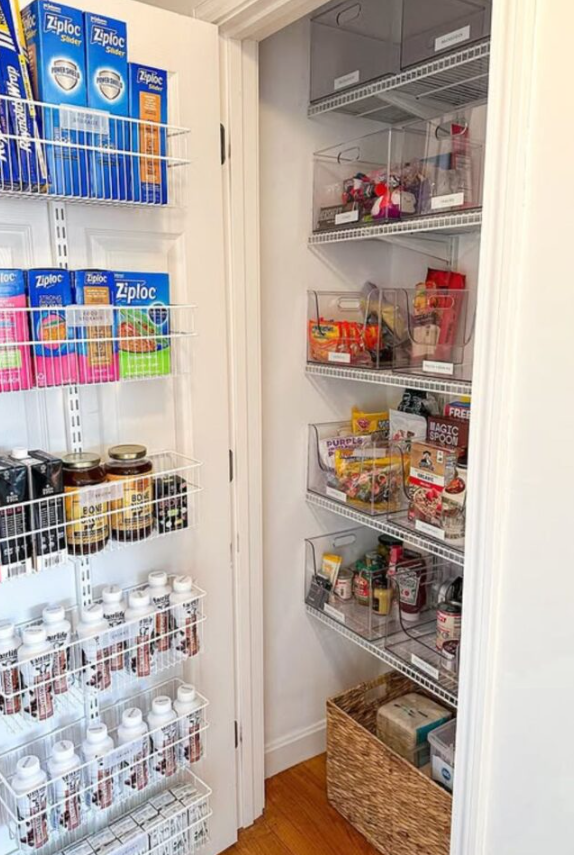
Kitchen cupboards can become crowded with snack packets, food-storage bags, foil, wraps, and small bottles. I can use the inside of a suitable pantry door to store these items without taking up as much room on the main shelves.
Shallow wire baskets work well for lightweight packets, while deeper baskets can hold larger packaged goods. I group similar items together so that snacks, wraps, and cooking accessories are easy to locate.
For food storage, I choose clean, dry baskets and avoid overloading the door with heavy jars or bottles. I also check that the organizer does not interfere with pantry shelves or prevent the door from closing completely.
Sneaker Rack
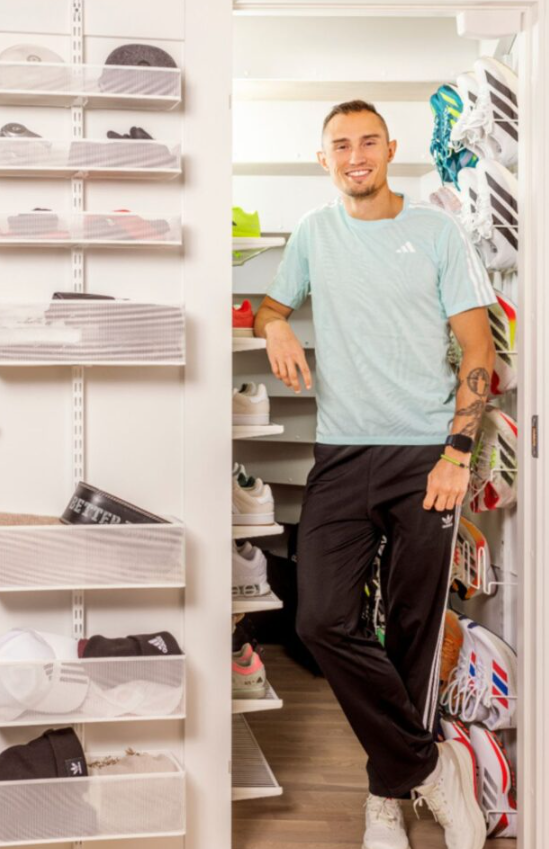
Sneakers can occupy a large amount of closet space when I keep every pair on the floor or separate shelves. A vertical sneaker rack helps me arrange suitable pairs in one organized area.
I look for holders that support the shoes securely without putting too much pressure on their shape. Slim metal racks can work well for everyday trainers and casual sneakers, provided there is enough clearance for the shoe size.
I arrange frequently worn pairs where I can reach them easily and place less-used footwear higher or lower as appropriate. Before installing the rack, I check the combined weight of the shoes and the rack’s mounting requirements.
Bow Display
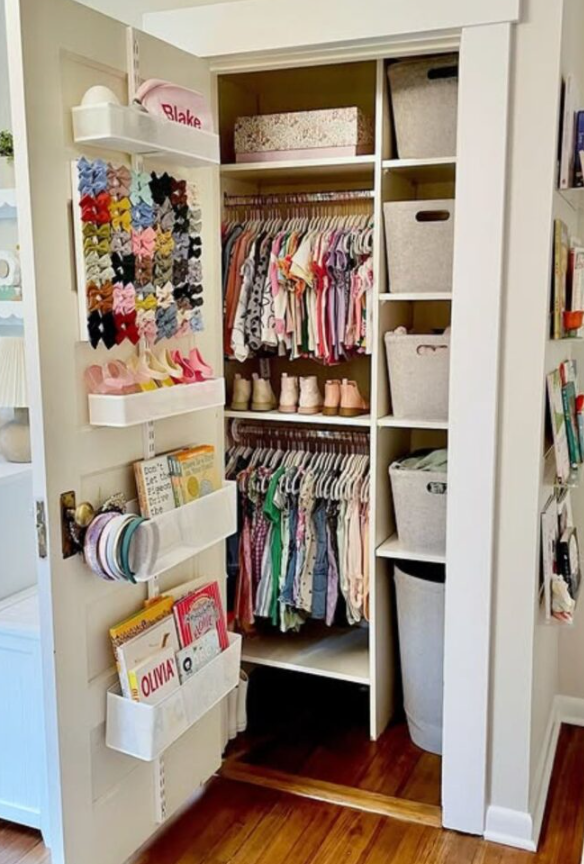
Hair bows and clips are easy to misplace when they are stored together in a drawer. For a child’s closet, I like the idea of using a ribbon board on the inside of the door to keep these small accessories visible.
I can attach several rows of ribbon or elastic to a secure backing and arrange bows by color, size, or style. This makes it easier to choose matching accessories while keeping the main drawer space free.
A small shelf underneath can hold headbands or other lightweight items if there is enough room. I make sure the display is firmly attached and keep small clips and accessories out of reach of babies and young children who might put them in their mouths.
Clear Pockets
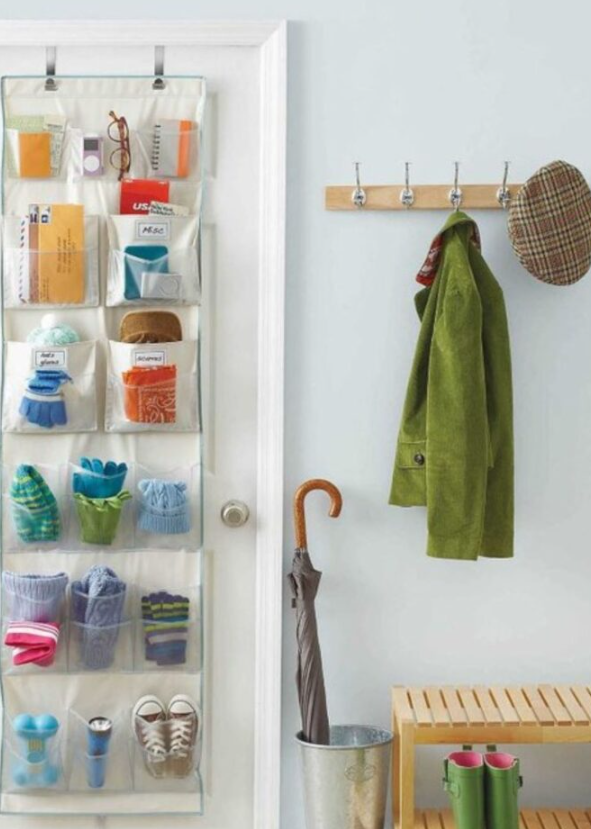
When I need to find small belongings quickly, a clear pocket organizer can be more useful than an opaque fabric one. The transparent compartments let me see items such as gloves, socks, glasses cases, travel accessories, and small household essentials.
I assign different pockets to different categories so that the organizer stays organized instead of becoming another place to collect clutter. Over-the-door hooks make installation simple when the organizer is lightweight and compatible with the door.
This solution works well in entryway, hallway, and bedroom closets. I avoid putting heavy objects or sharp items in the pockets because they can stretch or tear the fabric and make the organizer less secure.
Shoe Rack
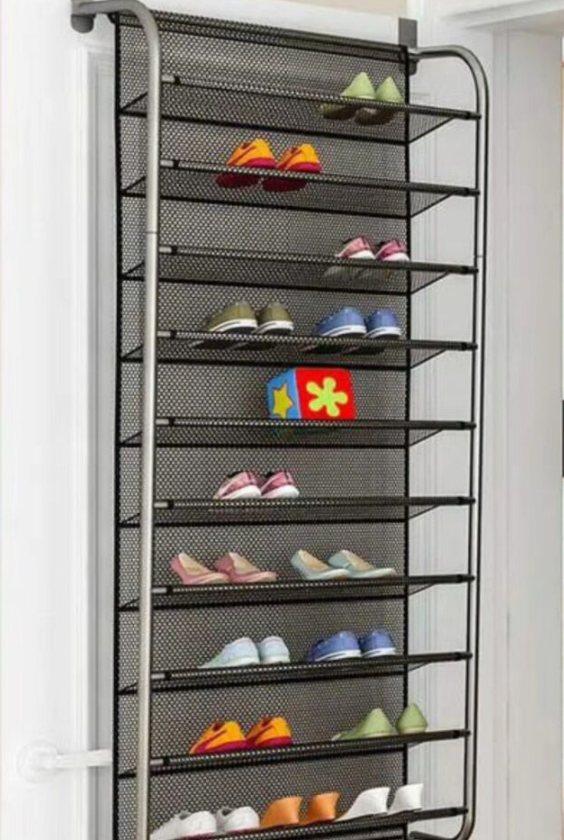
A tall over-the-door shoe rack can help when the closet floor is already crowded with footwear. Instead of spreading pairs across the floor, I can arrange them vertically on individual shelves or holders.
Open racks are convenient because I can see each pair and remove it without moving other shoes. They are often best suited to lightweight flats, sandals, and casual footwear, although the exact capacity depends on the rack’s design.
I measure the door and frame before choosing a rack that hangs over the top. I also check whether the hooks leave enough room for the door to close and whether the rack could damage the frame or nearby walls.
Gift Station
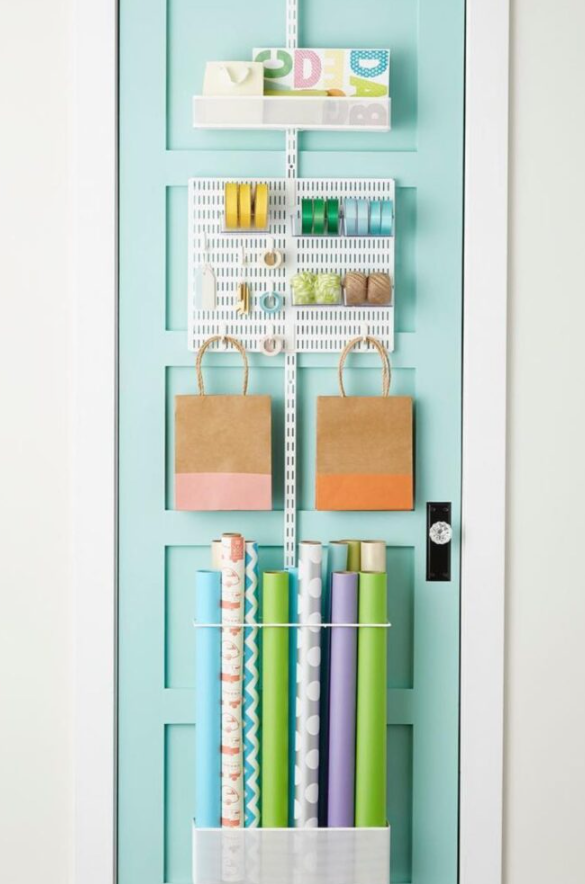
Wrapping paper, gift bags, ribbons, and tape are easier to manage when they have a dedicated storage area. I can turn the inside of a closet door into a compact gift station with a rail system, shallow trays, and suitable holders.
Tall compartments near the bottom can keep wrapping paper rolls upright, while smaller baskets above can hold tape, scissors, gift tags, and ribbon. A pegboard can provide additional places to hang lightweight tools or ribbon spools.
I find this arrangement useful in craft closets, hallway storage areas, and homes where wrapping supplies tend to spread across several drawers. I keep sharp tools in secure holders and check that long paper rolls do not interfere with the door’s movement.
Cleaning Grid

Cleaning tools can become difficult to manage when brushes, dusters, scrubbers, and small accessories are piled into a corner. A metal grid mounted on a suitable closet door gives these tools a more organized home.
I can attach compatible hooks and holders to the grid and arrange items according to their size and purpose. Longer tools should only be hung on supports designed for their weight and length, with enough floor clearance to keep them from dragging.
This setup works well in utility closets, laundry rooms, and household cleaning areas. I make sure the grid is securely mounted and keep cleaning products and tools safely stored, especially if children or pets can access the closet.
Toy Baskets
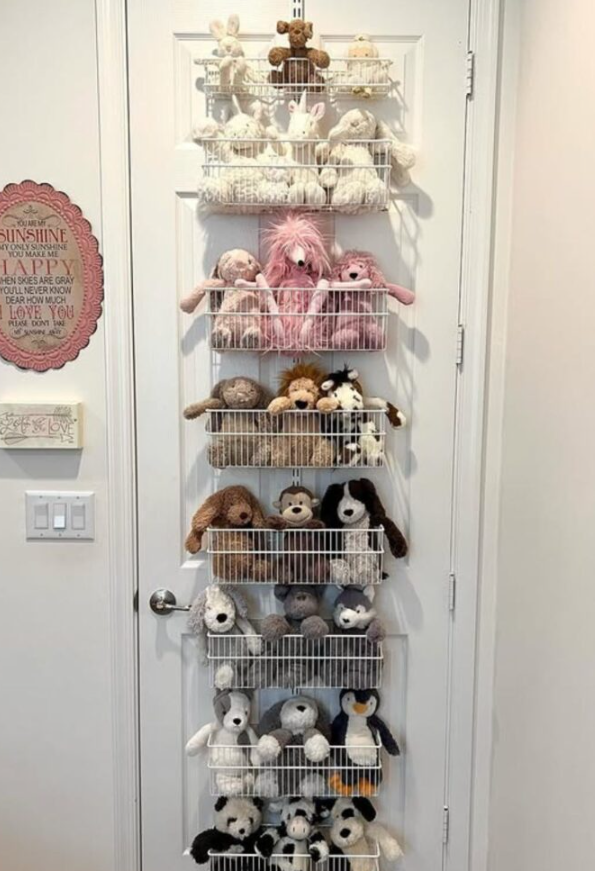
Stuffed animals and soft toys can quickly fill a child’s bed, floor, and closet shelves. I can use a few lightweight baskets on the back of the closet door to keep smaller toys organized and easier to find.
Each basket can hold a different type of toy or a collection of favorites. Placing frequently used toys at a reachable height can also make it easier for children to put things away after playing.
I choose shallow baskets that are securely fitted and avoid overloading the door. For nurseries and young children’s rooms, I pay special attention to mounting security and make sure the organizer cannot fall or create a climbing hazard.
Shoe Pockets
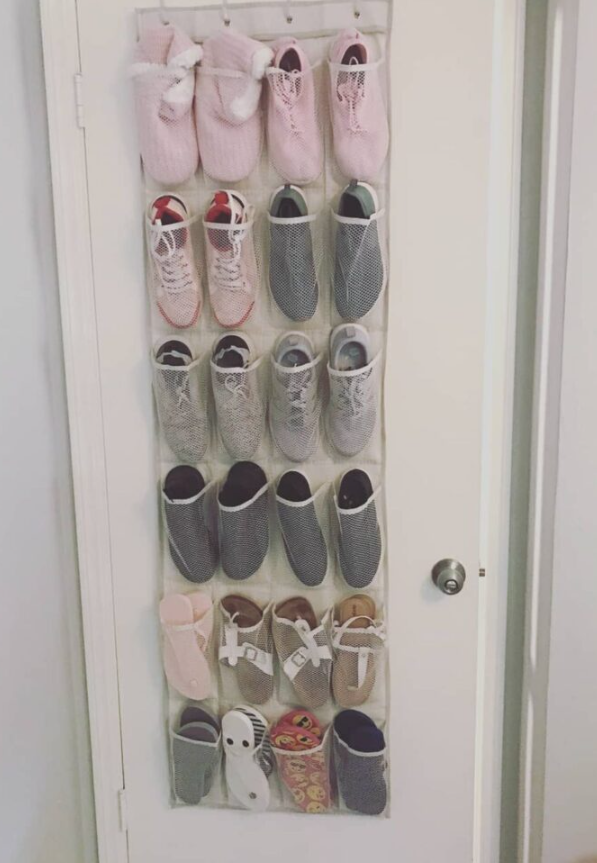
A hanging shoe pocket organizer is a practical choice when I want to store several pairs without installing rigid shelves. Its individual compartments separate suitable footwear and make it easier to see what I own.
I use the pockets for lightweight sneakers, flats, sandals, and other shoes that fit comfortably. Mesh compartments can improve airflow compared with solid fabric pockets, although shoes should still be clean and dry before storage.
I hang the organizer using compatible over-the-door hooks and check that the loaded pockets do not drag against the floor. This setup can help keep a small closet tidy while making better use of otherwise empty vertical space.
Nursery Storage
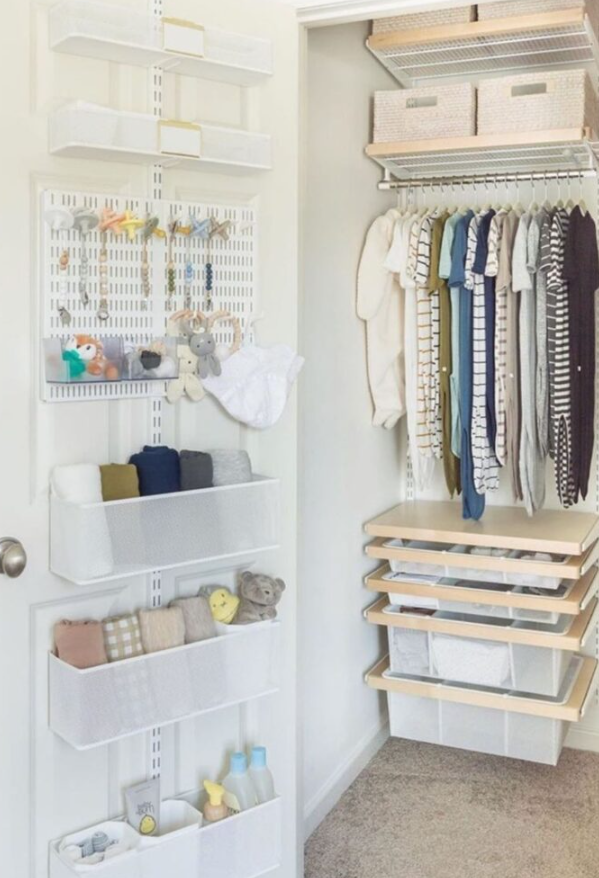
Baby essentials can quickly fill drawers and shelves, so I find vertical door storage useful when a nursery closet has limited room. A rail system with shallow baskets can provide separate spaces for wipes, baby creams, small toys, and lightweight blankets.
I arrange supplies by how often I use them, keeping everyday essentials easy for an adult to reach. A small organizer can also hold lightweight accessories, provided its hooks and compartments are suitable for the items being stored.
Safety matters most in a nursery. I securely install the organizer, keep heavy objects away from the top of the door, and store medicines, creams, small objects, and other potentially hazardous items well out of a child’s reach. I also make sure nothing can fall into a crib or sleeping area.
FAQs
Can closet door storage damage the door over time?
Yes, closet door storage can cause damage if I use an organizer that is too heavy, install it incorrectly, or put too much weight on a weak door. Hollow-core doors may be particularly unsuitable for heavy racks or screw-mounted systems unless the mounting method is specifically designed for that door.
I reduce the risk by choosing lightweight fabric organizers, suitable hooks, and shallow baskets for everyday essentials. Before installing anything, I check the door’s construction, the manufacturer’s weight limit, and whether the mounting hardware is compatible with the door.
For heavy items such as large detergent bottles, books, or bulky equipment, I prefer a sturdy shelf or floor-standing organizer instead. I also check the hinges and mounting points occasionally for signs of loosening or damage.
How do you choose the right organizer for a narrow closet door?
I start by measuring the door’s width, the usable height, and the clearance between the door and nearby shelves or walls. These measurements help me choose an organizer that adds storage without stopping the door from opening or closing properly.
Pocket organizers, shallow wire baskets, slim shoe racks, and lightweight hook systems are good options for many narrow doors. I also consider what I plan to store, because shoes, cleaning products, and small accessories have different space and weight requirements.
If I rent my home, I may prefer a compatible over-the-door organizer or another removable option. However, I still check the hook thickness, door clearance, and weight limit before buying, since not every door can support every organizer.