16 DIY Cat Tower Ideas for 2026
DIY Cat Tower Ideas: Materials, Designs, and Safety Tips
A DIY cat tower gives me a practical way to create a comfortable place for my cat to climb, scratch, play, and sleep without spending too much on store-bought furniture. I can build a simple scratching post or a multi-level tower based on my available space, budget, and cat’s habits. The key is to use sturdy materials, provide enough room to move, and make every platform safe to use. In this guide, I’ll cover the materials I need, different cat tower designs, and important safety tips to help me build a setup my cat will enjoy.
Key Takeaways
- I can build a DIY cat tower using plywood, solid wood, sisal rope, and soft fabric.
- A wide, stable base helps prevent the tower from tipping when my cat jumps or climbs.
- Multi-level platforms, hiding spots, and scratching areas make a tower more useful.
- I can save space with corner towers, window perches, wall-mounted shelves, or compact designs.
- For senior cats or cats with limited mobility, I should use lower platforms and gentle climbing routes.
- I should check every connection regularly and avoid exposed screws, sharp edges, and loose materials.
What Materials Do You Need for a DIY Cat Tower?
I don’t need expensive equipment to build a DIY cat tower, but I do need materials that can handle repeated climbing, scratching, and jumping. Before starting, I measure the available space and decide how many platforms, posts, and resting areas I want to include.
Plywood works well for platforms and the base because it provides a solid surface when properly selected and supported. For the main supports, I can use strong wooden posts or suitable structural components designed to carry the expected load. I should avoid thin boards that bend easily or materials that become unstable when exposed to moisture.
For scratching surfaces, I prefer natural sisal rope because it provides a rough texture that cats can grip with their claws. I can cover the resting platforms with washable fabric, securely attached carpet, or removable cushions. If I reuse old furniture materials, I check them for staples, loose threads, chemical treatments, and damaged sections before adding them to the tower.
Here are the basic materials I would prepare:
- Plywood or solid wood: For the base, platforms, and enclosed sleeping areas.
- Wooden posts: To support the different levels and provide a scratching surface.
- Sisal rope: For wrapping scratching posts.
- Carpet or washable fabric: To improve grip and make resting areas comfortable.
- Brackets and suitable fasteners: To secure platforms and supports.
- Basic tools: A measuring tape, drill, saw, screwdriver, and sandpaper.
- Optional extras: Cushions, baskets, hammocks, and cat-safe toys.
My biggest tip is to plan for stability before focusing on appearance. I make the base broad enough for the tower’s height, secure all structural joints, and anchor taller designs to a suitable wall or ceiling support when needed. I also avoid relying on friction alone to hold a tall tower in place.
Can cats sleep in a cat tower?
Yes, cats can sleep comfortably in a cat tower if it provides a secure, quiet, and suitably sized resting area. I like the idea of combining a sleeping spot with climbing and scratching areas because it gives my cat several ways to use the same piece of furniture.
Many cats enjoy elevated resting places because they can observe their surroundings while remaining out of the way. However, every cat has different preferences. Some prefer an open platform where they can stretch out, while others feel more comfortable inside a covered cubby.
When planning a sleeping platform, I focus on its width, support, and surface. It should allow my cat to lie down and change positions without slipping or feeling cramped. A removable cushion or washable cover also makes it easier to keep the resting area clean.
If I want to make the space feel more inviting, I can place a familiar blanket on the platform and position the tower in a quiet part of the room. I avoid putting it somewhere that receives excessive heat or has unstable furniture nearby.
Vertical Playground
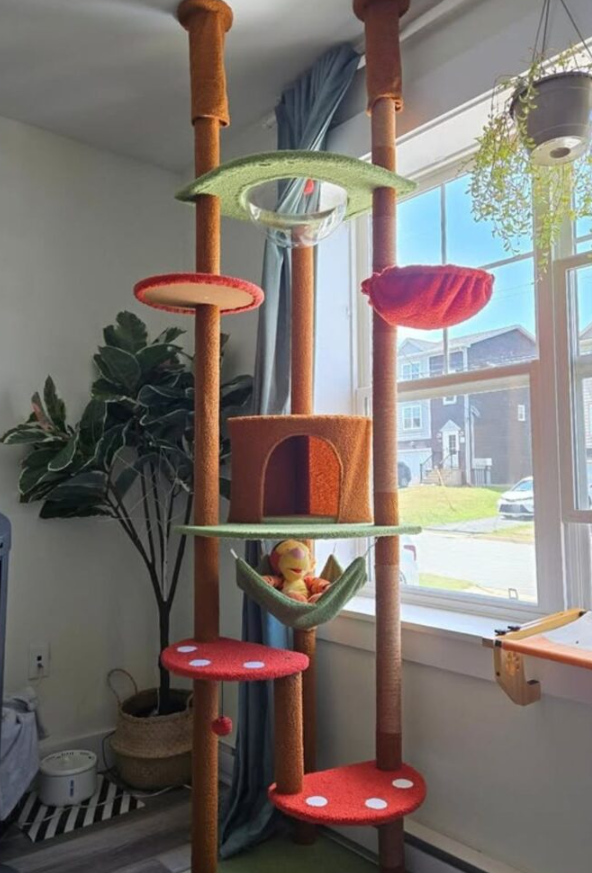
A vertical cat playground is a useful option when I have limited floor space but want to give my cat more room to climb. Instead of spreading the structure across the room, I can arrange platforms at different heights to create an upward route.
I would start with a sturdy base and strong vertical supports, then attach platforms at intervals that suit my cat’s jumping ability. The platforms should be large enough for a comfortable landing, and the route should allow my cat to climb down without having to make an unsafe jump.
Floor-to-ceiling systems can work well in small homes, but I wouldn’t rely on an unsecured tension pole for a heavy or active cat. I would follow the manufacturer’s installation instructions and check that the ceiling, floor, and mounting points can support the structure.
Staggered Steps
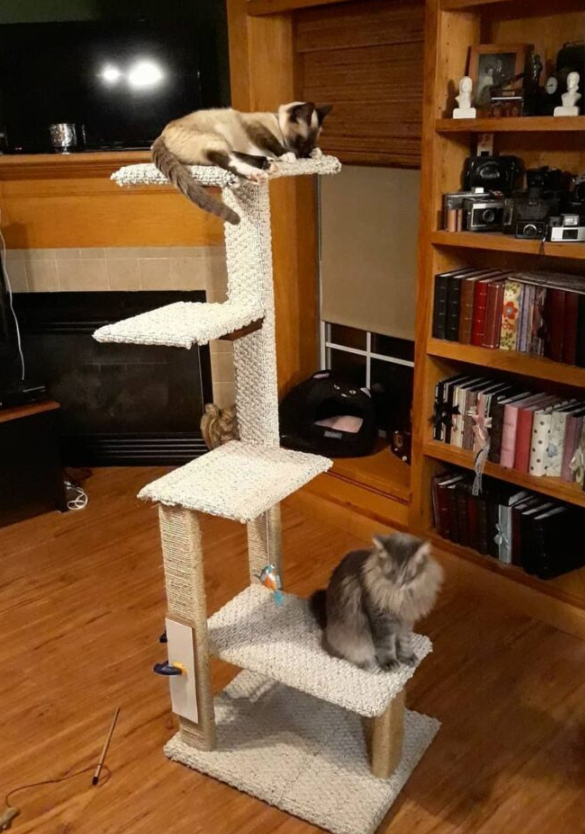
Staggered platforms create a climbing route with several shorter jumps instead of one long leap. I would consider this design for kittens, senior cats, or cats that prefer to pause between climbing sections.
I can position the platforms in a zigzag pattern, giving my cat a clear route upward and enough space to turn around. Each level should have a nonslip surface, and the gaps between platforms should match my cat’s size and physical ability.
This layout can also work in homes with multiple cats. Wider platforms give cats more room to rest without crowding one another, although separate resting spots may still be helpful if my cats prefer their own space.
Modern Column
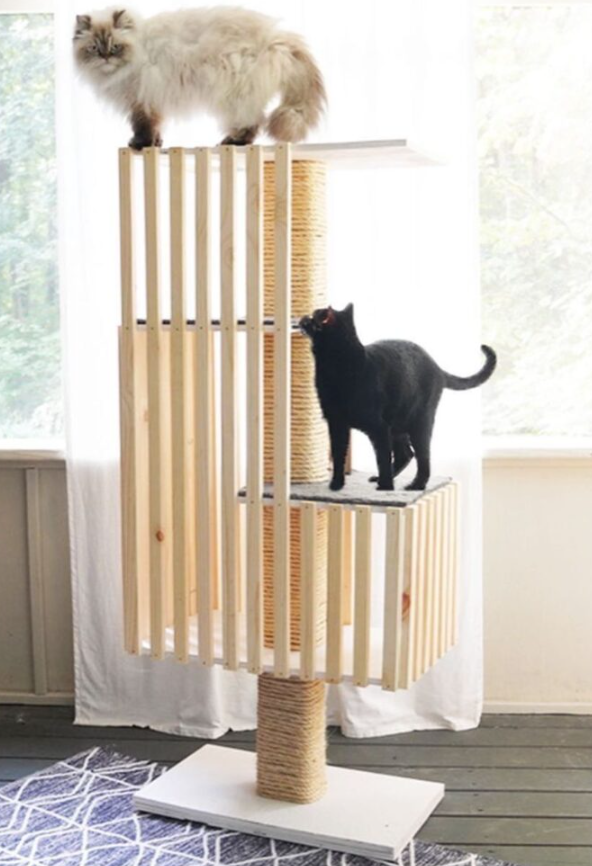
A modern column tower is a good choice when I want cat furniture that fits the rest of my home’s interior. It usually combines a clean shape, a central scratching post, and one or more resting platforms.
I would build the column around a solid support and attach the perch securely to the top. If I use an open-frame design, I make sure the gaps are not large enough for a cat to become trapped or lose its footing.
Wrapping the central post in sisal rope gives my cat a suitable place to scratch while protecting nearby furniture. I would choose a rope and attachment method that won’t unravel easily, then inspect the wrapping whenever I clean the tower.
Basket Tower

A basket tower can provide comfortable resting areas without taking up much floor space. I can use a suitable shelving unit and add securely fitted baskets to create separate places for lounging or hiding.
Before using this design, I check the shelf’s weight capacity and make sure the unit cannot tip over. I secure it to an appropriate wall fixing, especially if my cat likes to jump onto the upper levels.
The baskets should be firmly attached and large enough for my cat to enter, turn around, and leave comfortably. I also choose materials that are easy to clean and avoid baskets with loose woven strands that could catch claws.
Design Statement

A furniture-style cat tower lets me combine practical features with a design that suits my living space. Curved wooden platforms, neutral fabrics, and carefully arranged levels can make the tower look more like a piece of home furniture than a traditional pet accessory.
I would begin with a strong foundation and work upward, adding platforms that create a natural climbing route. Each decorative element must serve a purpose without making the structure harder to climb or less stable.
For comfort, I can add a removable padded seat or fabric covering to selected platforms. I make sure the padding cannot slide off during a jump and that all finishes, adhesives, and materials are suitable for use around pets.
Comfort Stack
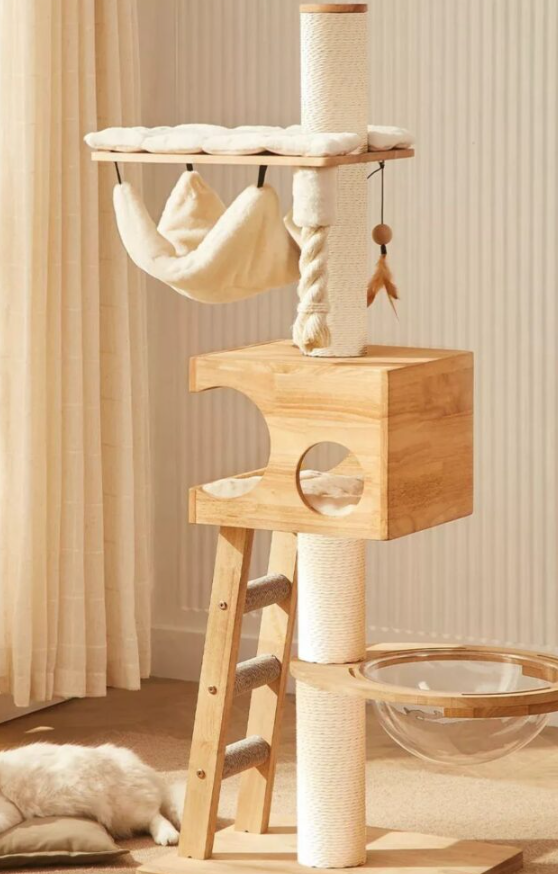
A comfort-focused tower combines several types of resting places in one structure. I can include an enclosed cubby, an open perch, a padded platform, and a properly supported hammock to give my cat different options throughout the day.
I would start with a broad base and build the main frame before adding the resting features. The cubby needs a comfortable entrance, while the hammock must have secure attachment points and fabric strong enough to support my cat.
I also leave clear routes between the different levels. A cat should be able to reach a favorite resting spot without being forced to make a difficult jump or squeeze through a narrow opening.
Sculpted Steps

Sculpted platforms offer a more decorative alternative to traditional square shelves. I can arrange rounded or curved platforms at different heights to create a gradual climbing route that looks simple and modern.
The shape is important, but I pay even more attention to the usable surface area. A platform that looks attractive may not provide enough room for my cat to land, turn around, or rest comfortably.
I would sand every wooden edge until it feels smooth and use a secure, nonslip covering where needed. Before letting my cat use the tower, I test each platform for movement and make sure the supports do not wobble under pressure.
Play Zones

For an active cat, I can turn a basic tower into a small indoor play area with several levels, scratching surfaces, tunnels, and hiding spots. This gives my cat opportunities to climb, explore, and play without requiring a large amount of floor space.
I would arrange the features so that resting areas remain separate from the busiest play routes. For example, a lower cubby can provide a quiet retreat while an upper platform offers a place to observe the room.
Homes with multiple cats may benefit from several access routes and separate resting spots. This helps reduce crowding around a single platform, although I would still observe how my cats interact and adjust the layout if one cat regularly blocks another’s path.
Branch Climber
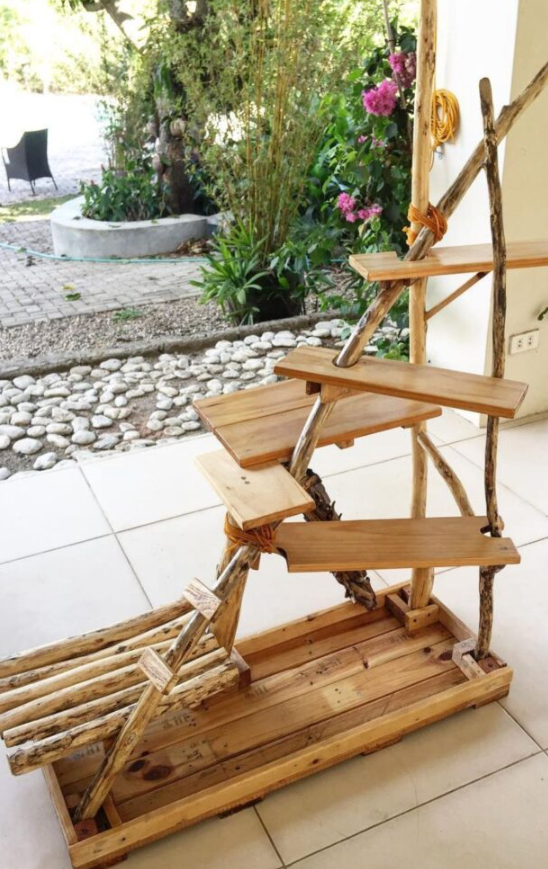
A branch-style cat tower brings a natural look indoors. I can use suitable untreated wood to create an irregular climbing structure that gives my cat different surfaces to grip and explore.
I would select branches that are sound, dry, and free from rot, pests, sharp broken sections, or unknown chemical treatments. Before assembly, I clean them thoroughly and remove loose bark where it could fall off or create a hazard.
The branches must be attached firmly to a stable wooden base. I would then add small resting platforms where they can be supported securely, checking that no branch shifts when pressure is applied.
This design can suit a sunroom or covered patio, provided the materials are appropriate for the environment. If I place it outdoors, I also consider weather exposure, moisture, and the risk of the structure deteriorating over time.
Cozy Crochet

A crochet-inspired cat tower adds a soft, textured look to a resting area. I can use thick fabric panels or securely fitted knitted covers to make selected platforms more comfortable for lounging.
I would begin with a sturdy wooden frame and add the soft elements only after the structure is stable. Any textile covering must be tightly secured so it doesn’t slip, unravel, or leave loose loops that could catch a claw.
I also keep a close eye on chewing and scratching. If my cat pulls at the yarn or begins swallowing loose fibers, I remove the covering and replace it with a safer material.
For everyday use, I prefer removable covers that can be washed and inspected easily. This helps me keep the tower cleaner while checking for worn seams or damaged fabric.
Window Watch
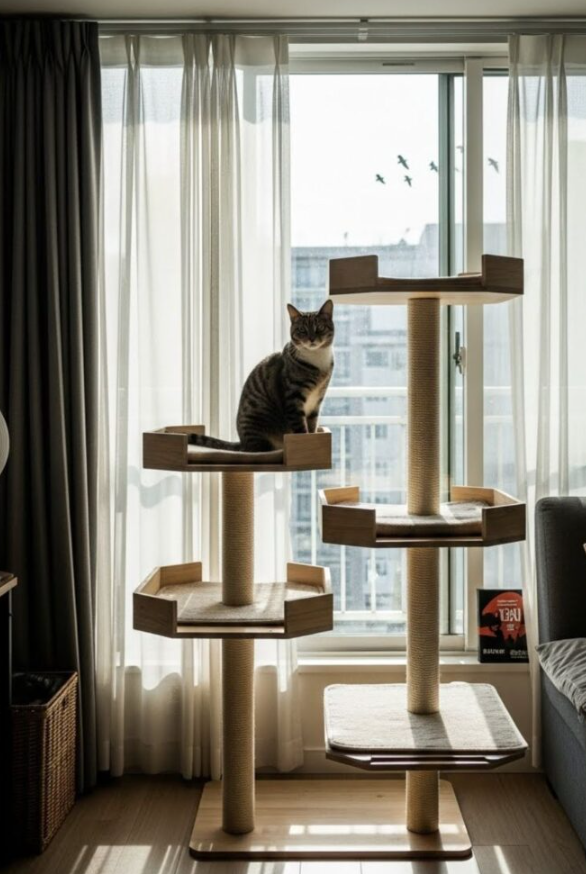
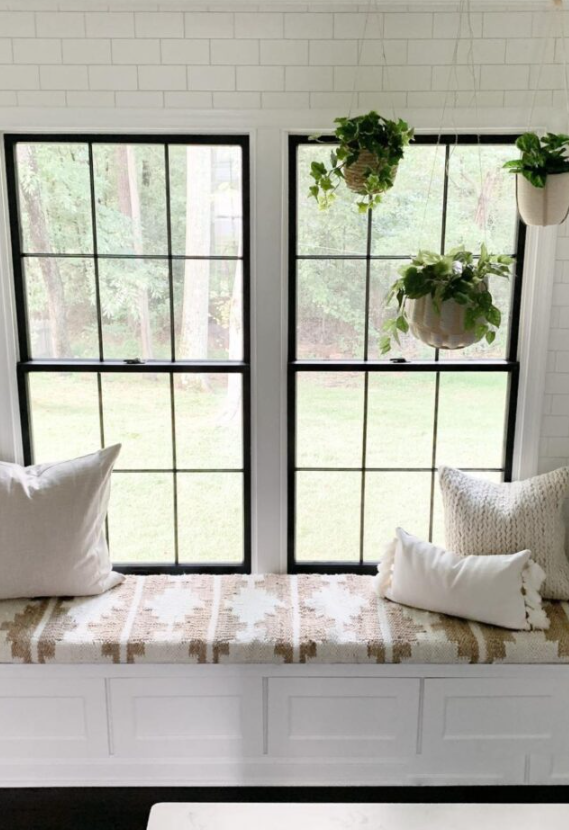
A window-side cat tower gives my cat a comfortable place to watch birds, passing people, and activity outside. I would choose a location that offers a good view without blocking a walkway or creating a hazard near blinds and curtain cords.
A medium-height tower with a wide, stable perch may be enough for many homes. If the window is high above the floor, I add secure intermediate platforms rather than expecting my cat to make one large jump.
Sunlight can make a window perch appealing, but I check the temperature throughout the day. I avoid placing a padded bed in a spot that becomes excessively hot and ensure my cat can move away from direct sunlight whenever needed.
Corner Climb
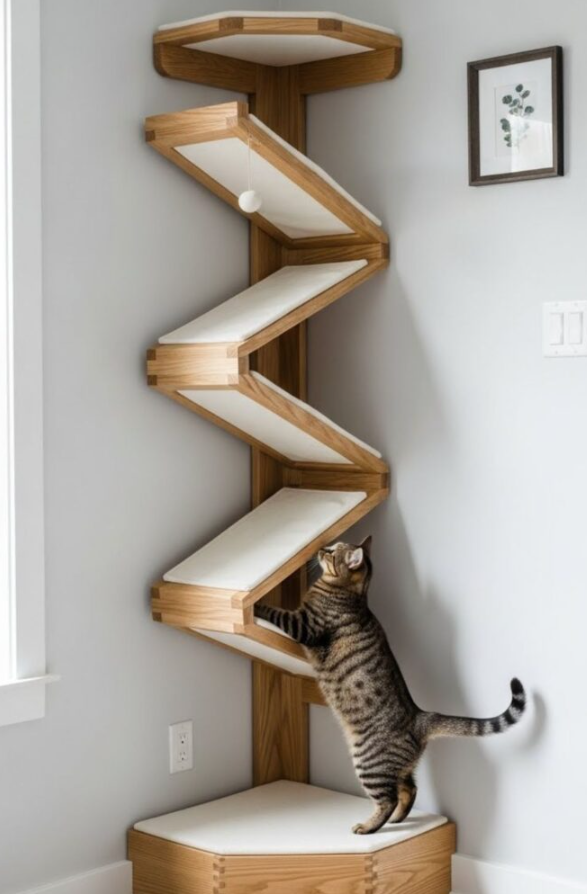
A corner cat tower makes use of an area that might otherwise remain empty. I can build a triangular base or install suitable corner shelves to create a compact climbing route.
I would measure both walls before cutting the base so the structure fits without obstructing doors, furniture, or walking space. Shelves arranged in a staggered pattern can help my cat move between levels with shorter jumps.
Every shelf needs secure support, especially when attached to a wall. I use fasteners suitable for the wall material and expected load rather than assuming that ordinary screws will hold safely in every surface.
This design is particularly useful in smaller apartments where a wide, freestanding tower would take up too much room.
Ladder Route

A ladder-style tower offers a more gradual way for cats to reach an elevated resting spot. I would consider this option for senior cats or those that are less comfortable with jumping, while remembering that individual mobility needs vary.
I can build an inclined ladder with securely attached wooden rungs and a nonslip surface. The angle should allow my cat to climb without struggling, and the ladder must be firmly connected to the main structure.
I would test each rung for movement before introducing the tower. I also keep the resting platforms low enough for my cat to access comfortably and avoid treating a ladder as a substitute for veterinary advice if my cat suddenly develops difficulty climbing.
Hidden Den

A hidden-den tower gives my cat an enclosed place to rest when the household feels busy. I can build one or more box-shaped compartments into the structure and add open platforms above them.
I would make the entrance large enough for my cat to move through easily and avoid sharp internal edges or narrow spaces that could cause a cat to become stuck. The compartment should also provide adequate airflow and be easy to inspect and clean.
I like combining the den with a low resting platform and an upper perch. This allows my cat to choose between privacy and a more open view without needing to leave the tower entirely.
Minimal Pole

A minimal cat tower works well when I want a compact setup with just the essentials. It usually consists of a heavy, stable base, a vertical scratching post, and a padded perch.
I would choose the post height and perch size based on my cat’s size and habits. The base must be wide and heavy enough to resist tipping when my cat stretches against the post or jumps onto the platform.
I would wrap the post with sisal rope and secure the ends so they cannot loosen easily. A comfortable top platform gives my cat a place to rest after scratching, making the tower useful for more than one activity.
Modular Build
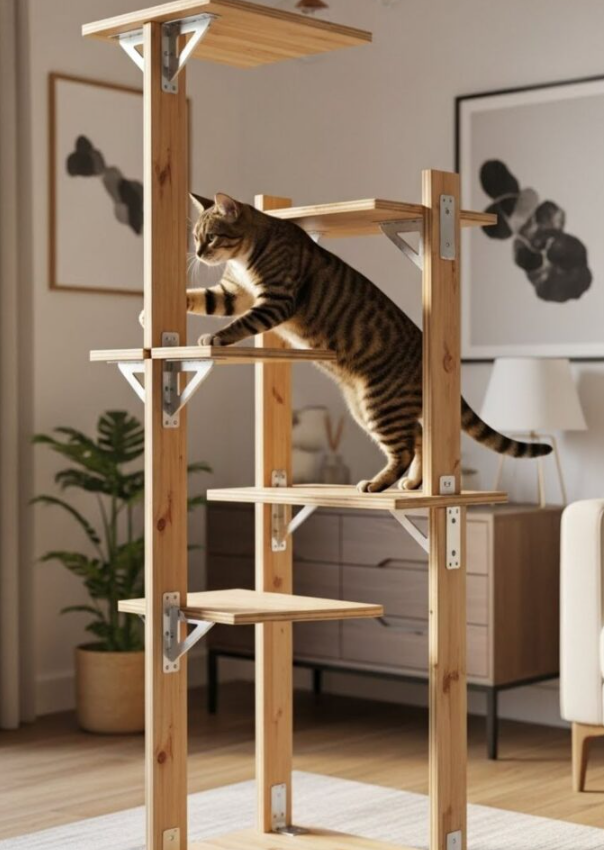
A modular cat tower lets me change the layout as my cat grows or my living space changes. Instead of building every component into one permanent structure, I can use separate platforms and compatible supports that are designed to connect securely.
I would start with a simple base and a small number of levels, then add components only when the existing structure can support them safely. Every connection needs the correct brackets or fasteners, and the assembled tower must remain stable after changes are made.
This approach can be useful for kittens whose climbing abilities change over time. I can begin with lower platforms and adjust the layout as needed, while checking the weight limits and installation requirements of every added component.
FAQs
Is a DIY cat tower safe for large or heavy cats?
Yes, a DIY cat tower can be suitable for a large cat when I design it around the animal’s weight, size, and movement. I would use strong structural materials, a broad base, well-supported platforms, and secure joints rather than relying on height or appearance alone.
I also make the resting platforms wide enough for my cat to lie down and turn around. If the tower is tall or the cat tends to jump forcefully, I secure it to a suitable structural wall support and follow the correct installation method.
Before allowing my cat to climb, I test the tower for wobbling, loose connections, and platform movement. I repeat these checks regularly because scratching, jumping, and everyday use can gradually loosen fasteners.
How tall should a DIY cat tower actually be?
There is no single ideal height for every cat. A tower around four to six feet tall can be a useful starting point for many homes, but the best size depends on the cat’s age, confidence, mobility, and the available room.
I focus on creating a safe route between platforms instead of simply building the tallest structure possible. Shorter gaps, secure landings, and nonslip surfaces can make the tower easier to use.
For kittens, senior cats, or cats with mobility limitations, I would start with a lower design and add accessible levels when appropriate. For confident climbers, a taller tower can work well if it has a stable base, secure supports, and safe access to every platform.