20 Watch Organization Ideas for 2026
How Do I Organize Smartwatches and Traditional Watches Together?
I find it easiest to organize smartwatches and traditional watches when each has a dedicated place. Smartwatches need convenient charging access, while traditional watches need padded storage to protect their cases, crystals, and straps. Keeping both in one organized area makes my daily routine simpler without risking unnecessary scratches or clutter.
The best setup depends on how many watches I own, how often I wear them, and whether I need storage for travel or display. From compact desk stands to multi-layer watch boxes, I can choose a solution that fits my space and collection.
Key Takeaways
- I keep my smartwatch near a charging point and store traditional watches in padded compartments.
- I use individual slots to prevent watches from rubbing against one another.
- I choose compact stands for daily favorites and larger organizers for growing collections.
- I avoid direct sunlight, excessive moisture, and loose storage that could damage watches or straps.
- I use travel cases with separate compartments to keep watches secure while moving.
Travel-Ready Watch Case
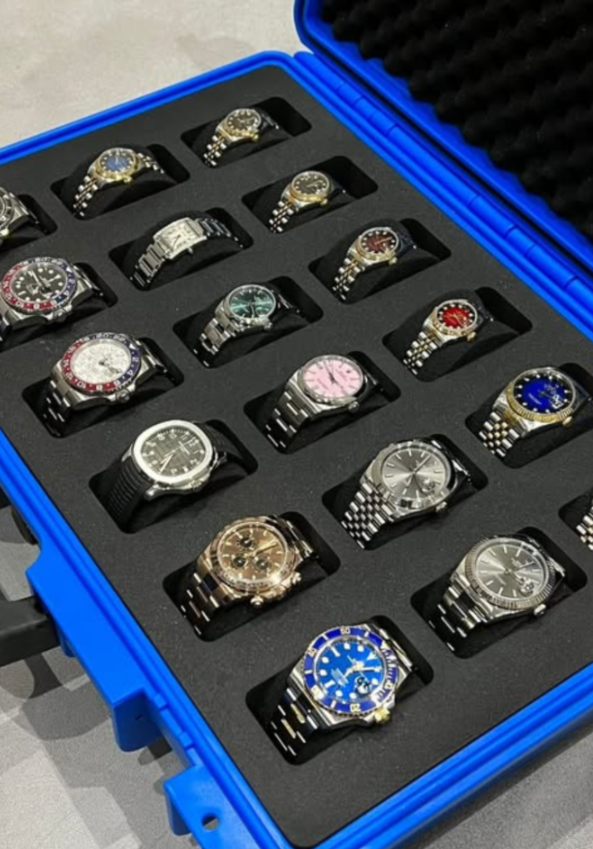
When I need to move several watches between home, work, or different destinations, I put protection ahead of appearance. A sturdy travel case with fitted compartments helps prevent watches from shifting and metal bracelets from hitting other pieces.
For a collection of 10 or more watches, I would consider a hard-shell equipment case with properly fitted inserts. However, even a smaller collection can benefit from a protective case when it includes valuable or delicate watches.
I make sure each compartment holds its watch securely without putting pressure on the crown, bracelet, or strap. Neutral lighting is useful when photographing the collection or checking each piece before packing.
Luxury Display Briefcase
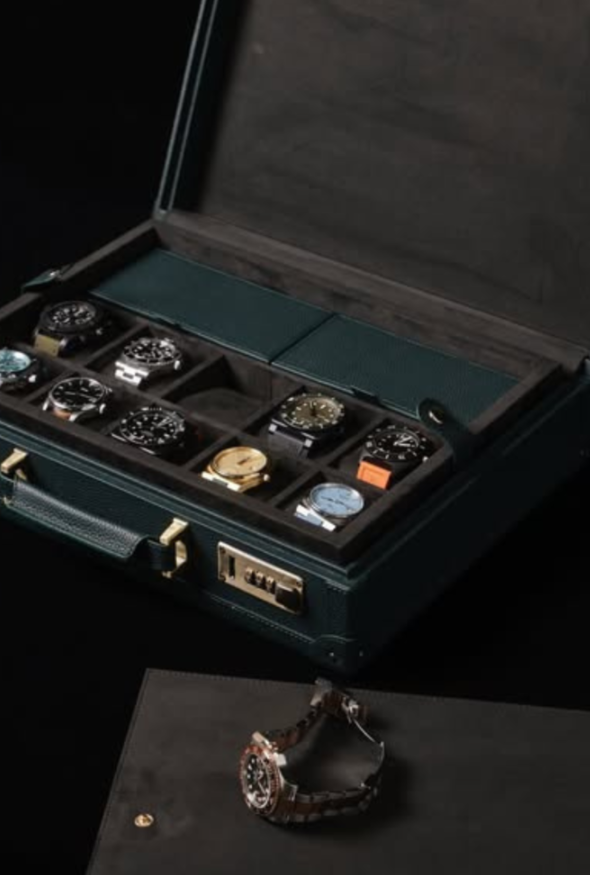
A structured leather watch briefcase is a practical choice when I want my collection to look organized without sacrificing protection. Its divided compartments keep individual watches apart, making it suitable for a bedroom shelf, walk-in closet, or home office.
To create a similar setup, I look for padded slots, a firm frame, and a lid that closes without pressing against the watches. I also arrange watches with similar colors or finishes together for a more balanced appearance.
Dark green leather with brass-colored hardware can create a warm, classic look. I prefer soft side lighting because it brings out the leather texture and watch details without producing too much glare.
Two-Tier Watch Drawer
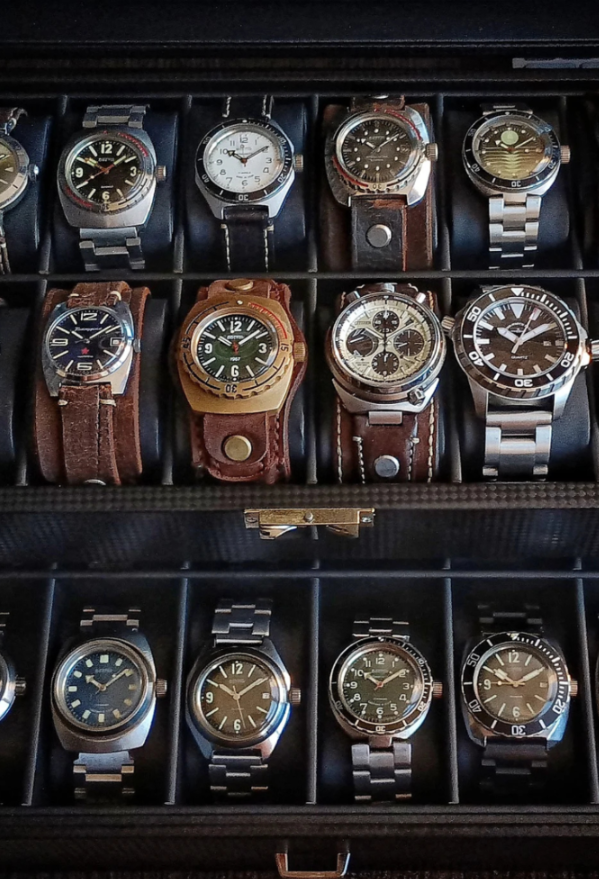
When drawer space is limited, I use a two-tier watch organizer instead of stacking watches on top of each other. The extra layer provides more storage while keeping the collection in one location.
This arrangement works well when I own several watches and change them regularly. I choose a design with removable trays or a sliding upper layer so I can reach the watches underneath without disturbing the rest.
I also separate leather straps from metal bracelets where practical. A dark, soft-lined interior creates a neat appearance, while even spacing makes it easier to identify each watch at a glance.
Vertical Desk Stand
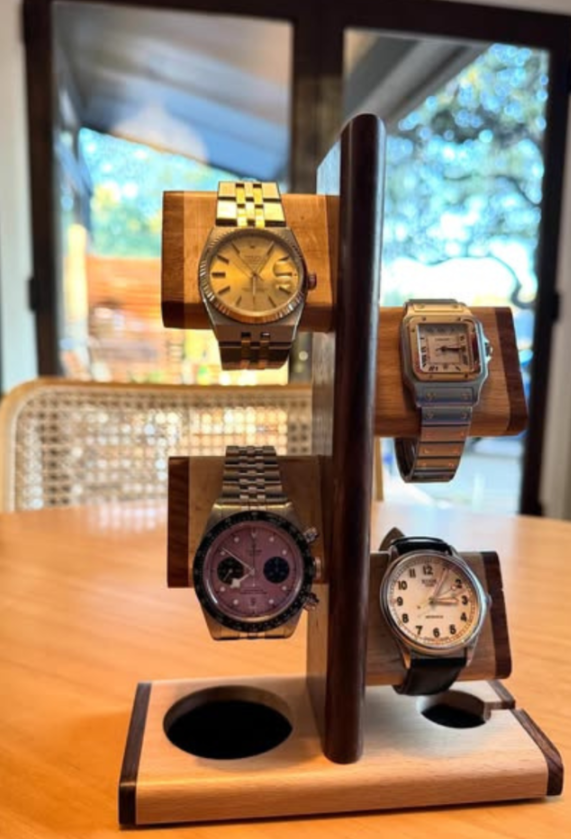
A vertical watch stand helps me free up valuable desk or bedside-table space. Instead of spreading watches across a flat surface, I display a few favorites upright and within easy reach.
For a small daily rotation, I would start with a stand that holds four to six watches. A solid wood base and padded horizontal supports provide a simple, stable option, provided the watches sit securely without touching one another.
I keep the stand away from areas where it could be knocked over. Indirect daylight works well during the day, while a warm desk lamp creates a comfortable look in the evening.
Luxury Drawer Grid
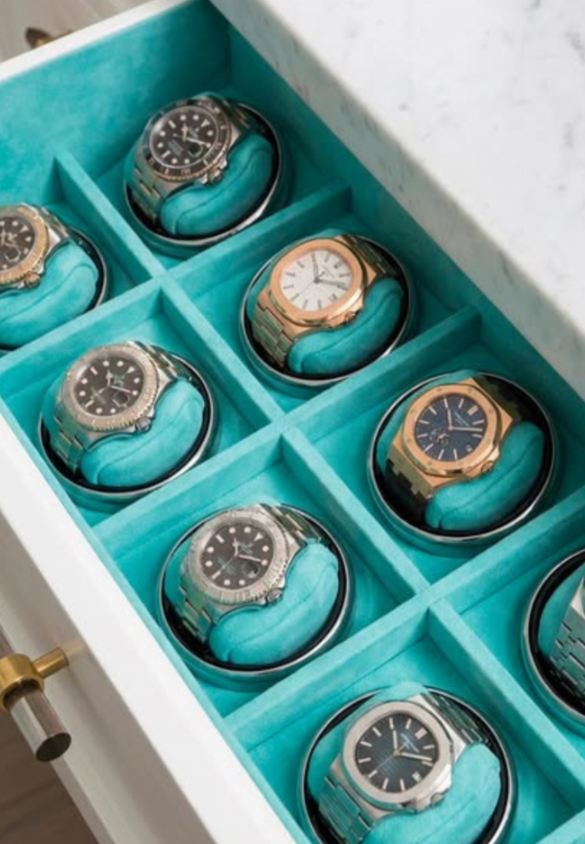
A fitted drawer grid is useful when I want my watches protected but don’t need them on display all day. Individual padded cushions help keep watches in position when I open or close the drawer.
I can recreate this arrangement by placing a watch tray inside an existing dresser drawer or custom closet. Before buying an insert, I measure the drawer’s width, depth, and height to make sure the tray fits properly.
For the visual finish, I might choose deep green lining to contrast with silver, gold, or two-tone cases. Keeping the same amount of space between watches gives the drawer a clean appearance and makes each piece easier to remove.
Travel Roll Setup

For a weekend away, I prefer a compact watch roll over a large storage box. It gives each watch its own padded section while taking up less space in my luggage.
A roll with five to eight slots can work for someone who likes several options on a trip. I check the dimensions before buying one and make sure the closed case fits comfortably inside my carry-on.
I wrap each watch around its own cushion without forcing the strap or bracelet into a tight position. A soft suede or similar lining helps reduce friction, but I still make sure the case is secure enough to prevent watches from moving during transit.
Glass-Top Display Box

A glass-top watch box lets me see my collection without opening the lid every time I choose a watch. I like this style for a dresser or closet shelf where the watches can remain neatly arranged.
I look for individual padded compartments, a secure lid, and an interior color that contrasts with my watches. Bright orange or deep red lining can make darker dials stand out, while beige or charcoal creates a more understated look.
I place the box away from direct sunlight because prolonged exposure can affect some watch materials, including leather straps and certain dial finishes. Diffused lighting also helps me view the watches without distracting reflections on the glass.
Watches and Eyewear

I can keep watches and sunglasses in the same organizer as long as each item has a separate compartment. This approach works particularly well on a dresser, where I want my everyday accessories together without allowing them to scratch one another.
I choose a multi-section organizer with padded watch slots and wider spaces for sunglasses. Soft dividers are especially useful because watch bracelets and exposed metal edges can damage eyeglass frames or lenses if they rub against them.
I place heavier watches in compartments that support their size and keep eyewear in its own section. A closed lid helps limit dust buildup, while a neutral interior creates a tidy, coordinated appearance.
Drawer-Plus Display
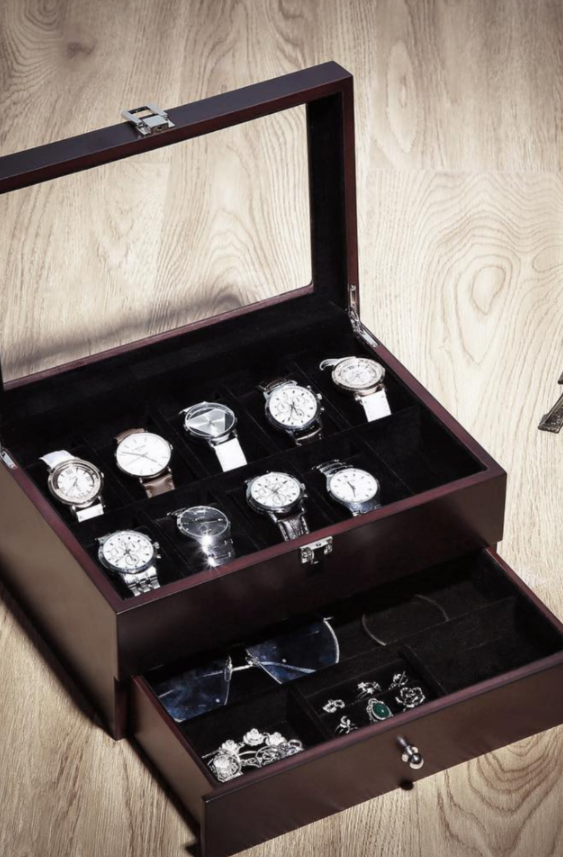
A two-level watch organizer gives me a useful combination of display and hidden storage. I can keep frequently worn watches on the upper level and use the lower drawer for spare straps, cufflinks, rings, or other small accessories.
This design suits a bedroom or dressing area where I want my essentials in one place. A glass lid makes the top row easy to view, while the lower drawer keeps smaller items out of sight.
I prefer a sturdy wooden case with padded watch cushions and enough depth for the accessories below. I also check that the lower drawer closes freely without pressing against the watches stored above it.
Desk Rotation Bar
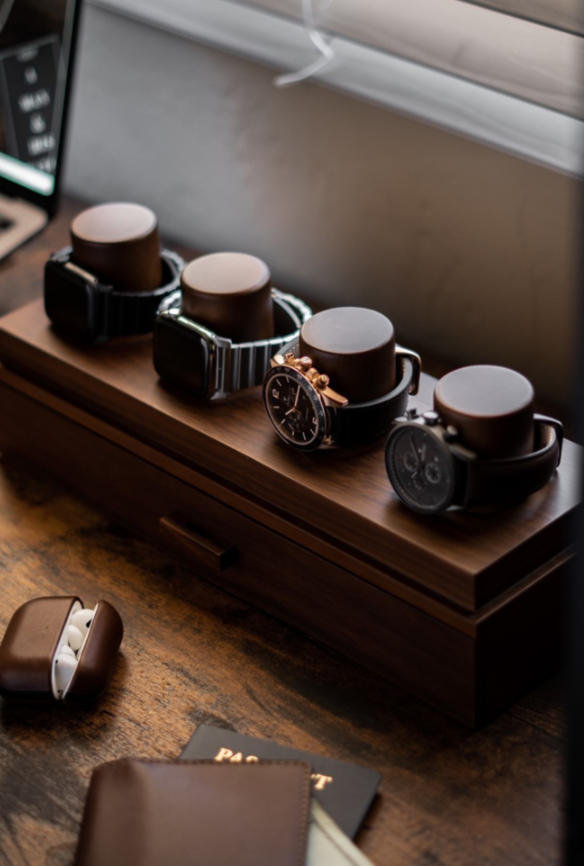
When I regularly switch between a smartwatch and a traditional watch, a desk rotation bar keeps my most-used pieces within reach. It works well in a home office or on a dresser where I have enough room for a small stand.
I would keep around three or four watches on the bar to prevent the display from becoming crowded. Padded holders and even spacing help keep the cases apart, while a stable base reduces the chance of the stand tipping over.
I position it away from drinks, spills, and the edge of the desk. A wooden finish pairs naturally with leather straps, and indirect window light helps me check dial colors without strong reflections.
Compact Zipper Case

For short trips, I don’t need to carry my entire collection. A compact zippered watch case with six separate slots provides enough room for several options without taking up too much luggage space.
I look for firm outer construction, individual padded dividers, and a soft interior. These features help prevent watches from knocking against each other when the bag moves.
Before packing, I check that the case closes without putting pressure on the watch crystals or crowns. I also store spare straps separately so their buckles and fittings don’t rub against the watch faces.
Window-Side Display Box
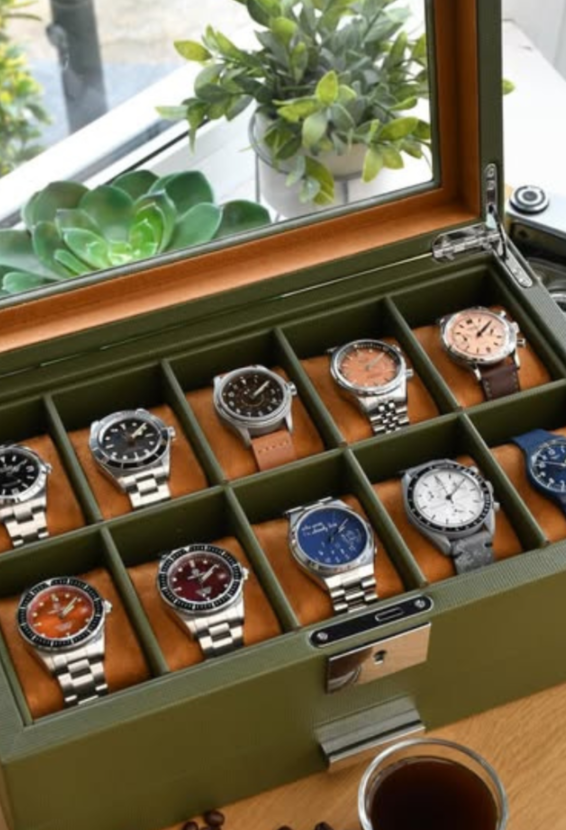
A watch box near a window can look attractive because natural light brings out differences in dial colors and case finishes. I would use this setup on a dresser or shelf that receives plenty of indirect daylight.
For a coordinated look, I might pair an olive-colored exterior with tan cushions. The contrast gives the display warmth without making it look too busy.
I avoid placing the box where direct sunlight falls on it for long periods. When the watches aren’t being selected, I keep the lid closed to limit dust exposure and help protect the collection.
Modern Capsule Case
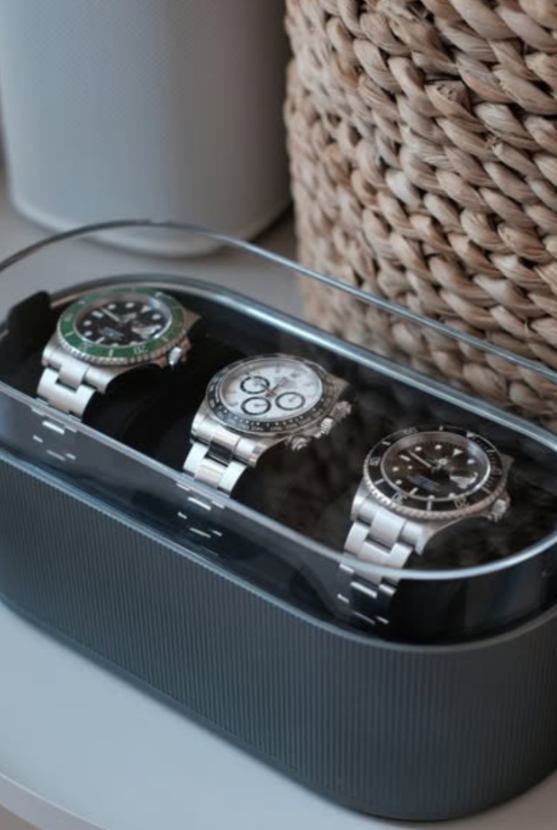
A rounded, glass-covered watch case works well when I want a compact display with a modern appearance. Its curved shape and clean lines can suit a minimalist bedroom, office shelf, or bedside table.
I would use this type of case for around three or four watches, depending on the available space. Dark cushions provide a strong contrast against polished steel, while a neutral surface helps the case stand out without competing with other décor.
I leave enough space around the case so it doesn’t feel crowded. Indirect daylight highlights the shape, and a nearby lamp adds warmth in the evening without requiring bright overhead lighting.
All-In-One Organizer
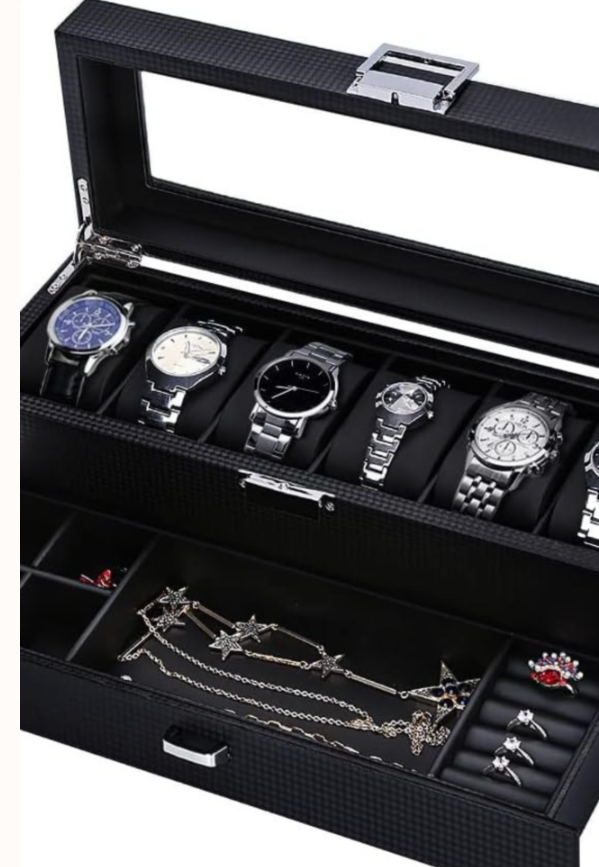
An all-in-one organizer is useful when I want to store watches and smaller accessories together. A glass-top watch section combined with a separate jewelry drawer keeps frequently used items accessible without mixing everything into one compartment.
I choose a structured case with padded watch slots and a lower section deep enough for rings, chains, cufflinks, or spare straps. Each watch should have enough room to sit securely without touching the pieces beside it.
I also avoid placing heavy accessories directly on top of stored watches. A dark, soft-lined interior can give the organizer a coordinated look while reducing visual distractions from reflections.
Dresser Statement Box
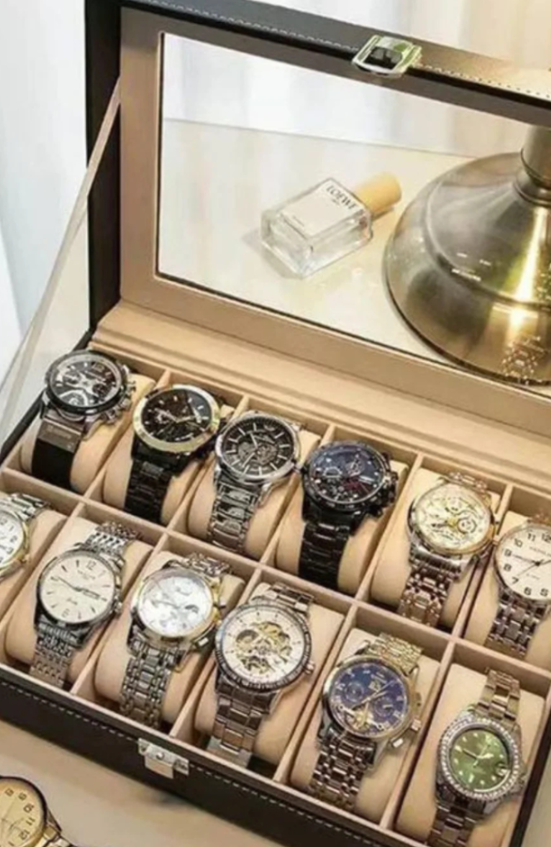
A large glass-top watch box can turn a collection into part of the room’s décor. I find this style particularly useful when I own around 10 to 15 watches and want to see my options without opening several containers.
I arrange the watches in straight rows with consistent spacing. This makes the collection easier to scan and prevents the display from looking crowded, even when the box holds many pieces.
I place the box on a stable dresser or console with enough room to open the lid fully. Soft daylight works well during the day, while a bedside lamp can provide gentle lighting in the evening.
Color-Coordinated Layout
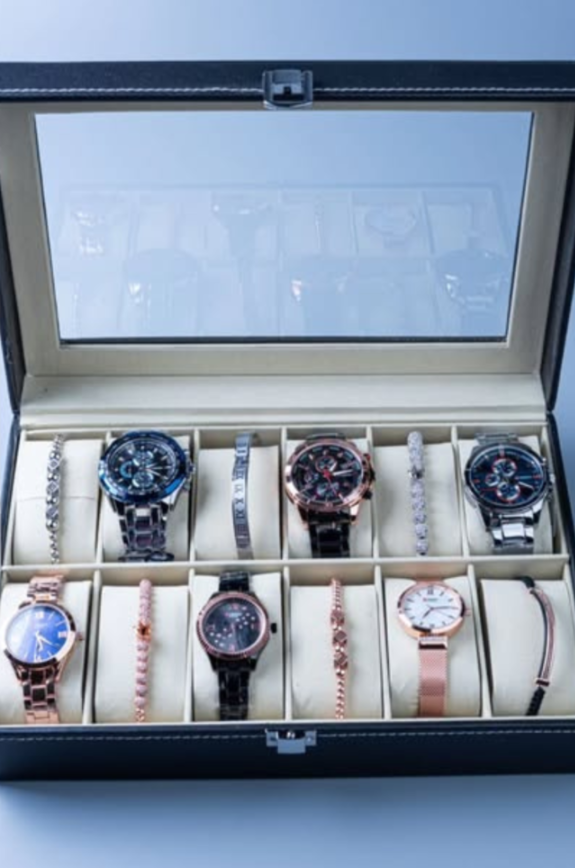
When my collection includes silver, gold, rose gold, and darker finishes, I can make the organizer look more balanced by grouping similar colors together. This creates a consistent layout without requiring an expensive storage box.
I might place silver watches in one row, gold or rose-gold pieces in another, and darker watches together. I also consider case size and bracelet style so that larger chronographs don’t overwhelm slimmer dress watches.
Light beige cushions can make darker watches stand out, while charcoal lining can complement brighter metal finishes. I focus on practical separation first and use color coordination as the finishing touch.
Executive Table Display
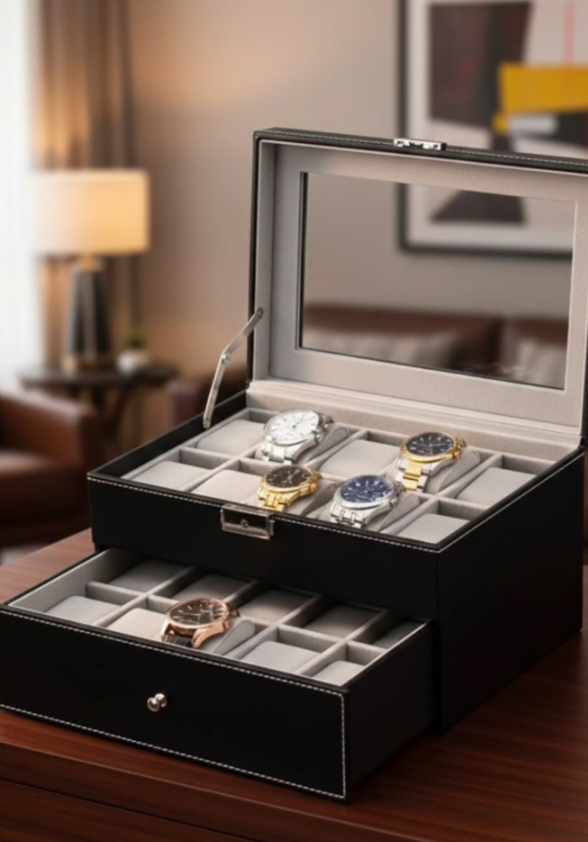
An executive-style watch display can work well in a home office or on a living room console. It keeps the collection visible while adding a polished, organized look to the space.
I would choose a structured, two-level case so my everyday watches sit on top and less frequently worn pieces remain in the lower drawer. This arrangement is especially helpful when I rotate watches according to work, social events, or daily activities.
Neutral gray cushions complement both gold and steel finishes. I also leave clear space around the box and position it away from the edge of the table to reduce the risk of accidental falls.
Daily Rotation Drawer
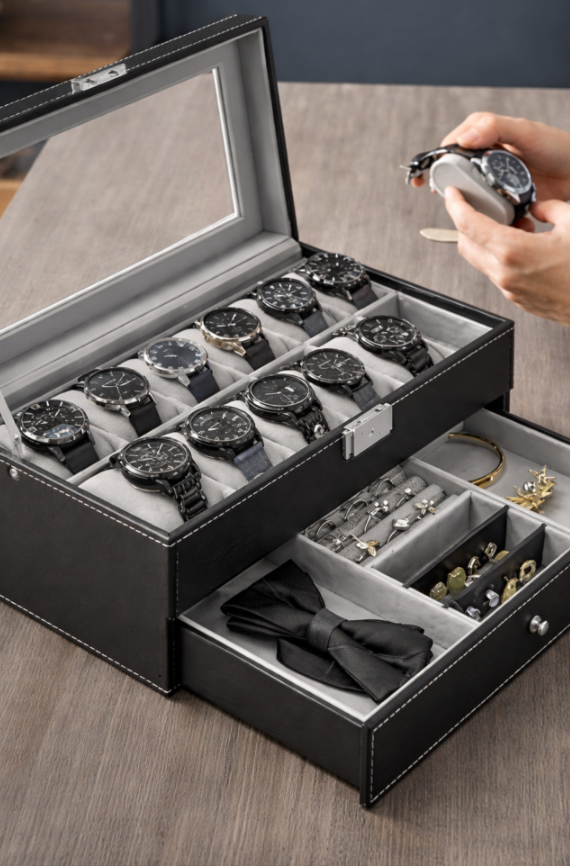
A daily rotation drawer helps me choose a watch quickly without searching through the entire collection. The upper section holds the watches I wear most often, while the lower drawer can store spare straps and smaller accessories.
I select an organizer with padded slots and a lid or tray that opens easily. Keeping frequently worn pieces toward the front makes them more accessible, especially when I’m getting ready in a hurry.
I make sure every watch has its own compartment and that the drawer closes without catching on bracelets or straps. A simple, neutral lining also makes it easier to see each watch clearly.
Premium Travel Roll

When I travel with three or four valuable watches, I prefer a structured travel roll that holds each piece separately. It keeps the watches together while reducing the chance of their cases or bracelets rubbing against one another.
I look for a soft interior, secure closures, and padded cylindrical cushions. Each watch should wrap around its cushion naturally, without forcing a leather strap, stretching a band, or placing unnecessary pressure on the clasp.
Before putting the roll in my luggage, I check that it closes securely and fits into a protected section of my bag. For especially valuable watches, I may prefer a rigid travel case with individual compartments and more impact protection.
Nightstand Watch Roll
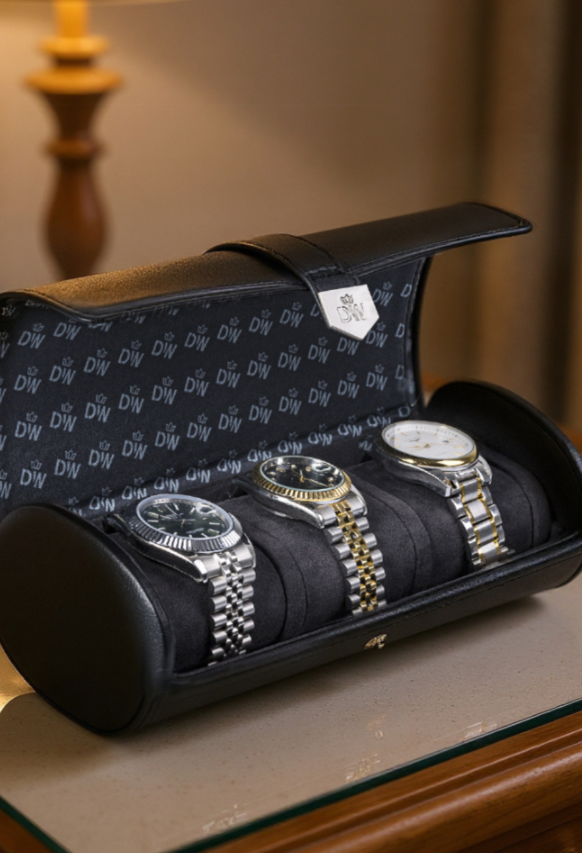
A nightstand watch roll makes it easy to put away today’s watch and prepare tomorrow’s choice before bed. Three padded slots are often enough for a small daily rotation.
I choose a firm base that keeps the roll stable and a cover that helps protect the watches from dust. I keep only the watches I use regularly on the nightstand and store the rest in a separate box to prevent clutter.
I also leave enough space around the roll for other bedside essentials. Soft bedside lighting makes it easy to select a watch without needing a bright overhead light.
FAQs
Should smartwatches go in a watch box?
I prefer to keep my smartwatch on a dedicated charging stand or charging pad and use a padded watch box for traditional watches. This arrangement makes charging easier and reduces the risk of placing a smartwatch in a compartment that doesn’t fit its shape.
If I want both types of watches in one organizer, I look for a design with a separate charging area or a removable cushion that creates enough flat space. I also make sure the charging cable isn’t trapped under the lid and that the watch can charge according to the manufacturer’s instructions.
How do I stop watches from scratching each other?
I give each watch its own padded slot or use individual drawer dividers so the cases and bracelets don’t touch. I also avoid piling watches together in a drawer or leaving several loose pieces on a desk.
Metal bracelets and exposed clasps can scratch nearby watches, glasses, or other accessories. When traveling, I use a watch roll or zippered case with separate compartments and check that the contents cannot shift freely inside.
The most important rule is simple: every watch needs its own secure space, whether I’m storing two everyday favorites or a larger collection.
Conclusion
I find that the best way to organize smartwatches and traditional watches is to give each piece a dedicated space that suits its needs. A charging stand keeps my smartwatch ready for daily use, while padded watch boxes, drawer organizers, and travel cases help protect traditional watches from scratches and unnecessary movement.
I don’t need an expensive setup to keep my collection neat. I can start with a small desk stand or a simple padded organizer and upgrade as my collection grows. By keeping watches separated, avoiding direct sunlight, and choosing storage that fits my routine, I can keep my watches organized, protected, and easy to access every day.