12 DIY Window Seat Ideas for 2026
A window seat can become one of the most comfortable spots in your home when you choose the right cushion, add proper back support, and make the most of natural light. I like the idea of combining practical features with simple decorating touches, so the seat feels inviting without taking up extra space.
In this guide, I’m sharing 11 window seat ideas, from built-in kids’ nooks and sunny pillow arrangements to peaceful bay window retreats and modern wooden benches. You’ll also find tips for choosing durable materials, adding storage, improving evening lighting, and creating a relaxing place to read, rest, or enjoy the view.
Key Takeaways
- Choose a supportive, high-density foam cushion that holds its shape.
- Add pillows that support your back and make sitting more comfortable.
- Use drawers or open shelves to keep books, toys, and other essentials organized.
- Combine natural daylight with warm lamps or wall sconces for evening use.
- Select durable, easy-to-clean fabrics that suit your room and daily needs.
- Match the seat design to your available space, from small corners to large bay windows.
How to Make a Window Seat More Comfortable?
I would start with the seat’s height and depth before choosing any decorations. Your feet should rest comfortably, and the seat should give you enough room to sit without sliding forward or feeling cramped.
Next, I would invest in a firm cushion that supports your body instead of flattening under your weight. High-density foam is a useful option because it generally holds its shape better than very soft, low-density filling.
Back support also makes a difference. A few well-placed pillows can make a hard bench more comfortable, while a soft throw adds warmth during cooler evenings. I would finish the space with a nearby lamp, especially if I planned to use the seat for reading after sunset.
When these details work together, a window seat becomes more than a decorative feature. It can serve as a reading corner, a quiet place to relax, or extra seating for family and guests.
Built-In Kids Nook
A built-in window seat can make a child’s bedroom or playroom more organized without using much additional floor space. I would add open shelves on either side for books and small toys, then use drawers underneath to hide items that tend to make the room look messy.
For comfort, choose a colorful seat cushion with enough firmness for everyday use. Two supportive pillows can make the nook more inviting for reading, drawing, or taking a break between activities.
Lighting is another detail worth planning. A small lamp placed safely out of children’s reach can make the nook useful in the evening. Keep frequently used books and toys on the lower shelves so children can access them easily.
Sunny Pillow Lineup
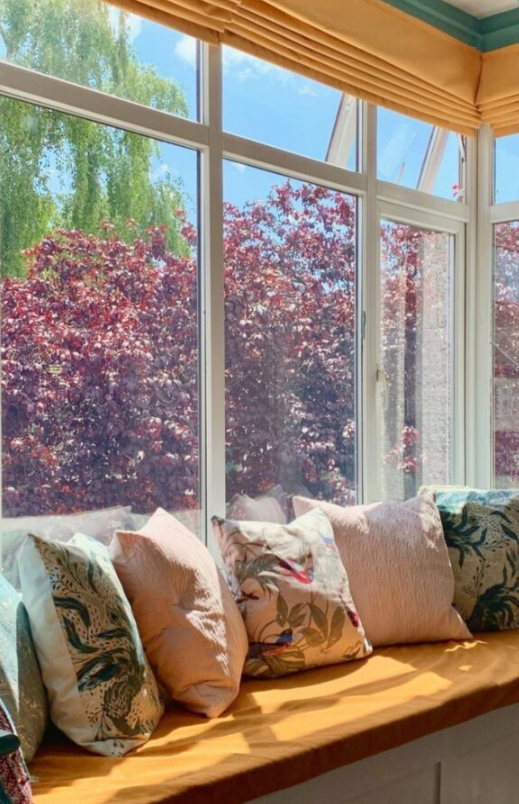
If your window seat already has a comfortable base, adding pillows is one of the easiest ways to improve it. I would mix different pillow sizes rather than buying a matching set, using larger pillows for back support and smaller ones as decorative accents.
A long bench cushion helps create a smooth, comfortable seating surface. Cotton, linen, and textured upholstery can add interest without making the arrangement look too busy.
Natural daylight makes this setup especially appealing in a living room or bedroom. To enjoy the seat after dark, add a floor lamp nearby or use a wall light with a warm-toned bulb. This gives you a comfortable spot for reading, having coffee, or simply looking outside.
Bay Window Cozy Spot

A bay window offers a natural place for a window seat because its shape can create a separate sitting area within the room. I would use a custom-fitted cushion that follows the window’s shape so there are no awkward gaps along the edges.
Neutral shades such as cream, beige, and soft gray work well when you want a calm appearance. You can introduce more texture with woven pillows, a knitted throw, or curtains that frame the window without blocking too much light.
For the most comfortable arrangement, make sure the cushion covers the entire seating surface and add pillows where you need back support. A nearby table lamp can make the corner feel more welcoming in the evening.
This idea works particularly well in bedrooms and living rooms where you want a peaceful place to sit without adding a separate armchair.
Kitchen Garden Seat
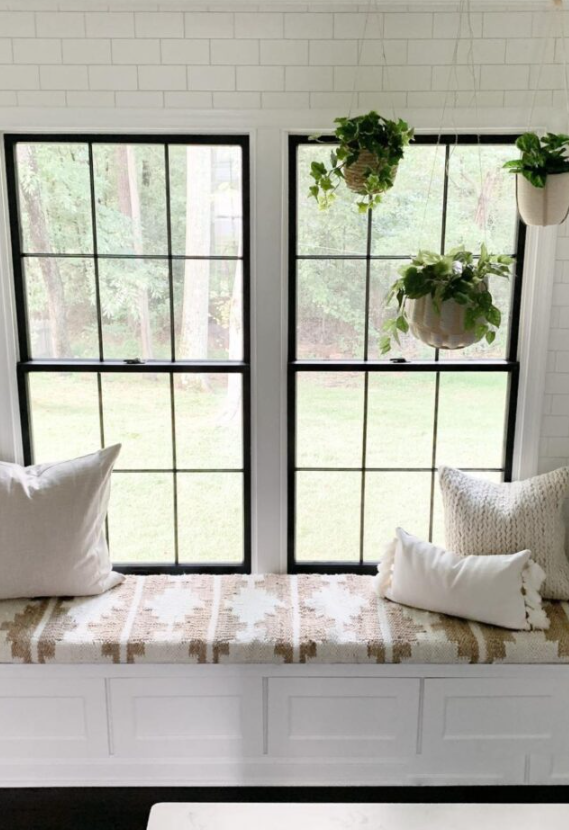
A kitchen window seat can create a pleasant place to enjoy breakfast, have a cup of tea, or take a short break while cooking. I would choose a sturdy bench with a patterned cushion and simple neutral pillows to keep the arrangement balanced.
If the window receives enough light, a few small plants on a nearby shelf can bring greenery into the space. Hanging plants may also work, provided they do not obstruct the window or interfere with the seating area.
Since kitchens are busy spaces, I would prioritize washable cushion covers and fabrics that are easy to maintain. This helps the seat stay fresh despite everyday use.
For evening comfort, a pendant light or suitable wall light can provide focused illumination. Make sure any lighting is positioned safely and does not interfere with kitchen work areas.
Neutral Lounge Bench

A neutral window seat is a good choice if you prefer a simple design that fits easily with the rest of your home. I would start with a plain wooden or built-in bench and add cushions in shades such as ivory, oatmeal, beige, or light gray.
The key is to mix textures rather than relying on lots of colors. A linen cushion, a woven pillow, and a soft throw can make the bench feel comfortable while keeping the overall look uncluttered.
This arrangement works well in living rooms, bedrooms, and reading corners. If you have limited space, choose slim pillows that provide support without taking up too much of the seating area.
A warm table lamp or wall sconce will make the bench useful after sunset. You can also add a small side table for a book, a drink, or reading glasses.
Cozy Curtain Retreat
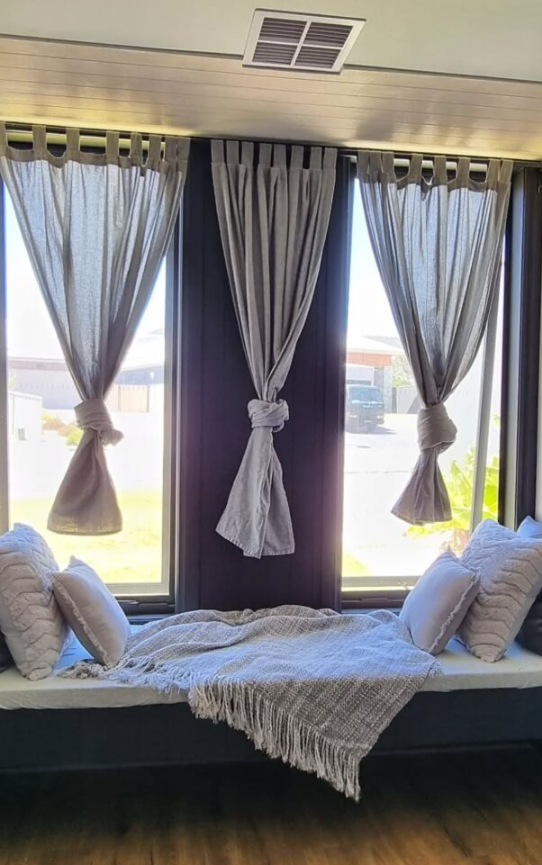
Soft curtains can make a window seat feel more private and comfortable, especially in a bedroom or a quiet living room corner. I would choose curtains that filter daylight gently while still allowing enough light into the room.
A long, fitted bench cushion provides the main seating comfort. Add several pillows at the sides and a textured throw to create a layered look without overcrowding the seat.
For a more practical setup, choose curtain lengths that do not bunch up on the cushion or get trapped under the seat. If you want the area to feel private, adjustable curtains allow you to control the light and view whenever needed.
A nearby lamp adds another layer of comfort for evenings. I would use warm lighting and soft fabrics to create a relaxing corner for reading or unwinding at the end of the day.
Minimal Wood Nook

A wooden window seat with clean lines is a practical choice for modern homes. The wood provides a simple, structured base, while a fitted cushion makes it comfortable enough for everyday use.
I would keep the surrounding design fairly simple and use a cushion in a color that complements the wood. Two firm pillows and a soft throw can add comfort without taking away from the clean appearance.
This style suits living rooms, home offices, and reading areas. If you need extra storage, the bench can include drawers or a lift-up compartment, depending on the available space and how often you need to access stored items.
A wall sconce is useful when you want to keep the surface beside the seat clear. Choose a warm-toned bulb and position the light so it illuminates your book or seating area without shining directly into your eyes.
Bright Built-In Bench
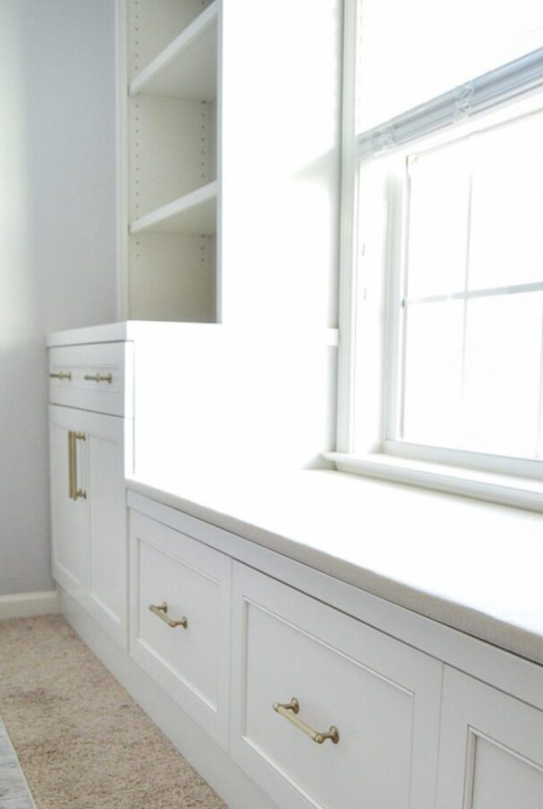
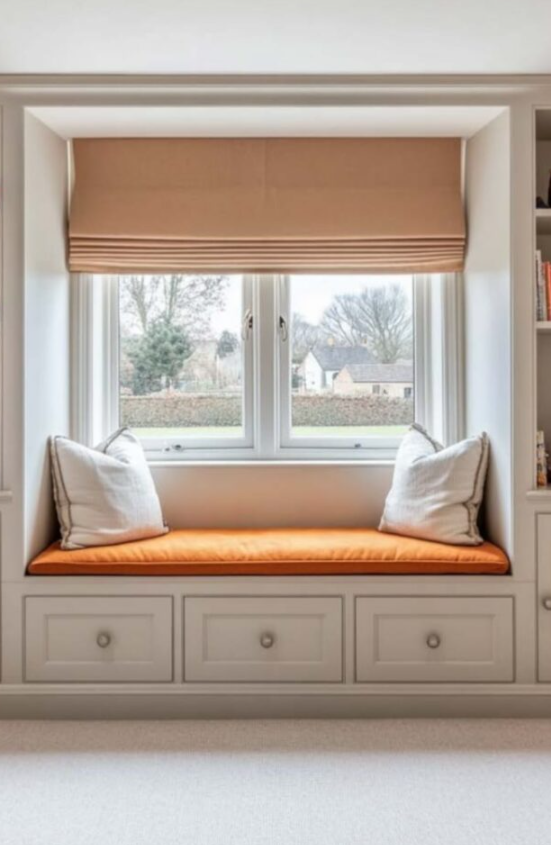
An all-white built-in window seat can make a room feel bright and open. I would use simple paneling or Shaker-style drawer fronts to give the bench a finished appearance that works with both traditional and modern interiors.
Brass or other understated hardware can add a little contrast without making the design too decorative. For the cushion, choose a fabric that suits the room and is easy to clean, especially if the seat will get regular use.
This design is particularly useful in bedrooms, home offices, and reading nooks. Drawers underneath provide space for spare blankets, books, or other items you want to keep close but out of sight.
Natural light will do much of the work during the day. For evenings, add a small table lamp or wall sconces so the seat remains useful when the room gets darker.
Shiplap Reading Nook
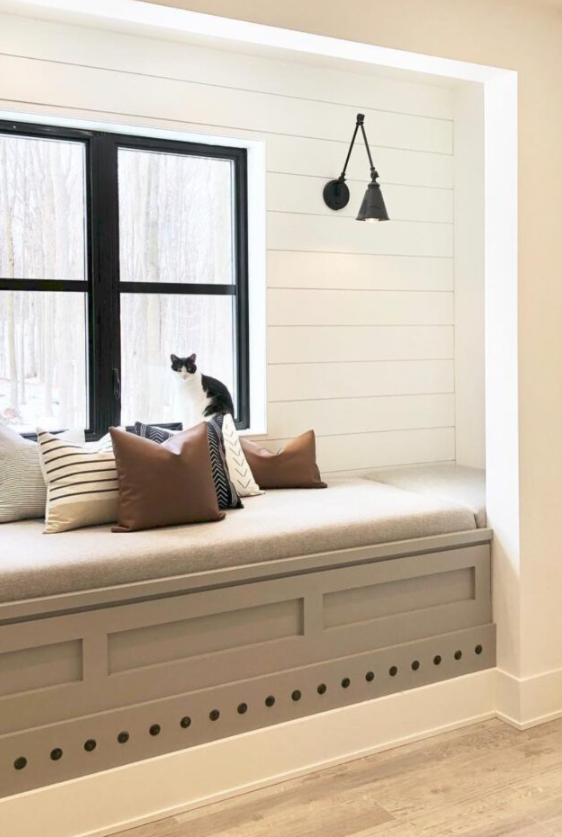
Shiplap walls can give a window seat a relaxed farmhouse appearance without requiring many decorative accessories. I would pair the wall treatment with a built-in wooden bench, a long cushion, and pillows in a few complementary neutral shades.
You can add interest with cream, taupe, muted green, or other earthy colors. Mixing linen, cotton, and woven fabrics helps the seating area feel comfortable without making it look overly styled.
A dark window frame can create contrast against light walls and cushions. If you want a similar effect without changing the window, darker accessories or a contrasting cushion can provide visual interest.
For reading, I would install a wall sconce beside the seat or use a nearby lamp that provides enough light for the page. Keep the cushion firm enough for sitting upright, and add a supportive pillow behind your back for longer reading sessions.
Tufted Corner Seat
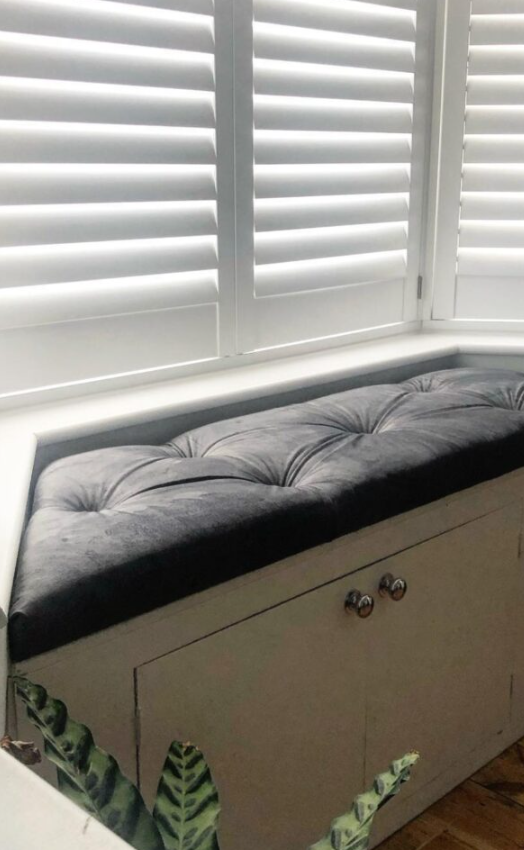
A tufted cushion can give a corner window seat a more traditional and finished look. The stitched details add texture, making the seat feel more decorative even when the rest of the design is simple.
I would choose a custom-fitted cushion in an upholstery fabric that suits the room. Velvet can create a rich appearance, while other durable fabrics may be easier to maintain in a frequently used seating area.
Keep the bench itself relatively simple so the tufting remains the main feature. A couple of plain pillows can add back support without competing with the cushion’s pattern or texture.
This style works well in bedrooms, formal sitting rooms, and traditional interiors. Soft lighting nearby helps create a relaxing atmosphere, while drawers beneath the seat can provide useful storage if the design allows for them.
Classic Sunlit Bench
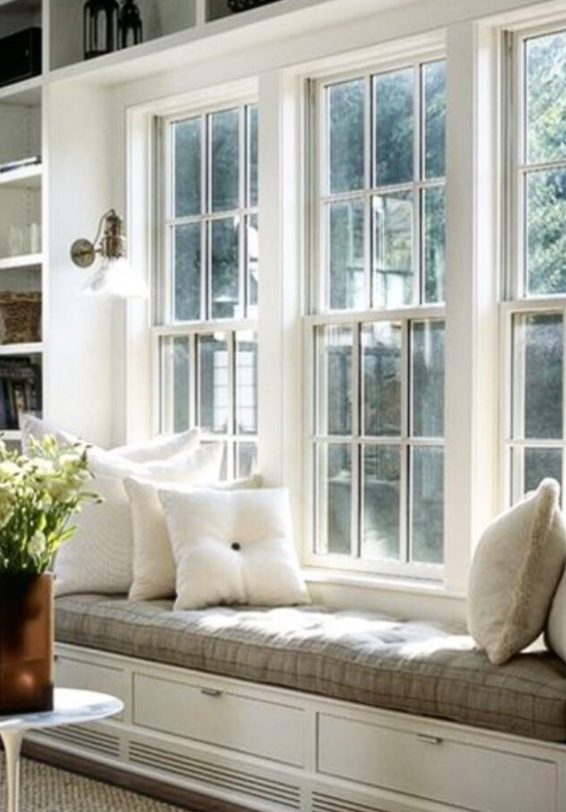
A classic window bench is a good option if you want a comfortable seat that will still look appealing as your decorating style changes. I would use a fitted cushion, a few neutral pillows, and a sturdy built-in base with simple details.
Tufted upholstery can make the seat feel more traditional, while plain linen or cotton cushions give it a more relaxed appearance. Choose the style that matches your furniture rather than adding too many different patterns.
Storage drawers underneath are useful for keeping blankets, books, and seasonal accessories out of sight. If you plan to store heavy items, make sure the bench is designed to support the added weight.
During the day, natural light can make this spot feel bright and welcoming. For evening use, place a lamp nearby or install suitable wall lighting so the bench can double as a reading or conversation area.
Soft Bay Hideaway

A soft bay window seat can create a quiet corner where you can read, rest, or enjoy the view. I would begin with a bench that follows the bay window’s shape and add a long cushion that fits the available seating area.
Light-colored pillows can keep the design feeling open, while full-length curtains frame the window and add softness. If you prefer a little contrast, introduce a muted color through one or two accent pillows instead of changing the entire palette.
Comfort should come before decoration. Choose a cushion with enough support for longer periods of sitting, and arrange the pillows so you can lean back naturally.
Since curtains and blinds help control daylight and privacy, I would also add a warm lamp for evenings. This makes the space more useful throughout the day, whether you want to read quietly or simply take a break.
FAQs
Are window seats good for people with anxiety?
A window seat may be a comforting place for someone who feels stressed or overwhelmed, although its effect will vary from person to person. Natural light, a familiar view, and a quiet place to sit may help some people feel more settled.
I would keep the area simple, with a supportive cushion, soft textiles, and lighting that feels comfortable rather than harsh. A view of trees, a garden, or the sky may also make the space more pleasant to spend time in.
You can make the nook feel more personal by adding a favorite blanket, a book, or a small plant. However, a window seat is not a treatment for anxiety, and anyone experiencing ongoing or severe anxiety may benefit from professional support.
What materials are best for window seats?
The best materials depend on how often you use the seat, how much sunlight reaches it, and whether children or pets will use the space. For the cushion, high-density foam is a useful option because it generally offers better shape retention than very soft foam.
For upholstery, cotton and linen provide a natural appearance, while performance fabrics can be a practical choice for busy households. Upholstery-grade velvet may suit a more formal design, but its care requirements depend on the specific fabric.
For the bench structure, plywood can provide a sturdy base when properly supported and constructed. MDF may also be suitable for certain built-in designs, particularly when it is kept dry and finished correctly. A hardwood frame or trim can add durability in areas that receive regular use.
If your window gets strong direct sunlight, look for fabrics designed to resist fading. I would also choose removable, washable cushion covers whenever possible, as they make routine cleaning much easier.