22 Under Sink Organization Kitchen Ideas for 2026
Under sink organization ideas can make a big difference when kitchen and bathroom cabinets become crowded with cleaning products, toiletries, and everyday essentials. I always recommend choosing storage solutions that fit around the plumbing instead of filling the entire cabinet with random baskets. Stackable shelves, sliding drawers, clear bins, and door organizers are practical ways to use the available space.
In this article, I am sharing 25 practical ways to organize the area under your sink. From pull-out baskets and labeled containers to acrylic drawers and vertical storage towers, these ideas help keep supplies separated and easy to reach. Whether you have a small bathroom vanity or a deep kitchen cabinet, you can create a functional storage system without making expensive changes.
Key Takeaways
- Use vertical organizers to make better use of cabinet height.
- Choose sliding baskets and drawers for easier access.
- Separate cleaning products and toiletries into different categories.
- Use clear containers to see what you have stored.
- Add door racks to make use of otherwise empty space.
- Keep plumbing connections accessible and check regularly for leaks.
Sliding Baskets
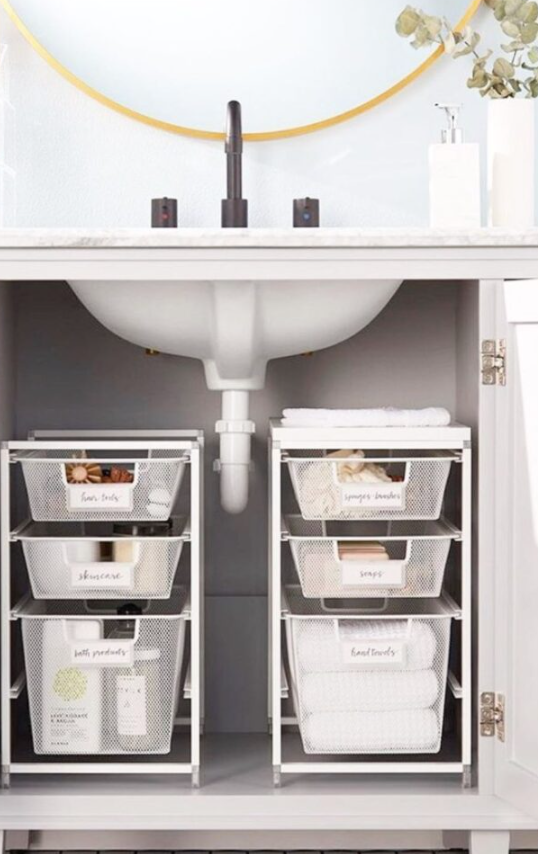
I like sliding baskets because they make deep under-sink cabinets much easier to manage. Instead of moving several bottles to reach something at the back, I can simply pull the basket forward and see everything.
A practical arrangement is to place two narrow pull-out basket units on either side of the plumbing. One side can hold cleaning sprays and dish soap, while the other can store sponges, dishwasher tablets, and replacement supplies.
Metal mesh baskets are a useful option because their open design allows air to circulate. Before purchasing them, measure the available width, depth, and height to make sure they fit around the pipes.
Pro Tip: Choose baskets with smooth sliding tracks and raised edges to prevent bottles from falling out.
Clear Drawers
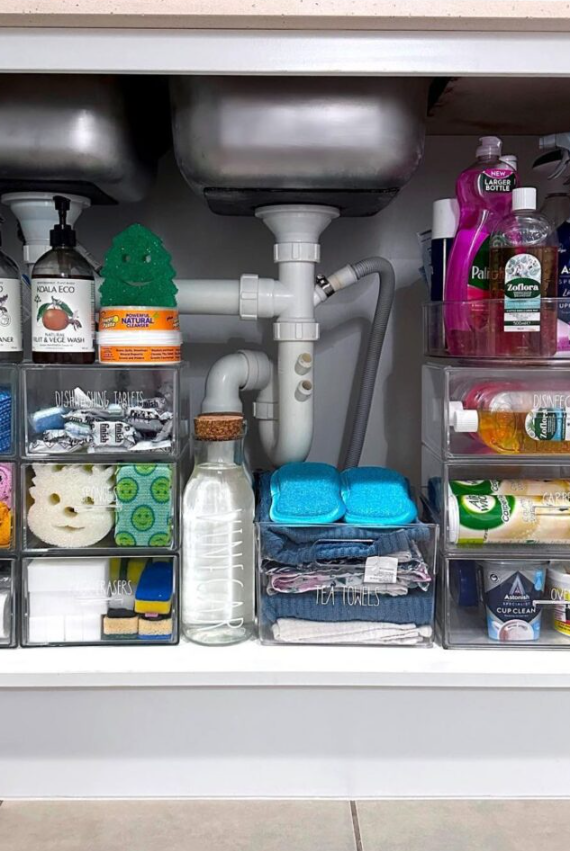
Clear drawers are a simple way to organize small cleaning supplies without mixing everything together. I find them especially useful for sponges, scrubbers, dishwasher tablets, cleaning cloths, and replacement brushes.
Instead of keeping everything in one large container, give each drawer a separate purpose. One can hold folded cloths, another can store sponges, and a deeper drawer can keep larger cleaning accessories.
Transparent organizers also make it easier to check which products are running low. You can see the contents without opening every drawer or moving other supplies.
Pro Tip: Keep moisture-sensitive products in their original packaging or suitable sealed containers.
Basket Towers
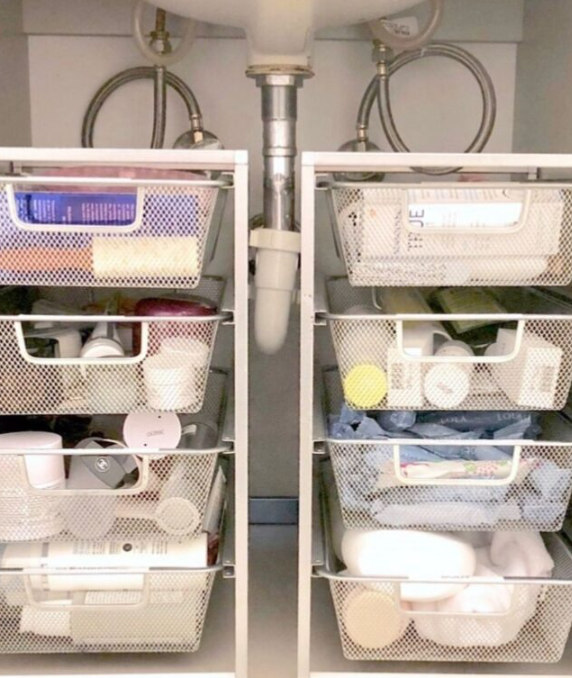
Basket towers are a good solution when the cabinet has plenty of height but limited floor space. Rather than spreading products across the bottom, I would use narrow vertical baskets to create several storage levels.
You can place a tower on each side of the plumbing if the cabinet layout allows it. Keep frequently used cleaning products in the middle baskets, larger refill bottles below, and smaller accessories in the upper section.
This arrangement makes it easier to separate household supplies while keeping the center area open for pipes.
Pro Tip: Store heavier bottles on the lower baskets to keep the tower stable.
Labeled Bins
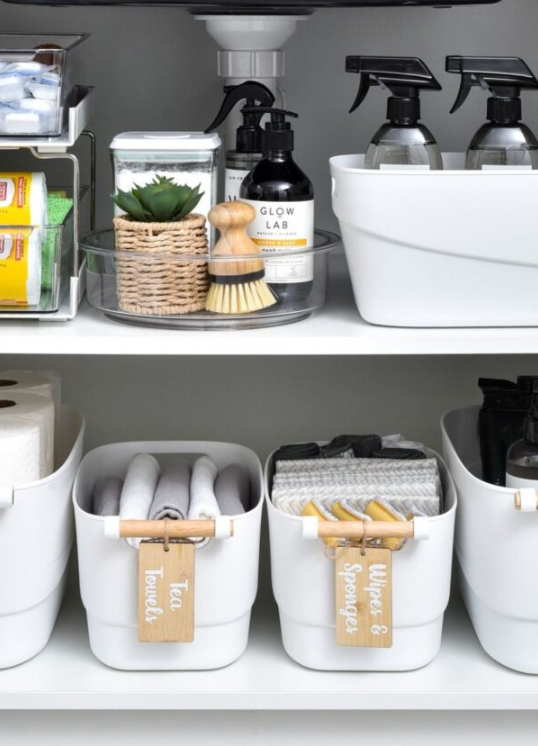
Labeled bins are one of my favorite affordable ways to organize an under-sink cabinet. They give every group of products a specific place and make it easier for everyone in the household to return items correctly.
I would use separate containers for cleaning sprays, dishcloths, sponges, trash bags, paper towels, and extra supplies. Bins with handles are particularly useful because you can pull out an entire category instead of reaching into the back.
Washable plastic containers are a practical choice for this area because they are easy to clean if something spills.
Pro Tip: Use short labels such as “Sponges,” “Cleaning Supplies,” and “Refills” to keep everything simple.
Category Zones

Clutter often builds up when different cleaning products are stored together without any organization. I recommend creating separate zones so each type of item has its own place.
You can make individual sections for gloves, dishwasher tablets, cleaning cloths, scrub brushes, trash bags, and spray bottles. Clear containers are helpful because you can see what is inside without opening every bin.
If your cabinet has an extra shelf, keep everyday products such as sponges and dishwashing supplies within easy reach. Backup products can go toward the back or on a lower level.
Pro Tip: Review each category regularly and remove empty containers or products you no longer use.
Pullout Shelves
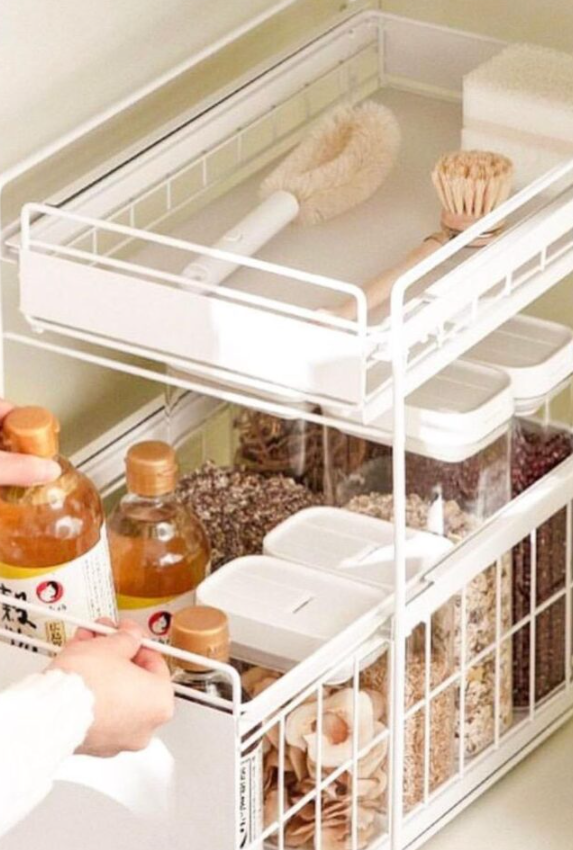
Pull-out shelves are especially useful for deep cabinets where products tend to disappear behind one another. I prefer this option because the entire storage level slides forward, making everything easier to reach.
A two-tier sliding organizer can provide separate spaces for different supplies. The lower basket is suitable for detergent, cleaning bottles, and larger containers, while the upper shelf can hold smaller accessories such as brushes and sponges.
Before buying a pull-out shelf, check the cabinet depth and the space around the plumbing. The organizer should slide smoothly without hitting the pipes or cabinet door.
Pro Tip: Choose a sturdy sliding rack that can support the weight of your cleaning products.
Shelf Layers
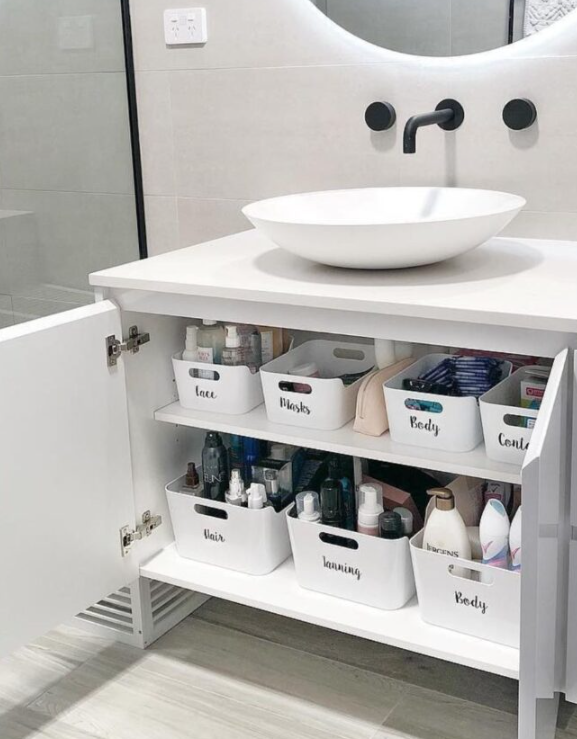
Adding an extra shelf can make a noticeable difference when the cabinet has unused vertical space. Instead of keeping everything on one crowded surface, you can create two separate storage levels.
I would use the upper shelf for smaller products, skincare supplies, cleaning accessories, and folded cloths. The lower section can hold taller bottles, bulk cleaning products, and larger containers.
You can also add small handled bins to keep similar supplies together. This makes it easier to remove an entire group without disturbing everything else.
Pro Tip: Measure your tallest bottles before installing an extra shelf so you have enough clearance on both levels.
Layered Zones
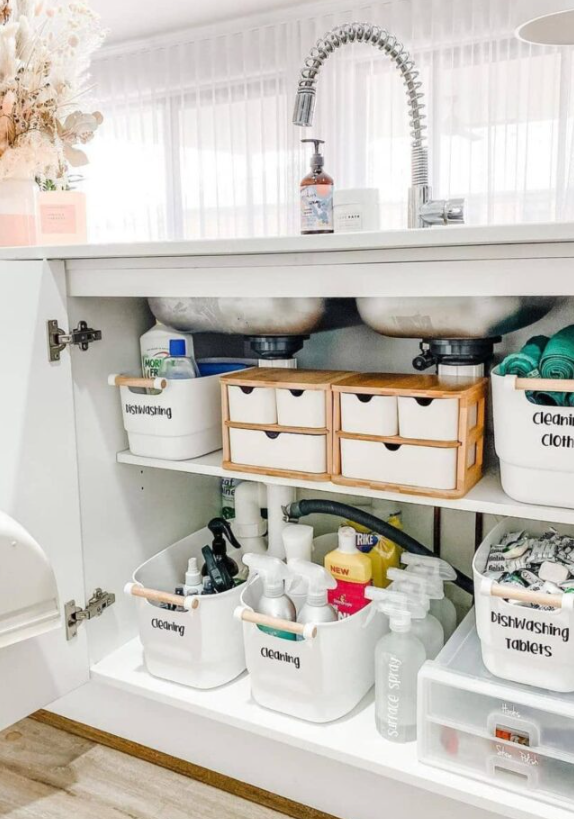
Layered storage helps separate everyday essentials from larger cleaning supplies. I like this arrangement because it creates more usable space without requiring a complete cabinet makeover.
The upper level can hold smaller containers, dishwasher tablets, scrubbers, and replacement cleaning accessories. The lower section is better for taller spray bottles, detergent, and refill products.
Containers with handles make this setup easier to maintain because you can lift out an entire group whenever you need to clean the cabinet.
Pro Tip: Keep the middle section open around the pipes instead of forcing organizers into every available gap.
Tier Racks
Tier racks are another practical way to use vertical cabinet space. They allow you to organize several types of products without spreading everything across the cabinet floor.
I would place larger detergent and cleaning bottles on the lower tray. The upper level can hold smaller items such as dishcloths, sponges, brushes, and extra soap.
Narrow racks are particularly useful when the plumbing runs through the center. You can place one on each side to create two separate storage areas.
Choose a sturdy metal or thick plastic frame that can support heavier household supplies.
Pro Tip: Check the weight capacity before placing large liquid bottles on a tier rack.
Cabinet Pullouts
Cabinet pullouts make it easier to access products stored deep inside an under-sink cabinet. Instead of leaning down and moving several containers, you can slide the storage rack forward.
A two-level wire pullout is a useful option for separating larger and smaller products. The bottom basket can hold detergent and dish soap, while the upper section can store cleaning brushes, sponges, and smaller accessories.
If your cabinet has enough room, you can install separate pullout units on both sides of the plumbing. This keeps the middle accessible while making better use of the cabinet walls.
Pro Tip: Check the full sliding distance before installation to make sure the rack does not hit the cabinet door.
Acrylic Organizers
Acrylic organizers are useful when you want to keep small household supplies visible and separated. Their transparent design makes it easy to check what is inside without opening every container.
I would use wider bins for dishwasher tablets, folded towels, and larger cleaning accessories. Slimmer drawers can hold scrubbers, brushes, sponges, and replacement pads.
Place these organizers along the front and sides of the cabinet while leaving enough room in the center for plumbing. This arrangement can also work well in bathroom vanity cabinets.
Pro Tip: Choose washable acrylic containers and dry them properly after cleaning.
Drawer Stacks
Small items often create the biggest mess under the sink. Cotton pads, wipes, skincare refills, and grooming accessories can easily disappear when everything is stored in one open container.
I like stacking drawer organizers because each drawer can have a separate purpose. One can hold cotton pads, another can store wipes, and a deeper drawer can keep small bottles or grooming products.
Transparent drawers make it easier to see the contents without opening every section. They also help prevent small products from getting buried under larger items.
Pro Tip: Leave a little room inside each drawer so products do not get stuck when opening or closing it.
Cube Containers
Extra household supplies can quickly take over an under-sink cabinet if they do not have a proper storage area. Travel toiletries, replacement products, extra sponges, and unopened refills all need somewhere to go.
Stackable cube containers are a practical way to organize these items. Larger containers can hold bulkier supplies, while smaller baskets can keep travel-size products and accessories together.
I recommend placing these containers along the sides of the plumbing and keeping everyday products separate from backup supplies.
Pro Tip: Use clear containers with simple labels so you can check your backup supplies before purchasing replacements.
Front Access
Keeping frequently used products near the front of the cabinet makes everyday tasks much easier. I always recommend arranging supplies according to how often you use them.
Open bins are useful for cleaning brushes, gloves, sponges, and spray bottles. Wider containers can hold paper towels and larger household supplies if there is enough room.
Smaller drawer organizers can sit along one side for dishwasher tablets, wipes, and replacement cloths. This prevents loose accessories from spreading across the cabinet floor.
Pro Tip: Keep daily essentials at the front and occasional-use products toward the back.
Stack Drawers
Stacked drawers help turn a small section of cabinet space into useful vertical storage. I find them especially helpful for organizing small cleaning tools that usually get mixed together.
You can give each drawer a separate category. Keep sponges in one, cleaning pads in another, and gloves or replacement cloths in a third.
Clear drawers make the arrangement easier to maintain because you can see what each section contains. Place the drawer tower beside the plumbing to keep the middle area accessible.
Pro Tip: Choose stackable drawers with a stable base so they do not wobble when opened.
Vanity Drawers
Bathroom vanity cabinets often become crowded with skincare products, makeup, hair accessories, and everyday toiletries. I prefer using clear vanity drawers to give these items separate storage spaces.
Small acrylic drawers can hold makeup, cotton pads, skincare products, and grooming accessories. Taller containers are better for lotions, shampoo bottles, hair products, and other items that need to remain upright.
If the plumbing runs through the middle, arrange the drawers along the cabinet walls. This creates additional storage without blocking access to the drain.
Pro Tip: Keep personal care products separate from household cleaning supplies.
Product Rows
Arranging products in rows is a simple way to make a bathroom vanity more functional. Instead of allowing bottles and toiletries to sit randomly, group them by type and keep frequently used items near the front.
Tall containers can hold deodorant, moisturizer, toothpaste, and other daily essentials. Smaller organizers are useful for contact lens supplies, wipes, face towels, and replacement toothbrush heads.
If your cabinet has an extra shelf, use it for lightweight daily products and keep larger bottles below.
Pro Tip: Group products according to your morning and evening routines so everything is easy to reach.
Door Storage
The inside of a cabinet door is often overlooked, but it can provide useful additional storage. I like this idea because it makes use of an area that usually stays empty.
You can attach a slim wire rack or small storage basket to hold lightweight items such as sponges, dish brushes, gloves, and cleaning accessories.
Before installing anything, check that the rack will not hit the pipes or products when the cabinet door closes. Make sure the door material can also support the organizer.
Pro Tip: Keep heavier bottles inside the cabinet rather than placing too much weight on the door.
Clear Layers
When everything sits at the same level, an under-sink cabinet can become crowded quickly. Creating separate storage layers helps make better use of the available height.
The upper trays can hold everyday products such as soap, cleaning cloths, scrub brushes, and small bottles. Deeper drawers or bins below can store refills, dishwasher tablets, extra sponges, and folded towels.
This arrangement works well when the cabinet has enough height for stacking organizers. Make sure the upper containers are still easy to reach.
Pro Tip: Use stable organizers designed for stacking rather than placing loose containers on top of one another.
Label System
A labeling system makes it easier to maintain an organized cabinet, especially when several people use the same kitchen or bathroom.
I recommend giving each container a specific purpose. You can have separate bins for wipes, gloves, dishcloths, dishwasher tablets, brushes, and cleaning refills.
Use smaller containers for everyday supplies and larger bins for backup products. Water-resistant labels are a practical choice because the area under the sink can occasionally become damp.
Pro Tip: Keep labels short and easy to read so everyone knows where products belong.
Twin Stacks
Twin drawer stacks create a balanced arrangement when the plumbing runs through the center of the cabinet. Instead of putting all the organizers on one side, you can use two smaller storage towers along the cabinet walls.
Clear acrylic drawers are useful for storing cotton pads, beauty accessories, skincare refills, wipes, and grooming supplies.
You can also give each side a different purpose. One stack can hold everyday toiletries, while the other stores extra products and replacement supplies.
The open center section remains available for pipes and taller bottles.
Pro Tip: Measure both sides separately because the plumbing may not be perfectly centered.
Slide Drawers
Wooden slide-out drawers are another option for making deep cabinets easier to use. They bring stored products forward instead of making you reach behind the front row of bottles.
I would use the upper drawer for smaller cleaning tools, sponges, brushes, and dishwashing accessories. The lower drawer can hold larger spray bottles, cleaning products, and refill containers.
Some designs also include side compartments for smaller items such as gloves, cloths, and replacement sponges.
If you choose wooden organizers, look for a properly sealed finish and check regularly for signs of water damage.
Pro Tip: Make sure the drawers slide out fully without blocking access to plumbing connections.
FAQs
How do you organize under the sink when pipes are in the way?
I recommend using narrow storage organizers on both sides of the plumbing instead of trying to fill the entire cabinet. Slim drawer stacks, pull-out racks, and small labeled bins can make good use of the available space.
Vertical storage is particularly helpful because it creates additional levels for household supplies. You can also use small containers along the cabinet walls while leaving the center open.
Before purchasing organizers, measure the space around the drain and water connections. Make sure you can still reach the pipes if maintenance or repairs are needed.
What should you not store under the kitchen sink?
I would avoid storing items that can be damaged by moisture or a possible plumbing leak. Paper products, food, cardboard packaging, and small electrical appliances are not ideal for this area.
Instead, use the cabinet for suitable household cleaning supplies, dishwasher accessories, washable cloths, and scrub brushes. Keep cleaning products in their original containers and follow their storage instructions.
It is also important to check the cabinet regularly for leaks, dampness, and unusual odors. If you notice water damage, fix the problem before putting organizers and supplies back inside.