24 DIY Fireplace TV Wall Ideas for 2026
A DIY media wall can give your living room a fresh look by bringing the TV, fireplace, storage, and lighting together in one well-planned feature. I would start by deciding where the TV will sit, how much space the fireplace needs, and whether built-in shelves or cabinets would make the room more useful.
There are plenty of ways to create a media wall without making the project too complicated. From floating wooden mantels and stone surrounds to vertical slats, hidden storage, and LED-lit shelves, the right design depends on your room size, budget, and preferred style. In this guide, I’m sharing 23 DIY media wall ideas, along with practical design tips and answers to common questions about materials and installation.
Key Takeaways
- Plan the TV position, fireplace dimensions, wiring, and wall depth before building.
- Use stone veneer, shiplap, MDF panels, or plaster to create different looks.
- Add built-in cabinets and recessed niches when you need extra storage.
- Use warm LED strips and shelf lights to create a comfortable evening atmosphere.
- Check fireplace heat-clearance requirements before mounting a TV above it.
Is it hard to build a DIY media wall?
Building a DIY media wall is manageable for someone with basic DIY skills, especially when the design uses a simple frame, decorative panels, and an electric fireplace. The difficult part is usually planning the layout and making sure every component fits correctly.
Before I start a project like this, I would mark the TV position, measure the fireplace opening, and decide where cables and power outlets will go. These details are easier to handle before the frame is covered.
You don’t necessarily need specialist tools for a straightforward decorative wall, but more complex projects involving electrical work, structural changes, or heavy materials may require professional help. I would also check the fireplace manufacturer’s instructions for heat clearances before installing a TV above it.
Taking accurate measurements and completing one stage at a time can make the entire project easier to manage.
Save these DIY media wall ideas for your next living room project.
1. Floating Mantel Focus

Design idea: A clean, modern wall with a wooden mantel.
A floating mantel is a good choice when I want the media wall to look simple without filling it with shelves and cabinets. The combination of a recessed TV, a linear fireplace, and a thick timber beam creates a clear focal point.
I would build a frame to accommodate the selected TV and electric fireplace, then finish the surrounding surface in a light neutral color. The wooden mantel adds warmth and breaks up the plain wall.
Keep the surrounding décor minimal so the fireplace and mantel remain the main features. Soft lighting from the fireplace can provide a cozy evening atmosphere without making the wall feel crowded.
2. Built-In Balance
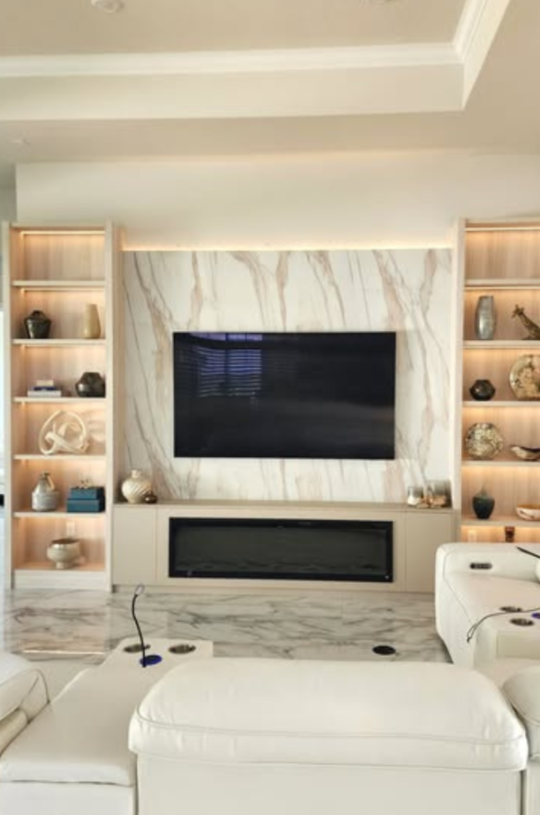
Design idea: Matching storage units on both sides of the fireplace.
Built-in cabinets on either side of the TV create a balanced look that works well in family living rooms. I would place the TV and fireplace in the middle, then add matching shelves or short cabinets on both sides.
Light-colored finishes help the wall feel open, while wooden shelves or darker hardware can add contrast. Wall sconces and discreet shelf lighting can also highlight decorative pieces without overwhelming the space.
For a more polished result, I would use consistent cabinet finishes and leave enough open space on the shelves. This helps the media wall look like a planned part of the room rather than a separate addition.
3. Stone Panel Center
Design idea: A large stone-look panel behind the TV and fireplace.
A stone or marble-look center panel can turn a simple media wall into a striking feature. I would keep the TV and fireplace aligned within the central panel and use open shelving on either side to balance the heavier finish.
Large-format porcelain panels, suitable stone veneer, or decorative stone-look boards can create different effects depending on the budget. A lighter finish works well in rooms with limited natural light, while darker stone can create a stronger contrast.
Warm LED strips beneath the shelves can highlight the panel’s texture. Before choosing a material, I would check its weight, installation requirements, and suitability for the fireplace surround.
4. Stone Column Wrap
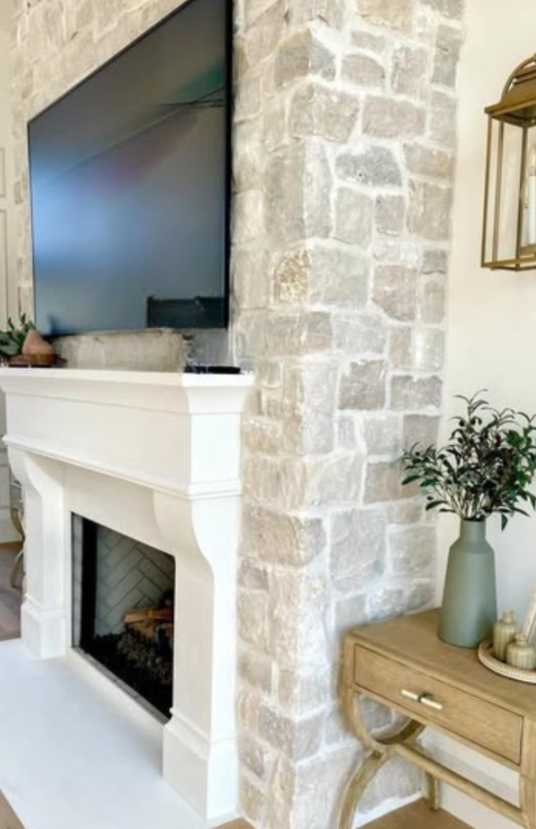
Design idea: A stone-covered section that gives the wall extra character.
Instead of covering the entire wall, I would wrap the fireplace section in stone veneer and position the TV just above it. This creates a vertical feature that stands out without requiring extensive built-in cabinetry.
Lightweight veneer can be easier to handle than full stone, although the chosen product still needs the correct support and installation method. Keeping the remaining wall simple allows the textured column to become the main attraction.
Natural daylight can bring out the stone’s color variations, while a few carefully positioned lights help it stand out in the evening.
5. Brick Stove Feature

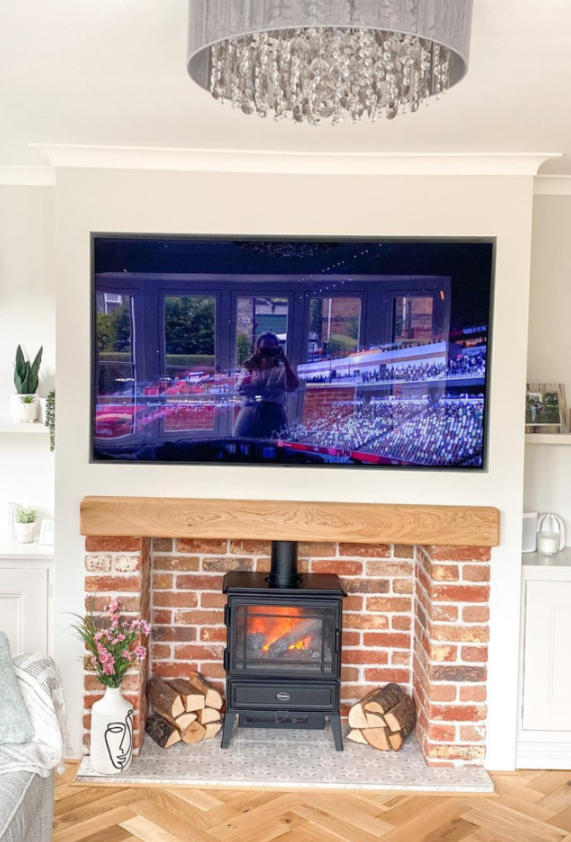
Design idea: Traditional brick paired with a wooden mantel.
Brick is a good option when I want a media wall with a more traditional, rustic feel. Rather than covering every surface with modern panels, I would preserve an existing brick fireplace or use a suitable brick finish around the stove.
A wooden beam above the fireplace softens the overall appearance and adds natural texture. The TV can sit above the fireplace only when the installation meets the appliance’s clearance and temperature requirements.
I would also keep cables neatly concealed and use subtle side lighting to highlight the brickwork. This design suits homes where natural materials and a relaxed atmosphere are more important than a completely sleek finish.
6. Full Wall Built-In
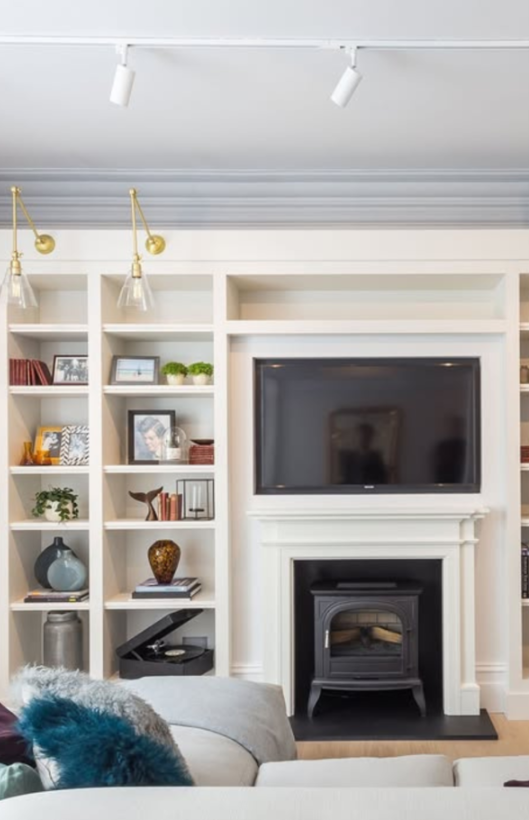
Design idea: A complete wall with a central media area and surrounding storage.
A full-wall built-in is useful when the living room needs both a focal point and plenty of storage. I would position the TV and fireplace in the center, then extend cabinets, drawers, and shelving across the remaining wall.
This arrangement provides room for books, games, decorative accessories, and everyday items that might otherwise clutter the living room. Closed cabinets are especially helpful for hiding cables, remotes, and electronic equipment.
To keep the wall looking organized, I would repeat the same cabinet finish throughout and limit the number of decorative colors. Integrated shelf lighting can add depth without making the design too busy.
7. Shelf Lighting Layers
Design idea: Open shelves with several sources of light.
Open shelving makes a media wall feel more personal because I can display books, framed photographs, plants, and a few favorite decorative pieces. Adding different types of lighting makes these shelves useful during the day and attractive at night.
I would combine discreet shelf lights with general room lighting rather than relying on one bright fixture. Adjustable spotlights can illuminate specific areas, while warm LED strips create a softer background glow.
The main thing to remember is that lighting should complement the TV rather than cause glare on the screen. Dimmable lights are especially useful because they allow the room to change from a bright family space to a comfortable evening setting.
8. Vaulted Stone Feature

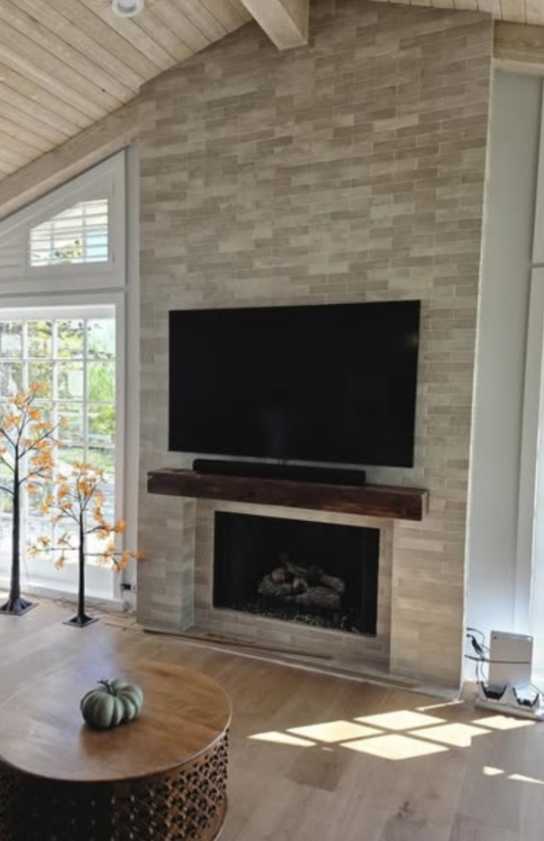
Design idea: A full-height feature wall beneath a high or sloping ceiling.
A vaulted ceiling gives me an opportunity to extend the media wall vertically instead of stopping just above the TV. Stone veneer or textured panels can run from the floor toward the ceiling, making the entire wall feel connected.
I would keep the TV and fireplace aligned within the main section and use small, carefully positioned ceiling lights to highlight the finish. This approach works particularly well in rooms where a short media unit would look too small against the high ceiling.
Because a full-height feature can use a substantial amount of material, I would measure the entire surface before choosing the finish. A simpler side treatment can help balance the design without adding unnecessary cost.
9. LED Shelf Glow
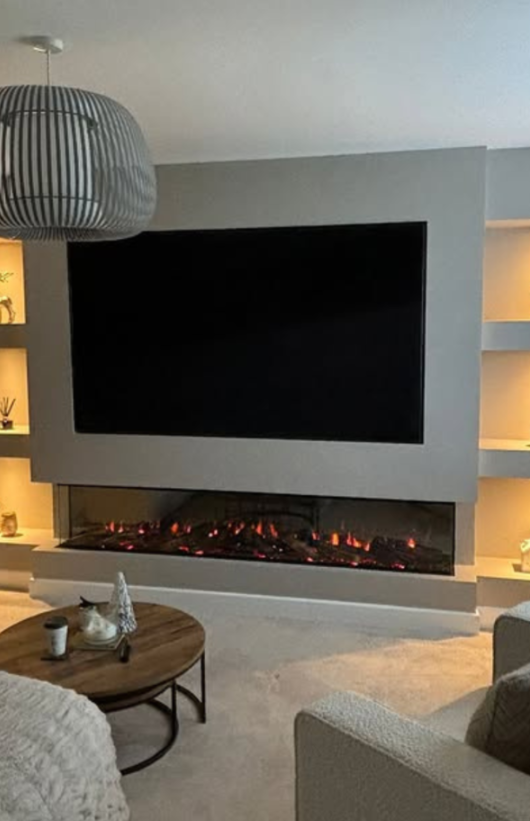
Design idea: Floating shelves with concealed LED strips.
LED-lit floating shelves are an easy way to give a media wall a contemporary appearance without building a complete cabinet system. I would place a few slim shelves beside the TV and fireplace, then conceal the lighting beneath or behind them.
Warm white LEDs create a comfortable atmosphere, while neutral white lighting gives the wall a cleaner, brighter appearance. The best choice depends on the room’s existing lighting and the colors of the walls and furniture.
I would plan the power supply and cable routes before installing the shelves. This keeps the finished design neat and prevents visible wires from distracting from the clean lines.
10. Recessed Shelf Niches
Design idea: Built-in display niches on either side of the media area.
Recessed niches provide storage and display space without projecting far into the room. I would place narrow niches beside the TV and fireplace, keeping the central area free from unnecessary decoration.
Painting the niches the same color as the surrounding wall creates a seamless appearance. If I want more contrast, I could use a slightly darker interior finish or add a small spotlight to highlight the objects inside.
This design works well when floor space is limited but there is room to create a deeper wall structure. Before cutting into an existing wall, I would check for structural elements, plumbing, and electrical wiring.
11. Compact Corner Build
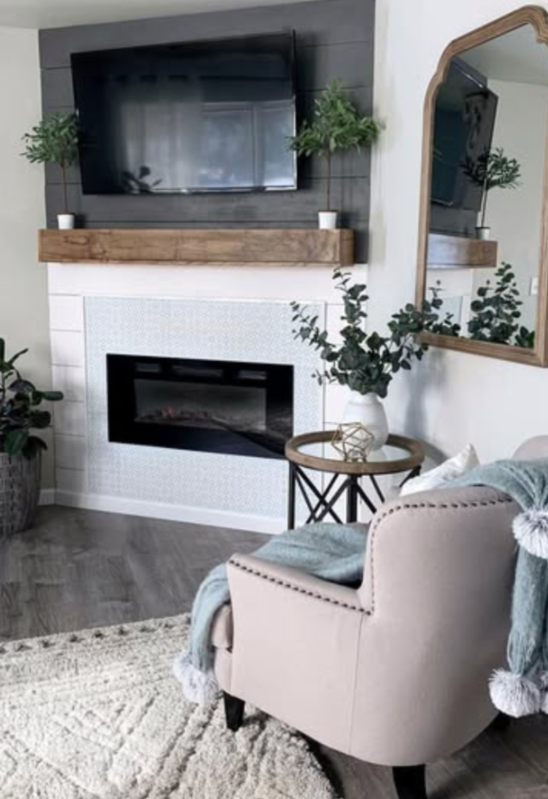
Design idea: A small media wall designed for a corner.
A compact corner media wall is worth considering when the living room does not have a large uninterrupted wall. I would use a smaller fireplace, a shallow frame, and vertical decorative panels to create height without taking up too much space.
A wall-mounted TV and a narrow floating shelf can help preserve floor space. I would avoid bulky side cabinets and use only the storage that the room genuinely needs.
Light finishes and simple styling can make the corner feel open rather than crowded. Careful measurements are particularly important here because the TV, seating, and fireplace all need to fit comfortably within a limited area.
12. Shiplap Center Strip
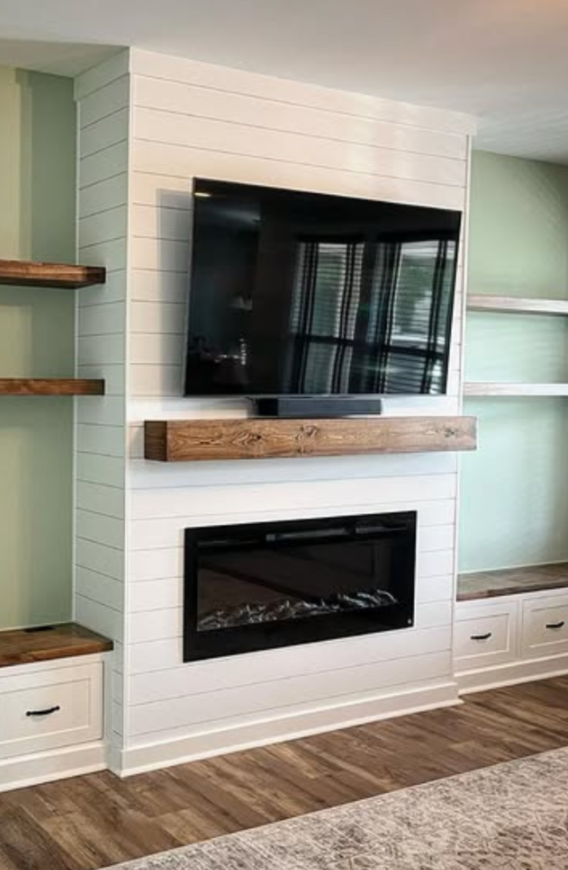
Design idea: Shiplap behind the TV without covering the whole wall.
Shiplap is a practical way to add texture without committing to an elaborate feature wall. I would install it across the central section behind the TV and fireplace, leaving the surrounding wall plain.
Vertical boards can make the wall appear taller, while horizontal boards create a wider visual effect. Painting the shiplap white, beige, or a muted color keeps the design easy to coordinate with the rest of the living room.
Base cabinets can provide useful storage beneath the TV, while open sides prevent the arrangement from feeling too heavy. A few small shelf lights are enough to finish the look.
13. Layered Shelf Warmth
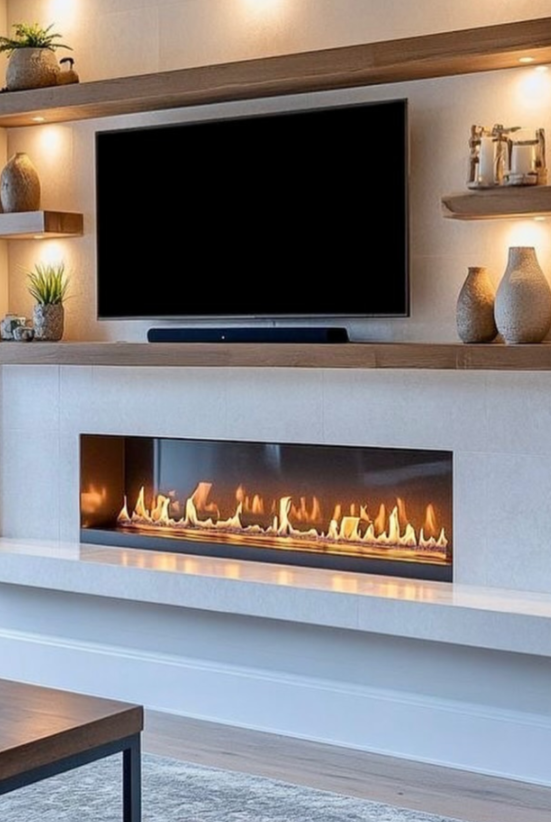
Design idea: Thick floating shelves with soft under-shelf lighting.
I would choose thick floating shelves when I want the media wall to look finished even when the TV is switched off. The shelves create depth around the screen and offer space for a few carefully selected accessories.
Keeping the shelves evenly spaced helps the layout look balanced. Hidden cable channels can also keep wires out of sight, particularly when the shelves hold streaming devices or other electronics.
Warm puck lights or LED strips beneath the shelves provide a soft glow without requiring additional decorative fixtures. I would leave some empty space between objects so the arrangement feels relaxed instead of cluttered.
14. Framed Fireplace Core
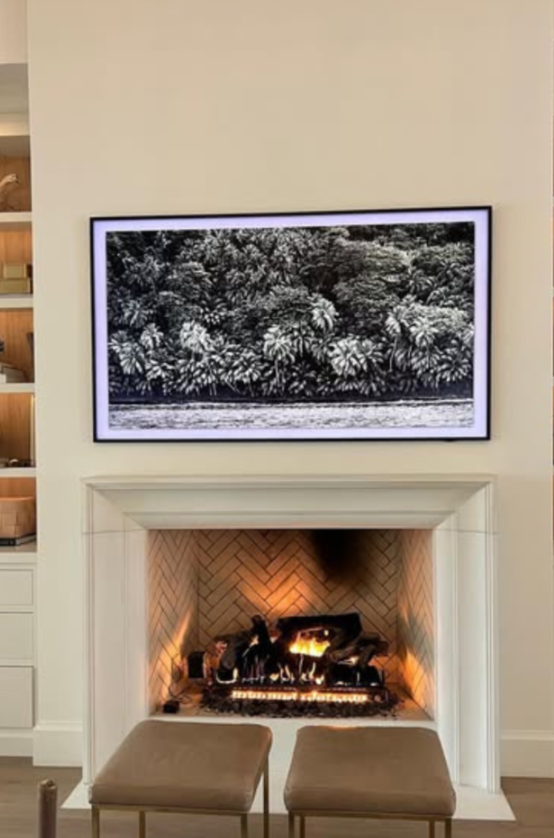
Design idea: A central TV and fireplace surrounded by built-in storage.
A framed fireplace core brings the TV and fireplace together as one central feature. I would create a defined surround for both elements and add cabinets or shelving along the outer edges.
This arrangement works well in family rooms because it leaves the center visually clear while providing space for everyday belongings. The surround can be finished in painted panels, stone veneer, or another material that suits the home’s style.
A wooden mantel can separate the TV from the fireplace visually, but it should never replace the clearance requirements specified by the fireplace manufacturer. Small, warm shelf lights can complete the design without distracting from the central feature.
15. Stone Symmetry Wall
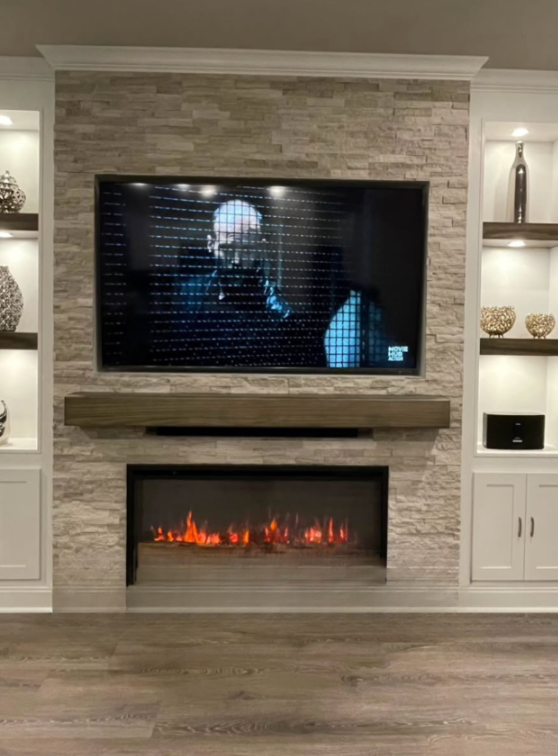
Design idea: A stone center balanced by matching built-ins.
For a more refined media wall, I would use stone or a stone-look finish in the middle and matching built-ins on both sides. The TV and fireplace remain the main focus, while the side units create a balanced frame.
A floating wooden mantel can soften the stone and introduce another natural material. Lightweight stone veneer may simplify installation, provided the wall structure and adhesive system are suitable for the product.
I would keep the cabinet colors consistent and avoid adding too many decorative finishes. This allows the stone texture to stand out while keeping the rest of the living room calm and coordinated.
16. Soft Panel Contrast
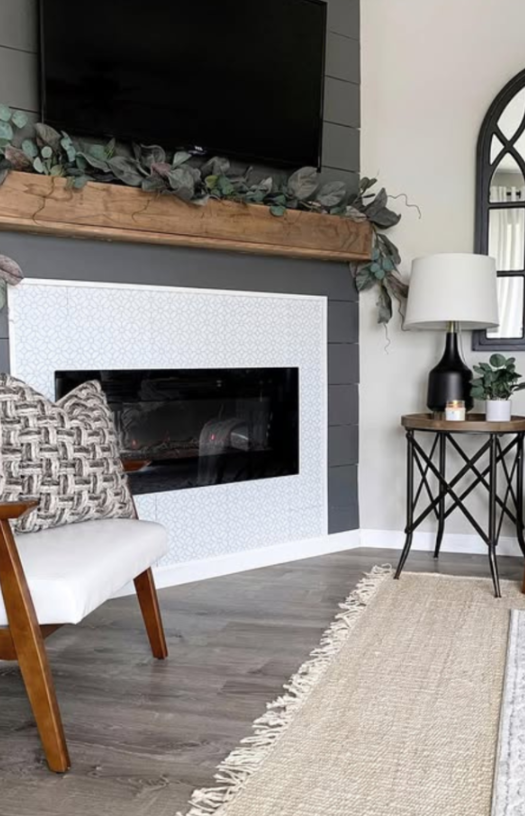
Design idea: Dark panels behind the TV with a lighter fireplace surround.
Using contrasting colors can give a media wall more depth without requiring expensive materials. I would install dark vertical panels behind the TV and keep the fireplace surround and nearby walls in a lighter shade.
The darker background helps the TV blend into the wall when the screen is off. A wide wooden mantel adds warmth and creates a visual break between the two colors.
This arrangement works best when the dark section is proportionate to the room. In a small living room, I would limit the darker finish to the central area so the entire wall does not feel too heavy.
17. Artwork Over TV
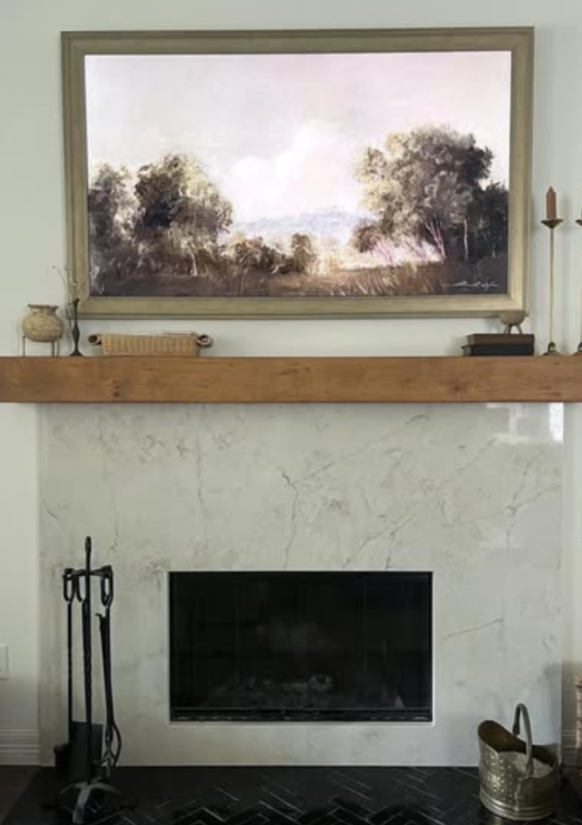
Design idea: A TV arrangement that allows artwork to remain the focus.
A TV can dominate a living room even when it is not being used. If I wanted the wall to feel more like a traditional living space, I would consider a suitable drop-down or concealed TV system that allows artwork to take center stage when the screen is not in use.
A simple wooden mantel and a stone or slab-style fireplace surround can support this design without competing with the artwork. I would keep surrounding decorations minimal and allow natural light to highlight the materials.
Concealed TV systems require more planning than a standard wall-mounted screen, so I would check the mechanism, available clearance, wiring access, and installation requirements before building the enclosure.
18. Dark Panel Statement
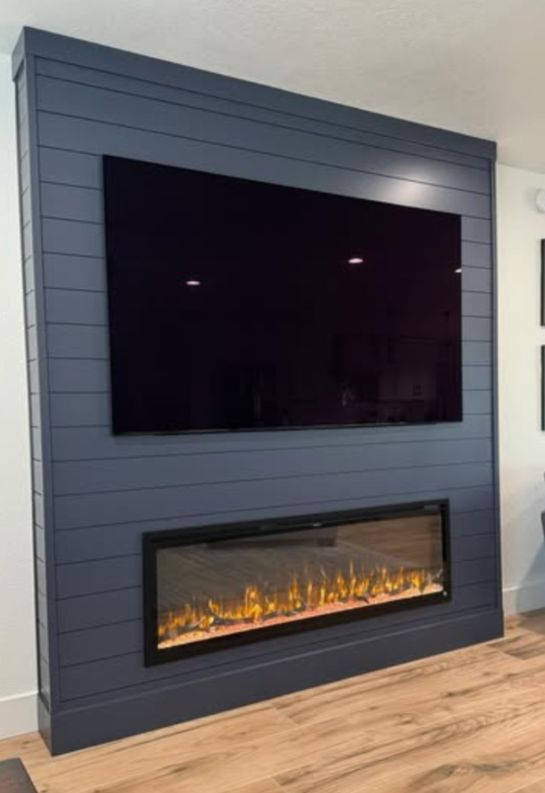
Design idea: A bold media wall with dark horizontal panels.
Dark horizontal panels can create a dramatic backdrop for a TV and linear fireplace. I would use painted MDF or another suitable decorative panel system to create a consistent surface across the central wall.
The dark finish makes the TV less noticeable when it is switched off and gives the fireplace a strong visual presence. To prevent the room from feeling too dark, I would balance the feature with lighter flooring, furniture, or surrounding walls.
Recessed ceiling lights or subtle side lighting can provide enough illumination without taking attention away from the fireplace. Before selecting the panels, I would check their suitability for the intended installation area.
19. Vertical Slat Frame
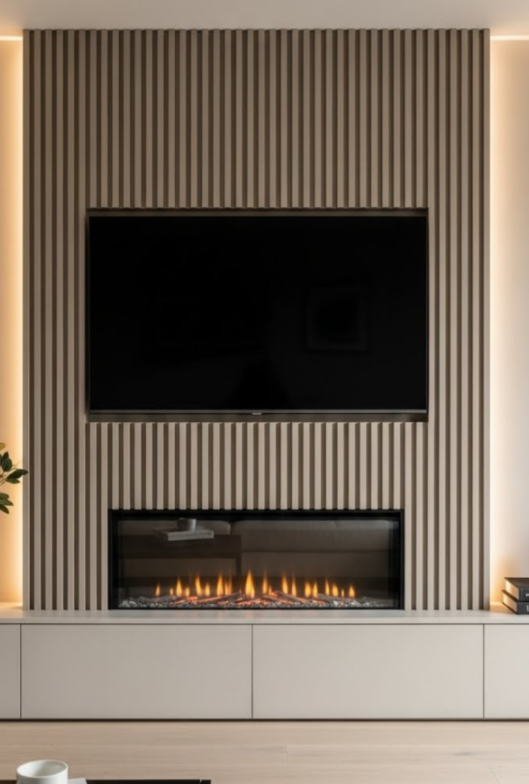
Design idea: Vertical slats surrounding the TV and fireplace.
Vertical slats add texture and make a media wall appear taller. Rather than covering the entire wall, I would use them around the central TV and fireplace section, leaving the remaining surface simple.
Painted MDF battens can create a clean, consistent pattern, while timber slats provide a more natural finish. Even spacing is important because uneven gaps can make the wall look unfinished.
A subtle backlight or gentle uplighting can emphasize the vertical lines. I would also make sure the chosen slat material and installation method are suitable for the fireplace surround and that any lighting components have adequate ventilation.
20. Minimal Plaster Wall
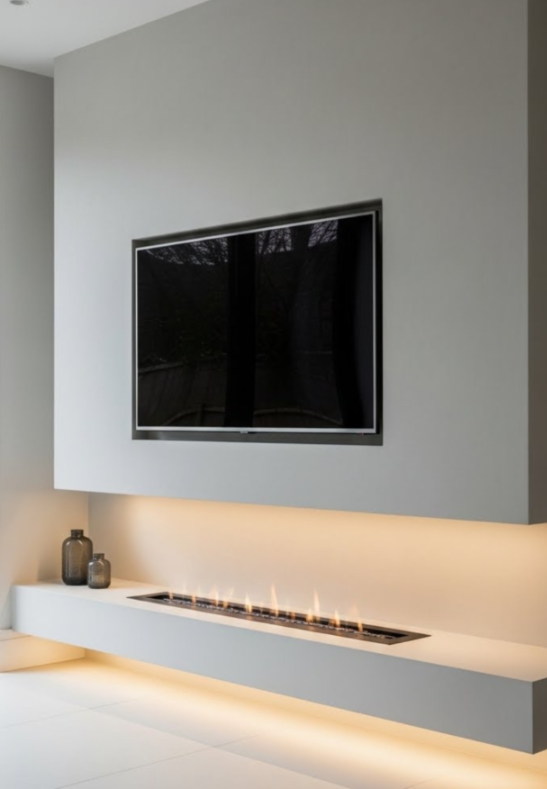
Design idea: A smooth, seamless media wall with very little decoration.
A plaster-finished media wall is ideal when I want the TV and fireplace to appear integrated into the architecture. The surface remains smooth, with no large shelves or decorative features competing for attention.
I would create a properly planned recess or frame for the components, then finish the wall in a consistent neutral color. Concealed lighting beneath a shelf or along the lower edge can add a soft glow without making the design look busy.
This style depends on accurate finishing because uneven surfaces and visible cable openings are more noticeable on a plain wall. I would plan all access panels and wiring before applying the final finish.
21. Offset Fireplace Design

Design idea: An asymmetrical layout with the fireplace slightly off-center.
A media wall does not always need a perfectly centered TV and fireplace. An offset arrangement can give a modern living room a more distinctive appearance, especially when the furniture layout also follows an asymmetrical design.
I would plan the positions of both components together, then use a simple wall bump-out or contrasting panel to connect them visually. A cabinet, open shelf, or decorative object on the opposite side can help balance the overall composition.
The important part is making the offset look intentional. I would mark the layout on the wall before building so the TV remains comfortable to watch and the fireplace has enough clearance.
22. Textured Microcement Look
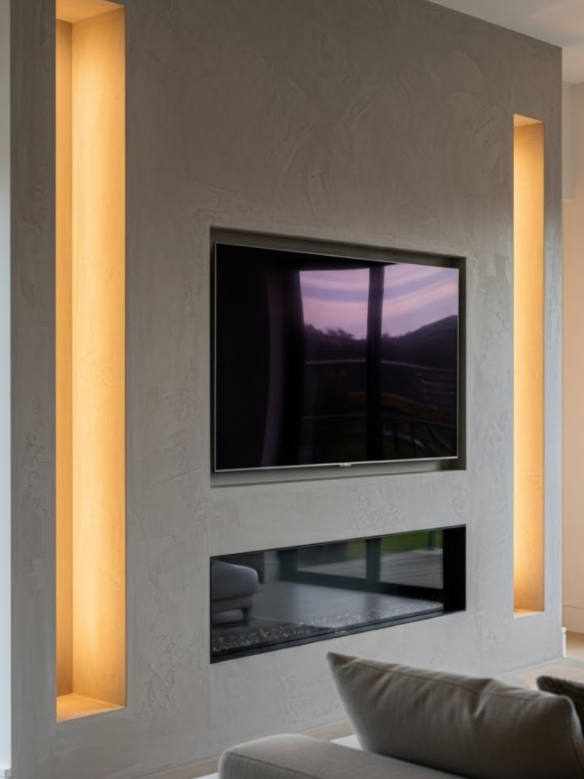
Design idea: A continuous, textured surface around the TV and fireplace.
Microcement creates a modern, understated finish that works well when I want the media wall to feel like one continuous surface. Its subtle texture adds depth without the strong pattern of brick or stone.
I would use the finish across the planned feature area, keeping the TV and fireplace neatly aligned. A warm LED strip beneath a shelf or along an appropriate edge can bring out the texture in the evening.
The surface needs correct preparation and application to achieve a consistent result. I would check whether the selected microcement system is suitable for the substrate and fireplace surround rather than assuming every product can be used in the same way.
23. Hidden Storage Wall
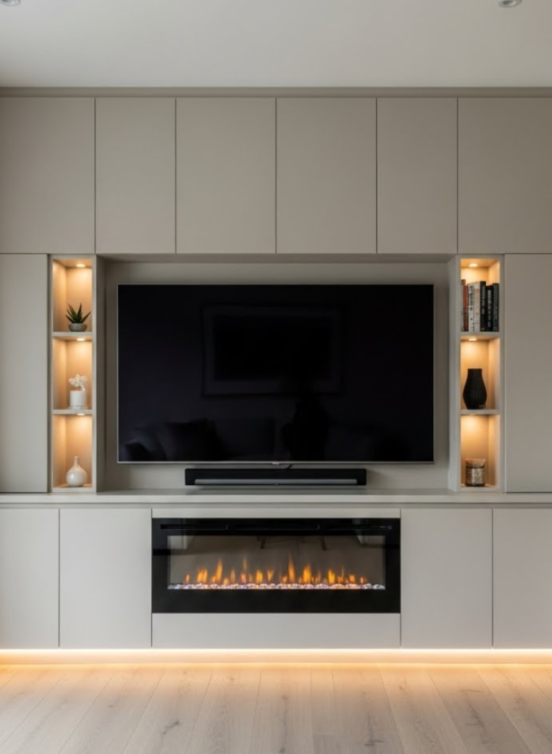
Design idea: Flat-panel cabinets that conceal everyday clutter.
A hidden-storage media wall is useful when I want the living room to look tidy without giving up practical storage. I would build flat-panel cabinets around the TV and fireplace, using push-to-open doors or discreet handles for a clean appearance.
The cabinets can hold remotes, gaming accessories, cables, books, and other items that tend to accumulate around entertainment areas. Open shelves are optional, so I could keep the entire design simple if concealed storage is the main priority.
A small amount of toe-kick or shelf lighting can help the wall feel finished. I would make sure electronic equipment has suitable ventilation and that cabinet doors do not block access to connections or maintenance points.
FAQs
What materials work best for a fireplace wall?
The best material depends on the look I want, the fireplace type, the wall structure, and the installation requirements. Popular options include MDF panels, shiplap, plaster, microcement, stone veneer, and decorative wood slats.
For a smooth modern finish, plaster or a suitable microcement system can work well. Stone veneer adds texture, while shiplap and wood slats bring warmth and character.
Electric fireplaces often provide more flexibility for DIY designs, but I would still follow the manufacturer’s requirements for clearances, ventilation, and surrounding materials. For gas or wood-burning fireplaces, heat-resistant materials and specific installation clearances are especially important.
What to put on a fireplace wall?
I would start with the TV, fireplace, and any storage the room needs. These main elements should determine the layout before I add decorative features.
A floating mantel can create a visual break between the TV and fireplace when installed at the correct height and clearance. Built-in shelves, recessed niches, and side cabinets can provide extra storage without crowding the central area.
For lighting, a few LED strips, shelf lights, or wall washers are usually enough. If the wall already has a strong stone pattern or textured finish, I would keep additional décor simple so the overall design remains balanced.